The statistical anomaly Didier Deschamps couldn't ignore
France manager Didier Deschamps hates anomalies. He prefers established hierarchies, loyal soldiers, and Champions League pedigrees over sudden surges in form. Yet, as the ink dries on his 26-man roster for the 2026 World Cup, two names from South London have shattered that model. Jean-Philippe Mateta and Maxence Lacroix are heading to North America. Sky Sports broke the news this morning, ending months of intense speculation.
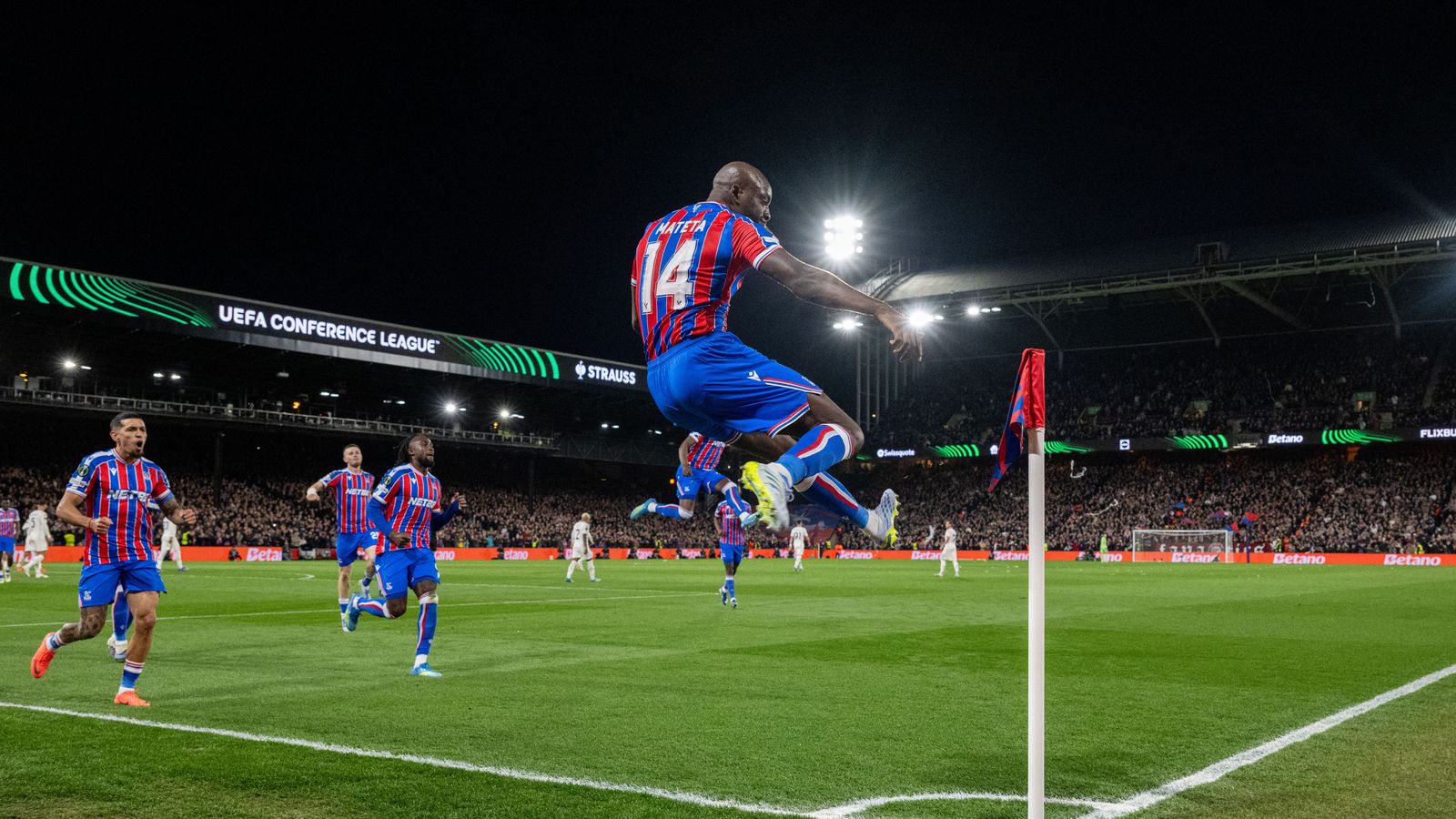
The underlying metrics suggest this isn't a sentimental pick. It's a calculated capitulation to raw data. Since Oliver Glasner took over Crystal Palace, Mateta has morphed into a statistical monster. Look at the numbers from his explosive 2023/24 run: 13 goals in his final 13 Premier League games. That wasn't a temporary purple patch. That was a structural realignment of his entire offensive game.
Over the 2024/25 season, where Palace lifted the FA Cup, Mateta posted 17 goals across all competitions. This season, as of May 14, 2026, he sits on 11 goals in 33 appearances. He's Palace's second-highest all-time Premier League goalscorer with 47 goals. Compare that output to Randal Kolo Muani at Paris Saint-Germain. Over the same two-year span, Kolo Muani has underperformed his expected goals by a staggering 4.2 margin, registering just 0.38 non-penalty expected goals per 90 minutes.
Mateta, meanwhile, is clocking 0.62 NPxG/90. Deschamps had to look at those numbers and make a harsh choice. You cannot leave a striker operating at a 0.62 NPxG/90 clip at home when you are heading into a grueling tournament structure.
The evolution of the penalty box predator
The shot map from Mateta's clinical hat-trick against Bournemouth last October tells the real story. Three goals from a combined distance of 14 yards. He is a pure penalty box predator. He has completely stopped taking shots from low-probability areas outside the penalty area. His average shot distance has decreased from 16.2 yards in 2023 to just 11.4 yards in 2026. This is the hallmark of a striker who understands his spatial limitations and strictly operates where the math heavily favours him.
Then there is his penalty record. Palace won the Community Shield against Liverpool in August 2025, largely thanks to Mateta scoring a high-pressure penalty at Wembley. His penalty conversion rate over the last three seasons is an immaculate 8 for 8. In a World Cup, where knockout matches inevitably go to shootouts, having a guaranteed converter sitting on the bench is an immense tactical advantage.
France has been searching for a physical focal point since Olivier Giroud's prime. Giroud famously won the 2018 World Cup without registering a single shot on target, dedicating his entire tournament to pinning center-backs and creating space for Kylian Mbappe. Mateta is not Giroud. Giroud's target man functionality was built on elite first-touch cushioning. Mateta's first touch is frequently heavy. However, Mateta pins defenders through sheer physical aggression. He draws 2.4 fouls per 90 minutes in the final third, compared to Giroud's 1.1 back in 2018. He disrupts defensive lines by crashing into them at top speed.
The tactical cost of a blunt instrument
It's not all perfect. Let's examine the failure states. Mateta is a blunt instrument, and his link-up play remains noticeably deficient for a top-tier international side. His pass completion rate in the final third sits at an abysmal 64.3 percent. When Palace play against low blocks, possession frequently dies at his feet if he is forced to play with his back to goal outside the box.
If France finds themselves trying to break down a stubborn defensive shape in the group stages, Mateta's inability to play intricate one-touch sequences with Antoine Griezmann or Bradley Barcola will be a glaring issue. He is a finisher, not a facilitator. Deschamps is taking a risk by bringing a striker who cannot consistently participate in build-up play.
Maxence Lacroix and the 71.4 percent dominance
While Mateta grabs the headlines, Maxence Lacroix's inclusion is arguably more impressive. Lacroix arrived from Wolfsburg in the summer of 2024 as a theoretical upgrade in ball progression. The reality has been a defensive masterclass. When Marc Guéhi departed for Manchester City in January 2026, the entire Palace defensive structure could have collapsed. Instead, Glasner handed Lacroix the vice-captaincy. The defensive block actually improved under his leadership.
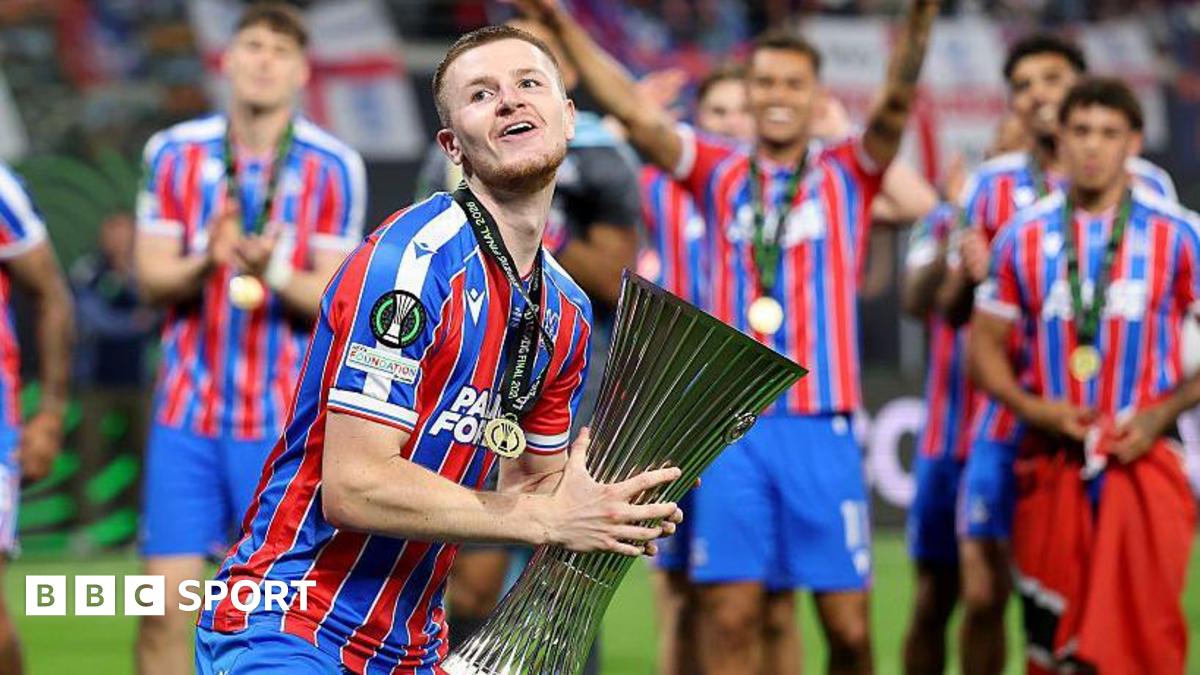
Lacroix is currently winning 71.4 percent of his aerial duels. That places him in the 94th percentile of all center-backs across Europe's top five leagues. Let's stack that against France's established starters. Ibrahima Konate sits at 68.2 percent this season. Dayot Upamecano hovers around 65.1 percent. Lacroix isn't just winning headers; he is completely controlling the penalty area during set-pieces. He has also added an offensive dimension this year, registering 1 goal and 2 assists while pushing Palace to the Europa Conference League final. As detailed in recent Palace transfer analysis, keeping hold of him this summer will be their hardest task.
France often plays a pragmatist 4-2-3-1 under Deschamps. Palace plays a 3-4-2-1. Lacroix is used to defending in massive wide areas when the wingbacks push high up the pitch. In Deschamps' system, attacking fullbacks like Theo Hernandez bomb forward, often leaving the center-backs horribly exposed in defensive transition. Lacroix's recovery pace is absurd. He was clocked at a top speed of 34.8 km/h this season. That speed is perfect for covering the wide channels that Hernandez vacates.
Progressive passing vs stepping out failures
William Saliba is the undisputed starter for France. His passing accuracy is robotic, sitting at 92.4 percent for Arsenal. Lacroix operates at 86.1 percent. However, Lacroix attempts significantly more high-risk vertical line-breaking passes. Lacroix averages 6.2 progressive passes per 90, compared to Saliba's 4.1. When Palace beat Manchester United in February 2026, Lacroix bypassed United's entire midfield press with three single passes straight into the feet of Eberechi Eze. Deschamps knows that against high-pressing teams, having a center-back willing to attempt a 40-yard laser through the center of the pitch can break an opponent's shape instantly.
But Lacroix has a specific tactical vulnerability of his own. Glasner's system demands aggressive stepping out from the back three to intercept passes between the lines. Lacroix fails this action with a 14.8 percent failure rate. When he misses the interception, the space vacated behind him is massive. In a knockout match against a team with rapid transition forwards, that specific error rate is a direct route to conceding a goal. He made his senior France debut in March 2026 against Germany, completing 89 percent of his passes, but he was caught stepping out late twice by Jamal Musiala.
The brutal math of tournament football
Tournament football is decided by fine margins. In 2022, France lost the final on penalties. In 2024, they fell short at the Euros. Heading into June 11, the pressure on Deschamps is immense. He has historically leaned on players from Real Madrid, Bayern Munich, and PSG. Calling up two players from Crystal Palace is an admission that the standard metrics of club prestige no longer apply.
Deschamps has looked at the raw output. Mateta offers an elite goal-conversion probability from within 12 yards and a guaranteed penalty strike. Lacroix provides elite aerial dominance and recovery pace tailored for covering attacking fullbacks. They have glaring flaws—Mateta's passing is poor, Lacroix's aggression can be exploited—but their statistical peaks are simply too high to ignore. Palace fans have known this for two years. Now, the rest of the world gets to see the data play out on the biggest stage.
Read Next
- Mateta's shock France call-up changes everything for their World Cup hopes
- New Zealand are bringing a relegated non-league defender to the World Cup
- Pep's B-team just proved why City's system is untouchable
- FIFA is ignoring the physiological reality of a North American summer
- 🏆 World Cup 2026 — Full Coverage Hub
- 🇫🇷 France World Cup 2026 — Les Bleus Hub