The Anfield Meltdown Nobody Needed
We are exactly eleven days away from the first leg of the Champions League quarter-finals. The stakes literally cannot be higher for Liverpool right now.
And yet, the entire red half of Merseyside is currently engulfed in a boardroom melodrama that feels more like an episode of Succession than a football season.
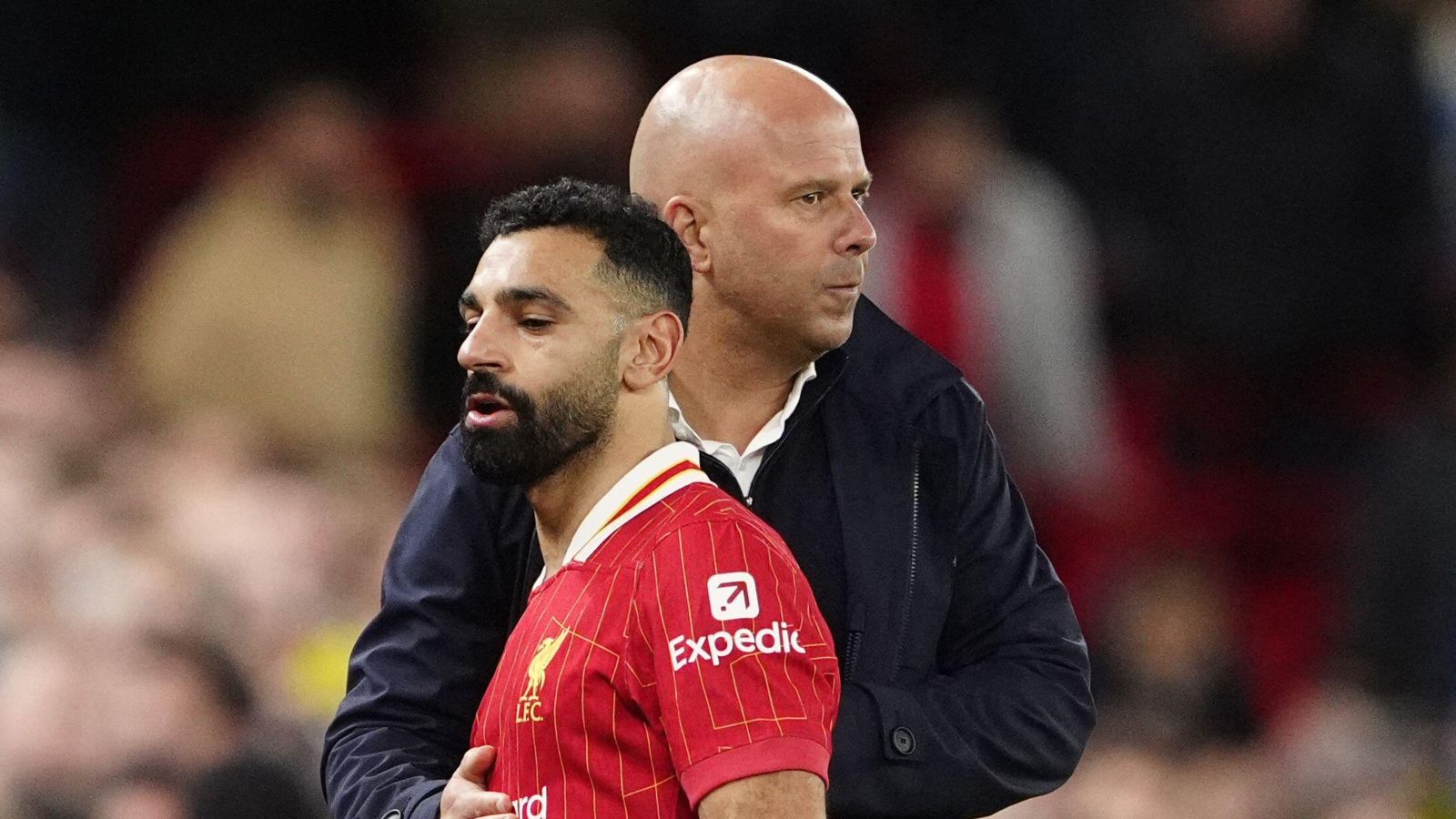
Mohamed Salah is leaving Liverpool. The Egyptian King has officially called time on his legendary Anfield career, announcing his departure at the end of the current campaign.
The timing of the announcement is, frankly, chaotic. You do not drop a bombshell like that in late March when there are massive European nights and a tense domestic run-in to worry about. But here we are. The statement is out. The farewell tour has unwillingly begun.
Naturally, the punditry class could not wait to tear this situation apart and search for a villain.
Keane vs. Neville: The Corporate Conspiracy
If you tuned into the noise this week, you probably caught the absolute collision of opinions between Roy Keane and Gary Neville. It is the classic dynamic we have come to expect from them, but this time, the stakes feel a lot more grounded in the grim reality of modern football economics.
Keane came out swinging with a theory that is absolute catnip for cynical football fans.
The former Manchester United captain essentially suggested that Liverpool's ownership group was pulling the strings behind the scenes. According to the reporting from the Mirror, Keane's read of the situation is that the Liverpool chiefs actively put pressure on Arne Slot regarding how Salah is utilized on the pitch.
The underlying implication is obvious. If a superstar player is asking for astronomical wages in his mid-thirties, the easiest way for a data-driven ownership group like FSG to justify walking away is to quietly diminish the player's importance. If he plays less, his numbers drop. If his numbers drop, the fans are less angry when he walks out the door on a free transfer.
It is a remarkably spicy theory. It paints Slot as a weak-willed puppet and the board as ruthless bean-counters orchestrating a smear campaign against a club legend.
But Gary Neville immediately shut it down.
And as much as it pains me to write these words, Neville is completely right on this one.
The Reality of Replacing Klopp
Let us actually look at the reality of Arne Slot's tenure so far, because the narrative has completely detached from the facts on the ground.
Replacing Jurgen Klopp was supposed to be the impossible job. The emotional hangover alone was expected to tank the club for at least two seasons. We all saw what happened to Manchester United after Sir Alex Ferguson left. We saw what happened to Arsenal after Arsene Wenger.
Slot walked into a dressing room built by a charismatic giant and was asked to impose a more controlled, possession-heavy tactical structure. He did not come to Anfield to be a yes-man for the Boston front office. He came to build a winning football team.
Neville's counter-argument rests on basic, undeniable football logic. A manager operating at the absolute peak of the sport, trying to win major honors in his first two seasons, is not going to intentionally sabotage his own attack.
Managers are incredibly selfish creatures by nature. They want to win games. They want to protect their win percentages. They want to keep their very lucrative jobs.
Slot needs Salah to win football matches. It is that simple.
The idea that Michael Edwards or Richard Hughes are texting down to the dugout, instructing Slot to hook Salah in the 70th minute of a tight game just to manipulate contract optics, is pure tin-foil hat material. It fundamentally misunderstands how top-level football clubs actually operate on matchday.
Tactical Friction vs. Sabotage
However, acknowledging that there is no grand conspiracy does not mean the relationship between Salah and Slot has been perfect. Far from it.
Any major tactical shift creates friction. Klopp's heavy metal football relied on Salah being the ultimate chaos agent. He was encouraged to take risks, attack space with reckless abandon, and shoot from low-percentage areas because the volume of attacks would eventually break the opposition down.
Slot prefers order. He wants the ball retained. He wants structured, methodical buildup play.
Naturally, a veteran forward who relies on explosive bursts of pace and instinct is going to find that transition frustrating. We have seen the negative body language on the touchline this season. We have seen the muted goal celebrations. We have seen the frustration when a pass goes backward instead of being launched into the channel.
But there is a massive difference between tactical friction and corporate sabotage.
Keane is looking at this through the lens of a player who felt betrayed by his own club hierarchy back in his prime. He sees boardroom interference everywhere because he experienced the brutal, political side of football management firsthand at Old Trafford. He expects the worst from executives.
Neville, for all his flaws on commentary, is looking at this structurally.
Liverpool operates on a strict, unyielding wage structure. They always have under FSG. They let Sadio Mane walk when the numbers no longer made sense. They allowed Roberto Firmino to gracefully exit when his physical output dropped. They did not blink when Gini Wijnaldum demanded more money than the algorithm suggested he was worth.
Salah was always going to face the same ruthless mathematical equation. The spreadsheets do not care about how many goals you scored against Manchester United five years ago. They only care about projected output over the next three years.
The Burden of Aging Legends
The real problem here is the modern football news cycle. A player cannot just naturally age out of a specific wage bracket anymore. There always has to be a villain. There has to be a bad guy.
Either the manager is disrespecting the legend out of ego, or the board is cheap and hoarding cash, or the player is greedy and demanding too much.
Nobody wants to accept the boring, depressing truth. Mohamed Salah is getting older, his physical profile is changing, and Liverpool cannot commit massive financial resources to his declining years without risking the long-term health of the squad.
Think about how other legends have left the Premier League recently. Sergio Aguero quietly faded out at Manchester City, largely due to injuries, but Pep Guardiola never faced accusations of a boardroom conspiracy. Eden Hazard secured his dream move to Real Madrid, leaving Chelsea with a massive check and fond memories.
Salah's departure feels different because he is still, on his day, a highly effective player. He is not broken down. He is just no longer the terrifying, inevitable force of nature he was in 2019. That subtle decline is the hardest thing for a fanbase to accept.
It is much easier to blame Arne Slot's system or John Henry's wallet than to admit that your hero has lost half a yard of pace.
There is also the reality of the squad rebuild. Liverpool have to look to the future.
You cannot build the next great Liverpool team if your entire tactical setup is still entirely dependent on feeding an aging winger. The club has to empower players like Luis Diaz, Cody Gakpo, or whoever they bring in this summer. Slot's job is to build the 2027 team, not preserve the 2022 team in amber.
If he has to occasionally bench Salah to figure out how this team functions without him, that is just basic management. It is not a slight against Salah's legacy.
Neville understands this because he played under Sir Alex Ferguson, the master of moving players on exactly one year before they completely fell off a cliff. Ferguson ruthlessly shipped out Roy Keane himself, Ruud van Nistelrooy, and David Beckham when he felt the team needed to evolve.
The Run-In Awaits
Slot has actually managed this transition quite well, considering the impossible circumstances he inherited.
He has kept Liverpool highly competitive. He has navigated the post-Klopp emotional void without a total collapse. He has integrated new tactical ideas without completely breaking the attacking output of the team.
To suggest he is merely following orders from above to freeze out a club icon is deeply insulting to his managerial ability and his integrity.
And let us think about the timing again. April is going to be an absolutely brutal month. The schedule is relentless.
Slot needs a fully engaged Salah for the run-in. If there was genuine, top-down pressure to phase the Egyptian out, you would not see him trusted in the massive European fixtures that define a season.
Liverpool are staring down the barrel of the UCL quarter-finals. The first leg is on April 7, and the return leg on April 14.
Do you honestly believe Arne Slot is going to pick his starting eleven based on a financial directive? Absolutely not. He is going to play the guys who give him the best chance to reach the semi-finals on April 28.
Neville saw right through the manufactured drama. He recognized that Keane was applying an old-school, emotive framework to a very modern, cold-blooded football decision.
Salah leaving is undeniably sad for the Premier League. He is one of the greatest wide forwards to ever play in England. His numbers over the last decade are completely absurd. His peak was terrifying. He defined an entire era of Liverpool dominance.
But all eras end. And they rarely end with everyone holding hands and smiling.
The failure here isn't Arne Slot's tactics. It isn't even the board's strict financial modeling, which has largely kept the club solvent and competitive against state-backed rivals.
The failure is our collective inability as fans and pundits to let a brilliant player move on without trying to manufacture a bitter, toxic narrative to explain it away. We demand drama where there is only math and Father Time.
Gary Neville got this one absolutely spot on. The conspiracy theories need to stop right now.
Liverpool have a massive season to finish. Salah has a farewell tour to complete. The fans deserve to enjoy these final weeks without dissecting every substitution for hidden corporate motives.
Everything else is just noise generated to fill the silence before the actual football kicks off again.
Read Next
- Liverpool are about to find out how much Mo Salah actually matters
- Top 10: Mohamed Salah's Most Iconic Liverpool Moments
- PSG are clearing the schedule but rest won't solve their Liverpool problem
- Anfield's Emotional Canvas: Klopp and Gerrard Return to Paint New Memories
- 🇪🇬 Egypt World Cup 2026 — Salah's Last Dance