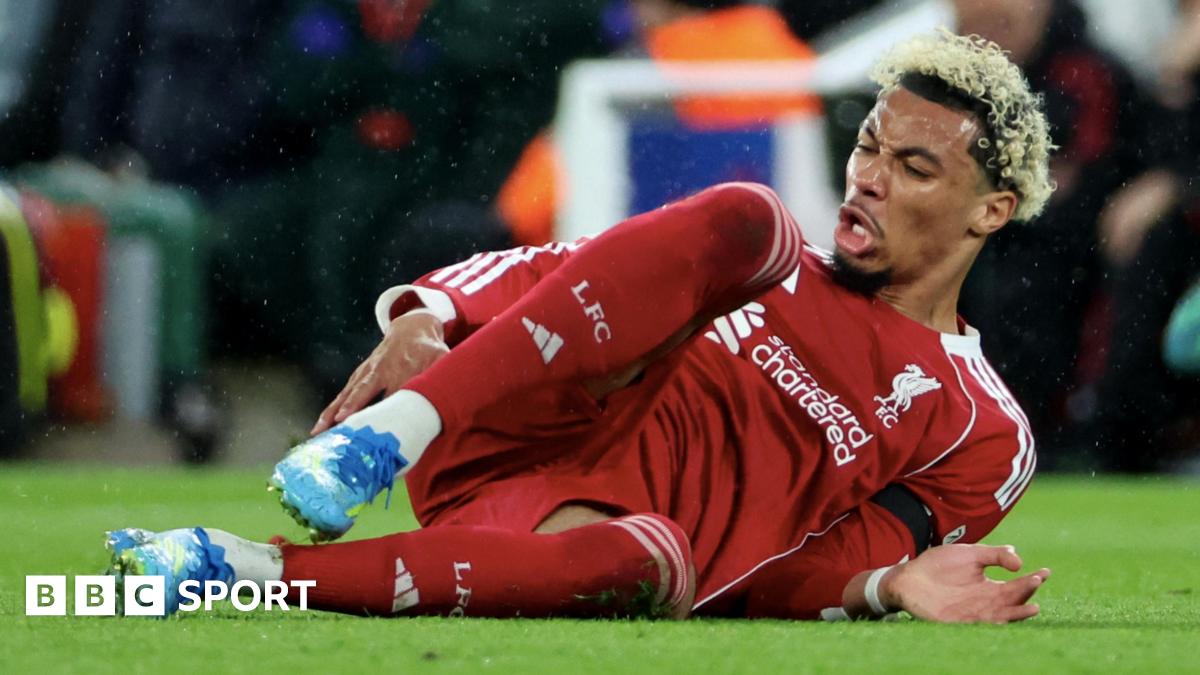
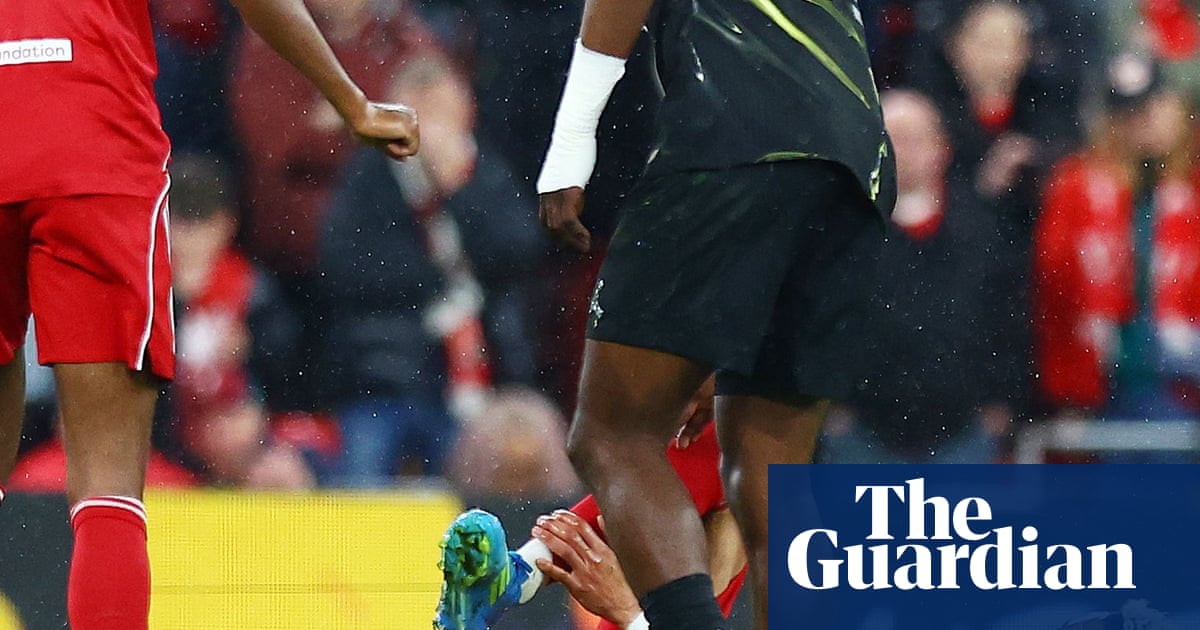
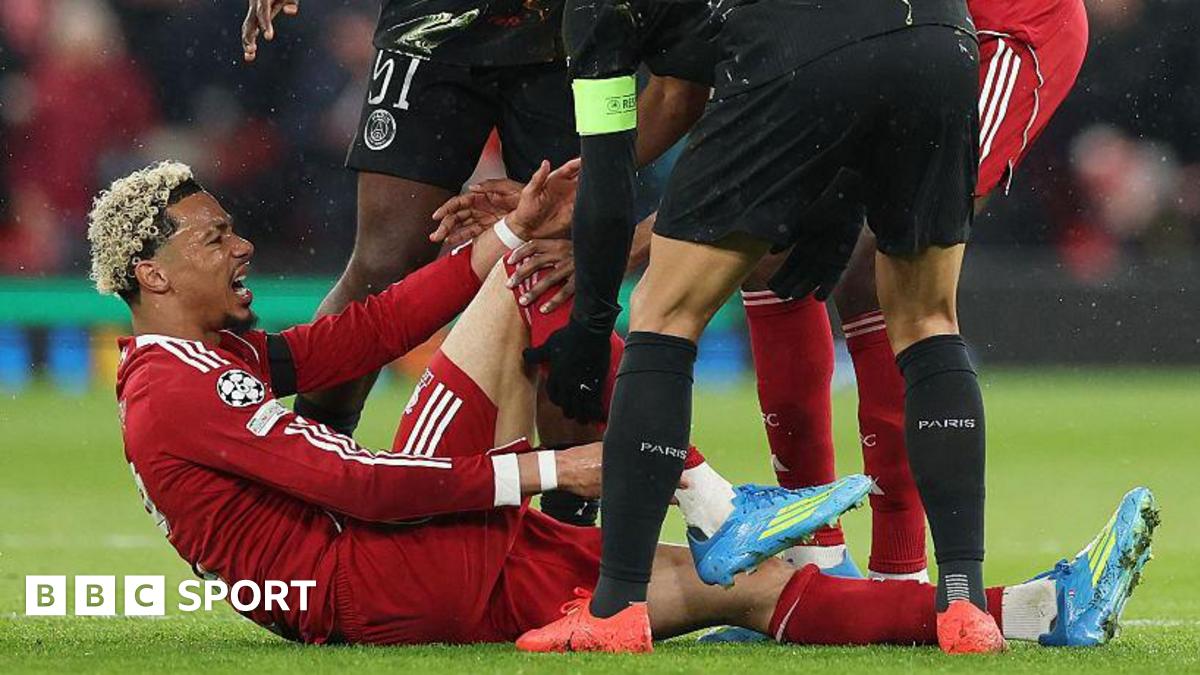
The 29th minute collapse
The silence that fell over Anfield on Tuesday night during the 29th minute was not merely the standard concern for a fallen player. It was the sound of a tactical system disintegrating in real-time as Hugo Ekitike was stretchered off. By the time the scan results were released on Thursday, confirming a ruptured Achilles, the statistical reality of Liverpool's season had become grimly transparent.
Arne Slot’s side surrendered 2-0 to Paris Saint-Germain, marking their exit from the Champions League and effectively ending their hopes for silverware in 2026. The numbers behind the defeat suggest a team that has become dangerously dependent on a single vertical outlet. Without Ekitike’s ability to stretch the opposition backline, Liverpool’s pass completion in the final third dropped from a season average of 74% to a staggering 58% during the second half of the PSG match.
This injury does more than just ruin Liverpool's spring; it alters the geometry of the French national team ahead of the World Cup. With only 56 days until the tournament kicks off in the USA, Mexico, and Canada, Ekitike’s absence leaves a void that Didier Deschamps cannot easily fill with traditional profile strikers. The rupture is a definitive end to a campaign that promised a transition into elite status for the young forward.
The vertical vacuum
To understand why Liverpool looked so toothless after the injury, one has to look at Ekitike’s specific gravity on the pitch. Before his departure on Tuesday, he had already recorded 14 high-intensity sprints into the channels. This forced the PSG defensive line, led by Marquinhos, to drop five yards deeper than Luis Enrique usually prefers. As the BBC reported, the suspected Achilles issue was evident almost immediately, and the tactical fallout was instantaneous.
Once Ekitike was replaced, PSG squeezed the game. The distance between PSG's defensive line and their midfield trio narrowed to just 12 meters on average for the final hour of play. Liverpool, lacking a runner to threaten the space behind, began recycling possession harmlessly in front of the Parisian block. Their xG (expected goals) plummeted from 0.82 in the first 30 minutes to a measly 0.34 for the remainder of the contest.
Slot’s refusal to pivot to a more direct approach once his primary runner was gone remains a point of intense scrutiny. The decision to keep the wingers wide rather than asking them to occupy the central space vacated by Ekitike allowed PSG to dictate the tempo. Liverpool finished the game having attempted 18 crosses, of which only two found a red shirt. It was an exercise in futility that exposed a lack of a viable Plan B in the current squad structure.
Dembele's Anfield habit
While Liverpool mourned their injury luck, Ousmane Dembele continued to turn Anfield into his personal playground. For the second successive season, the Frenchman was the matchwinner on Merseyside. His performance was a masterclass in transitional efficiency, requiring only three touches in the box to produce a goal and an assist. As Mirror Football noted, Dembele was vocal in his respect for the Anfield atmosphere, yet his play was clinically disrespectful to Liverpool's defensive shape.
Dembele's goal in the 62nd minute was a direct result of Liverpool's growing desperation. With the midfield pushed high to compensate for the lack of forward pressure, a single turnover in the center circle left Virgil van Dijk isolated. Dembele’s top speed was clocked at 35.8 km/h during the break, a figure no Liverpool defender could match in a retreating transition. This is the third time this season Liverpool have conceded a goal following an attacking set-piece of their own, highlighting a recurring failure in their rest-defense positioning.
The cost of the triple blow
The fallout from Tuesday night is being described as a triple blow: the injury to a star player, elimination from Europe, and the confirmation of a trophy-less season. Statistically, this is Liverpool's most inefficient campaign since the 2020-21 season. Despite having 61% possession on average across their Champions League fixtures, they have converted only 9% of their total shots into goals. This lack of clinical edge is exactly why the Ekitike injury is so catastrophic; he was the only forward outperforming his individual xG by more than 15%.
As reported by the Mirror, this injury is already impacting the club's internal transfer discussions. The recruitment department is now forced to prioritize a versatile forward who can replicate Ekitike’s output, likely inflating the price tags of any potential summer targets. The financial impact of missing out on the Champions League semi-finals is estimated to be in the region of £15 million, further tightening the belt for a summer window that now looks like a mandatory overhaul.
A World Cup dream deferred
For Ekitike, the timing is particularly cruel. The 2026 World Cup was supposed to be his arrival on the global stage. France's depth is legendary, but Ekitike offered a profile—tall, mobile, and capable of playing with his back to goal—that differentiated him from the likes of Marcus Thuram or Kylian Mbappe. His former club has already sent messages of support, as noted in recent reports, but sentimental value won't fix a ruptured tendon.
The recovery timeline for an Achilles rupture is typically 9 to 12 months. This means Ekitike will likely miss not only the World Cup but also the entire first half of the 2026-27 Premier League season. Liverpool are now looking at a player who will have missed roughly 45 competitive matches by the time he is fit to return. For a 23-year-old whose game is built on explosive acceleration, the long-term statistical implications are concerning. Research into similar injuries in elite footballers shows a mean reduction of 4% in top-end speed following surgical repair.
The tactical dead-end
The final fifteen minutes of Tuesday’s match served as a grim preview of what Liverpool fans can expect for the remainder of the domestic calendar. Without the threat of Ekitike, Liverpool’s horizontal passing increased by 22% as they struggled to find gaps in a settled defense. They finished the match with a pass accuracy of 89% in their own half, but that dropped to a dismal 41% when attempting passes into the penalty area. It was possession without purpose, a tactical dead-end that PSG were happy to facilitate.
Slot’s side now faces a dead-rubber run-in for the rest of April and May. The focus shifts from trophy hunting to damage limitation and structural assessment. The core issue remains: when the primary tactical lever is removed, the entire machine stalls. If Liverpool cannot find a way to score goals without Ekitike’s specific movement patterns, the final month of the season will be a long, data-rich post-mortem of a campaign that broke in the 29th minute at Anfield.
Read Next
- Hugo Ekitike is out and Liverpool's season is officially on life support
- Liverpool’s PSG defeat exposed a team playing with fire
- Ekitike's Nightmare: Liverpool Stunned by Striker's Season-Ending Injury
- Top 10: Top Moments
- ⚽ Ligue 1 2025-26 — PSG, Monaco & the Title Race Hub
- ⭐ UCL 2026 — Champions League Quarter-Finals Hub