The Missing Spine
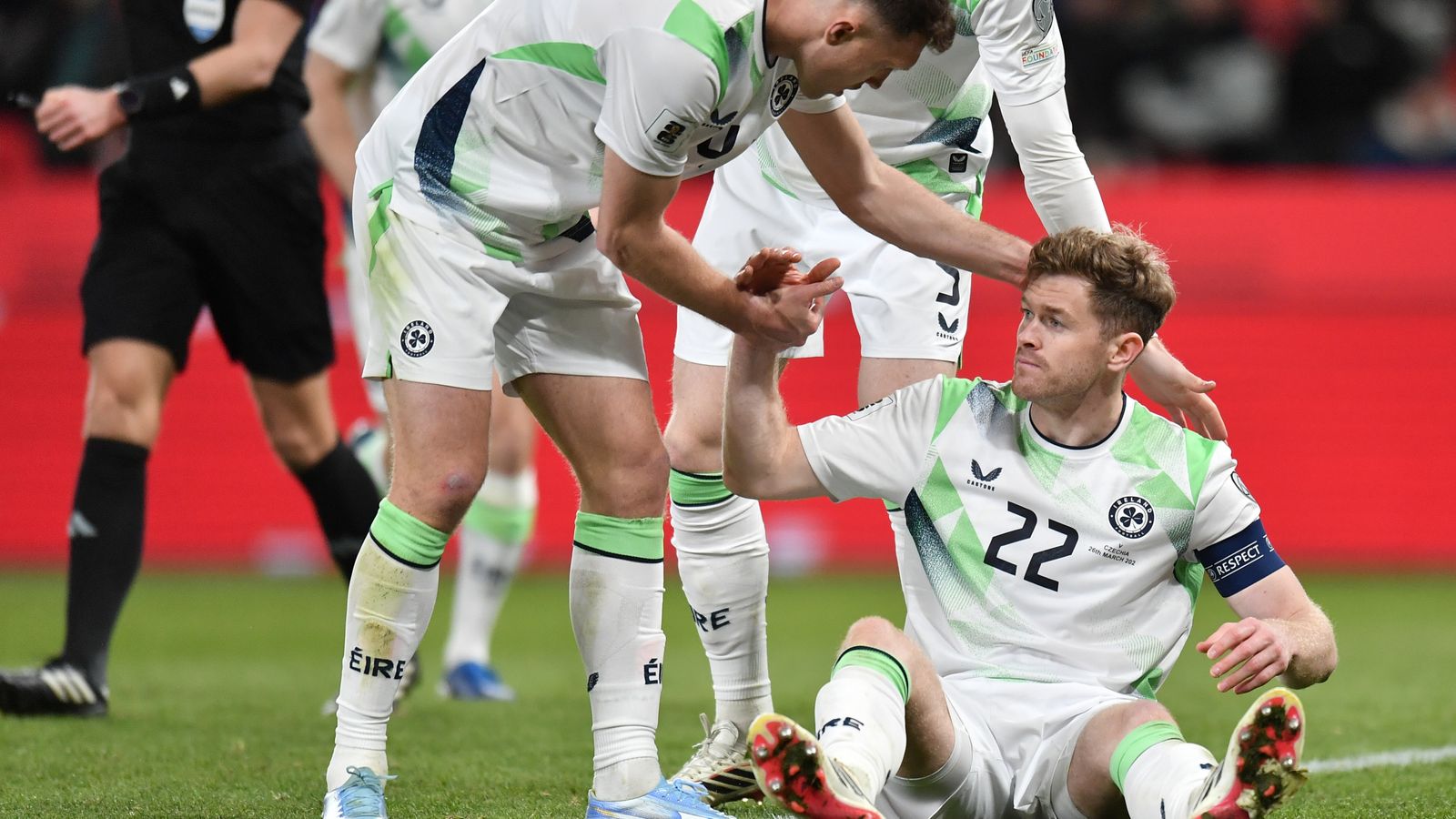
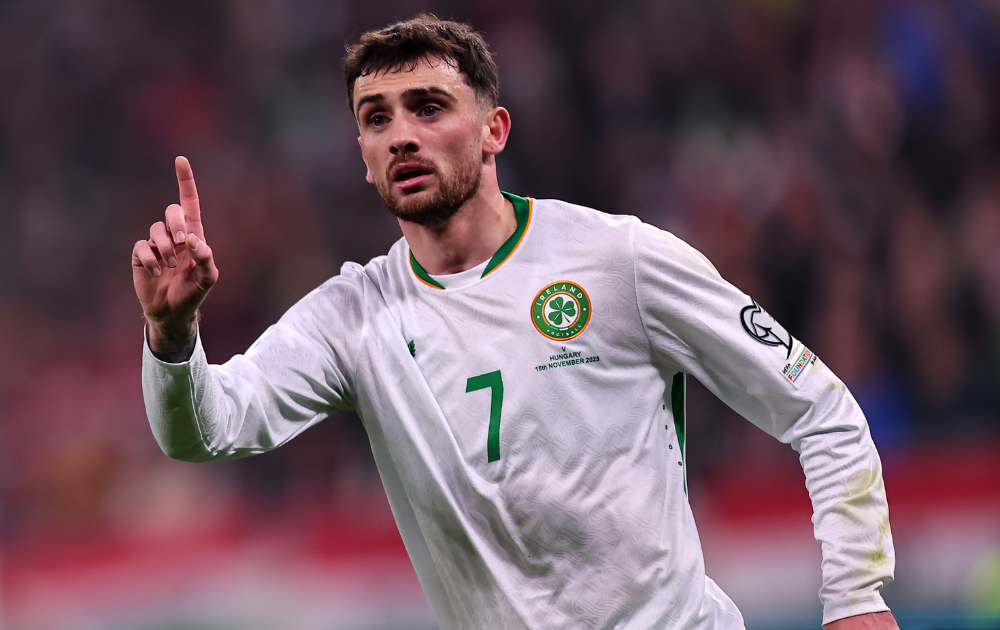
The Republic of Ireland face a significant reshuffle as they travel to Prague to take on the Czech Republic. The confirmed absence of suspended center-back Liam Scales and injured midfielder Josh Cullen leaves a glaring hole in the spine of the team.
Both players have been instrumental in recent tactical setups. Losing them simultaneously forces an immediate rethink in how Ireland will approach a difficult away fixture against a physically imposing Czech side. The disruption to both the defensive structure and the midfield pivot presents a dual problem that cannot be solved with simple like-for-like replacements.
Scales has grown into his role on the left side of the defense, providing balance and a willingness to step into midfield. Cullen, meanwhile, has been the metronome, the player tasked with receiving the ball in tight areas and keeping possession ticking over. Removing both from the starting XI fundamentally alters how Ireland can build from the back and control the tempo of the game.
Cullen's Midfield Void
Josh Cullen’s injury is a particularly sharp blow to the tactical plan. He operates as the primary deep-lying playmaker, dictating tempo and providing a reliable shield for the backline. Without him, Ireland lose their most consistent outlet for recycling possession under pressure.
While the exact nature and timeline of Cullen's injury haven't been exhaustively detailed in the immediate buildup, his absence means the midfield balance shifts dramatically. Historically, when Cullen misses out, Ireland struggle to maintain any semblance of control in the middle third. They often resort to longer, less accurate distribution, bypassing the midfield entirely out of necessity rather than design.
This isn't the first time an injury to a key holding midfielder has threatened to derail an Irish game plan. The heavy reliance on Cullen highlights a concerning lack of depth in that specific deep-lying role. Players like Jayson Molumby or Will Smallbone offer immense energy and pressing ability, but they do not possess the same natural inclination to sit, dictate, and orchestrate from deep. This forces the manager into a compromise: either ask a player to perform an unnatural role, or change the shape of the midfield entirely to compensate for the missing profile.
Scales' Defensive Disruption
Adding to the selection headache is the suspension of Liam Scales. The Celtic defender has established himself at the international level, offering vital composure on the ball and aerial dominance. His ability to carry the ball out of defense has been a useful tool against teams that sit back, and his defensive reading of the game has improved significantly.
His suspension means the left side of the central defensive pairing needs a new occupant. This disrupts the established partnership and the unspoken communication at the back, which is absolutely vital when facing the type of direct, physical attacking play the Czech Republic often employ. Defensive solidity is built on repetition and familiarity; removing a core piece of that unit introduces instability at the worst possible time.
The defensive adjustment is complicated by the simultaneous loss of Cullen. With the midfield shield weakened, the makeshift defensive line will likely face more direct pressure and less protection. This compounding effect means the replacement for Scales will be tested more severely than if he were stepping into a fully settled team.
Tactical Adjustments Needed
The manager now faces a crucial set of decisions. Does he stick to a preferred back three and slot a less experienced left-sided defender into Scales' specific role, or does he revert to a more traditional back four to try and solidify the defense through sheer numbers and familiar shapes?
If a back three is maintained, the pressure on the wing-backs to provide width and defensive cover increases exponentially. If a back four is chosen, the midfield configuration must be robust enough to prevent the center-backs from being isolated against the Czech forwards.
In midfield, the absence of Cullen almost certainly forces a more pragmatic, combative approach. Instead of trying to patiently build through the center of the pitch, Ireland might have to rely on high-energy, box-to-box players to disrupt the Czech rhythm. The game plan may shift from trying to dictate possession to focusing on winning second balls, forcing turnovers in the middle third, and springing quick counter-attacks.
This is where the absence of a natural replacement for Cullen is most keenly felt. Without a player to calm the game down, the match is likely to become chaotic and transitional—a style that can yield unpredictable results and relies heavily on individual moments rather than sustained pressure.
Looking Ahead
The immediate, pressing concern is surviving the stern test in Prague. Getting a positive result without two crucial players would be a massive boost to squad morale and a validation of the team's depth. However, the short-term implications are also worrying, heavily depending on the severity and specific nature of Cullen's injury.
If he faces a prolonged spell on the sidelines, stretching into the critical upcoming fixtures, Ireland will need to find a sustainable, long-term solution rather than a one-game tactical patch. The depth of the squad will be severely tested in the coming weeks. The coaching staff must use this enforced absence to evaluate alternative midfield structures, because relying so heavily on a single player for the entire tactical system is a dangerous game.
The suspension of Scales is a one-game issue, easily resolved upon his return. But the questions raised by Cullen's injury are far more profound. It exposes a structural vulnerability in the squad that opponents will undoubtedly try to exploit if a convincing alternative isn't found quickly. The performance in Prague will be closely watched not just for the result, but for how the team manages the glaring holes in its foundation.
The medical team will be working overtime to assess Cullen, while the coaching staff burns the midnight oil figuring out how to plug the gaps. This match has suddenly transformed from a standard international fixture into a critical stress test of Ireland's tactical flexibility and roster depth. The outcome will tell us a lot about the resilience of this group when forced out of their comfort zone.
Read Next