The Boardroom Decision
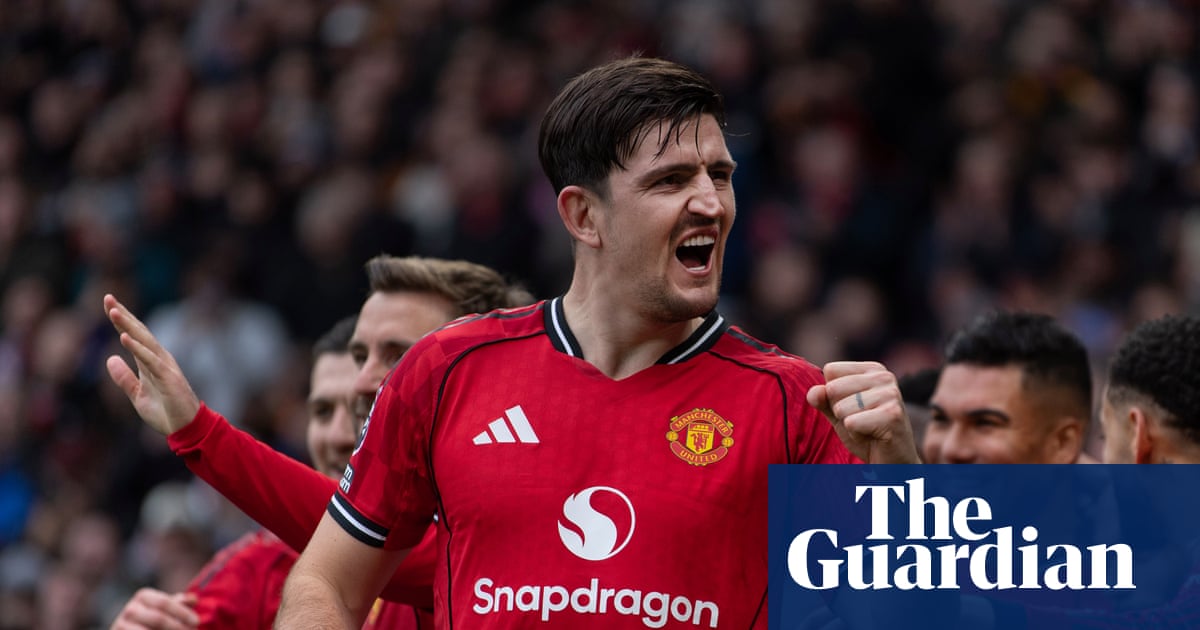
News leaked this week via a Sky Sports transfer update that Harry Maguire is confident of securing a new deal at Old Trafford. It is a decision that instantly split the fanbase. For INEOS, under the stewardship of Sir Jim Ratcliffe, it represents continuity and a reward for quiet professionalism during turbulent times.
For the tactical skeptics, it is glaring proof that Manchester United are still terrified of a clean, ruthless break from the past. But the boardroom politics and contract negotiations will have to wait. Chelsea arrive in Manchester this weekend, and the tactical reality of Maguire's presence in the starting XI will be under an immediate, brutal microscope.
The Structural Disconnect
This is not the Chelsea of two years ago. They are not a team that lets you hide structural flaws. Under Enzo Maresca, they thrive in calculated chaos. They actively seek to stretch the pitch, using Cole Palmer's drifting movement to isolate slower center-backs and create overloads in the half-spaces.
Let's look at the underlying numbers. When Maguire starts, United's average defensive line drops by four yards compared to when Leny Yoro partners Lisandro Martinez. That sounds marginal. To a casual fan, four yards is nothing.
But in the Premier League, four yards is an entire tactical zone. It creates a massive disconnect. Because the defensive line drops, the midfield has to make an impossible choice: drop with them and concede the center of the pitch, or stay high and leave a chasm behind them.
Usually, they get caught somewhere in the middle. Kobbie Mainoo suddenly has to cover significantly more ground in defensive transition. Bruno Fernandes finds himself dropping deeper just to receive the ball, entirely blunting his final-third threat where he is most dangerous.
This brings us to the core structural issue. Maguire is magnificent when defending his own penalty area. If you ask him to head away crosses and block shots for 90 minutes, he looks like a world-beater.
His aerial win rate is consistently elite. But modern football is rarely played exclusively in the penalty box. Chelsea will not swing hopeful crosses into the mixer, because that is exactly what Maguire wants. Instead, they will try to pull him into the channels.
The Jackson Matchup
Nicolas Jackson is the exact profile of striker that gives Maguire nightmares. Jackson does not want a physical wrestling match in the six-yard box. He wants to drag the center-back out of position, spin, and sprint into the void left behind.
If Maguire bites on Jackson's dropping movement—and he frequently does, stepping up to challenge for the ball—the space behind him is instantly attacked by Palmer or Christopher Nkunku. It is a simple tactical pattern, but incredibly difficult to stop if your defense fundamentally lacks recovery pace.
United's counter-strategy has to rely on cutting the supply line at the source. Mainoo and Manuel Ugarte must dictate the tempo against Moises Caicedo and Enzo Fernandez. This is the real battleground.
If Chelsea get time on the ball to pick their passes, it is going to be a punishing afternoon for the Stretford End. The away side's midfield pivot has finally started to click. Caicedo is sweeping up loose balls with terrifying efficiency, while Fernandez is constantly scanning for those progressive, line-breaking passes that completely bypass the first line of the press.
The Tactical Cascades
We also need to evaluate Malo Gusto's role in this specific setup. Gusto does not play as a traditional overlapping full-back; he inverts into midfield to create a box-four structure alongside Caicedo and Fernandez. This numerical superiority in the center of the pitch is exactly what starves opposition teams of the ball.
If Gusto successfully pins Mainoo or Ugarte inside, it forces Alejandro Garnacho to track all the way back into his own defensive third. When Garnacho is defending on the edge of his own penalty area, United have zero outlet for the counter-attack. The entire offensive gameplan evaporates.
This highlights the cascading effect of the defensive line. Because Maguire cannot push up to condense the space, the midfield drops. Because the midfield drops, Gusto and Caicedo can dictate terms uncontested. It is a systematic failure born from a single point of vulnerability.
On the other side of the pitch, Amad Diallo will need to help Diogo Dalot deal with Noni Madueke. Madueke's isolation play is incredibly dangerous. He actively wants to get Dalot into 1v1 situations on the edge of the box, slowing the game down before exploding to the byline.
Let's return to the Maguire problem, because every tactical road for United currently leads back to this central dilemma. If United play a low block to protect his lack of pace, they invite endless pressure and surrender territory.
If they attempt to play a high, aggressive line, they risk him being completely exposed by Jackson's raw speed. The manager has to find a compromise. Often, that compromise is asking the full-backs to stay inverted, creating a rest-defense of three or four players just to guard against the counter-attack.
The Cost of Compromise
This is exactly why the news of a contract extension feels so regressive to analytical observers. You simply cannot build a modern, high-pressing, pitch-dominating team around a central defender who fundamentally requires a low block to survive against elite opposition.
It is a harsh assessment, but the tape does not lie. Watch the away fixtures against top-half opposition this season. United routinely concede the midfield battle simply because the defensive line refuses to step up and compress the space. The gap between the forwards initiating the press and the defenders holding the line is big enough to park a bus in.
Chelsea know this. Every data analyst in the league knows this. The question is whether United can mask the deficiency through sheer individual brilliance or heroic goalkeeping.
Andre Onana is the key variable here. His starting position will need to be exceptionally aggressive, effectively acting as a sweeper-keeper to mop up the balls played over the top of Maguire. If Onana hesitates on his line for even a second, Jackson will be clean through on goal.
Onana has undeniably improved his sweeping this season, but he is still prone to the occasional erratic decision when rushing out. It adds yet another layer of anxiety to a defensive unit that already looks inherently fragile in transition.
Up front, Rasmus Hojlund has a massive, thankless job. He will be up against Levi Colwill and Wesley Fofana, two aggressive and physical defenders. Hojlund needs to hold the ball up, absorb the physical punishment, and buy enough time for his midfield to catch up and join the attack.
If Hojlund gets isolated and loses the physical battles, the ball will just keep coming back in waves. The pressure on Maguire and the rest of the defense will eventually break them. You cannot defend for 75 minutes in the Premier League and expect a clean sheet.
The Set-Piece Duality
Let's look at the set-piece situation, because we must give credit where it is due. This is where Maguire genuinely earns his keep. United are significantly more dangerous from attacking corners when he is on the pitch, and far more robust when defending them.
Chelsea's zonal marking system has looked highly vulnerable at times this season. They struggle with second balls and aggressive runs from deep. If Christian Eriksen or Fernandes can deliver the right trajectory, Maguire is heavily favored to win the first contact.
It is entirely plausible, almost predictable, that Maguire gets exposed in open play multiple times but ends up scoring the winning header from a corner. That is the frustrating duality of his current role at the club.
As we approach the final months of the season, these matches define European qualification. With the Champions League spots hotly contested, United cannot afford to drop points at home to direct rivals.
The atmosphere at Old Trafford will be tense. The crowd demands expansive, dominant, front-foot football, but the personnel—specifically the lack of recovery pace at the back—dictates a much more pragmatic, reactive approach.
I expect Chelsea to control the bulk of the possession. They will probe the half-spaces, circulate the ball quickly, and patiently try to isolate Maguire against their quicker forwards. United will have to suffer without the ball and rely on rapid, ruthless counter-attacks, utilizing Garnacho's pace and Bruno's vision in transition.
Prediction time. Chelsea's structural attacking patterns look sharper and more cohesive, but their defense still has unforced errors in it. United have the individual quality to score from nothing, but keeping a clean sheet against this Chelsea attack feels highly unlikely.
Prediction: Manchester United 1-3 Chelsea. The visitors will ruthlessly exploit the space behind the defense, leaving the Old Trafford hierarchy to look down from the directors' box and ponder exactly what kind of future they are investing in.