
Javier Mascherano is out at Inter Miami and the timing is terrible
The mid-season collapse of the Barca experiment
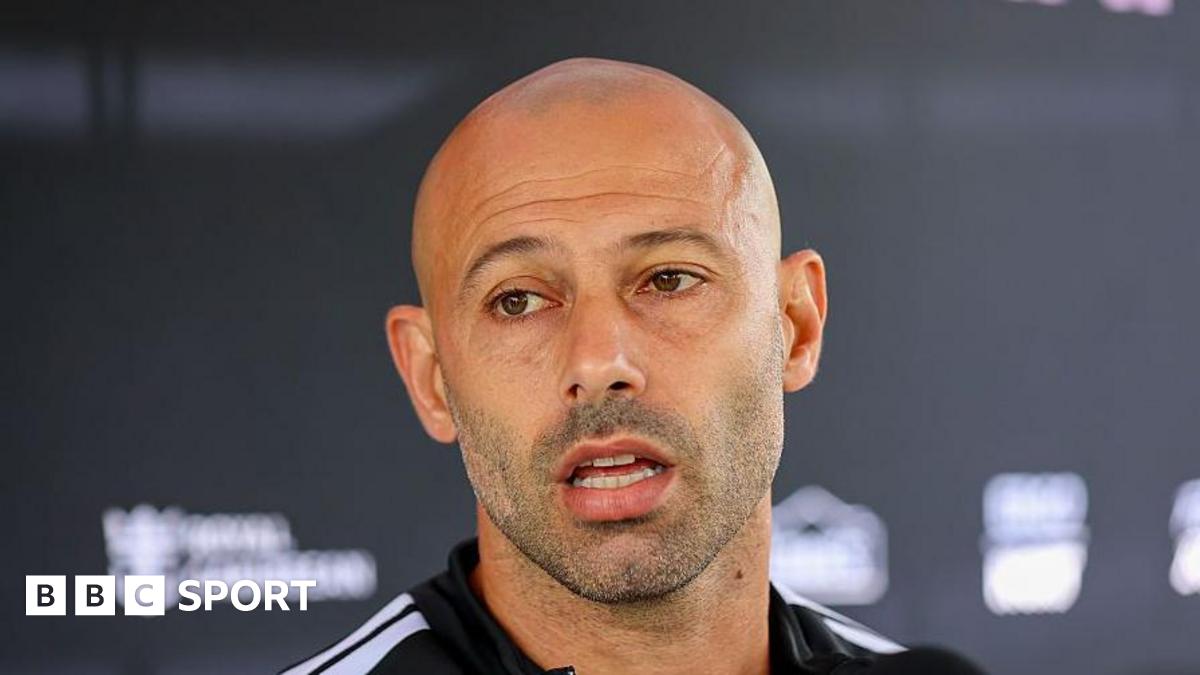
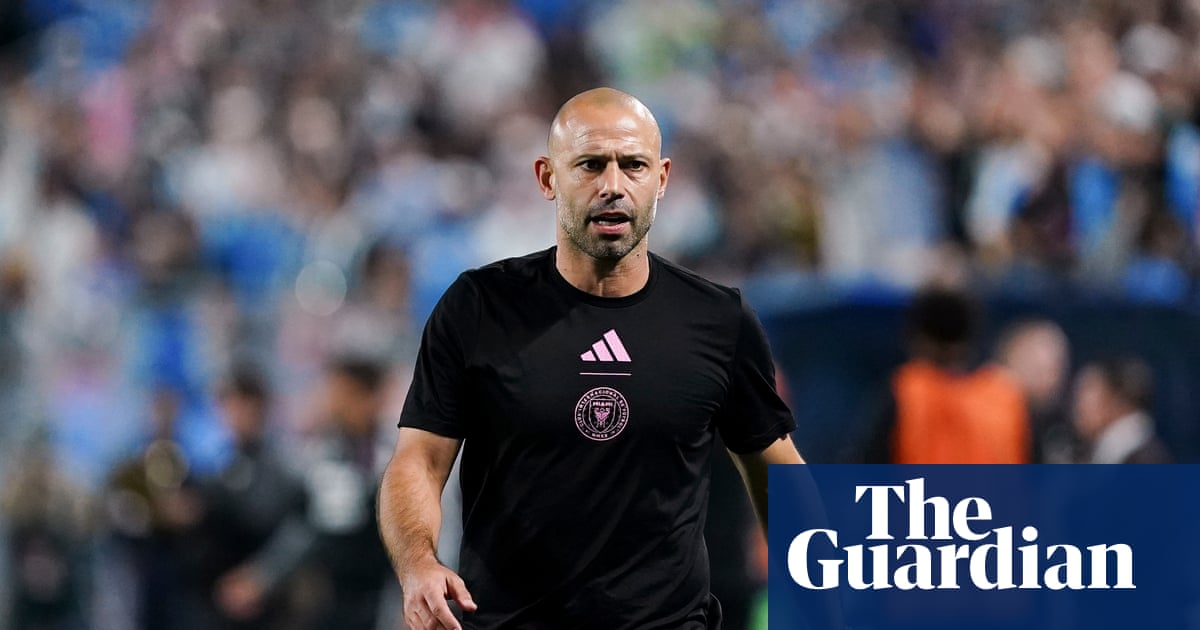
Javier Mascherano stepping down as the head coach of Inter Miami on April 14, 2026, is not merely a personnel change. It is a loud, vibrating alarm bell for a project that has spent two years trying to defy the laws of biological decay and salary cap gravity. The timing of this departure, just 58 days before the 2026 World Cup kicks off on North American soil, suggests a profound fracture in the club’s sporting direction.
The announcement from the BBC confirms that the former Liverpool and Barcelona midfielder is moving on, but the brevity of the statement hides the tactical friction that has defined his tenure. Mascherano was hired to be the bridge between the heavy-gravity superstars and a roster of young, confused South American prospects. Instead, he found himself trapped in a tactical straitjacket, unable to reconcile the needs of aging legends with the physical demands of a league that rewards verticality over nostalgia.
Inter Miami has spent the early months of the 2026 season looking like a team playing in slow motion. While the rest of the league has pivoted toward high-intensity pressing and data-driven recruitment, Miami has remained anchored to a possession-heavy 4-3-3 that requires every player to be a technical genius. When that system fails, it fails spectacularly. The high defensive line Mascherano insisted on during the recent trip to Charlotte FC was a case study in stubbornness, leaving their back four exposed to every simple long ball.
The Little Chief and the big ego problem
Mascherano was always going to have a difficult time managing his former teammates. It is one thing to lead a dressing room as a captain; it is entirely another to tell Lionel Messi and Luis Suarez that their defensive work rate is causing a structural deficit. Sources close to the training ground in Fort Lauderdale have frequently hinted that Mascherano’s tactical sessions were too rigid for a group of veterans who prefer a more intuitive, relaxed approach to the mid-week grind.
The technical data from the last six matches shows Inter Miami's defensive transition speed has dropped by nearly 12 percent compared to the previous season. This is the natural result of relying on a core of players whose combined age resembles a historical timeline. Mascherano, ever the disciplinarian, tried to compensate by over-drilling the positional play of the younger midfielders like Federico Redondo. The result was a team that looked paralyzed by instructions, afraid to make the instinctive forward pass that used to be their trademark.
His departure mid-season is a blow to the club’s stability, but perhaps a relief for Mascherano himself. Managing this version of Inter Miami is less about coaching and more about ego management and load balancing. For a man who obsessed over the minute details of the game under Pep Guardiola and Rafa Benitez, the chaotic nature of MLS travel schedules and roster rules must have felt like trying to perform surgery in a moving car.
The Argentina national team shadow
We cannot ignore the proximity of the World Cup. In the coaching circles of Buenos Aires, Mascherano’s name has never stopped circulating as a potential successor or high-level assistant within the AFA setup. With the tournament starting in June, the suddenness of his resignation on this Tuesday morning suggests a phone call may have been placed from the Argentine federation. Whether he is joining Lionel Scaloni’s staff or taking over a youth development role, the timing is too convenient to be a coincidence.
If Mascherano is indeed headed back to the national team, it leaves Inter Miami in a desperate position. They are currently sitting on a meager 12 points after the first nine games of the season, a tally that puts them well outside the playoff picture in the Eastern Conference. Finding a coach who can command the respect of the 'Big Four' while simultaneously implementing a functional defensive system in mid-April is an almost impossible task for the front office.
The recruitment strategy at Inter Miami has been heavily criticized for its lack of balance. While they secured the headline-grabbing names, the middle of the roster has been hollowed out. Mascherano was forced to rely on academy products who weren't ready for the pressure of starting alongside the greatest player in history. This disparity in quality created a tactical vacuum that Mascherano simply couldn't fill with his chalkboard diagrams and video analysis.
A critical failure of mobility and vision
The harshest criticism of the Mascherano era must be directed at the lack of a 'Plan B'. When opponents realized they could simply sit in a low block and wait for a misplaced Sergio Busquets pass, Miami had no answer. They became predictable. The attacking output stagnated, with Suarez often isolated and Messi forced to drop into his own half just to see the ball. This isn't just a coaching failure; it’s a failure of the entire 'Barcelona-in-Florida' philosophy.
Real football isn't played on a highlights reel. In the 84th minute of games, when the humidity hits and the legs grow heavy, you need more than just names. You need a system that protects your weaknesses. Mascherano’s insistence on a high-risk, high-reward style was a mismatch for a squad that only had the 'high-risk' part left in its tank. He refused to compromise on his principles, and in doing so, he lost the dressing room's confidence in his ability to navigate the physical reality of the league.
The club now faces a defining choice. Do they hire another 'friend of the family' like Cesc Fabregas or Xavi, or do they finally look for an MLS-hardened coach who understands how to win in places like Columbus and Cincinnati? If they choose the former, they are essentially admitting that Inter Miami is a marketing vehicle first and a competitive football club second. The fan base, which has seen ticket prices soar, is starting to lose patience with the lack of on-field results.
What the numbers tell us about the exit
- Inter Miami conceded 18 goals in their first nine matches under Mascherano this season.
- The team's average age of starters was the highest in the league at 31.4 years.
- Messi’s shot involvement dropped by 20% during away matches in 2026.
- The club has used four different center-back pairings in just two months.
- Mascherano ends his tenure with a win percentage of just 38 percent across all competitions.
These stats don't lie. They tell the story of a coach who was trying to build a cathedral on a swamp. You can't blame Mascherano for the roster he was given, but you can certainly blame him for not recognizing that his tactical ideals were an active hindrance to the squad's survival. He coached as if he still had the peak 2011 version of his teammates, ignoring the reality that they are now injury-prone veterans in a league that has moved past them.
The exit of 'El Jefecito' marks the end of a specific kind of idealism in Miami. The hope was that the sheer weight of footballing intelligence would overcome the physical deficit. It didn't. Instead, it led to a stagnant, frustrated team that looks older than its years. Mascherano leaves with his reputation as a thinker intact, but his reputation as a pragmatist is in tatters. He is a coach for a perfect world, and MLS is anything but perfect.
The post-Mascherano vacuum
As the sun sets on the Mascherano era in Fort Lauderdale, the focus shifts to the owners. Jorge Mas and David Beckham have a habit of chasing the shiny object, but they can no longer afford to treat the head coach position as a ceremonial role. The next hire needs to be someone with the backbone to drop a legend if they aren't performing. They need someone who understands that in 2026, tactical flexibility is more important than a shared history at the Camp Nou.
There is a growing sense of disappointment among the South Florida faithful. They were promised a dynasty; instead, they are watching a slow-motion retirement party that keeps getting interrupted by losses to teams with 40 million dollar lower payrolls. Mascherano’s departure is the first domino to fall in what will likely be a massive overhaul of the sporting department before the 2027 season begins.
For now, the players are left to figure it out on their own. Given the seniority in that locker room, they might prefer it that way for a few weeks. But without a tactical rudder, the remaining 25 games of the season look like a long, painful slog toward a missed postseason. Mascherano was the chief, but he couldn't find a way to lead a rebellion against Father Time. He exits a winner in his playing career, but a frustrated observer of the 'Miami Dream' that turned into a tactical nightmare.
Read Next
- Cristian Romero's season is over and Spurs are officially in trouble
- AC Milan's half-billion euro project is finally running out of excuses
- Manchester United's UCL Quarter-Final bid balances on a razor's edge
- Manchester United face a Champions League reckoning without Martinez
- 🇦🇷 Argentina World Cup 2026 — Defending Champions Hub
- ⚽ MLS 2026 Season Hub — World Cup Year Guide
adidas FIFA World Cup 2026 Trionda Competition Ball
The official match-grade feel for the 2026 North American summer.
More Coverage

Arsenal and PSG are locked in a tactical chess match for the trophy
7 hours ago
Lincoln City's joint-manager gamble is a blueprint for disaster
8 hours ago
Ella Toone is the most realistic window into the modern footballer's life
9 hours ago
Arsenal's Champions League final gamble rests on Timber's fitness
9 hours ago
Arsenal’s Champions League final run is pure Arteta obsession
9 hours ago
Arsenal face a legacy-defining night in the Champions League final
9 hours agoMore Analysis
Javier Mascherano walked out on the Messi project and the timing is brutal
1 month, 2 weeks ago
Inter Miami need a manager not a member of the class of 92
1 month, 1 week ago
Lionel Messi's legal woes and Mascherano's exit are ruining the vibes
1 month, 2 weeks ago
Javier Mascherano leaves Inter Miami in shocking post-title departure
1 month, 2 weeks ago