The stark reality of an interrupted debut
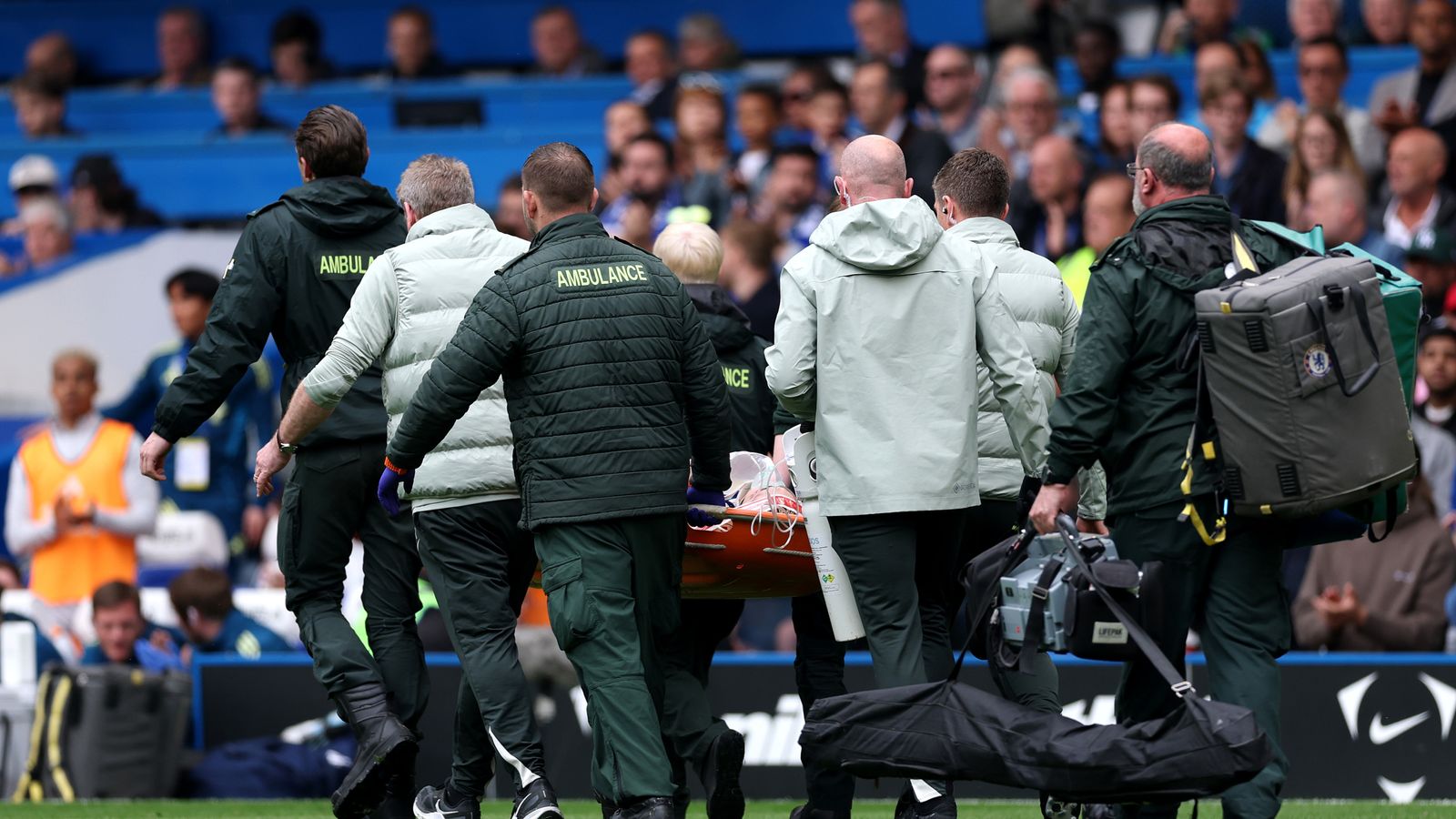
Jesse Derry's highly anticipated Chelsea debut lasted exactly 14 minutes. That was all the time the 18-year-old had to showcase his immense potential before a heavy collision against Nottingham Forest left him being stretchered off the Stamford Bridge turf. It was a deeply uncomfortable scene that instantly silenced the home crowd and completely altered the tactical shape of the match.
Before the injury, Derry was incredibly active. He managed 12 touches and completed all eight of his attempted passes in the middle third. He wasn't playing safe, either. Three of those passes were progressive, bypassing Forest's initial pressing line and feeding the wide players. For a teenager thrust into a volatile Premier League environment, the composure was striking.
The match was already taking on a familiar pattern before Derry went down. Chelsea held 68% possession in those opening exchanges. Forest sat extremely deep, dropping into a rigid 5-4-1 block out of possession. Their expected goals (xG) stood at a miserable 0.04 during that period. They came to defend, disrupt, and rely on set-pieces.
Derry was supposed to be the lock-pick. Operating as an advanced eight, he found pockets of space behind Forest's midfield duo. His intelligent movement created immediate overloads on the left flank. Then the collision happened, and Chelsea's entire attacking rhythm vanished alongside him.
A statistical void in the midfield
When Derry was replaced, Chelsea's average starting age remained remarkably young at 23.4 years, but they lost their technical connective tissue. The difference in ball progression was immediate and obvious. In the 30 minutes following his substitution, Chelsea's pass completion rate in the final third plummeted from 84% to 61%.
This isn't just about one young player going off injured. It exposes a recurring flaw in Enzo Maresca's squad building. Despite spending aggressively in the transfer market, Chelsea's midfield depth chart is worryingly fragile when injuries strike. They rely heavily on specific profiles to make their positional play work.
Forest aggressively targeted the center of the pitch once they realised Chelsea lacked a progressive ball-carrier. Ryan Yates and Nicolás Domínguez began stepping up 10 to 15 yards higher than they did in the opening stages. They recognised a weakness and exploited it without hesitation. It was a cynical but highly effective adjustment from the visitors.
The medical department under scrutiny
This incident brings Chelsea's grim injury record back into focus. Derry is now the fourth academy player to suffer a significant physical setback within weeks of joining the senior squad this season. A pattern is emerging, and it reflects poorly on the transition process between the youth ranks and the demands of the first team.
Are these young players being adequately conditioned for the violence of top-flight football? The data suggests otherwise. Chelsea have lost an astonishing 142 days to injury among players under the age of 21 in this campaign alone. That is not simply bad luck. It points to a systematic failure in physical preparation or load management.
The collision itself was a 50-50 challenge that happens a dozen times a match. But the speed and impact of Premier League football is a massive leap from Premier League 2. Forest's midfield plays with a level of physicality that requires absolute physical resilience. Derry clearly has the technical quality, but his body was not ready for that specific impact.
Tactical stagnation without the academy spark
Without Derry offering a dynamic option between the lines, Chelsea reverted to sterile possession. They circulated the ball in a giant horseshoe shape around the Forest penalty area. It was predictable, slow, and exactly what the away side wanted.
By the 60th minute, Chelsea had attempted 18 crosses, completing just two. They were completely devoid of central penetration. Forest absorbed the pressure effortlessly, clearing 24 balls from their penalty area without making a single defensive error. The away side's defensive block was never seriously pulled out of shape once Derry left the pitch.
It highlights a bizarre contradiction in Chelsea's current model. They have spent hundreds of millions of pounds assembling a global squad, yet their attacking fluency heavily depended on an 18-year-old making his first senior appearance. When that teenager went down, the £100m alternatives looked entirely devoid of ideas.
The path forward for player and club
The immediate concern is obviously Derry's physical recovery. An early career injury of this nature can severely derail a young player's trajectory. The physical rehabilitation is one thing, but the psychological hurdle of returning to the pitch after being stretchered off is entirely another.
For Chelsea, the match served as a grim reminder of their underlying vulnerability. They ended the game with 74% possession but generated just 0.82 non-penalty xG. They had the ball, but they did absolutely nothing meaningful with it. Forest walked away feeling completely justified in their negative approach.
Derry's 14-minute cameo was a brief glimpse into a highly functional midfield dynamic. His subsequent absence was a prolonged demonstration of exactly what Chelsea lack. The club must now wait for medical scans, but the tactical autopsy of this performance should be just as painful.