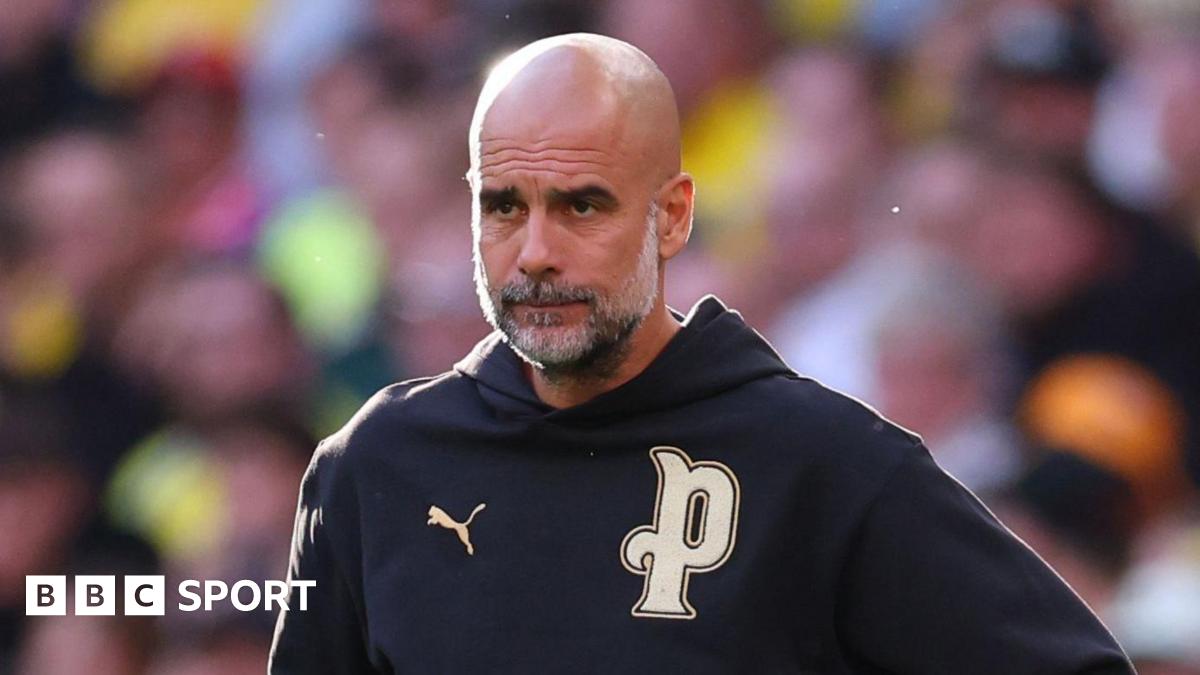
A Calendar Built to Break Teams
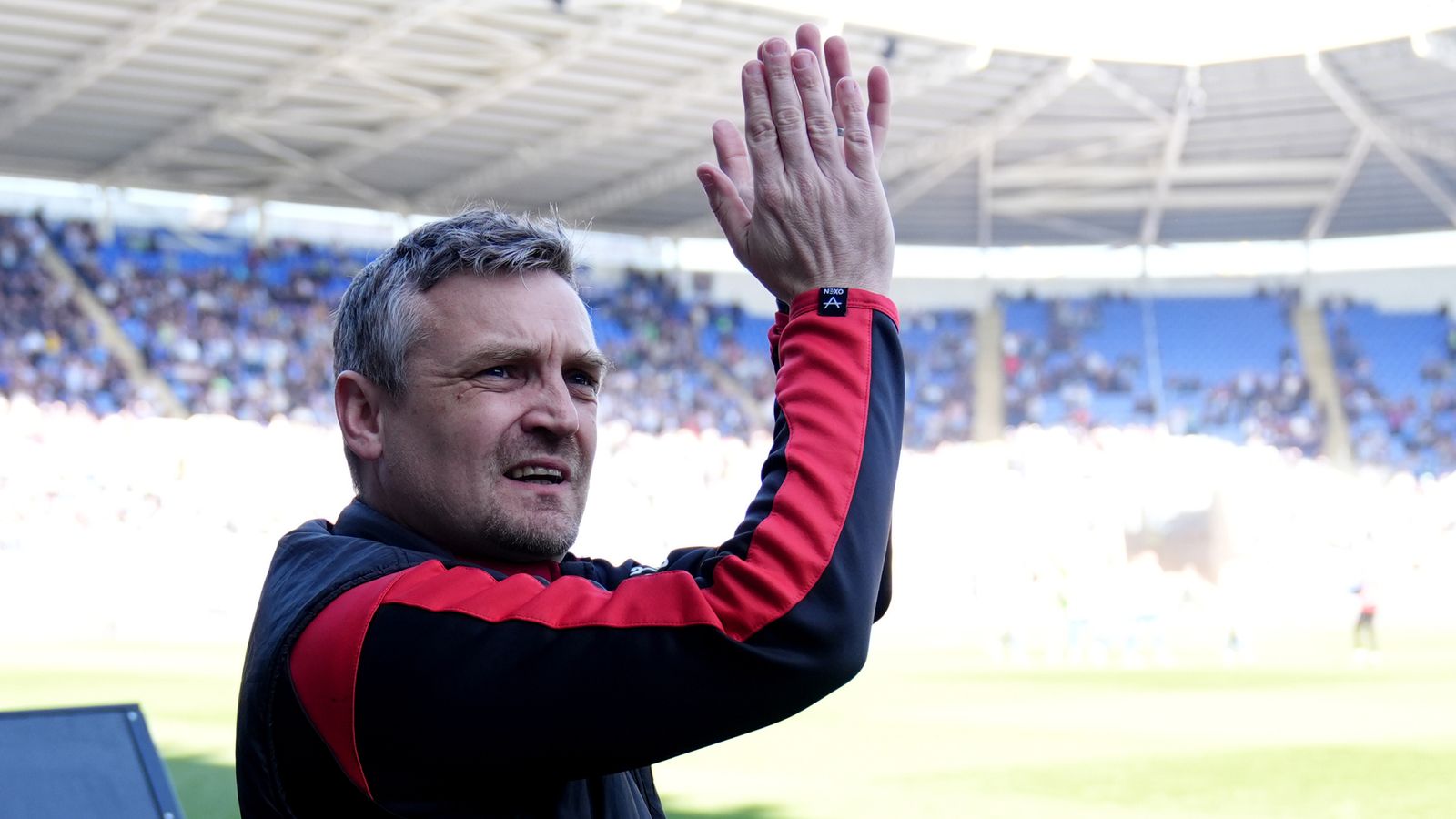
Guardiola is a manager obsessed with control. He dictates the pitch, the possession, the tempo, and the spaces. Yet, the one thing he cannot control is the calendar.
The authorities have handed Manchester City an absurd schedule. They face Chelsea in the FA Cup final at Wembley on May 16, and exactly three days later, they are forced to travel south to face Bournemouth. It is a logistical nightmare and a physical impossibility disguised as an end-of-season run-in.
This is not a new complaint. Guardiola has spent years highlighting the lack of recovery time. But this specific bottleneck feels uniquely punitive. As The Mirror reported, the Premier League has given the Manchester City boss a serious headache by insisting his side travel to the south coast so quickly after a major final.
Playing a cup final demands emotional and physical exhaustion. Wembley finals rarely end in 90 minutes of walking pace. They are frantic. Chelsea will ensure that this one is chaotic.
Chelsea's Tactical Trap
Chelsea have built their identity against top sides on rapid, vertical transitions. They want the game to be broken. When City lose the ball, Chelsea will leave two men high. They will bypass the midfield entirely.
This means City's rest-defense must be flawless.
Usually, Guardiola solves this by instructing his fullbacks to invert, packing the central areas. But Chelsea's wingers stay exceptionally wide. If City invert too aggressively, they leave massive avenues for the counter-attack.
It forces a compromise. A compromise means doubt, and doubt is exactly what Chelsea will prey upon.
Let's talk about Enzo Fernandez and Moises Caicedo. Chelsea spent a fortune assembling this pivot. While they have looked disjointed against lower-block teams, they excel when the opposition has the ball. Caicedo is a destroyer. He covers ground at an elite level.
Fernandez has the passing range to immediately spring the wingers the moment Caicedo wins the ball. This exact dynamic is what Guardiola fears.
He knows that if Kevin De Bruyne loses the ball in the final third, Fernandez only needs one touch to bypass City's entire midfield counter-press. This forces City's defenders to drop early. When defenders drop early, the space between the lines expands. It gives Chelsea's ball carriers room to turn and run.
To combat this, City will likely use John Stones stepping into midfield. Stones is arguably the most important tactical piece in Guardiola's current iteration of City. He blocks the central passing lanes for the counter-attack.
But Stones has a history of muscle injuries. Playing him in a grueling final and then asking him to recover for a high-intensity away game three days later is a massive risk. If Stones plays at Wembley, he surely sits out against Bournemouth.
The Wide Dilemma
Looking at the tactical matchups for the FA Cup final, the battle on the flanks will dictate everything. If Jeremy Doku starts on the left, he will look to isolate Malo Gusto or Reece James. Doku's raw acceleration is a cheat code, but his final ball is still inconsistent.
If Jack Grealish starts, City will have more control. Grealish rarely loses the ball. He draws fouls. He slows the game down, which might be exactly what Guardiola wants given the looming Bournemouth trip.
I expect Grealish to start the final. Guardiola will prioritize control over chaos. Chelsea will counter this by defending in a narrow 4-4-2. They will concede the wide areas and pack the box. They will dare City to cross.
City are not a crossing team. Erling Haaland is a monster in the air, but City prefer cutbacks from the byline. To get to the byline, City need to create overloads. This requires the central midfielders to make aggressive underlapping runs.
Those runs require energy. Energy that City might be trying to conserve. It is a vicious cycle. Conserve energy, and you can't break down Chelsea. Expend energy, and you get overrun by Bournemouth.
The Cost of a Small Squad
This is where the criticism of City's transfer strategy comes in. They let players like Ilkay Gundogan and Riyad Mahrez leave over the last few years, replacing them with profiles that don't quite offer the same immediate tactical security.
Gundogan was the ultimate tempo-setter. When games became chaotic, he slowed them down. City lack that specific profile now. They have direct runners and elite creators, but they sometimes lack the pause.
They also sold Cole Palmer to Chelsea. That decision looks worse every week. Palmer has been a revelation, and now he stands in their way at Wembley.
City banked on their academy players filling the gaps. However, the drop-off in reliability from a seasoned pro to a 20-year-old is steep.
We also have to analyze Rodri's workload. The Spanish midfielder cannot play every single minute of every competition, yet City look entirely disjointed without him. We saw him look visibly heavy-legged in April. If Mateo Kovacic is asked to anchor the midfield alone, the ball progression instantly slows down.
Kovacic carries the ball brilliantly through the first wave of pressure, but his passing range is considerably shorter than Rodri's. Against Chelsea's mid-block, you need line-breaking passes. You need someone who can find Phil Foden in the half-spaces instantly.
A versatile player can cover multiple positions, but they cannot play two games in 72 hours without a drop in intensity. The Bournemouth game will require fresh legs.
Who steps in? Matheus Nunes has struggled to grasp the complex tactical demands of Guardiola's system. Rico Lewis is brilliant but physically light for a bruising encounter in the midfield.
The Bournemouth Aftermath
This brings us to Andoni Iraola's pressing traps at Bournemouth. They do not sit deep. They press. They go man-to-man in the midfield.
Bournemouth will watch the FA Cup final, noting every sprint, every heavy collision, every minute of extra time. They will wait for a fatigued City side to arrive at the Vitality Stadium.
Iraola's team uses the touchline as an extra defender. They will allow City's center-backs to have the ball. They will wait until the ball is played to a fullback.
The moment the ball travels to the flank, Bournemouth's winger will sprint to close down the receiver, cutting off the return pass to the center-back. At the same time, the near-side central midfielder jumps onto City's pivot.
It is a coordinated, aggressive trap. To beat it, you need to play quickly and accurately through tight spaces.
You need peak mental sharpness. A tired mind makes slow decisions. A slow decision against Bournemouth's press results in a turnover in your own defensive third.
Guardiola knows this. He knows that the Bournemouth game is a tactical minefield perfectly designed to blow up a fatigued team.
If Guardiola plays his strongest XI against Chelsea, he risks dropping essential points against Bournemouth. If he rotates at Wembley, he risks surrendering a trophy.
The Television Dictatorship
There is no correct answer here. The FA and the Premier League should be embarrassed. They have engineered a scenario where one of the world's best teams is punished for being successful.
It is an indictment of the television broadcasting deals. The broadcasters dictate the schedule. They want City on Saturday, so they put them on Saturday, ignoring the Tuesday or Wednesday fixture context.
The Premier League bows to the broadcasters because they pay the bills. The product suffers. We want to see the best players at their peak physical condition. Instead, we watch them manage their energy, jogging when they should sprint, passing backward when they should dribble.
This is the reality of elite football. It is a test of endurance more than a test of skill.
City have the skill to beat Chelsea. They have the skill to beat Bournemouth. But the physical toll of Wembley will linger. Lactic acid does not care about tactical shapes.
The Verdict
If the final goes to extra time, Guardiola is in a nightmare scenario. Every additional minute at Wembley is a point dropped at Bournemouth.
This is why the first half at Wembley is so important. City need to establish dominance immediately. They cannot afford a slow start. They must put the game to bed.
I anticipate a tight, nervous FA Cup final. City will dominate possession, holding around 65% of the ball. Chelsea will have three or four massive chances on the counter. The outcome will depend entirely on their finishing.
City will edge Chelsea at Wembley. Let's call it 2-1, with a late winner from Phil Foden.
But the real cost will be paid three days later. A depleted, exhausted City will travel to Bournemouth and drop points. Expect a 1-1 draw on the south coast.
The Premier League will get their drama. The FA will get their showcase. And Manchester City will pay the physical price.