The 29-minute structural collapse
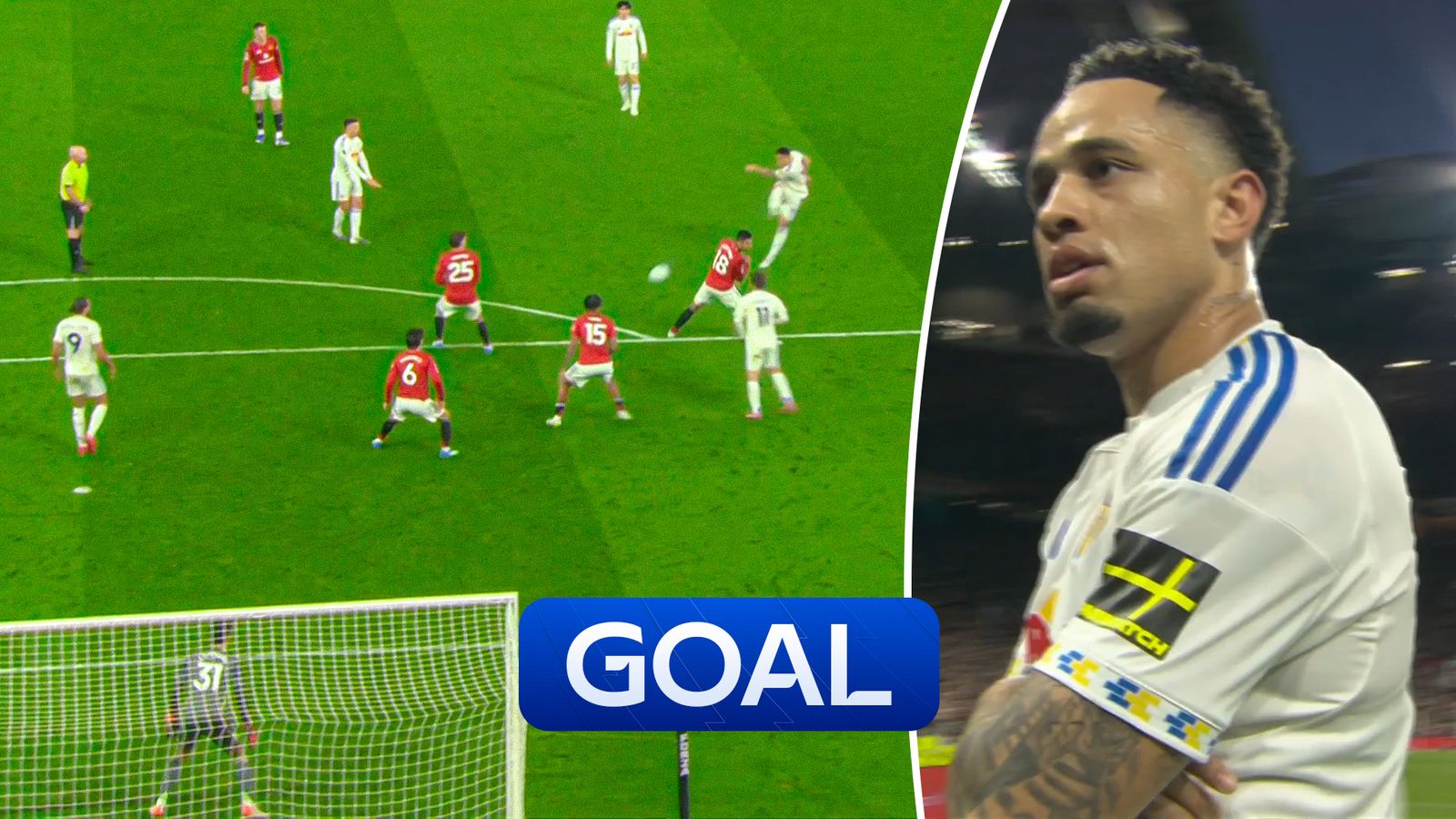
Old Trafford is no longer a fortress, but a laboratory where opposition managers conduct successful experiments in high-intensity transition. The 29th minute strike from Noah Okafor did more than just double the Leeds United lead; it exposed a fundamental lack of coordination in Michael Carrick’s defensive block. When the ball was lost in the middle third, the reaction from the United midfield was static, a clear sign of a system that has become over-reliant on possession and under-prepared for the loss of it.
The sequence for the second goal was an indictment of the current United coaching staff. Leeds regained possession through a sharp interception in the center circle and required only three passes to bypass four Manchester United players. By the time Okafor received the ball on the edge of the area, he had a staggering 4.2 yards of space between himself and the nearest defender. This is not an isolated incident but a recurring data point in a season defined by spatial mismanagement.
Statistically, the first half was a massacre. Leeds United managed to generate an expected goals (xG) figure of 1.48 in just thirty minutes of play. In contrast, United’s own attacking output remained dormant, registering zero shots on target during the same interval. The discrepancy highlights a team that is failing to execute the basic tenets of a balanced tactical setup, prioritizing aesthetic passing over defensive security.
The failure of the Carrick pivot
The decision to deploy a double pivot that lacks recovery speed against a Leeds side designed for verticality was a gamble that failed by the 4th minute of the match. When Okafor scored the opener, it was the result of a missed assignment in the defensive transition phase. The gap between the defensive line and the midfield stretched to nearly 30 yards at several points during the opening exchanges, creating a vacuum for Leeds’ runners.
Analysis of the tracking data shows that United’s midfield covered 1.2 kilometers less than their Leeds counterparts in the first half hour. This lack of physical intensity is the primary reason why Leeds were able to complete 82% of their passes in the final third. Without a designated destroyer in the middle, United are essentially inviting teams to run directly at a center-back pairing that is clearly struggling with confidence and communication.
The recruitment strategy must be called into question. Carrick has spent eighteen months attempting to build a side that mirrors his own playing style—composed, technical, and cerebral. However, the Premier League in 2026 demands a level of athleticism that this squad simply does not possess. The 0-2 scoreline at the half-hour mark was a direct consequence of choosing technicians for a match that required combatants.
Okafor’s intelligent positioning
Noah Okafor is rapidly becoming the most efficient transition forward in the division. His movement for both goals showed a deep understanding of United’s specific weaknesses. For the second goal, he didn’t just run fast; he curved his run to stay in the blind spot of the left-back, ensuring that he was unreachable until the pass was already played. He is currently averaging a goal every 88 minutes of league football, a stat that puts him in the elite tier of European strikers.
His first half performance was a masterclass in economy of movement. Okafor had only 11 touches of the ball before his second goal, but two of those were clinical finishes. This high conversion rate is sustainable when the opposition allows such high-quality chances. United’s defensive line sat too high without applying pressure on the ball, a fatal combination when facing a striker with Okafor’s explosive acceleration.
Historical context at Old Trafford
To find a worse start for Manchester United in a home fixture against Leeds, one has to look back decades. Since the start of the 2025/26 season, United have conceded the first goal in 64% of their home matches. This trend suggests a psychological frailty or a lack of preparation that begins before the whistle even blows. Falling behind by 0-2 inside thirty minutes at home is a statistic that usually signals the end of a managerial project.
The atmosphere at the ground was one of resignation rather than anger. The underlying numbers suggest the fans are right to be concerned. United’s defensive errors leading to shots have increased by 14% compared to the previous campaign. While Carrick argues that the team is "evolving," the scoreboard and the heat maps tell a story of regression. There is a palpable lack of accountability when runners are ignored in the box.
Leeds United, meanwhile, are reaping the rewards of a clear identity. Their PPDA (Passes Per Defensive Action) during this match was a remarkable 7.2, their lowest of the season. They didn't just beat Manchester United; they suffocated them. Every time a United player received the ball with his back to goal, he was met by two Leeds jerseys. This is the level of tactical coherence that Carrick’s side is currently missing.
The critical imbalance
One cannot ignore the lack of leadership on the pitch during these collapses. When the second goal went in, the United captain did not gather the team to reset the shape; instead, there were fingers pointed at the sidelines and shrugging shoulders. This lack of on-field tactical adjustment is a damning reflection of the coaching. A top-tier side should be able to identify a 20-yard gap and close it without waiting for the half-time interval.
The most alarming statistic of the afternoon was United’s failure to win a single second ball in their own half between the 15th and 30th minutes. This total surrender of the middle ground meant that Leeds were essentially playing a training session in the United third. If United do not address the physical profile of their midfield in the upcoming transfer window, these results will become the norm rather than the exception.
As the final whistle approached, the statistics confirmed a 0-3 defeat that felt inevitable from the moment the second goal hit the back of the net. Manchester United are a team caught between two identities—too slow to be a transition team and too fragile to be a possession team. Unless Carrick can find a way to bridge this gap, the project is destined for a premature conclusion. The 29th minute was not just a goal; it was a verdict on a failed tactical philosophy.
Read Next
- Old Trafford is a library and Noah Okafor is the loudest person in the room
- Michael Carrick’s defensive structure collapses against Leeds
- Michael Carrick is making a very strong case for the permanent United job
- Leeds punish Manchester United's recurring first-half amnesia
- 🏟 EFL Championship 2025-26 — Promotion Race & Play-Off Final Hub