The worst-case scenario has been narrowly avoided. Mohamed Salah will not quietly disappear into the medical room to end his Liverpool career.
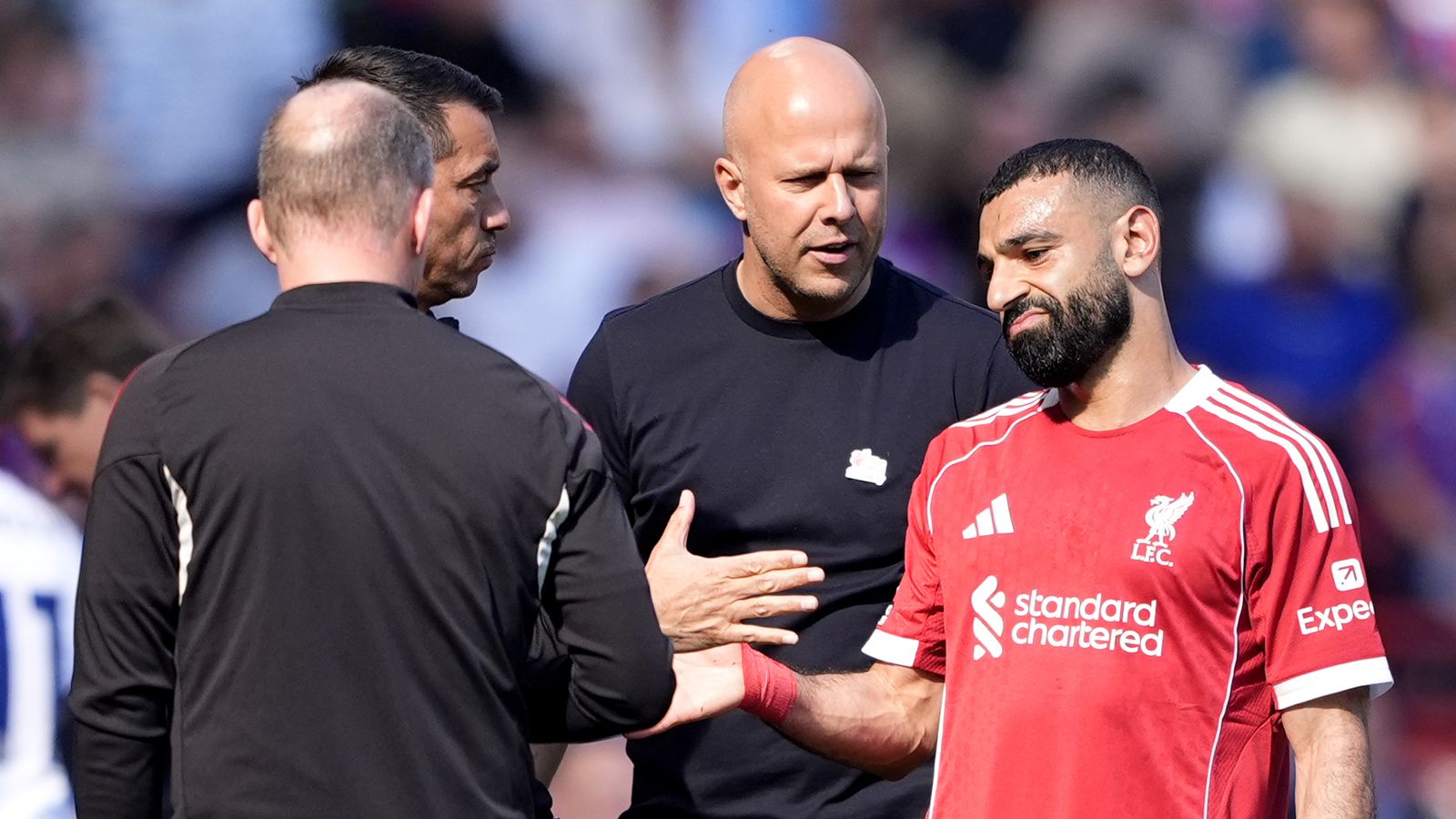
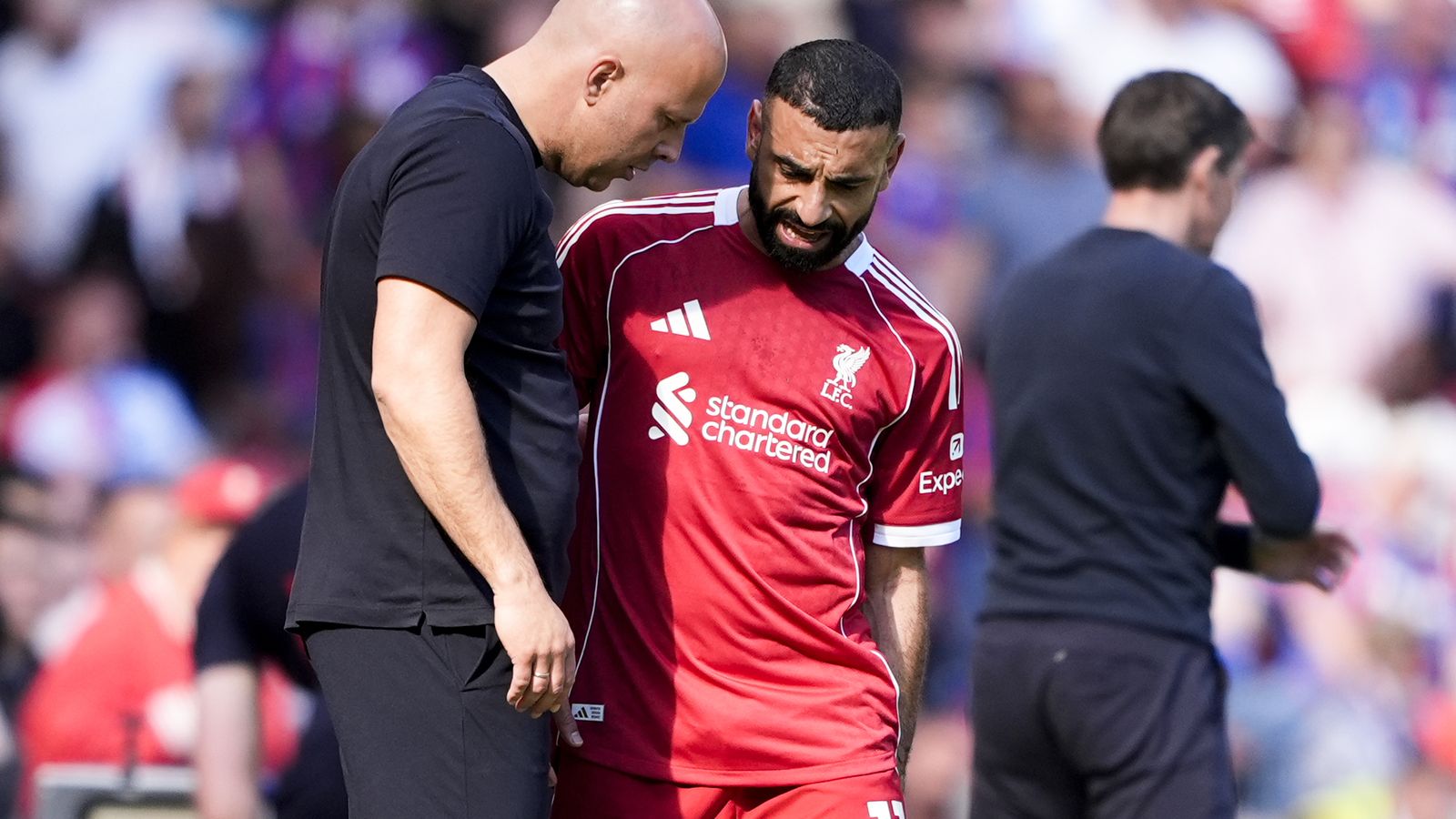
After limping off the pitch in the 59th minute against Crystal Palace on Saturday, the immediate fear was catastrophic. Fans inside Anfield held their collective breath. The Egyptian forward went down clutching his leg, signaling to the bench immediately. The grim reality of a quiet, anti-climactic exit loomed large over his highly publicized farewell season.
Those fears have officially eased. Medical assessments early this week confirmed that Salah sustained only a minor muscle injury. He is fully expected to play again before the end of the campaign, dodging a physiological bullet that threatened to ruin a historically significant goodbye.
According to reports from The Guardian, the diagnosis brought a massive wave of relief through the entire club structure. A minor muscle tweak rather than a severe tear changes the entire math of May.
But the fact that we even reached this sheer panic point highlights a glaring failure in Liverpool's workload management.
The Price of Absolute Reliance
You cannot run an explosive forward in his thirties into the ground and expect zero consequences. Liverpool's medical and coaching staff gambled. They pushed their star asset during a violently congested schedule, and on Saturday afternoon, the bill finally came due.
The timing against Crystal Palace was entirely predictable. Muscle injuries of this nature do not happen by accident. They are the cumulative result of fatigue, inadequate recovery windows, and desperate dependency on a single player for offensive output.
Liverpool leaned too hard on Salah. Again. The negative fallout is that they now face a critical stretch of the domestic calendar without their primary engine. This exposes a massive tactical blind spot that the coaching staff has ignored for months.
This is not a new story in the Premier League. We have seen this exact physical cliff before, particularly at Anfield.
When an aging winger loses that half-step of explosion, the surrounding muscles compensate. The hamstrings work twice as hard to generate force. The calves tighten up under the strain. Eventually, something snaps. We saw the exact same physical degradation with Fernando Torres during his final days on Merseyside. We watched Michael Owen's hamstrings betray him after years of over-reliance.
Salah has been famously durable throughout his career in England, functioning as an absolute machine of biomechanical efficiency. But biology remains undefeated.
The substitution against Palace was a jarring visual. Salah walking off the grass, head down, knowing the immediate implications of the tweak. It was the picture of a club that ultimately failed to protect its most valuable asset from his own competitive drive.
The Strategic Void
Now comes the tactical nightmare. How do you replace Mohamed Salah on a few days' notice?
The short answer is that you do not. You patch the bleeding hole and pray the ship does not sink before the final whistle of the season.
While Arsenal and Manchester City are locked in an intense 15-day title sprint, Liverpool find themselves navigating a sudden and terrifying offensive vacuum. The focus shifts entirely to a supporting cast that has frequently looked lost without their talisman.
Opposing defenses will immediately adjust their shapes. The gravitational pull of Salah on the right flank usually demands constant double-teams. It forces opposing left-backs to play a conservative, terrified game.
Without him, the pitch shrinks dramatically. Opponents can press higher up the field without the fear of a devastating counter-attack over the top. The passing lanes into the final third instantly clog up.
This minor muscle issue exposes the lack of a true succession plan. Liverpool have spent years allegedly preparing for life after Salah, yet the moment he steps off the grass, the attack looks entirely mortal and flat.
The club must now scramble to invent a temporary solution. Tactical shapes must shift. The midfield will be forced to shoulder a significantly heavier creative burden, a task they have historically struggled with when the Egyptian is watching from the stands.
The Roster Reality Check
While other clubs are desperately trying to justify massive expenditures on underperforming players, Liverpool are simply trying to keep their singular icon breathing.
The contrast across the league is staggering. Look at the noise surrounding Manchester United's desperate need for central midfield reinforcements, or the endless debates over the worst signings of the summer window. Clubs up and down the country have wasted hundreds of millions on players who cannot even get on the pitch due to poor form.
Liverpool’s problem is the exact opposite. Their reliance on a veteran winger exposes a structural fragility in their squad building. They have brilliant young talent, but nobody who commands the sheer terror that Salah inspires.
When a large signing flops, it is embarrassing. When a club’s entire offensive strategy crumbles because one veteran tweaks a hamstring, it is systemic negligence.
The medical staff cannot fix the roster. Their only objective is localized healing. They are working furiously behind the scenes with ultrasound treatments, hyperbaric oxygen therapy, and strictly controlled load management.
Every day without Salah is a day where the opposing teams breathe slightly easier. The fear factor is simply gone.
This period also serves as a massive audition for the remaining attackers. With the Egyptian sidelined, the pressure instantly transfers to the rest of the forward line. They are no longer the supporting cast; they are the entire show. If they fail to produce against deep-sitting defenses over the next two weeks, the narrative around Liverpool’s future will turn toxic very quickly.
The Anatomy of a Farewell
There is a massive psychological component to this injury that cannot be ignored. This is Salah's farewell season. Every single match is supposed to be a celebration of his legacy.
Football, however, is rarely sentimental. It does not care about narrative endings or storybook goodbyes.
Just ask Steven Gerrard. His final match in a Liverpool shirt was a miserable, humiliating defeat to Stoke City. But at least he was physically on the pitch to absorb it.
A quiet exit via the rehabilitation pool is the ultimate indignity for a global superstar. It robs the paying fans of closure. It robs the player of his final ovation.
The relief surrounding his diagnosis is immense. The medical staff has bought the narrative a massive lifeline.
A minor muscle injury typically carries a strict recovery timeline. This means he will miss immediate domestic action, but the door remains wide open for a dramatic return in the final fixtures of the month.
This completely changes the atmosphere around the training ground. It shifts the collective mood from mourning to high-stakes anticipation.
The final home game of the season will now serve as a hard target date. A desperate race against time.
Rehabilitation protocols will be heavily accelerated, but they must be managed flawlessly. A secondary tear during a rushed comeback would be catastrophic. The medical team faces a brutal calculation every single morning: push hard enough to get him back in shape, but not so hard that the muscle fibers rip again.
It is a tightrope walk over a razor blade.
The Broader Industry Impact
Salah's medical situation also sends a significant ripple through the broader European transfer market.
Clubs watching from the outside are paying microscopic attention to his physical degradation. A major structural injury, like an ACL tear or an Achilles rupture, would have immediately tanked his market value and altered his summer plans completely.
A minor tweak changes nothing structurally. The farewell tour proceeds. The massive summer market remains entirely intact.
But it serves as a stark warning to future employers. The grueling reality of elite football takes no prisoners, and investing heavily in aging wingers carries a permanent, lingering risk.
The injury also removes a massive layer of star power from the English game just as the season reaches its climax. The recent Champions League epic between PSG and Bayern Munich already highlighted the lack of pure adventure and star-driven chaos in English club football right now. Losing Salah for any stretch of the run-in only makes the Premier League product slightly more sterile.
As Sky Sports firmly confirmed, the expectation of a return is solid. But expectations and reality often collide violently in professional sports.
Every single sprint in training will be meticulously monitored. Every ice bath perfectly timed.
Liverpool have exactly one job right now. Get Mohamed Salah to the finish line in one piece.
The fans deserve it. The player undeniably deserves it. But the club has to earn it through flawless, uncompromising medical execution over the next few weeks.
The margin for error is officially zero.
Read Next