The left-sided dead zone
Mikel Arteta has spent the better part of three years obsessing over control. Arsenal's manager views chaos as the enemy, constantly tweaking his structure to suffocate opponents in the opposition half. Yet, as the domestic season hits the final stretch this May, control alone is no longer enough.
Teams have figured out the rhythm. They sit deep, compact the central zones, and challenge Arsenal to play through a forest of legs. The template to frustrate Arteta's side has been widely distributed across the division. You clog the middle, force the ball wide, and deal with predictable crosses.
For much of this grueling campaign, the Gunners have looked devoid of answers. The left-sided number eight role devolved into a tactical dead zone. The spacing was consistently awkward, and the passing angles were too flat to dissect a low block.
Granit Xhaka is long gone, Kai Havertz was repurposed higher up the pitch as a false nine, and the rotating cast of stop-gaps failed to consistently break the lines. Thomas Partey's physical decline left a gaping hole in the squad's ability to transition the ball under pressure. Arsenal needed someone who could accept the ball in tight spaces, draw a marker, and manipulate the defensive block without turning the ball over.
Rewiring the midfield mechanics
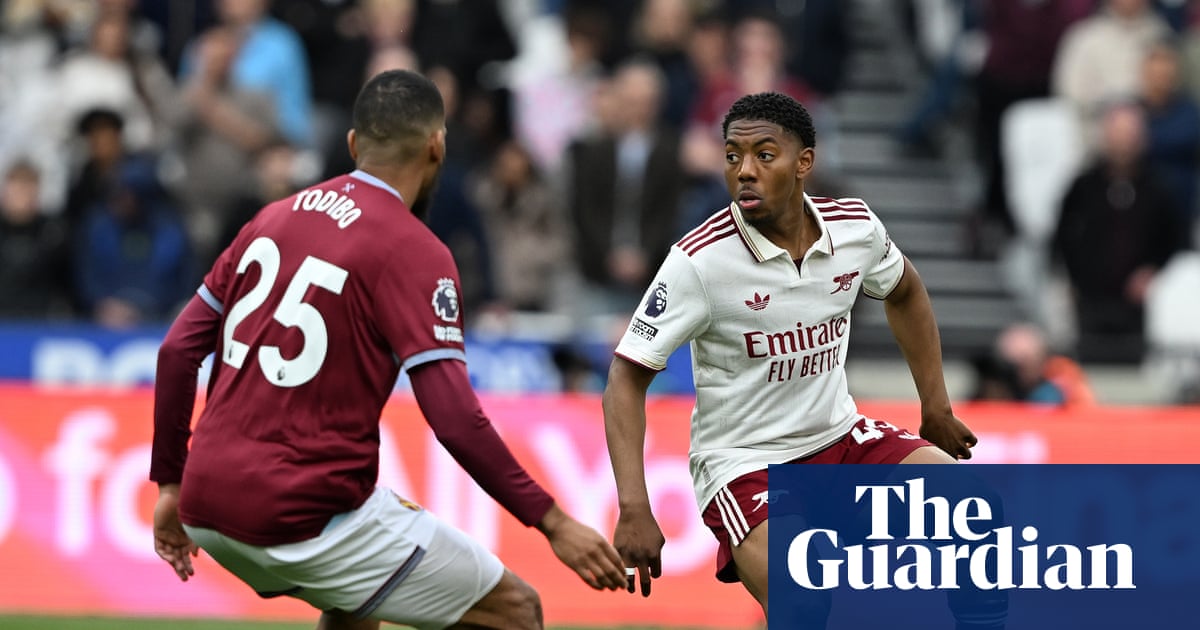
Enter Myles Lewis-Skelly. At 19 years old, thrust into the spotlight at a make-or-break stage of the season, the teenager has completely rewired the mechanics of Arteta's midfield. This has not been an easy road. The physical jump to the senior men's game is brutal.
He endured a tough season, largely spent on the fringes or navigating the grueling physical demands of youth football, waiting patiently for an opening. Now, as The Guardian recently highlighted, he is writing his own scripts and acting as the tactical skeleton key the senior squad desperately required to unlock stubborn low blocks.
To understand his impact, you have to watch his neck. Before Lewis-Skelly even receives a pass, he scans the pitch three or four times. He maps the proximity of the nearest defender, the angle of the passing lane, and the position of his wingers.
When the ball arrives, he does not stop it dead and kill the momentum. He lets the ball travel across his body, opening his hips to receive on the back foot. That single, fluid motion is the hardest skill to teach a young midfielder, yet he executes it with the calmness of a ten-year veteran.
It instantly eliminates the pressing forward and opens up a 180-degree view of the final third. Arsenal’s attacks immediately accelerate. Instead of recycling possession back to the central defenders in a predictable horseshoe shape, Lewis-Skelly fires zipped passes between the opposition's midfield and defensive lines.
His positional discipline alters the entire geometry of the left flank. For months, Gabriel Martinelli looked isolated, constantly receiving the ball with his back to goal and two defenders breathing down his neck. Lewis-Skelly changes that dynamic by anchoring himself in the left half-space.
He attracts the opposition's right-sided central midfielder, which forces the opposing full-back to tuck inside. Suddenly, Martinelli has an extra yard of grass on the touchline. It sounds like a minor detail, but at the elite level, an extra yard is a gaping chasm.
The teenager’s bravery on the ball forces defenses to compress centrally. When they do, the out-ball to the winger becomes a lethal weapon rather than a predictable escape valve. Arsenal can finally stretch the pitch horizontally.
The transition vulnerability
However, we cannot ignore the defensive frailties that accompany throwing a 19-year-old into a high-stakes title run-in. Lewis-Skelly is far from the finished product off the ball. In defensive transition, his recovery runs can be sluggish.
He has a terrible habit of ball-watching when possession turns over quickly, leaving his full-back totally exposed to two-on-one overloads on the flank. His initial reaction to a lost ball is sometimes to drop deep rather than aggressively counter-press, which breaks the team's defensive cohesion.
Against direct, counter-attacking sides, that half-second of hesitation is a massive liability. If he pushes too high to support the press and misses the initial tackle, the gap between him and Declan Rice becomes a runway for opposition ball-carriers. Arteta is gambling that the offensive upside outweighs these transition risks.
The mental resilience required to step into this environment is staggering. Lewis-Skelly recently framed his journey and sudden integration into the starting eleven as something akin to an act of God. It is a dramatic characterization, but it speaks to the emotional whiplash of his season.
You go from the periphery to the exact center of a demanding tactical system in the blink of an eye. The noise surrounding him is already deafening. Ian Wright, never one to hide his emotions, offered his typical heart-on-the-sleeve hyperbole regarding the academy graduate's breakthrough.
The fanbase is desperate for a homegrown hero to anchor the midfield, projecting their hopes onto a player who only recently learned to drive. The pressure is immense, and it is going to mount with every passing week.
The Crystal Palace trap
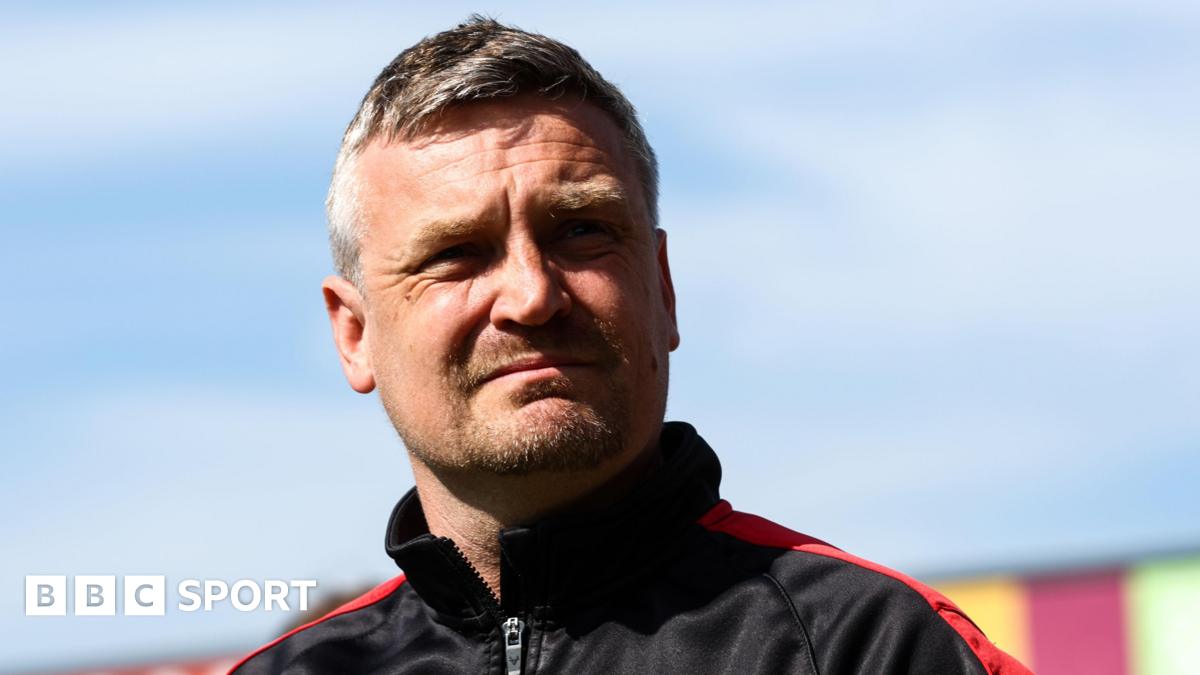
This weekend’s clash against Crystal Palace will be the ultimate acid test for this new midfield configuration. Oliver Glasner has transformed Palace into a pressing machine. They deploy a highly aggressive 3-4-2-1 shape, specifically designed to congest the middle third and force turnovers.
Their twin number tens will sit right on top of Lewis-Skelly and Rice, aiming to disrupt their rhythm from the first whistle. Palace will not afford the teenager the luxury of time to scan and dictate. They set aggressive pressing traps in the half-spaces, using the wing-backs to jump the passing lanes the moment the ball moves backward.
If Lewis-Skelly takes an extra touch, or if his scanning fails him for a split second, they will swallow him whole and break toward the Arsenal penalty area. Arteta will likely instruct his full-backs to invert aggressively, creating a box midfield to outnumber Palace centrally.
This places even more responsibility on the young midfielder. He will be tasked with pulling the strings from deeper areas, trying to bait the Palace press before clipping passes over their high line into the channels.
The data suggests he is ready for this specific challenge. In his recent outings, his progressive pass completion rate hovered around 89%, a remarkable figure for a player operating in the most congested areas of the pitch.
He does not just keep the ball; he moves it with intent. For a player who cost Arsenal £0 in transfer fees, the return on investment is already staggering. But data only tells half the story.
Football is played on grass, in front of sixty thousand screaming fans, against opponents actively trying to ruin your afternoon. The Palace midfield will test his physicality. They will leave an elbow in, step on his toes, and drag him to the floor.
How he reacts to the dark arts will dictate the flow of the game. If he shrinks, Arsenal's buildup will stall, and Palace will dictate the tempo. If he stands his ground, uses his body to shield the ball, and continues to demand possession under pressure, Arsenal will slice through the high press.
The final verdict
The entire tactical battle hinges on a teenager keeping his head while surrounded by chaos. I expect Palace to draw first blood. Their transition game is too sharp, and they will likely expose Lewis-Skelly’s defensive positioning early on.
But Arsenal's offensive ceiling is simply too high with him acting as the primary progressor from the middle third. The passing angles he creates are too difficult to defend for ninety minutes without someone eventually making a mistake. The teenager will consistently ask questions of the Palace defensive line until it inevitably breaks.
He has the vision to dismantle Glasner’s block, and the attackers ahead of him are ruthless. Arsenal will weather an early storm before taking complete control of the midfield in the second half.
Prediction: Arsenal win 2-1. Expect Lewis-Skelly to be at fault for a transition chance, but ultimately provide the pre-assist that breaks the deadlock late in the game. He is writing his own scripts now.
Read Next
- De Zerbi's rant masks a fatal tactical flaw ahead of the derby
- Arsenal's title hopes hang by a thread ahead of St James' Park showdown
- Myles Lewis-Skelly shuts down exit talk as Arsenal embrace title hostility
- Why the West Ham VAR drama has broken Premier League social media
- ⭐ UCL 2026 — Champions League Quarter-Finals Hub