The Medical Verdict at City Ground
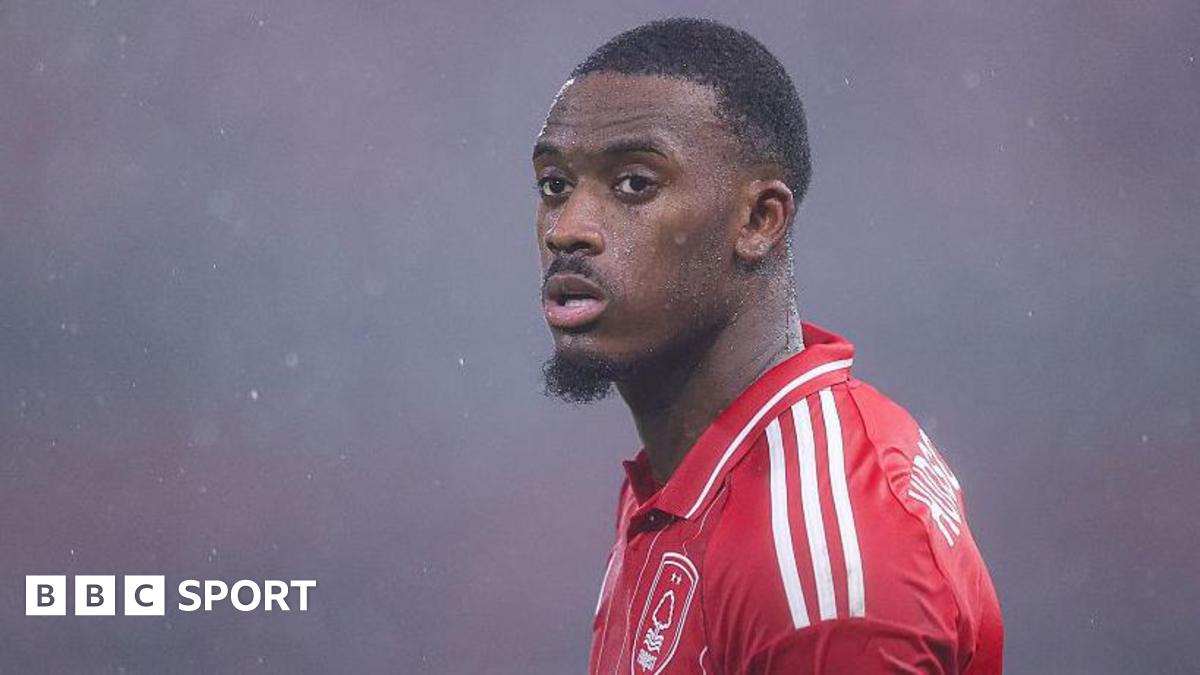
Nottingham Forest's push for a strong finish to the 2025/26 campaign hit a significant roadblock on Tuesday morning. The club confirmed that Callum Hudson-Odoi has undergone successful leg surgery, a move that officially draws a curtain on his season. While the club did not specify the exact nature of the injury beyond the broad "leg" classification, the timing is catastrophic for Nuno Espirito Santo’s tactical setup.
Surgery at this stage of the year suggests a structural issue that could no longer be managed through conservative treatment. Hudson-Odoi has been a frequent presence on the Forest treatment table, but this latest development removes him from the rotation during the most high-stakes month of the football calendar. The medical staff at the City Ground have reportedly been managing his load for weeks, but the decision to go under the knife indicates a long-term view on his recovery.
The recovery timeline for such procedures typically stretches into the ten-to-twelve-week window. This puts Hudson-Odoi on a trajectory to return just in time for the 2026/27 pre-season, completely ruling him out of any late-season heroics or a potential call-up for international duty ahead of the summer’s FIFA World Cup. For a player who was finally finding a rhythm in the East Midlands, the timing is nothing short of brutal.
Tactical Reconfiguration under Nuno
Losing Hudson-Odoi isn't just about losing a body in the squad; it’s about losing the specific verticality he provides. Under Nuno Espirito Santo, Forest have leaned heavily on a transition-based 4-2-3-1 where the wingers are expected to carry the ball over long distances. Hudson-Odoi’s ability to isolate full-backs and cut inside on his stronger right foot has been a primary source of chance creation for Morgan Gibbs-White to exploit in the central pockets.
Without him, the burden shifts almost entirely to Anthony Elanga and Jota Silva. Elanga provides raw pace, but he lacks the nuanced ball-carrying and deceptive change of pace that Hudson-Odoi mastered during his time at Chelsea. We are likely to see a more direct, perhaps less sophisticated, Forest attack in the coming weeks. Nuno may even be forced to look at a 3-4-3 system to provide more defensive security, knowing that his team has lost a player capable of relieving pressure by drawing fouls in the final third.
There is also the question of squad depth. Forest’s recruitment strategy has often been criticized for its scattergun nature, but in moments like this, having a bloated roster actually pays dividends. However, the drop-off in quality from a fit Hudson-Odoi to the bench options is steep. The lack of a direct replacement with the same profile means Forest will likely become more predictable, leaning on set-pieces and Gibbs-White's individual brilliance to navigate the final five fixtures of the season.
The Recurring Nightmare of Fitness
For Hudson-Odoi, this latest setback is part of a frustratingly familiar pattern. Since his breakthrough at Chelsea, his career has been defined more by the time spent in the recovery room than the time spent on the grass. The shadow of that 2019 Achilles injury still looms large over his physical profile. He has lost that explosive first yard of pace that made him one of Europe's most coveted teenagers, and he has had to reinvent himself as a more technical, measured winger.
This is the third consecutive season where Hudson-Odoi has missed a significant block of games due to lower-limb issues. While the club is optimistic about the success of this specific surgery, the accumulation of scar tissue—both literal and metaphorical—cannot be ignored. Elite football is increasingly moving toward a model of high-intensity, repeated sprinting, a demand that Hudson-Odoi’s body seems to struggle with over the course of a 38-game schedule.
Forest took a calculated gamble when they brought him in from Chelsea. The low initial fee was a reflection of his medical history, and while he has provided moments of genuine quality, the "best ability is availability" mantra continues to haunt his tenure. There is a legitimate concern that he may never be a 3,000-minute-per-season player again. If Forest want to move into the top half of the table, they cannot afford to have their primary creative outlet missing for 30 percent of the season every year.
Strategic Implications and Financial Fallout
The timing of this surgery also complicates Forest’s summer strategy. With the 2026 World Cup on the horizon and the transfer market expected to be volatile, Hudson-Odoi was one of the few assets Forest could have potentially flipped for a significant profit to satisfy Profit and Sustainability Rules (PSR). A player coming off leg surgery with a history of soft-tissue issues is a hard sell in the current market.
Instead, Forest are now locked into a situation where they must support his rehabilitation while simultaneously searching for a more reliable alternative in the market. This creates a financial strain. You cannot go into a new season with Hudson-Odoi as your only elite left-sided option, given the risks. The recruitment team will now have to pivot, likely looking for a high-upside younger winger who can share the load, which further eats into a budget already under scrutiny from the league's financial watchdogs.
Furthermore, the impact on team morale shouldn't be understated. Hudson-Odoi is a popular figure in the dressing room and a player the fans at the City Ground have truly taken to. Seeing him sidelined for another "run-in" feels like a deflating end to a season that has had its fair share of ups and downs. The atmosphere during the final home games may suffer without the anticipation that builds whenever he picks up the ball on the flank.
The Critical Observation: A Lack of Contingency
If there is a criticism to be leveled at the Forest hierarchy, it is the failure to build a tactical system that functions without its stars. When Chris Wood was out, the goals dried up. When Gibbs-White is marked out of a game, the creativity vanishes. Now, with Hudson-Odoi gone, the left side of the pitch looks remarkably barren. Relying on a player with a known injury record to carry the creative burden for an entire season was always a high-risk strategy.
The coaching staff must take some responsibility for the load management. While they claim to have been careful, the fact that surgery was required suggests a breakdown in the preventative side of the medical department. Forest have invested heavily in their training facilities, but the results on the pitch—specifically regarding soft tissue and recurring bone issues—remain underwhelming compared to their mid-table rivals.
As we look toward the final games of April and the start of May, Forest will have to find goals from unconventional sources. The defensive unit, led by Murillo, will need to be perfect, because the attacking output just took a 25 percent hit in terms of expected goals and assists. This isn't just an injury; it's a test of the club's entire structural integrity. If they fall away in these final weeks, the decision to delay this surgery—or the failure to prevent it—will be the primary talking point of the post-season post-mortem.