Rangers found their enforcer and Scotland's midfield finally matured
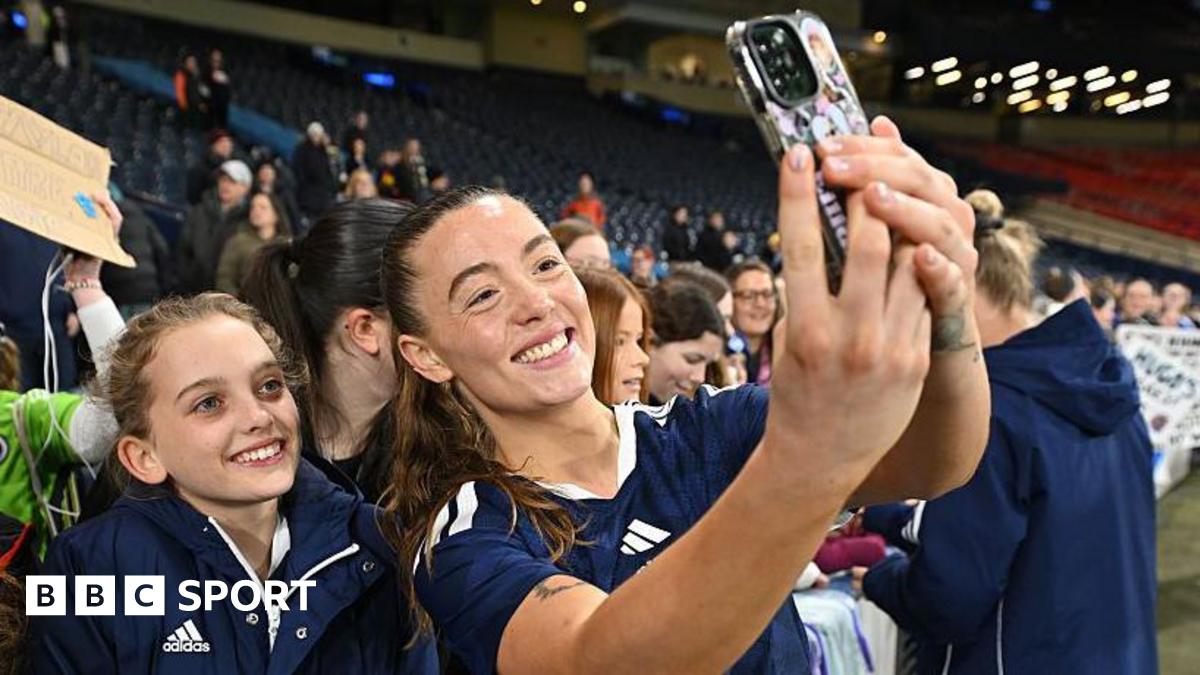
The anatomy of a chaotic afternoon at Falkirk
Midway through a frantic second half at Falkirk yesterday, the away end found its voice for a player who recently looked entirely surplus to requirements. The name Nico Raskin rolled down the terraces. It was not a cheer of technical appreciation or a reaction to a 40-yard diagonal pass. It was an acknowledgment of pure, unadulterated graft.
In the Scottish Premiership, graft is a currency that never depreciates. You can arrive with serious technical pedigree, which Raskin certainly did when he joined from Standard Liège. But if you cannot win the second ball when the game breaks down into a scrap, you will be bypassed completely.
For a long stretch of this season, Raskin was an outcast. He looked too lightweight for the winter slog and too undisciplined to anchor a structured double pivot. Yet, as the title race hits its absolute boiling point here in mid-April, he has inexplicably become the exact type of enforcer Rangers desperately lacked.
To understand the tactical shift, look at how Rangers were dropping points in November and December. They were completely porous in transition. The central midfield would vacate the middle third to press high, but without coordinated triggers, they left massive acreage behind them.
Opposing teams figured out that one direct ball over the press would expose the center-backs instantly. Raskin was often the culprit. He chased the ball like an excited puppy rather than holding his defensive zone.
Against Falkirk, his discipline was stark. The pitch was heavy, the second half descended into a frantic end-to-end mess, and Rangers were losing their grip. Instead of joining the chaos, Raskin sat deep in the pocket.
He broke up play and took the cynical fouls. He moved the ball laterally to kill the tempo. As the Daily Mail noted, he drove Rangers forward by doing the dirty work. It was not pretty, but it wins titles in Scotland.
The lower league crucible
The fact that this revelation happened at Falkirk is somewhat poetic. The lower leagues in Scotland operate as a brutal proving ground. The Championship and League One are characterized by an unrelenting physicality that shocks academy graduates and foreign imports alike.
A recent BBC lower-league lowdown highlighted this exact dynamic. The technical gap between the top tier and the rest might be shrinking, but the physical demands remain monstrous. Falkirk themselves have navigated this labyrinth to get back into meaningful contention.
Their performance against Rangers was not just a plucky underdog effort. It was a tactical challenge that forced Rangers to abandon their preferred passing lanes entirely. Falkirk compressed the space between the lines so aggressively that the attacking midfielders were suffocated.
Raskin adapted when others panicked. Instead of forcing passes through impossibly tight corridors, he simplified his game. He won the duels. His tackle success rate hit 71 percent in the second half, spiking exactly when his team needed stability.
This is a vital lesson for any player trying to survive in this environment. When the tactical system fails, you must fall back on your defensive fundamentals. Raskin’s reinvention from a peripheral luxury player to a gritty enforcer is the most significant tactical development of Rangers' season.
Miri Taylor and the ghost of 2019
While Rangers bludgeon their way through the spring, the Scottish Women's National Team is navigating a different kind of pressure. The ghost of the 2019 World Cup still hangs over this squad. Missing the 2023 tournament was a structural failure as much as a lack of talent.
The infamous playoff defeat to Ireland at Hampden exposed a massive flaw. The team lacked a steadying hand in the middle of the park when the emotional temperature of the game spiked. Now, the push for the 2027 World Cup is fully underway.
The narrative within the camp has forcibly shifted. They can no longer rely on raw potential; they demand tactical maturity. Nobody embodies that shift quite like Miri Taylor.
"I wasn't mature enough for Scotland, now I can make my gran proud."
In a remarkably candid interview with the BBC, Taylor admitted she was not in the right headspace for international football earlier in her career. That kind of honesty is incredibly rare in modern sports.
Most players will bluff their way through poor form, citing minor knocks or vague tactical misunderstandings. Taylor owned her lack of readiness. She acknowledged that she simply was not mentally prepared for the international stage.
Her move to Aston Villa has clearly changed the calculus. The Women's Super League is an unforgiving environment. If you are not mentally switched on for every second of the match, you are exposed immediately.
At Villa, Taylor has been forced to refine her game. She has had to speed up her decision-making under high-pressing schemes. More importantly, she learned how to dictate play rather than merely participating in the fringes of a match.
The metronome Scotland desperately needs
Taylor’s public declaration that she wants to make her gran proud provides a neat human-interest angle. On the pitch, however, it translates to a player who has finally stopped rushing her development. She plays with the patience of a central midfielder who understands the gravity of her role.
Aston Villa’s tactical setup heavily influences Taylor’s development. Under their current system, the midfield is often asked to operate with numerical disadvantages against possession-heavy sides. Taylor has to constantly scan her blind spots.
She is learning the dark arts of positioning. She knows how to cut off a passing lane to the striker while remaining tight enough to press the opposing eight. This kind of dual-responsibility defending is exactly what Scotland lacked in their previous qualification cycle.
Against high-caliber European opponents, Scotland's midfield would often flatten out into a straight line. This made them incredibly easy to bypass with a single line-breaking pass. If Taylor can replicate her club form, she provides Pedro Martinez Losa with a tactical cheat code.
He can deploy a more aggressive high press knowing he has a reliable safety net behind it. The entire shape of the national team changes when the holding midfielder is entirely comfortable receiving the ball under extreme duress. In international football, managers have limited training time to drill cohesive pressing traps.
Because of this, the midfield anchor dictates everything. For years, Scotland produced outstanding wide players and combative center-backs. But the modern game, at both the domestic and international level, is decided entirely in the middle third.
If you cannot control the transition, you cannot control the game. This has been the SWNT's fatal flaw against top-tier European opposition. They can match the physical intensity of elite teams for 45 minutes.
Eventually, however, their lack of ball retention leads to defensive collapse. Taylor's newfound maturity gives Scotland a potential tempo-setter to fix this glaring issue. She isn't just an athlete covering ground; she is developing into a metronome.
If Scotland are going to qualify for 2027 and end the drought since 2019, they need players who do not panic. They need players who can receive the ball on the half-turn, absorb a hit, and recycle possession efficiently.
The converging paths of April football
It is fascinating to watch these two separate strands of Scottish football pivot on the exact same axis. Raskin offers the exact same tactical luxury to his manager at Ibrox. When you have a player winning individual duels efficiently, you can afford to push your fullbacks higher up the pitch.
James Tavernier’s attacking numbers are directly correlated to the defensive stability behind him. For months, Tavernier was exposed because the midfield cover was practically non-existent. With Raskin dropping into the right half-spaces to cover the transitions, Rangers look structurally sound again.
It is not a coincidence that their form has stabilized just as the pressure of the run-in reaches its peak. You build title-winning sides from the base of the midfield outward. Both teams found their answers by looking at the ugliest parts of the pitch.
Look at the calendar. We are inside the final stretch of the domestic season, with the UCL quarter-finals literally concluding today. Legs are heavy across the continent. The pitches are dry, slow, and unforgiving.
The meticulous tactical whiteboards drawn up in August mean significantly less now than sheer willpower and game intelligence. Falkirk was a glaring warning sign for Rangers. They looked disjointed for long, agonizing periods.
But they survived because one player decided to stop playing expansive football and start winning ugly battles. That is the enforcer's job. It is a thankless task until the away end starts chanting your name in the 78th minute.
For the SWNT, the timeline is longer, but the urgency is identical. The domestic game in Scotland is still trying to professionalize fully. This makes the reliance on exports like Taylor an absolute necessity.
You do not get to the World Cup on good vibes and media hype. You get there by producing players who have been forged in highly competitive, high-stakes environments. Aston Villa is providing that exact crucible for Taylor right now.
The final analysis
Scottish football is frequently mocked by outsiders for its chaos. But within that chaos, players who can impose order are worth their weight in gold. Raskin and Taylor are fighting entirely different battles in different competitions, but their developmental arcs are striking.
They are the ones cutting through the noise. They recognize that talent without maturity is essentially useless when the pressure mounts. As Rangers push for a title and Scotland gears up for a brutal qualification campaign, the spotlight will inevitably fall on the goalscorers.
But look closer. Look at the engine room. If Rangers lift the trophy in May, it will be because Nico Raskin stopped being an outcast and started being a nightmare to play against.
And if Scotland books a ticket to the 2027 World Cup, it will be because Miri Taylor finally found the headspace to run the show.
Read Next
- Nico Raskin has turned his Rangers career around just in time for the summer window
- Rangers escalate referee feud as Celtic legend calls the title race
- Rangers' referee summit and Celtic's title surrender are tearing fans apart
- Rangers are scoring for fun but the defensive rot is becoming impossible to ignore
- ⚽ Scottish Premiership 2025-26 — Celtic vs Rangers Hub
Nike Premier League Pitch Soccer Ball
A highly visible, durable training ball for everyday play.
More Coverage
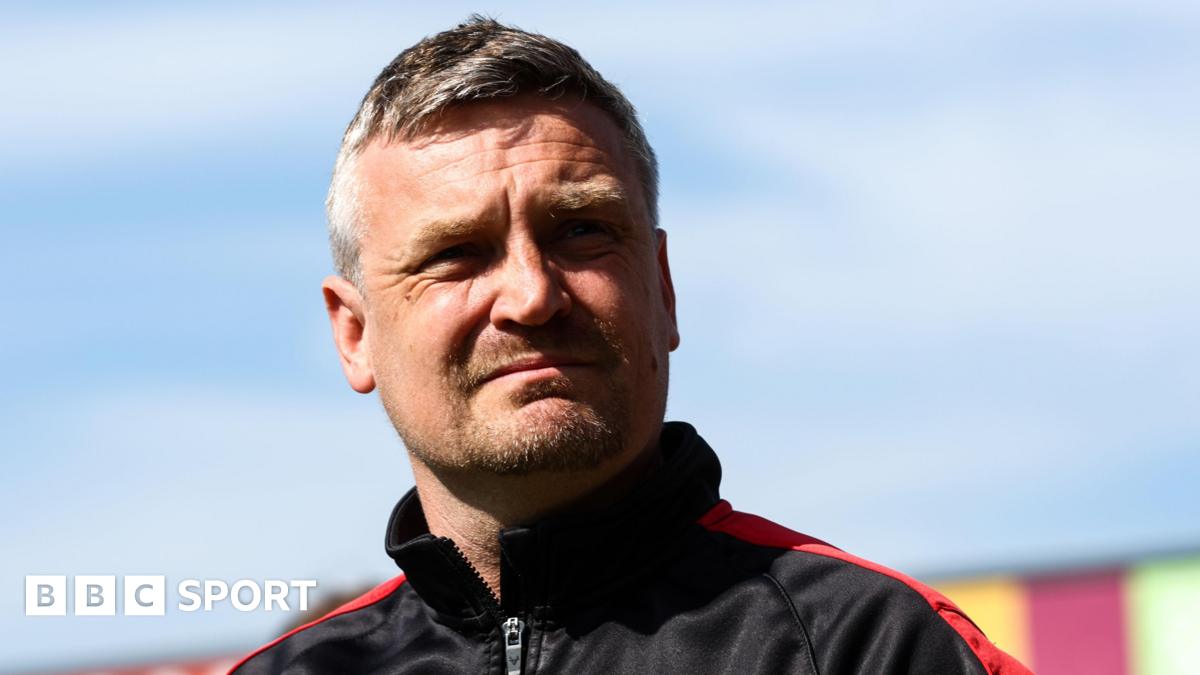
Michael Skubala takes the hot seat at Ashton Gate
3 hours ago
VAR consistency concerns mount as Scottish Premiership season hits final stretch
3 hours ago
World Sevens brings high-octane chaos before the World Cup fever hits
3 hours ago
Why Manchester United’s pursuit of Ederson makes tactical sense
11 hours ago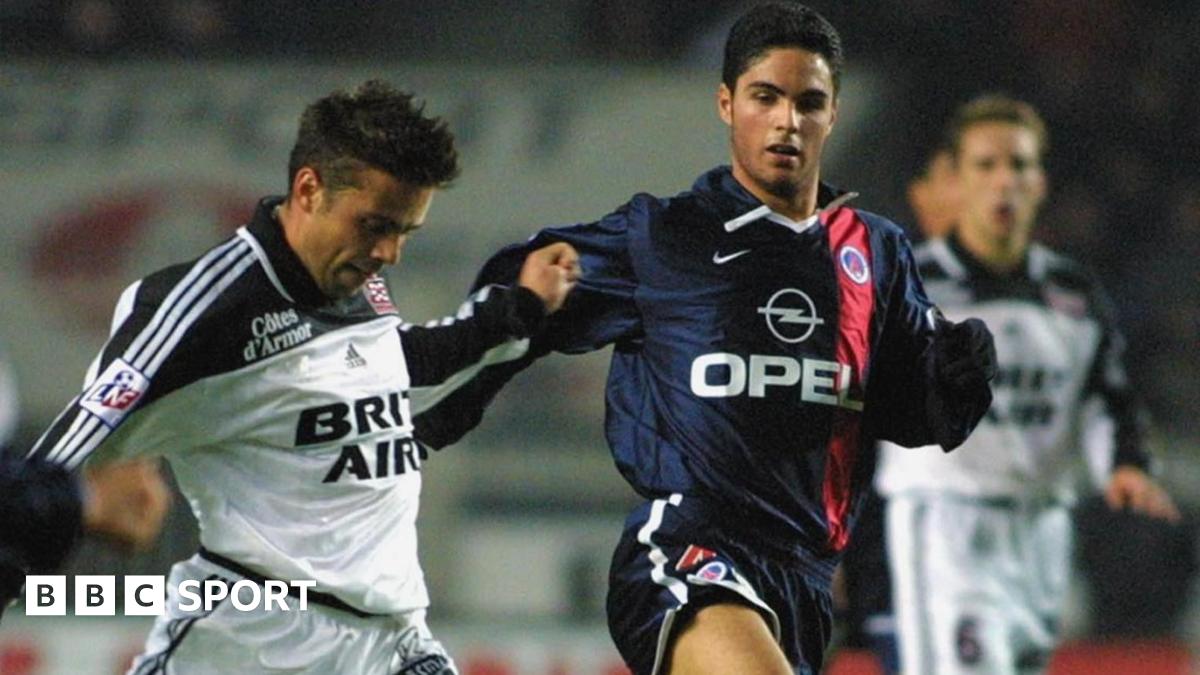
Arsenal must reconcile their tactical past with this final hurdle
13 hours ago
Manchester United are sleepwalking into another summer of uncertainty
15 hours agoMore Analysis

Rangers have a Lisa Forrest problem and Leanne Crichton knows it
2 months ago
Nico Raskin has turned his Rangers career around just in time for the summer window
1 month, 2 weeks ago
Why Scottish football is suddenly terrified of change
2 months ago
Rangers are going to bottle the SWPL title after that Fir Park disaster
2 months ago
Scotland are finally ready to break their World Cup qualifying curse
1 month, 1 week ago