The anomaly of the Tallaght Stadium trailblazer
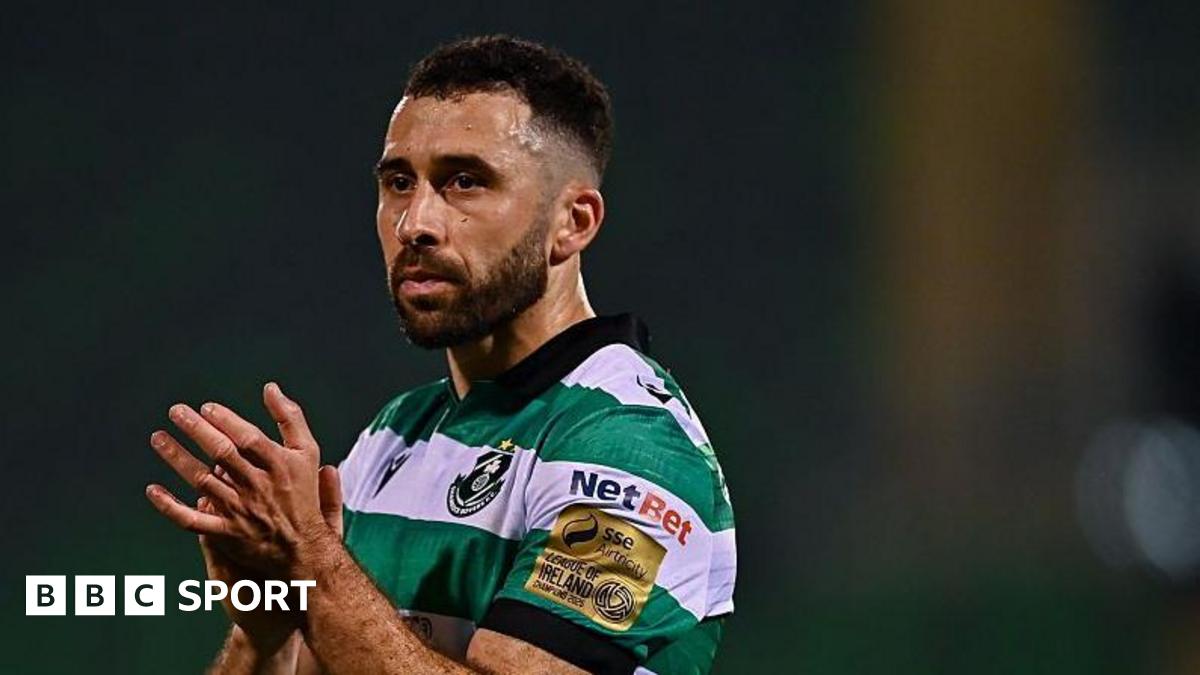
In a summer that will be dominated by the usual collection of billion-dollar rosters and state-sponsored sporting projects, the inclusion of Roberto 'Pico' Lopes in Cape Verde's World Cup squad offers a rare connection to the grassroots of the professional game. The Shamrock Rovers captain is not just another face in a 26-man list; he is the defensive heartbeat of the smallest nation to ever grace the tournament since Iceland's 2018 foray. For the League of Ireland, seeing a stalwart from the Dublin suburbs prepare to mark the likes of Darwin Nuñez and Lamine Yamal is a surreal collision of worlds.
As the BBC reported, Lopes has been officially named in the Blue Sharks' final selection for the 2026 showpiece. This is not a ceremonial pick based on past service. At 33, Lopes is currently averaging a 7.52 match rating in domestic competition and has already found the net three times this season. His aerial dominance remains his primary weapon, winning over 68 percent of his duels in the air, a stat that will be tested to its absolute limit in Group H.
How the Blue Sharks broke the Cameroon ceiling
Cape Verde’s qualification was not a product of the expanded 48-team safety net, but rather a surgical dismantling of traditional African hierarchies. They finished top of Group D, effectively ending Cameroon's campaign with a disciplined low block and devastating transitions. The 1-0 win in Praia last September was a tactical masterclass in spacing. Bubista’s side squeezed the pitch into a narrow 30-yard band, forcing the Indomitable Lions into aimless wide deliveries that were meat and drink for Lopes and his defensive partners.
The Blue Sharks operate in a flexible 4-1-4-1 system that prioritizes structural integrity over possession. While larger nations obsess over inverted full-backs and box midfields, Cape Verde relies on the old-school reliability of a fixed back four. Lopes acts as the designated 'sweeper' in this setup, often dropping five yards deeper than his partner to account for his lack of recovery pace against elite sprinters. It is a pragmatic solution to a physical reality, and it has worked remarkably well during a qualifying run where they conceded just four goals in ten matches.
The Dailon Livramento factor
While Lopes provides the foundation, Dailon Livramento is the lightning rod that makes the counter-attack viable. Scoring four goals during the qualifying phase, the forward thrives on the shoulder of the last defender. In their recent 5-3 win over Finland, Livramento's movement in the half-spaces was particularly sharp, dragging center-backs out of position to create lanes for Garry Rodrigues. If Cape Verde is to steal points in the group stage, the connection between Lopes' long-ball distribution and Livramento's verticality must be flawless.
Lopes has recorded an average of 4.8 successful long passes per 90 minutes this season for Shamrock Rovers. In a tournament where they will likely see less than 40 percent of the ball against Spain and Uruguay, these direct switches are the only way to bypass a high press. The tactical gamble is clear: sit deep, absorb pressure, and wait for the one transition opportunity that a player like Livramento can exploit. It is a high-variance strategy that requires 90 minutes of absolute concentration from the back line.
The Group H reality check
The schedule is unforgiving. Cape Verde opens against Spain on June 15, followed by Uruguay on June 21, and finishes with Saudi Arabia on June 26. This is a brutal draw for a debutant. Spain’s penchant for overloading the wide areas with Yamal and Nico Williams will be a nightmare for full-backs who are used to more predictable attacking patterns. Lopes will need to be more than a defender; he will need to be a traffic controller, constantly adjusting the line to prevent Yamal from cutting inside onto his left foot.
The match against Uruguay presents a different, more physical challenge. Darwin Nuñez is a chaotic presence who thrives on the exact kind of physical duels Lopes usually enjoys in the League of Ireland. However, the intensity is vastly different. In the LOI, Lopes can often bully forwards with his strength alone. Against Nuñez, any over-commitment in the tackle will result in a 87th minute heartbreak. The margin for error is non-existent when you are defending against players who can turn a half-chance into a goal in 0.4 seconds.
The fitness concern and the red card shadow
No analysis of Lopes' inclusion would be complete without addressing his recent form and disciplinary record. Despite his high average rating, he has been inactive for several key fixtures in May, missing matches against Drogheda and Galway United. Stephen Bradley has cited minor muscular issues, but for a player of his age, any interruption in match rhythm just weeks before a World Cup is a major red flag. International football is significantly faster than the domestic Irish game, and a 90 percent fit Roberto Lopes is a liability against world-class opposition.
There is also the matter of temperament. A red card earlier this season suggested a frustration with the pace of play, or perhaps a lapse in concentration that he cannot afford in June. Cape Verde has a thin squad, and a suspension for their primary leader would effectively end their hopes of progress. The Blue Sharks lack a comparable replacement who can match Lopes’ organizational skills, making his availability and discipline the single most important factor for their defensive stability.
A critical look at the Blue Sharks' depth
While the feel-good narrative around Cape Verde is strong, the reality of their squad depth is troubling. Beyond the starting XI, the quality drops off precipitously. If Bubista is forced to go to his bench in the second half of a game against Uruguay, he will be looking at players from second-tier European leagues who have never faced this level of scrutiny. The reliance on Lopes and Rodrigues is immense, and any injury during the warm-up friendlies, including the upcoming clash with Serbia on May 31, would be catastrophic.
The lack of a true creative playmaker in the midfield is another glaring weakness. Most of their goals come from individual brilliance or set-piece headers—areas where Lopes excels. However, relying on a center-back for offensive output is a desperate measure. If Spain manages to mark Livramento out of the game, Cape Verde has no 'Plan B' to retain possession and relieve the pressure on their defense. They risk being trapped in their own third for 70 minutes at a time, a scenario that inevitably leads to a collapse.
Final Prediction: The underdog's limit
Cape Verde will not be the whipping boys of Group H, but they are unlikely to reach the knockout rounds. I expect them to push Saudi Arabia to the limit and perhaps secure a historic draw in their final game. However, the technical gap against Spain and the sheer physical aggression of Uruguay will prove too much. Lopes will have his moments, likely winning a dozen headers in a valiant defensive stand, but a 2-0 loss to the Spanish in the opener will set a tone that is hard to shake.
The story here isn't just about the results; it's about the validation of a career. Roberto Lopes has spent a decade proving he is the best defender in Ireland. On June 15, he gets to find out where that bar sits on the global stage. It won't be pretty, and it will almost certainly involve a lot of desperate lunges and goal-line clearances, but it will be a landmark moment for every player who ever dreamt of the World Cup while playing on a cold Tuesday night in Tallaght.
Read Next
- Roberto Lopes secures World Cup spot despite late-season fitness concerns
- Shamrock Rovers are sending a fully fit Roberto Lopes to the World Cup
- Roberto Lopes's World Cup Call-Up Is a Quiet Triumph for Irish Football
- Mexico's World Cup opener at the Azteca is a disaster waiting to happen
- 🏆 World Cup 2026 — Full Coverage Hub
- 🇪🇸 WC 2026 Group H — Spain, Uruguay, Ivory Coast