The physiological bill comes due
Mid-April is the breaking point. This is the time of year when the bill for August's ambition finally comes due. We are seeing it across the continent right now. Muscles tear. Tendons fray. The human body is simply not designed to play ninety minutes of elite-level football every three days for nine consecutive months. Yet, the modern schedule demands exactly that.
Clubs are finally being forced to make cold, hard decisions based on physiological limits rather than sentimentality or past achievements. The medical departments are wrestling control from the tacticians.
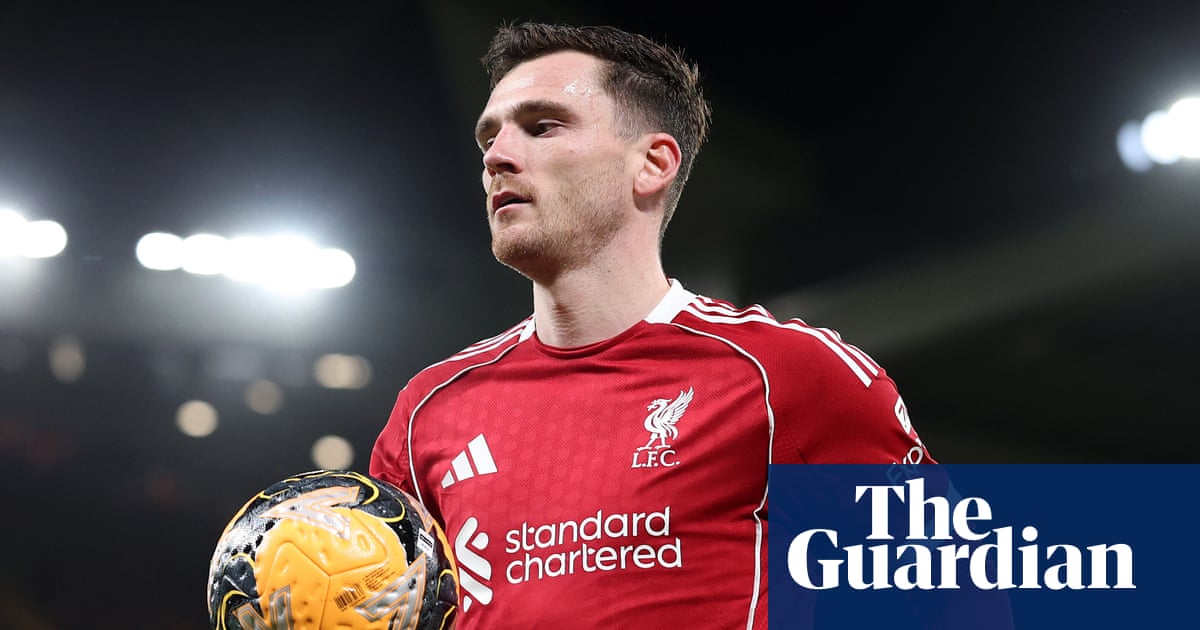
The news out of Merseyside is the starkest example of this harsh reality. As reported by the Mirror, Liverpool will lose long-serving stars Andy Robertson and Mo Salah in the summer. Arne Slot is facing a massive squad overhaul. But let us be entirely clear about what is actually driving these impending exits. This is not merely a contract dispute or a tactical pivot. It is a fundamental sports science decision dictated by physical decline.
The biomechanics of aging fullbacks
Look at the sheer volume of minutes Robertson has logged since arriving at Anfield. Jurgen Klopp’s heavy-metal system demanded an unprecedented level of high-speed running from his fullbacks. Robertson was regularly registering upwards of twenty maximal sprints per match during Liverpool’s peak years. That kind of repeated sprint ability requires elite hamstring elasticity and explosive power.
But the biological clock remains undefeated. As a player crosses the age of thirty, the recovery time required between those maximal efforts invariably lengthens. The fascia tightens. The risk of micro-tears in the muscle belly increases exponentially.
Robertson has battled niggling issues over the past two seasons, a direct consequence of chronic overload. His body has been pushed beyond standard physical parameters for over half a decade. Consider the mechanics of a hamstring strain. It rarely happens during concentric contraction when the muscle is shortening. It happens during the eccentric phase, when the player is decelerating from a full sprint or overextending. For players with accumulated fatigue, the neural pathways that tell the muscle to stop stretching fire just a fraction of a second too late. That microsecond delay is the difference between a successful tackle and a Grade 2 tear.
Salah presents a different, but equally pressing, medical profile. The Egyptian has been a freak of durability. He has rarely suffered acute trauma. But physical decline is rarely a sudden cliff edge; it is a slow erosion of peak attributes. For an elite winger, the explosive burst over the first five yards is always the first casualty of age. The fast-twitch Type II muscle fibers lose their firing efficiency.
Slot’s medical team has clearly looked at the biometric data and made a ruthless calculation. The underlying metrics likely show a drop in peak acceleration and a rise in post-match fatigue markers. Liverpool’s failure here is not letting them go now; it is a failure of physical forecasting over the last twenty-four months. The club’s transition team held onto an aging core too long, forcing a scenario where multiple foundational pieces must be replaced simultaneously. It is terrible roster sequencing.
The Premier League's unsustainable load
This physiological crisis is not isolated to Anfield. The entire Premier League is staring down the barrel of an unsustainable workload. The Daily Mail highlights an unlikely late-season shootout between Everton and Brentford. This clash, once earmarked as a potential relegation six-pointer, is now a massive fixture with European implications.
The Mail notes that we could see an unprecedented 11 English teams playing internationally next season. From a fitness perspective, this is a terrifying prospect. The sports science departments at clubs like Everton and Brentford are simply not equipped to handle a Thursday-Sunday schedule across the continent.
Entering the Europa Conference League requires a squad depth these mid-table clubs do not possess. We have seen the medical reality of this jump before. When West Ham and Aston Villa first expanded their schedules to include deep European runs, their treatment rooms overflowed. Soft tissue injuries spiked violently.
The physical demands are jarring. It is not just the extra ninety minutes on the pitch. It is the disrupted sleep cycles from late-night flights back from Eastern Europe. It is the elevated cortisol levels. It is the inability to get a full forty-eight hours of recovery before the next domestic fixture. If the league sends eleven teams into Europe, expect a catastrophic rise in hamstring strains and groin tears by November of next season. The schedule is actively breaking the athletes.
Milan's proactive physical conditioning
Over in Serie A, we are seeing a much more proactive approach to load management and physical integration. As Sempre Milan reports, Max Allegri is starting Gimenez specifically to send a signal for next season. This is not just tactical experimentation from the notoriously pragmatic Italian. It is highly calculated physiological conditioning.
You cannot expect a player to drop into a high-stakes Champions League group stage match in September if they have not established a robust physical baseline in the months prior. Training ground fitness is a myth. The erratic, unpredictable multi-directional movements of a live match cannot be simulated in drills. The sudden decelerations and chaotic changes of direction are what cause joints to fail and muscles to snap.
Allegri is buying future fitness equity. By getting competitive minutes into Gimenez’s legs now, he is adapting the player’s musculoskeletal system to the specific demands of Milan’s shape. He is strengthening the connective tissue around the knee and ankle joints before the summer break. This ensures the player returns for pre-season with a higher baseline threshold for injury prevention.
The survival of the fittest
Look back at the decline of Arsene Wenger’s Invincibles or Jose Mourinho’s first iteration of Chelsea. The physical drop-off in elite squads is rarely a gentle slope. It is a sudden, violent cliff edge. One season a fullback is dominating the flank; the next, he is getting exposed by average wingers because he has lost half a yard of pace. The biomechanical reality is that speed is the first athletic trait to diminish. Endurance remains, but the power required to recover defensively evaporates.
This is why the data analysts in the back rooms are now wielding as much power as the managers. They track the high-speed running metrics. They measure the force output on the force plates every morning. When a player who has historically recorded absurdly high sprint distances starts showing a five percent drop in his top-end speed, the red lights flash in the medical department.
This stark contrast between clubs highlights the modern reality of football medicine. It is no longer just about treating a sprained ankle with ice and compression. It is about macro-level load management, predictive analytics, and making ruthless personnel decisions before the physical drop-off destroys a season.
The clubs that survive the final grueling weeks of this campaign will not necessarily be the ones with the most technical quality. They will be the ones with the deepest squads and the most conservative medical departments. The human body has hard limits. April is the month those limits are brutally exposed on national television.
Liverpool is learning that the hard way with their outgoing legends. Everton and Brentford are fighting for a European prize that might ultimately break their squads next year. And Allegri is quietly building the physical foundations for his next campaign. The medical reality of the sport dictates everything. You can have the best tactical blueprint in the world, but if the legs are gone, the system fails entirely.