The Boardroom Shadow Over Anfield
March is always the month where the noise starts to drown out the football. For Liverpool, that noise is currently deafening, and it is blowing in directly from the Middle East.
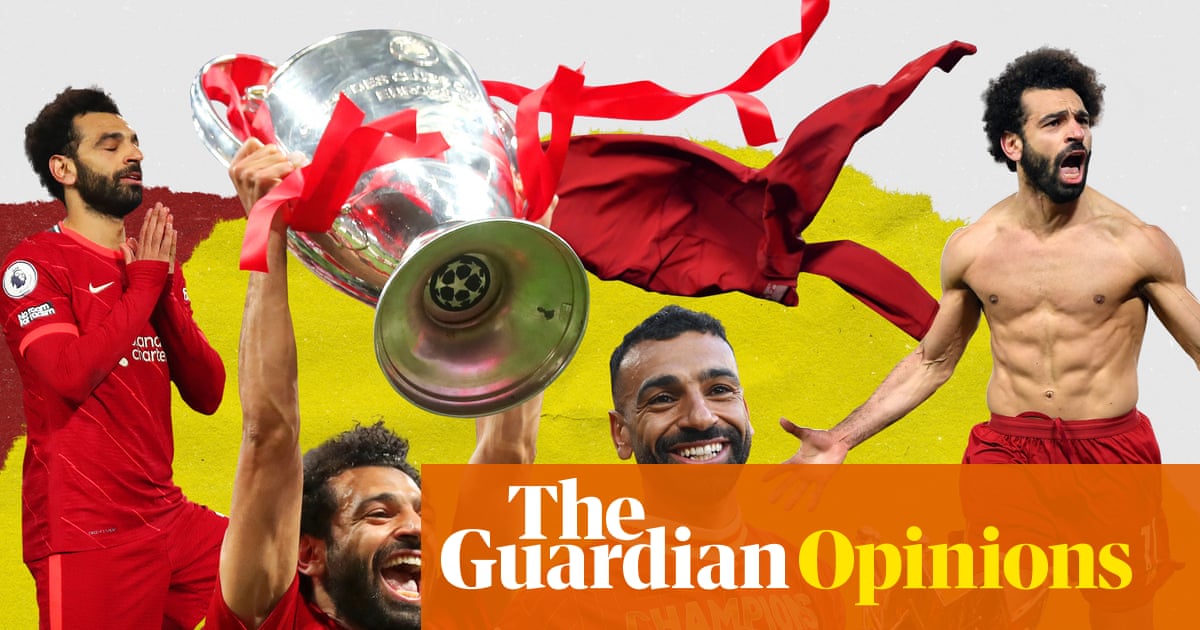
The news broke early this week, and the reality is stark. Multiple Saudi Pro League clubs are preparing an all-out financial assault to secure Mohamed Salah this summer.
As Sky Sports confirmed, the interest is concrete, coordinated, and backed by immense state wealth. It is the worst possible distraction at the worst possible time.
The timing is absolutely brutal. We are sitting on March 25. That puts us exactly thirteen days away from the first leg of the Champions League quarter-finals on April 7.
The domestic campaign is entering its frantic, lung-busting final stretch. You simply cannot navigate the deepest waters of European football when your talisman is dominating the transfer columns.
This isn't just a generic contract dispute. This is about the fundamental structure of Liverpool's attack.
The Saudi interest forces the club's hierarchy into a corner. Do you cash in on a legendary figure entering the twilight of his physical prime? Or do you turn down astronomical money to squeeze one last elite season out of him?
The lack of a clear succession plan from the sporting director is glaring. They have known this day was coming for two years, yet the right-wing depth remains perilously thin.
The Tactical Reality on the Right Flank
To understand what Liverpool stands to lose, you have to watch what happens off the ball. Everyone sees the goals and the obvious output.
But the true value of Salah in this current tactical setup is his gravity. He pins opposition left-backs deep into their own defensive third, creating a massive void in the half-space.
Watch the tape from their recent fixtures. The moment Liverpool regains possession in their own defensive third, the opposing left-back immediately takes three steps backwards.
He is terrified of the space in behind. This instinctual retreat creates a massive pocket of space in the midfield, which Trent Alexander-Arnold happily steps into.
When Alexander-Arnold drifts inside to operate as an inverted playmaker, Salah is left entirely isolated on the right touchline. He is expected to hold the width, receive the ball under pressure, and instantly generate a threat.
He does this better than almost anyone in world football. His ability to roll his marker and drive inside forces the opposing left-sided center-back to step out.
That split-second movement creates the channel for Darwin Nunez or Cody Gakpo to exploit. It is the entire foundation of Liverpool's ball progression.
A Broken Rest-Defense
But the system is starting to show deep structural cracks. Opposing managers have figured out the pressing trigger.
When Alexander-Arnold vacates the right-back position, the rest-defense is highly vulnerable. If Salah is dispossessed quickly, the opposing left-winger has an unprotected highway straight toward Virgil van Dijk.
We saw this exact pattern repeatedly exploited throughout February. It is a fundamental flaw that the coaching staff has refused to correct.
This is where the criticism needs to be leveled heavily. Liverpool's coaching staff has failed to adapt to the increasing athletic limitations of their forward line.
Salah cannot consistently beat two men from a standing start anymore. He needs overlapping runs. He needs a midfielder crashing the box to draw a marker.
Instead, he is frequently asked to solve the attacking equation entirely on his own. When he loses the ball, the counter-press is no longer as suffocating as it was three years ago.
The midfield three are asked to cover far too much ground. Alexis Mac Allister is a brilliant progressor of the ball, but he is not a pure destroyer.
When the transition happens, Mac Allister is bypassed entirely too easily. The defensive line pushes incredibly high, trusting Van Dijk and Ibrahima Konate to sweep up the danger.
It works a lot of the time, but the margins are razor-thin. A single mistimed step in the offside trap, and the opposition is through on goal.
You cannot play a defensive line this high without elite pressure on the ball. It is a fundamental law of tactical geometry.
The Approaching European Crucible
With the Champions League quarter-finals looming on April 7, the margin for error drops to zero. European nights demand serious tactical flexibility.
You cannot roll out the exact same predictable patterns and expect to dismantle elite continental opposition. The pressing triggers need to be significantly sharper.
Right now, Liverpool's forward line often initiates the press in disjointed waves. Nunez will chase a lost cause, while the wingers drop off.
That hesitation allows technically gifted center-backs to easily play through the first line of pressure. Once that line is broken, the midfield is scrambling backwards.
They need to compress the space between the midfield and the attack. If Salah is going to stay high and wide, the right-sided number eight needs to push up aggressively to support him.
They have to create local numerical superiorities. If they rely purely on individual brilliance, they will be found out on the European stage.
The Left-Sided Imbalance
The obsession with Salah and the right flank has also masked the wild inconsistencies on the opposite side of the pitch. Luis Diaz is a chaotic force of nature.
He carries the ball brilliantly, but his final decision-making remains highly erratic. The underlying metrics constantly show a massive discrepancy between the quality of chances created on the right versus the left.
Andy Robertson's overlapping runs are still a feature, but the timing is slightly off. The dynamic combinations that used to tear defenses apart are now functioning at a fraction of their previous speed.
Furthermore, Robertson is increasingly being asked to tuck in and form a back three when Alexander-Arnold steps into midfield. This hybrid role blunts his attacking instincts.
It requires a level of positional discipline that he occasionally lacks. When he pushes up at the wrong time, the left channel is wide open.
This imbalance makes Liverpool entirely predictable. If you shut down the right side, you effectively neutralize 70 percent of their creative output.
This over-reliance is exactly why the Saudi transfer rumors are so deeply destabilizing. If you remove Salah from this current iteration of Liverpool, the entire attacking structure collapses.
The Weekend Blueprint
Looking ahead to this weekend's defining domestic fixture, the blueprint for the opposition is painfully obvious. Sit deep in a compact medium block.
Deny the space between the lines. Let the center-backs have the ball, and wait for the inevitable forced pass into the wide right areas.
When the pass goes out to Salah, immediately close down the space with the fullback and the wide midfielder. Force him backwards. Do not let him turn on his left foot.
If the ball is recycled centrally, apply intense physical pressure on Mac Allister. Disrupt the rhythm. Frustrate the crowd.
For Liverpool to overcome this, they need rapid ball circulation. Two-touch passing. Quick switches of play from left to right to isolate Salah before the double-team can arrive.
They need Nunez to make aggressive diagonal runs to drag the center-backs out of position. Executing it against a disciplined Premier League defense requires supreme technical precision.
The Verdict
The noise is not going away. The Saudi clubs will continue to circle, and the formal bids will inevitably arrive this summer. The boardroom faces a massive decision.
But right now, the focus has to remain strictly on the grass. Liverpool has thirteen days to fine-tune their tactical setup before the defining European fixtures.
The defensive frailties in transition are a glaring issue. The over-reliance on the right flank is a tactical crutch that limits their ceiling.
I expect them to struggle this weekend. The off-field distractions, combined with the structural flaws in their rest-defense, make them highly vulnerable.
They will likely dominate possession, rack up the shot count, and force a barrage of corners. But they will get caught on the counter-attack.
A frustrated Anfield, a disjointed press, and a late equalizer from the opposition. 1-1.
Read Next
- Top 10 Destinations For Mohamed Salah After Liverpool Exit
- Mo Salah is finally leaving Liverpool and the internet is in absolute shambles
- Salah's final push for Anfield immortality starts right now
- Top 10 Defining Moments of the Salah-Trent Era at Liverpool
- 🇪🇬 Egypt World Cup 2026 — Salah's Last Dance
- ⭐ UCL 2026 — Champions League Quarter-Finals Hub