The Burden of a Dream
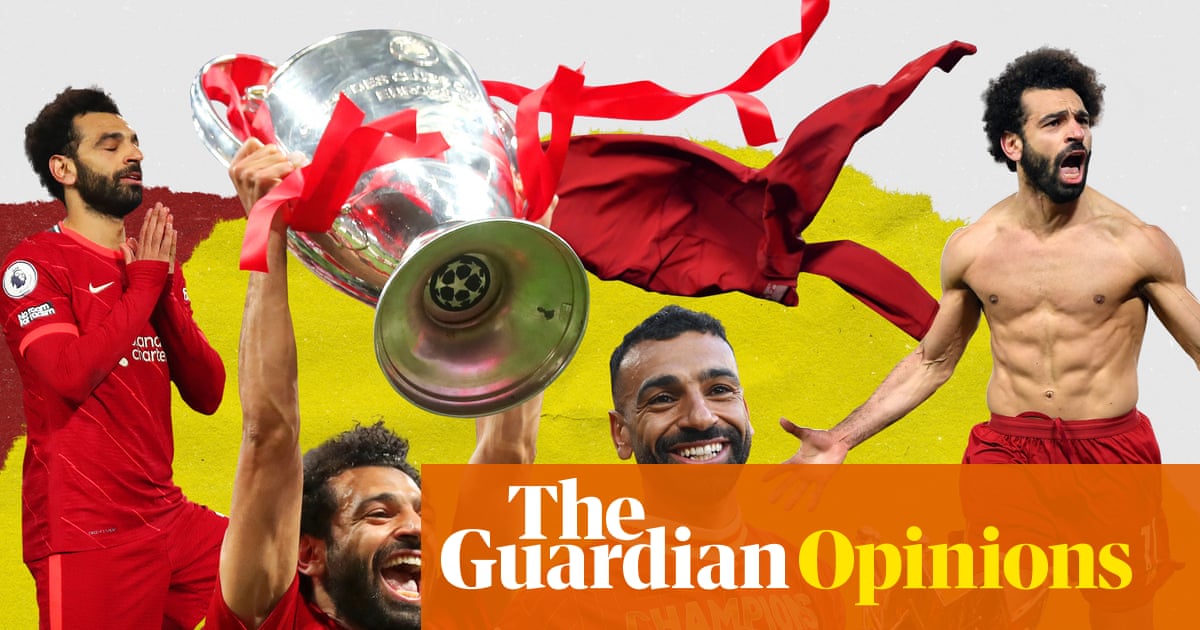
The latest revelation via the Mirror about Mohamed Salah shouldn't surprise anyone who has watched him operate over the last decade.
"Before Mohamed Salah signed for Liverpool, he told a former team-mate that he wanted to become a Reds legend and that it was his dream to move to Anfield."
We all know the history. He achieved that legendary status years ago. But football doesn't let you rest on what you did in 2019.
As we sit here on March 24, staring down the barrel of the April run-in, that original dream is facing its most demanding test yet. Liverpool are gearing up for the Champions League quarter-finals starting on April 7, and the tactical reality of this current squad places an enormous weight squarely on the Egyptian's shoulders.
The 2026 Version of the Egyptian King
Let's be brutally honest about where Salah is physically right now. The explosive, terrifying burst of acceleration that defined his early years isn't quite there. Defenders don't back off in blind panic the moment he isolates them on the right flank anymore. Instead, they get tight. They try to rough him up.
But Salah has adapted brilliantly. He's transitioned from a pure inside forward into a hybrid playmaker. Look at his heat map this season. He's dropping deeper into the half-spaces, pulling opposition left-backs out of position, and threading reverse passes into the box for Darwin Nunez or Diogo Jota. It is a smarter, more cynical version of the winger we used to know.
The problem? Liverpool's system hasn't entirely caught up to this evolution. When Trent Alexander-Arnold inverts into midfield, the natural width on the right vanishes. Salah is forced to hold the touchline more often than he probably wants to.
Against a disciplined low block, this turns into a frustrating geometry problem. Liverpool end up shuffling the ball from left to right, waiting for Salah to produce a miracle from a static position. It is predictable, and top-tier European sides have started to figure it out.
The April Gauntlet
The upcoming Champions League quarter-final is going to expose whether this tactical compromise can hold up under pressure. When you reach the last eight in Europe, you don't get away with structural imbalances. You face teams that transition with terrifying speed.
This is where my biggest criticism of Liverpool's current setup lies. They are horribly exposed in the right channel when they lose the ball. If Alexander-Arnold is tucked inside acting as a quarter-back, and Salah is hugging the touchline trying to stretch the play, there is a massive void defensively.
Ibrahima Konate spends half the match sprinting out to the touchline to cover that space. Against mid-table Premier League opposition, Konate's sheer athletic freakishness bails them out. In a Champions League quarter-final? That is a glaring red target painted on the right side of their defense.
We saw exactly this vulnerability earlier in the campaign. Teams bypass the central midfield press entirely and hit angled balls into the space Trent vacated. If the opposition left-winger has any sort of pace, Liverpool's right side looks entirely dysfunctional.
The Anatomy of a Scrappy Run-In
Look at the broader context of this season. We are deep into late March, and the margins at the top of the Premier League are practically microscopic. Arsenal and Manchester City have set a relentless pace, turning every weekend into a high-stakes shootout.
This environment is fundamentally hostile to a team trying to rebuild its tactical identity on the fly. Liverpool haven't possessed the smooth, machine-like control of City, nor the defensive suffocation of Arsenal. Their games are chaotic. They are open, breathless, and frankly, exhausting to watch.
In this relentless environment, Salah's consistency is the only reliable metric. When the midfield loses its grip on a match, or when the pressing triggers are bypassed, the default setting is simply to find the Egyptian. It's a massive tactical burden. You can see the frustration when he receives the ball with three defenders immediately collapsing on him, knowing that the rest of the attacking unit is static.
The Midfield Conundrum
Let's drill down into the midfield mechanics, because this is where the upcoming European tie will actually be decided. Wataru Endo has been a revelation in terms of breaking up play, but his distribution under severe pressure can be a split-second too slow. Against domestic opposition, you get away with it.
Against the elite of Europe, a delayed pass in the central third is an immediate counter-attack. When Alexis Mac Allister is forced to drop deeper to assist with the build-up, the distance between the midfield line and the forward line expands. Salah is left isolated. The connections break.
He still guarantees you 20-plus goals a season, but the structural concessions required to get those goals are becoming more expensive by the month. We saw this clearly in their recent away trips. The gap between the lines was massive, leaving the forwards chasing shadows. For Salah to be effective in his new, playmaking role, he needs runners. He needs the central midfielders making late bursts into the box to drag markers away from the edge of the penalty area.
If those runs don't happen, Salah is forced to cut inside into traffic. He ends up taking low-percentage shots from twenty yards out through a forest of legs. The shot map from recent weeks tells a grim story—a high volume of efforts blocked before they even reach the goalkeeper. It is a symptom of a dysfunctional attacking structure forcing its best player to try and do everything himself.
The Defensive Trade-off
And we cannot ignore the defensive side of the equation. Jurgen Klopp's old system was always built on the counter-press, winning the ball high up the pitch to create artificial transitions. Salah was integral to this, leading the trigger from the right. But in 2026, the intensity of that press has undeniably dropped.
It is entirely understandable. You cannot ask a player of his age and mileage to sprint relentlessly for ninety minutes every three days. But the consequence is a softer edge to Liverpool's first line of defense. Opposing center-backs have a fraction of a second longer to pick their passes.
They can hit those sweeping diagonals out to the left flank, instantly exposing the space behind Alexander-Arnold. This is the exact vulnerability I expect their European opponents to target ruthlessly in the quarter-finals.
You don't try to play through the center of Virgil van Dijk. You bypass him entirely. You isolate the full-backs. If the winger can pin Alexander-Arnold back, Salah is forced to track back deeper than he wants, blunting his attacking threat. It is a tactical catch-22. If he stays high, the defense is exposed. If he drops deep, the attack loses its focal point.
Cementing the Legacy
That brings us back to his former teammate's revelation. Salah wanted to be a legend here. He wanted Anfield to be his defining stage. As we approach the defining weeks of the season, the narrative is perfectly set. He isn't the raw, blistering force of nature he was five years ago. He is a veteran carrying a slightly flawed, highly entertaining football team on his back.
If Liverpool are going to navigate the April gauntlet and book a ticket to the semi-finals, they need Salah to be flawless. Not just in his output, but in his decision-making. He can't afford to force low-percentage shots when he's double-teamed. He has to trust his teammates, even when the system breaks down around him.
I am nervous about their defensive transition. I think a smart European side with a rapid left-winger will cause them absolute agony in the quarter-finals. The space behind the right side of Liverpool's defense is just too inviting.
But writing off Mohamed Salah has always been a fool's errand. Every time he looks isolated, every time the tactical setup seems to hinder him, he finds a sliver of space. He bends a shot into the top corner. He wins the game.
My prediction for the weeks ahead? Liverpool will concede heavily in the first leg. The structural flaws are too obvious to survive unpunished. But Anfield under the lights in the return leg on April 14 is a different beast entirely. Expect Salah to drag them through, perhaps ugly, perhaps relying on a moment of individual brilliance rather than cohesive team play. The dream club got exactly what they wanted in him. Now, he has to deliver one more masterclass to keep this season alive.
Read Next
- Liverpool are walking into a massive trap trying to replace Mohamed Salah
- Top 10 Defining Moments of the Salah-Trent Era at Liverpool
- Arsenal's 3-1 win exposed Chelsea's European structural flaws
- The brutal tactical truths that will decide the UCL quarter-finals
- 🇪🇬 Egypt World Cup 2026 — Salah's Last Dance
- ⭐ UCL 2026 — Champions League Quarter-Finals Hub