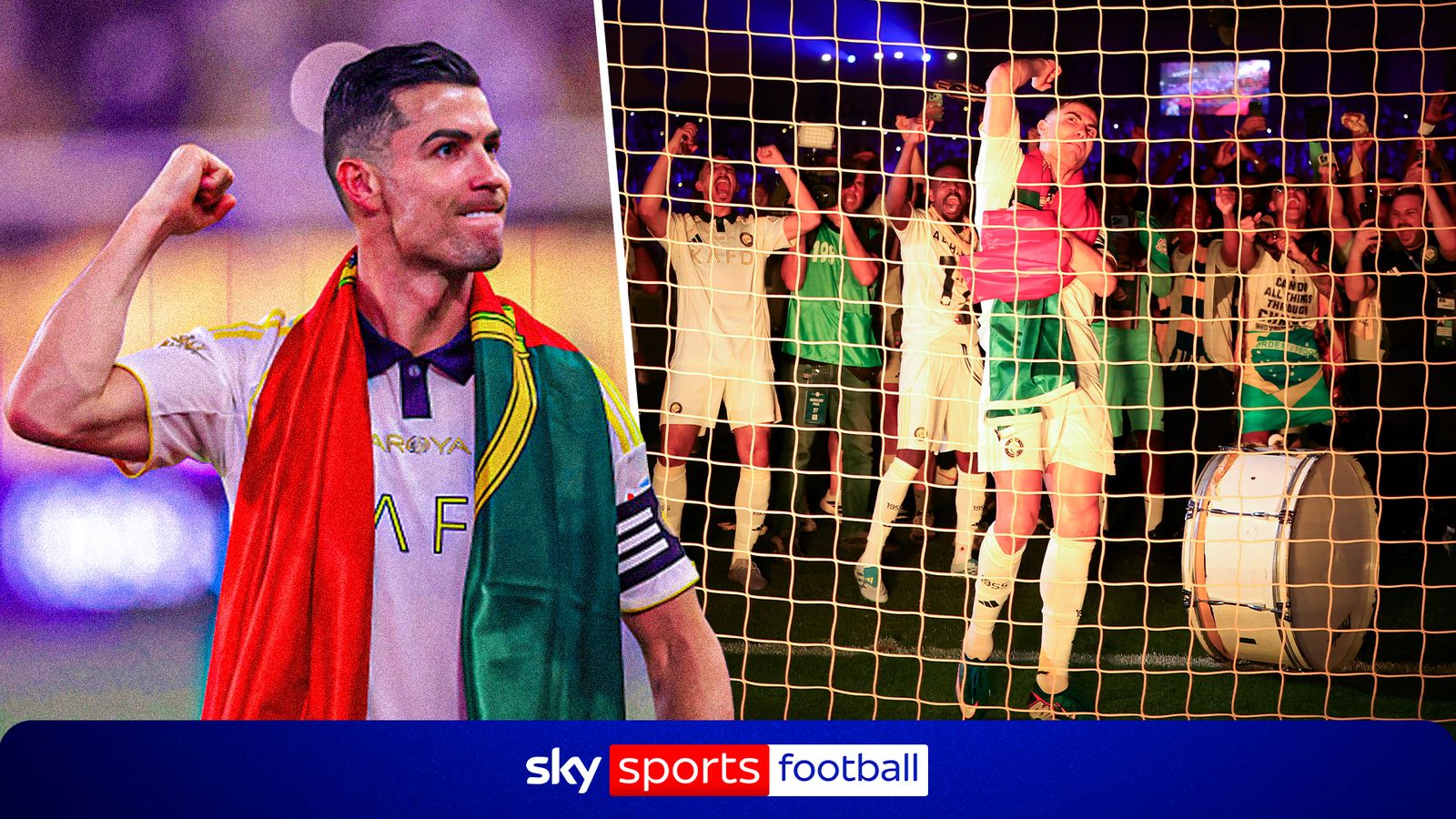
Saudi Arabia's Billion-Dollar League Is Killing Its National Team

The Saudi Pro League's aggressive expansion was supposed to lift all boats. We were told that importing Cristiano Ronaldo, N'Golo Kanté, and Neymar would force local talent to adapt or die. Instead, the Saudi national team—El Khadra—looks more disjointed than ever heading toward the 2026 World Cup.
Look at the numbers. In the 2023-2024 season, foreign players accounted for over 70% of the total minutes played in the SPL. When you bring in Sergej Milinković-Savić to run the midfield for Al-Hilal, what happens to Salman Al-Faraj? He sits. He watches. He loses match sharpness. You cannot build a competitive international squad out of guys getting spot minutes in domestic cups against third-tier opposition.
It’s a bizarre paradox. The SPL has never been stronger, but the domestic player pool is suffocating.
The Mancini Miscalculation
Roberto Mancini's tenure as manager perfectly illustrated the disconnect. He walked in with a Euro 2020 pedigree, expecting a squad of battle-hardened professionals. What he found was a group of technically gifted players who simply lacked the stamina and tactical discipline required at the highest international level.
Mancini famously complained about his players not getting enough game time at their clubs. He wasn't wrong. Firas Al-Buraikan is one of the few domestic strikers who actually gets on the pitch consistently. But even he often has to play second fiddle at Al-Ahli depending on the formation. When your primary goalscorers are sitting behind Aleksandar Mitrović and Roberto Firmino at club level, where do the goals come from on the international stage?
We saw this exact problem play out during the Asian Cup in Qatar. The round of 16 loss to South Korea wasn't just a tactical failure. It was a physical and mental collapse. They couldn't hold the ball under pressure in the final 20 minutes, sitting deeper and deeper until they gave up a devastating 99th minute equalizer to Cho Gue-sung. That is what happens when your core players aren't used to grinding out 90-minute matches against elite opposition every single week. They ran out of gas.
A History of Domestic Bubbles
This isn't an entirely new problem in Asian football, but the scale is unprecedented. Look at Qatar's catastrophic 2022 World Cup campaign. They kept their players isolated in a domestic bubble, completely detached from high-level weekly competition, and got embarrassed on home soil. They lost all three group games and looked completely overwhelmed by the speed of play against Ecuador and Senegal.
Saudi Arabia is doing the exact opposite—flooding their league with elite global talent—but they are risking the exact same result for the national team. By buying up the world's aging superstars, the local players are completely squeezed out of the starting XIs.
You can't learn how to handle a high press from the bench. You can't develop the muscle memory required to track runners in the 85th minute by watching Marcelo Brozović do it from the dugout. The theory was that training against these guys would elevate the Saudis. The reality is that training isn't a substitute for competitive minutes.
The Missing Identity
Compare the current squad to the 2022 team under Hervé Renard. That team had a specific, undeniable identity.
When they shocked Argentina in Lusail, it wasn't a fluke. They pressed incredibly high, played a seemingly suicidal offside trap, and fought like absolute dogs for every loose ball. Saud Abdulhamid and Hassan Tambakti played out of their minds that day. They were a cohesive unit because they played together every week in a league where they were the main characters. They dictated the tempo of their club matches.
Now? They look like a collection of expensive backups trying to remember how to lead. The SPL experiment has undoubtedly brought massive global eyeballs to Riyadh and Jeddah. It has changed the financial realities of global football. But it might have sacrificed the national team's immediate future in the process.
Can the SPL Pivot Before 2026?
There is still time to fix this, but the Saudi Arabian Football Federation needs to stop pretending the current model is working flawlessly for the national team.
The recent mandate requiring clubs to field younger domestic players is a step in the right direction. It forces managers like Jorge Jesus and Luis Castro to actually develop talent instead of relying entirely on their eight permitted foreign slots to bail them out of tight games.
But is a token youth quota enough?
If Saudi Arabia wants to make a serious run in North America, they need a starting XI that plays regular, high-stakes club football. Ali Al-Bulaihi is 34 years old. Salem Al-Dawsari is 32. The golden generation that carried them through the last two cycles is aging out, and the next generation is stuck playing FIFA while Ruben Neves takes all the free kicks.
The Path to North America
El Khadra has an easy enough qualifying path to make it to the expanded 48-team tournament. Missing out on 2026 entirely would be a historic disaster, and frankly, given the sheer number of spots allocated to the AFC, it's highly unlikely to happen. They will qualify.
The real question is what they do when they land in the United States, Canada, or Mexico.
Will they be tourists taking selfies, or will they actually compete to get out of the group? The clock is ticking. The federation needs to figure out how to balance their ambition to have a top-five league in the world with the reality of maintaining a competitive national team. Right now, those two goals are directly at odds. If things don't change drastically over the next 18 months, El Khadra's trip to North America is going to be incredibly short, and wildly disappointing.
Read Next
- Why Mexico's 2026 World Cup dream is already a nightmare
- The 2026 Nations League Finals are going to be a bloodbath
- The night Zidane broke: Witnessing football's most shocking meltdown
- Why Cristian Romero's rallying cry is exactly what Tottenham needed right now
- 🏆 World Cup 2026 — Full Coverage Hub
- 🇸🇦 Saudi Arabia World Cup 2026 — Green Falcons Hub
Adidas Unisex-Adult MLS League Soccer Ball
A durable, high-quality ball perfect for weekend pickup games.
More Coverage
Premier League summer transfer window 2026: Everything you need to know
5 minutes ago
João Félix just pulled off the ultimate heist against Cristiano Ronaldo
6 days, 5 hours agoWhy Argentina's World Cup title defense is doomed to fail
6 days, 19 hours agoManuel Neuer's World Cup Return is the Funniest, Cruelest Joke in Football History
1 week, 1 day agoEmi Martínez secured Villa's trophy with a broken finger
1 week, 2 days agoTop 10: The Moments Defining the 2025-2026 Season
1 week, 2 days agoMore Match Reports

The Saudi Pro League is a hollow spectacle built on a mountain of cash
2 months, 1 week ago
Liga MX is failing to prepare Mexico for the 2026 World Cup
2 months, 1 week ago
Why Mexico's 2026 World Cup dream is already a nightmare
2 months, 1 week ago
The 2026 World Cup qualification path is a bureaucratic mess
1 month, 4 weeks ago
MLS isn't ready for the 2026 World Cup spotlight
2 months, 1 week ago