A Clash of Absolute Absolutes
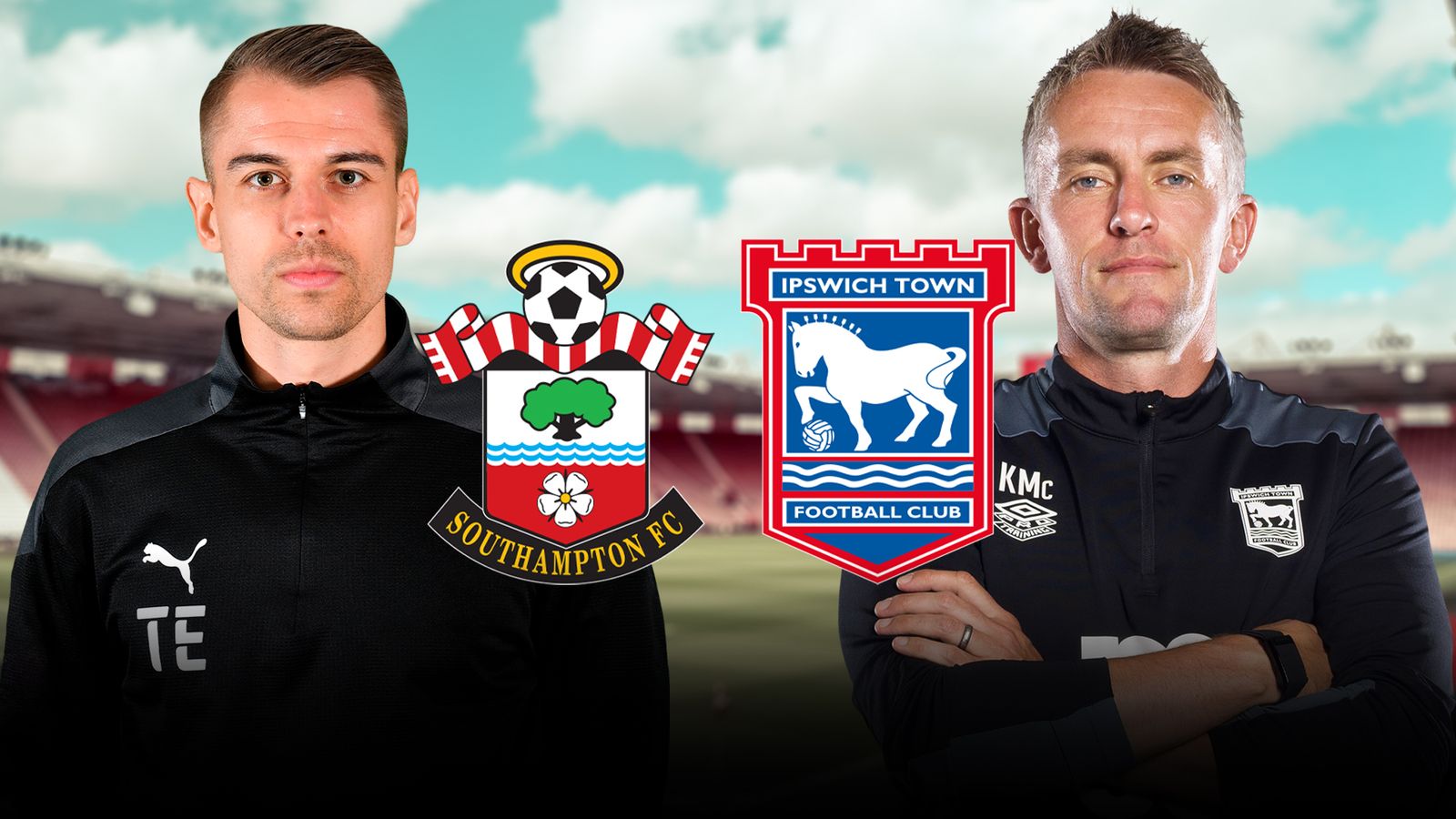
The Championship promotion race rarely offers a tactical contrast this extreme. When Southampton face Ipswich Town, it is not just a match with Premier League money on the line. It is a collision of two entirely different footballing philosophies.
On one side, you have Russell Martin. The Southampton manager is a fundamentalist. He demands the ball, he demands slow, methodical build-up, and he refuses to compromise. On the other side, Kieran McKenna has built a devastating transition machine at Portman Road.
This match is going to answer a simple question. Does possession guarantee control, or does it just offer the illusion of it?
Southampton will have the ball. That much is guaranteed. They will likely finish the ninety minutes with something close to 65 percent possession. But what they do with it is the problem that has plagued them in their worst moments this season.
The reality of the Championship is that absolute purism often gets you punched in the mouth. Martin wants his team to play like Manchester City, but he does not have Rodri or Kevin De Bruyne. He has very good second-tier players being asked to execute flawless technical sequences under severe pressure.
The Trap of the U-Shape
When Southampton are bad, they are agonizing to watch. They fall into the classic possession trap: the dreaded U-shape.
The center-backs exchange passes. The ball goes out to the full-back. The full-back realizes the winger is marked, so he turns back and passes to the center-back. The cycle repeats. It is sterile, predictable, and entirely unthreatening.
Martin’s system requires flawless execution. When Flynn Downes is sharp, he can break lines. Downes is the metronome, the one player who seems to understand exactly when to speed the game up. But when the tempo drops, Southampton become a slow-moving target.
This is exactly what Ipswich want. McKenna does not care if you have the ball in your own defensive third. In fact, he encourages it. He sets traps.
Ipswich operate with a highly coordinated pressing trigger. They allow the first pass, sometimes the second. But the moment a Southampton defender takes a heavy touch, or a pass is slightly under-hit, the trap snaps shut. Sam Morsy and Massimo Luongo push up aggressively. The wingers pinch inside, cutting off the escape routes.
If Ipswich win the ball high, they only need three passes to create a high-xG chance. They do not mess around with extra touches in the box.
The Ghost of the Reverse Fixture
We have seen this script before. As Sky Sports reported during their last clash, Ipswich provided a masterclass in playing without the ball.
They finished that game with barely a third of possession. Yet, they always looked like the more dangerous team. They didn't need the ball to dictate the game; they dictated the spaces.
Southampton looked bewildered. They were stringing together thirty-pass sequences that ended in a hopeful cross to absolutely nobody. Martin refused to change the plan. Plan B was just to do Plan A better.
That stubbornness is Martin’s greatest strength, but it is also his fatal flaw. If you are going to commit to a style that risks exposure on the counter, you have to create high-quality chances. Southampton often fail to convert their territorial dominance into actual shots on target.
Adam Armstrong has had a brilliant season, but he is not a traditional target man. Floating crosses into a crowded box against Luke Woolfenden and Cameron Burgess is a complete waste of time. Armstrong needs the ball on the deck, slipped through the half-spaces, but Southampton's slow build-up gives opposition defenses plenty of time to pack the penalty area.
Where the Game Will Be Won
The key battleground is not in the penalty areas. It is in the transition moments in the middle third of the pitch.
Watch Leif Davis. The Ipswich left-back is statistically one of the most creative players in Europe outside the top flights. His delivery is wicked, but it is his positioning in transition that hurts teams. When Ipswich win the ball, Davis is already sprinting into the space vacated by the opposition winger.
Southampton’s right side is going to be tested severely. Kyle Walker-Peters loves to invert and step into midfield. It gives Southampton an overload in possession. But if he loses the ball centrally, Davis has an acre of grass to run into down that flank.
Will Martin ask Walker-Peters to be more conservative? History suggests absolutely not.
This is where McKenna has the edge. He is pragmatic. He adjusts his defensive shape based on the opponent. If he needs to drop his block ten yards deeper to nullify Che Adams dropping in, he will do it. Martin, conversely, plays the game on a spreadsheet where his team always has the ball.
The Midfield Enforcers
You cannot preview an Ipswich match without talking about Sam Morsy. The Egyptian international is the snarling, beating heart of this team. He is going to make his presence felt early, likely with a crunching tackle on Joe Aribo or Stuart Armstrong.
Morsy walks a disciplinary tightrope every week, but he rarely falls off. His job is to disrupt. He will foul tactically, he will slow the game down when Southampton try to take quick free-kicks, and he will command the space in front of his center-backs.
Southampton need a physical response. They cannot allow Morsy to bully their midfield. This is where Downes is vital. Downes has the engine to match Morsy, but he needs support.
If Southampton's attacking midfielders float too high, Downes will be isolated, and Morsy will swallow him whole. The battle for the second balls will dictate the flow of the match. Southampton want to win the ball back cleanly to restart their passing cycles. Ipswich want to win the messy, chaotic balls that lead to broken-field attacking opportunities.
The Goalkeeping Dilemma
Another massive factor is the man between the sticks for Southampton. Playing out from the back demands a goalkeeper who is essentially a third center-back in possession.
Gavin Bazunu has faced intense scrutiny this season. His shot-stopping numbers have been below average for a team chasing promotion, but Martin relies entirely on his footwork. Bazunu will be asked to hold onto the ball until an Ipswich forward commits to the press.
It is a terrifying strategy for the fans in the stands. One slip on the turf, one poorly weighted pass, and the ball is in the back of the net. Ipswich will target Bazunu. They will force him to go long, and when he does, Woolfenden will be waiting to gobble up the aerial ball.
The Psychological Weight
There is also the sheer pressure of the moment. We are deep into April. The finish line is visible.
Ipswich were not supposed to be here. A newly promoted team challenging the parachute payment heavyweights is a statistical anomaly. They are playing with the house's money, fueled by the momentum of back-to-back promotions.
Southampton, meanwhile, carry the weight of expectation. Failure to bounce back to the Premier League at the first time of asking is a disaster. The wage bill demands promotion. The ownership structure demands it.
You can see that tension in the players. When things go wrong for Ipswich, the crowd gets louder, driving them forward. When Southampton string sideways passes at St Mary's in the 70th minute at 0-0, the groans are audible.
That anxiety translates to the pitch. Passes get safer. Runs become hesitant. Players stop taking risks in the final third because they are terrified of losing the ball and hearing the sighs from the terraces.
The Danger of the Set Piece
If open play becomes a stalemate, look to the dead ball. Ipswich are incredibly efficient from corners.
They do not just lump it into the mixer. They use elaborate blocking schemes to free up runners at the near post. Conor Chaplin, despite his lack of height, finds space in the box because the big men drag the markers away.
Southampton's zonal marking system has looked fragile at times. They have a tendency to switch off on the second phase of set-pieces. If the initial ball is cleared, the defensive line often fails to step up together, playing attackers onside for the follow-up cross.
In a tight game with promotion on the line, a sloppy clearance in the 82nd minute could define an entire season.
Will Martin Adjust?
This is the central narrative. Everyone knows how Southampton will play. McKenna has undoubtedly spent the week drilling his squad on exactly when to press and when to sit off.
For Southampton to win, Martin needs to show a tactical flexibility he has actively resisted all season. He needs his midfielders to bypass the press with early, direct balls into the channels. He needs to recognize that sacrificing five percent of possession for a sharper attacking edge is a worthwhile trade.
But he won't. He has staked his entire managerial reputation on this purist approach. He genuinely believes that if his team executes his plan perfectly, the opponent is irrelevant.
Ipswich know this. They will absorb the slow passing. They will wait for the mistake. And when it comes, they will strike with numbers.
Prediction
The stakes could not be higher. Southampton have the individual talent, but Ipswich are the better collective team. They are coached better out of possession, and they are significantly more ruthless in front of goal.
Expect Southampton to dominate the ball early. They might even take the lead through a moment of individual brilliance from Armstrong or a sweeping move down the right wing.
But as the game wears on, Ipswich's fitness and tactical discipline will take over. Martin's refusal to adapt will cost them. A turnover in midfield, a rapid transition, and Davis will put the ball on a plate for Kieffer Moore or Nathan Broadhead.
Ipswich to win 2-1, hitting Southampton on the counter twice in the second half. The possession stats will look great for the Saints, but the scoreboard will belong to McKenna.
Read Next
- Southampton face Ipswich with the automatic promotion race on the line
- Ipswich didn't need the ball to break Southampton. They just needed space.
- Championship chaos is pure, unadulterated madness
- Why Ipswich Are About To End Southampton's Promotion Dream
- 🏟 EFL Championship 2025-26 — Promotion Race & Play-Off Final Hub