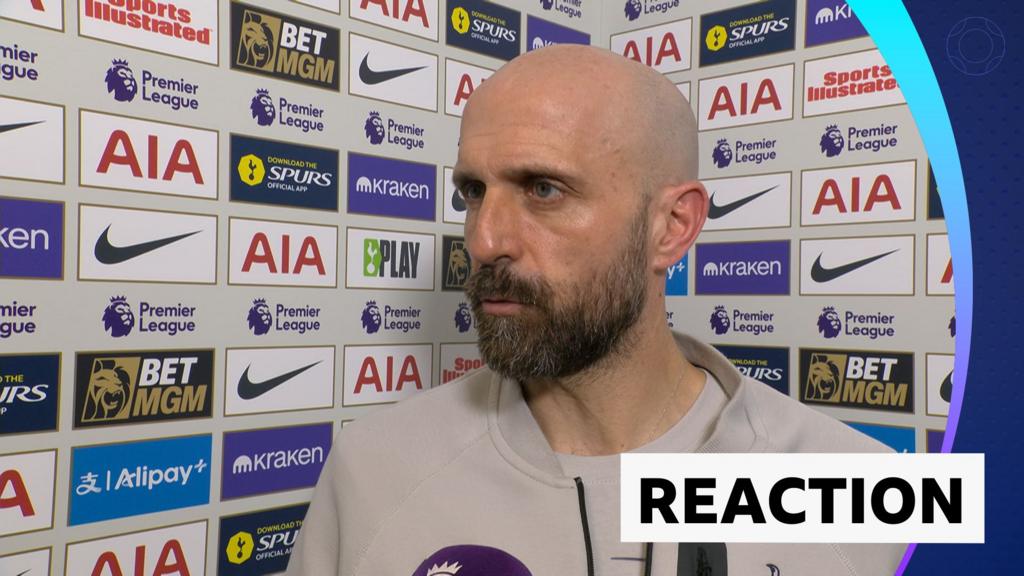
The drop zone reality for Tottenham
Tottenham Hotspur’s 2-2 draw with Brighton on April 18, 2026, was not merely a case of two dropped points. It confirmed a trajectory that sees Spurs lingering in the drop zone with a win percentage of just 23.5% over their last 17 league fixtures. When a team concedes a goal in the 90th minute, analysts call it bad luck; when it becomes the defining characteristic of a season, it is a structural failure.
Tottenham controlled the ball for 58% of the match, an expected figure for a side playing at home. However, the quality of their chance creation remains abysmal. Throughout the 90 minutes, they managed an expected goals (xG) total of 1.14 despite the two-goal return. This over-performance on finishing is masking an inability to dominate the vertical space between the defensive midfielder and the center-backs.
Defensive collapse and structural fragility
The late drama captured on video tells the story of a backline that has forgotten how to close space. Since February, Spurs have allowed 14.2 high-quality chances per 90 minutes, a figure that ranks them 17th in the Premier League. Most damning is the drop in defensive duels won, down from 54% in the first half of the season to 47.1% as of today.
Brighton’s leveller wasn't an anomaly, but a mathematical certainty. Spurs are currently conceding 1.8 goals per game, an increase of 0.6 from their preceding ten-game stretch. The spacing in the defensive transition broke down when the press was bypassed, leaving the center-backs isolated in 1v2 scenarios. This repeated tactical error suggests the defensive line is not merely tired, but disconnected from the pivot.
Why the xG gap matters
The most counterintuitive finding is that Tottenham’s attacking output in the final third has increased by 12% since the start of April, yet their points per game have stagnated. They are taking more shots—averaging 14.5 per game in the last three fixtures—but the shot quality is deteriorating. Average distance for these attempts has crept up to 21.4 yards, indicating a desperate, low-probability strategy that lacks the patience of a top-tier side.
Without a tactical adjustment to facilitate deeper penetration, the team is forced to rely on individual moments rather than systemic movement. The lack of efficiency in the 0-18 yard box continues to plague their record. Looking at the data, the reliance on long-range strikes to salvage points suggests a team that has run out of ideas in the final third. With 6 matches remaining, the math suggests that the drop zone is no longer a temporary state of affairs, but a destination.