Manchester United have spent the better part of a decade chasing ghosts. They cycle through managers who promise cultural resets, only to end up playing the exact same broken transition football.
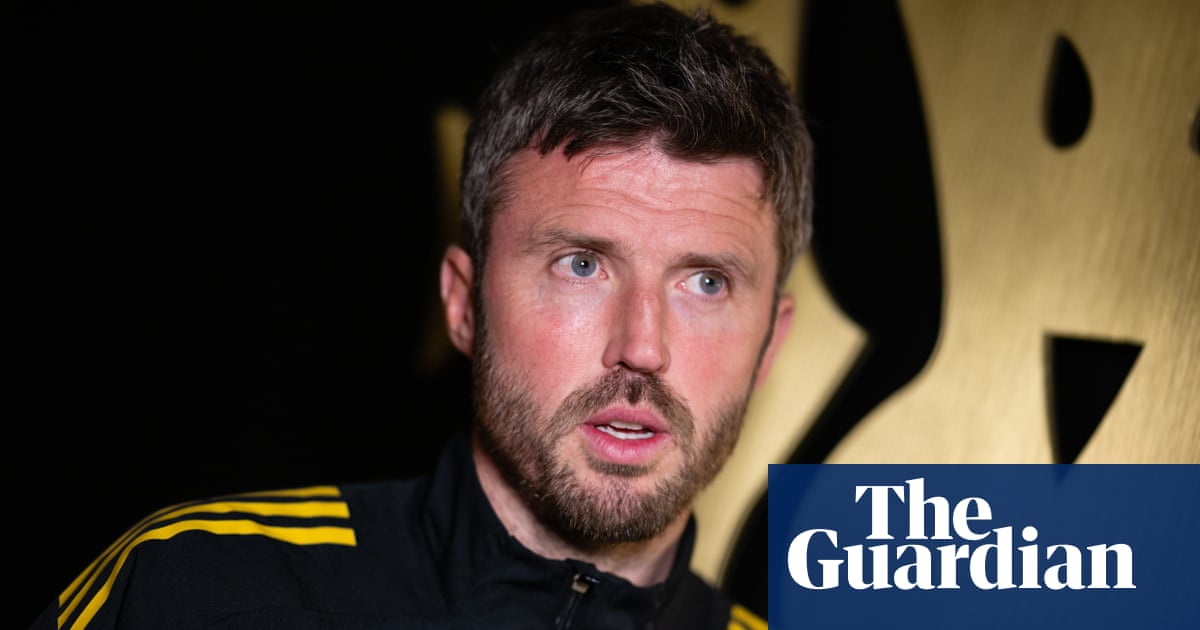
Michael Carrick is doing something different. He isn't talking about philosophy in press conferences. He is simply fixing the midfield.
Ten matches into his interim tenure, the results are undeniable. Seven wins. Two draws. One defeat. The metrics suggest this isn't just a standard new manager bounce.
United are holding the ball higher up the pitch. Their pass completion rate in the final third has spiked. They look like a coherent football team rather than a collection of expensive strangers.
The clamour from his old Class of '92 teammates is predictable. David Beckham and Gary Neville have both thrown their weight behind Carrick getting the permanent job.
You can usually ignore the punditry class when they back one of their mates. But this time, the growing consensus is actually backed by on-pitch evidence.
Look at the shape out of possession. Under previous regimes, United pressed as individuals. One forward would sprint at the goalkeeper, the midfield would stay flat, and the opposition would slice through the giant gap in the middle.
Carrick has installed a rigid mid-block. They don't press high unless there is a clear trigger. Usually, that trigger is a bad touch from a centre-back or a slow, looping pass to the flank.
When they win the ball, the first pass is no longer a desperate hoof to a winger. It is a controlled, angled ball to the nearest central midfielder to secure possession.
This sounds basic. But at Old Trafford, basic competence is a revelation.
The Midfield Renaissance
To understand why this is working, you have to look at what Carrick has done with the double pivot. For years, United's midfield was a black hole. Passes went in, but progression rarely came out.
Carrick has essentially redesigned the engine room. He has stopped asking limited ball-winners to play line-breaking passes under pressure. Instead, he has simplified their roles.
The holding midfielders now operate in tighter proximity. When the centre-backs have the ball, the pivot players don't sprint away to find space. They drop deep, creating a box-like structure that makes it incredibly difficult for opponents to press them effectively.
This is exactly what we saw in the recent gritty away win at St James' Park. Newcastle tried to suffocate United with a high, aggressive press in the opening twenty minutes.
Under the previous manager, United would have panicked. They would have hit long diagonals into the channels, turned the ball over, and invited wave after wave of attacks.
Under Carrick, they simply played through the pressure. Short, sharp combinations. Third-man runs. They bypassed the Newcastle midfield entirely by baiting the press and playing the extra pass.
It was a masterclass in game state management. They completely nullified a hostile crowd by starving the home team of the ball.
You could see the frustration building in the opposition ranks. Players were jumping out of their defensive shape, chasing shadows, and leaving massive gaps behind them.
That is the hallmark of a well-coached side. They don't react to the opponent; they dictate the terms of engagement.
Structural Flaws and Set-Piece Panic
But let's not pretend this is a finished project. The turnaround hasn't been entirely flawless, and you have to look critically at the defensive numbers.
In their last three matches, United have conceded high-quality chances from set-pieces. The zonal marking system Carrick implemented is still completely disjointed.
Against aggressive aerial teams, they freeze. Players are caught ball-watching instead of tracking runners blocking the goalkeeper. If Carrick doesn't sort out the defensive phase from corners, elite teams will brutally punish them in the upcoming fixtures.
The recent 2-1 defeat highlighted this perfectly. United dominated possession, created the better open-play chances, but lost because they could not defend consecutive corner kicks in the second half.
There is also the question of game management when holding a narrow lead. Carrick has shown a tendency to make conservative substitutions a fraction too early.
Bringing on an extra holding midfielder with twenty minutes left invites unnecessary pressure. It sends a psychological message to the opposition that United are shutting up shop.
It hands the initiative over. In the Premier League, if you sit back on a one-goal lead for a quarter of the match, you are asking for trouble.
These are coachable flaws. They are the growing pains of a manager who is still relatively early in his top-flight career.
What matters more is the fundamental structural improvement in the attacking phase. The final-third patterns are heavily automated now.
Numerical Superiority
The wingers know exactly where the underlapping runs are coming from. The full-backs understand when to invert and when to hold the width.
Let's look at the underlying numbers over this ten-game stretch. United are averaging 1.8 xG per 90 minutes. That is a massive leap from the miserable 1.1 they were producing before the managerial change.
The buildup structure has shifted from a flat 4-2-3-1 into a fluid 3-2-5 in possession. One full-back tucks in to form a back three, allowing the other to bomb forward and join the attacking line.
This creates numerical superiority in midfield. Carrick, perhaps unsurprisingly given his playing days, wants complete control of the centre of the pitch.
By dropping a forward slightly deeper and pushing a full-back high, United overload the opposition pivot. It forces defenders to make uncomfortable decisions.
Do you step up to track the dropping forward and leave space behind? Or do you drop off and concede the shot from the edge of the box?
It is a modern, possession-heavy approach. And more importantly, it suits the profile of the squad much better than pure counter-attacking.
Resurrecting the Roster
The truest measure of a manager is whether he improves the players at his disposal. On this front, Carrick’s impact has been stark.
Look at the previously maligned midfield pivot. For months, they looked slow, easily bypassed, and completely devoid of confidence. Fans were demanding wholesale replacements in the transfer market.
Under Carrick, the same personnel look entirely different. By narrowing the distances between the midfield lines, he has masked their lack of recovery pace.
They don't have to cover forty yards of open grass anymore. They just have to shuffle five yards left or right to close the passing lanes.
This has led to a dramatic increase in interceptions in the middle third. United are winning the ball back quicker and higher up the pitch, entirely due to better starting positions.
Then there is the utilization of the wide forwards. Previously, they received the ball on the touchline with two defenders immediately doubling up on them.
Now, they are receiving the ball in the half-spaces. The overlapping runs from the full-backs drag the opposition defenders wide, isolating the United wingers one-on-one against retreating centre-backs.
This is exactly how you maximize attacking output without spending another hundred million in the transfer market. You change the geometry of the attack.
Even the center forwards look more engaged. They are no longer isolated targets waiting for hopeful crosses. They are active participants in the buildup play, dropping deep to link passes before spinning into the box.
The entire unit operates with a synchronized rhythm that simply did not exist four months ago. It is the difference between hoping for individual brilliance and relying on a cohesive system.
The Verdict
So, what happens next? The INEOS ownership group have a massive decision to make before the summer window opens.
Do they chase a big-name European manager with a massive ego and a demand for a £200 million transfer budget? Or do they trust the man currently fixing the plane while it is in the air?
The answer seems obvious. Carrick has earned the right to build his own squad. He has proven he can organize a defence and structure an attack at the highest level.
Here is my prediction. Michael Carrick will be named the permanent Manchester United manager before the end of April. The board simply cannot ignore a 70% win rate in the Premier League.
I also expect them to secure Champions League football for next season. The fixture list is relatively kind, and the structural improvements are real.
They will drop points. They will likely struggle away from home against lower-block teams where their set-piece vulnerabilities can be ruthlessly exploited.
But they will win enough of the matches they are supposed to win. And for Manchester United, that consistency is exactly what has been missing.
The Beckham and Neville endorsements might grab the headlines. But the tactical tape is what really matters here.
Carrick has taken a broken, unbalanced squad and made them incredibly hard to beat. He has simplified the defensive roles and added sophisticated attacking patterns.
It isn't flashy. It isn't built on soundbites. It is just good, solid coaching. And right now, that is exactly what this club needs.
Read Next
- Michael Carrick is getting the United job and we all know how this ends
- Manchester United are about to fall for the exact same interim trap again
- Man United's midfield is about to walk into Unai Emery's tactical trap
- Cole Palmer's Chelsea frustration makes this United clash a powder keg
- 🏆 Europa League Final 2026 — Full Coverage Hub