The 1.7 anomaly
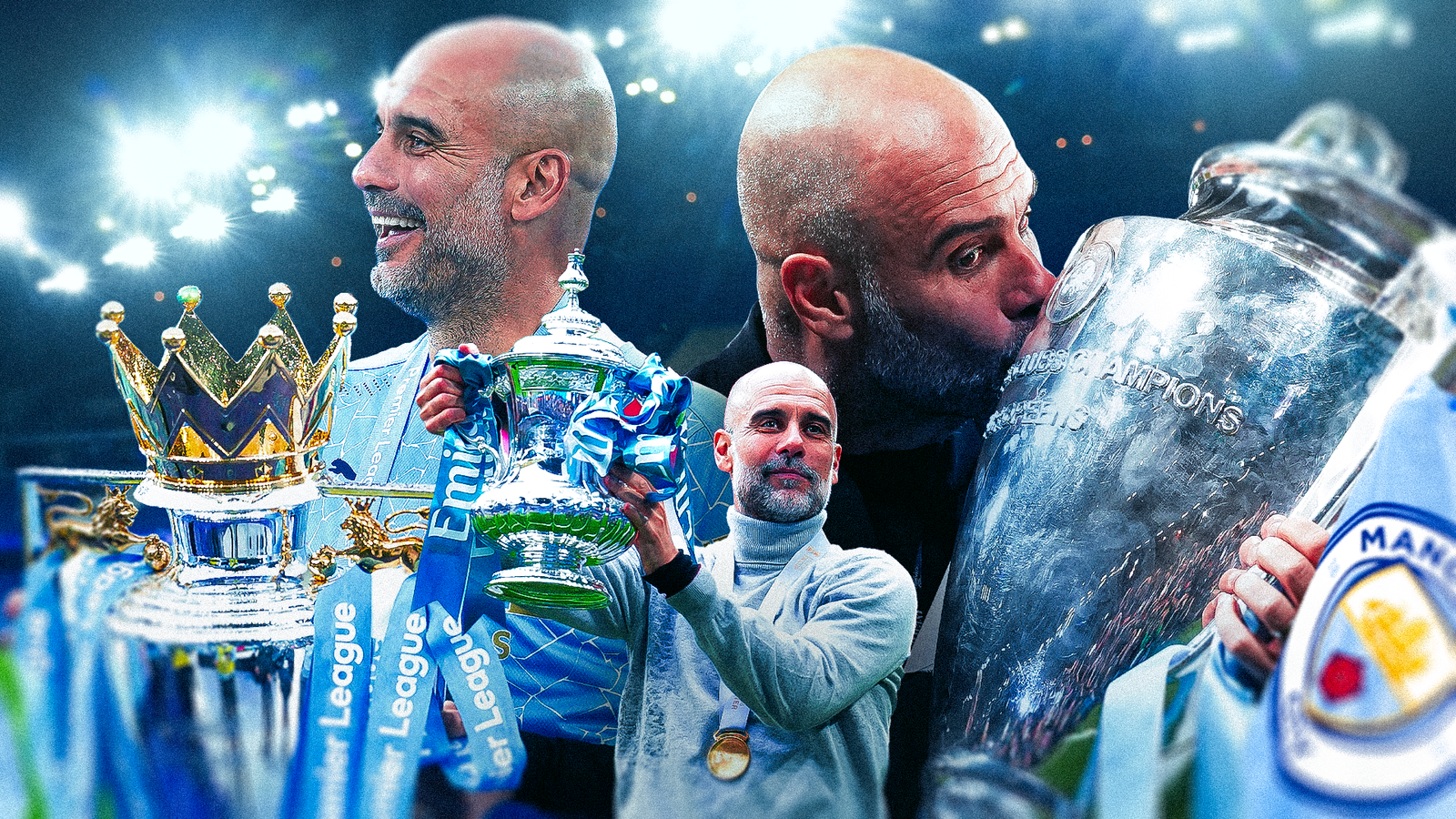
The BBC reported it in a single, devastatingly brief sentence on Monday: Manchester City are preparing for manager Pep Guardiola to leave the club at the end of the season after a decade in charge. Ten years. 17 major trophies. The end of an era is a tired media cliché, but what exactly does this specific departure look like when you strip away the emotion and look purely at the data? It looks like an anomaly that broke the Premier League's competitive calibration.
When you manage a football club at the absolute elite level, maintaining a trophy-winning pace is physically and mentally corrosive. Sir Alex Ferguson managed 38 trophies in 26 years across his Manchester United tenure. If we filter out the Community Shields—which most analysts agree we should—Ferguson's rate of major honours hovered around 1.1 per season. Bob Paisley's furious nine-year spell at Liverpool yielded 14 major honours, clocking in at 1.55 per season. Guardiola's 17 major trophies in exactly 10 seasons puts him at 1.7 per year. He has normalised a level of success that makes historic greatness look relatively sluggish.
But the raw silverware count is the least interesting part of Guardiola's decade. The real story is how he systematically dismantled the traditional English transition game. Over the past 10 years, City have led the Premier League in average possession every single season, never dipping below 63.5%. This was a weaponised monopoly on the ball that forced opponents into deep, exhausting low blocks. The sheer physical toll of chasing City's passing circuits meant that teams were often too fatigued to launch effective counter-attacks when they finally won the ball back.
Suffocation by a thousand passes
Before Guardiola arrived in Manchester, a pass completion rate of 85% for a starting eleven was considered elite. By his third season, City were regularly crossing the 90% threshold in high-stakes matches. The league average had to adapt just to survive the suffocating geometry of his setups. Teams stopped trying to win the ball in the middle third because City’s central progression was essentially unpressable.
Consider the role of the goalkeeper. Ederson arrived in 2017 and immediately rendered traditional pressing obsolete. Before his arrival, pressing the keeper was a viable strategy to force turnovers. Ederson’s ability to bypass the first and second lines of pressure with a 60-yard clip to a winger fundamentally altered the risk-reward calculation for opposing managers. His pass completion rate frequently exceeded 85%, a number that would have been perfectly acceptable for a creative midfielder a decade prior. If you pressed high, he played over you. If you dropped off, City's centre-backs casually carried the ball to the halfway line.
Look at the evolution of their build-up shape. We went from the inverted fullbacks of 2017—where Fabian Delph and Kyle Walker would step into midfield alongside Fernandinho—to the brutalist back four of pure centre-halves by 2023. John Stones stepping into the double pivot wasn't a stylistic quirk. It completely altered how opponents engaged. If you pressed Stones, Ruben Dias had a clean passing lane to Rodri. If you marked Rodri, Stones carried the ball into the final third. The passing sequences extended. In the 2017/18 Centurions season, City averaged around 18 passes per sequence before a shot. By 2023, that number had crept even higher against low blocks.
The expected goals distortion
City did more than just keep the ball. They monopolised specific, dangerous areas of the pitch. Expected goals (xG) models had to evolve largely because of what Guardiola's teams were doing in the penalty area. Traditional models assigned a flat value to certain shot locations. City broke this by engineering cut-backs to the penalty spot where the goalkeeper was already taken out of the equation.
Raheem Sterling's peak years under Guardiola perfectly illustrate this mechanical efficiency. Sterling wasn't scoring 30-yard screamers. He was tapping the ball into an empty net at the back post because the system guaranteed that a low, driven cross would bypass the defensive line precisely as he arrived. City consistently outperformed standard xG models because their tactical patterns generated shots with a 0.85 xG value or higher. They stopped shooting and started passing the ball into the net.
Then came Erling Haaland, which required a completely different statistical framing. Guardiola sacrificed a degree of midfield control—the false nine system that defined his middle years at the club—to accommodate a pure apex predator. The transition was rocky at times. City's overall possession dropped slightly, but their sheer efficiency in the final third spiked. The midfield no longer needed to engineer the perfect cut-back. They just needed to find Haaland in a 10-yard radius of the goal.
The defensive floor
For all the focus on his attacking systems, Guardiola's real masterpiece over this decade has been his defensive structure. The narrative early in his tenure was that his teams were susceptible to the counter-attack. Jurgen Klopp's heavy-metal Liverpool exploited this repeatedly in 2018.
The adjustment was cold and mathematical. Guardiola recognised that transition defending relies on raw physical duels. If you lose the duel, you concede a high-quality chance. His solution was to remove the duel entirely. By deploying four natural centre-backs across the backline—think Nathan Ake, Manuel Akanji, Dias, and Josko Gvardiol—he sacrificed overlapping width for absolute transitional security.
City’s rest defence—the shape they hold while attacking—became an impenetrable block. In their peak title-winning seasons, City faced fewer than 7.5 shots per game. You cannot beat a team if you physically cannot progress the ball past the halfway line. The opposition's xG per 90 routinely plummeted below 0.5 against them. It was defensive dominance achieved entirely through offensive possession.
A fractured legacy
There has to be a critical lens applied to this decade, though. The tactical rigidity that makes Guardiola's system so effective in a 38-game league season has repeatedly tripped them up in knockout football. We saw it against Chelsea in Porto, against Real Madrid in consecutive years. When the game state devolves into chaos—when the tactical board is thrown out and a match requires pure, instinctive adaptation—City have often looked paralysed.
Guardiola demands absolute control. Every movement is choreographed. When an opponent successfully introduces anarchy, his players look to the touchline for a solution rather than finding one organically on the pitch. It is the fundamental flaw of a micromanager. You build a machine so complex and perfect that its operators forget how to function when a single gear slips out of alignment.
We also have to acknowledge the ceiling he hit with certain types of players. Jack Grealish arrived as a chaotic, unpredictable ball-carrier. Under Guardiola, he was systematically reprogrammed into a ball-retaining mechanism on the left flank. Grealish's dribbles per 90 plummeted, replaced by recycled passes back to the central midfielders. While this served the team's overall structure, it undeniably stripped away the individual brilliance that made the player special in the first place. Guardiola demands subservience to the system, and that system leaves very little room for maverick expression.
The financial context also cannot be ignored. The 17 major trophies were built on an unprecedented accumulation of talent. Guardiola didn't just buy players; he bought specific profiles to solve microscopic tactical issues. If a £50 million fullback didn't grasp the interior positional play required, they were discarded and replaced without hesitation. The genius of the system is undeniable, but the system required immense capital to construct.
The vacuum left behind
The Premier League will look completely different next season. Over 10 years, Guardiola forced every other top-half club to adapt to his reality. Arsenal hired his assistant and replicated his positional structures. Liverpool built an entire identity around disrupting his passing networks.
Without Guardiola as the final boss of English football, the tactical arms race might actually slow down. City are preparing for his departure, but finding a successor isn't just about hiring a good manager. It is about replacing an entire footballing operating system. You don't just plug a new coach into this squad and expect the gears to keep turning at the same rate.
The data from this decade will be studied for fifty years. The 17 major trophies are the headline, but the underlying numbers—the passing networks, the high turnovers, the staggering suppression of opposition xG—are the true legacy. He didn't just win; he mathematically solved the league. Whoever steps into the dugout next August inherits a club that has forgotten how to be normal.
Read Next
- Arsenal and City go down to the wire in the ugliest title race yet
- PGMOL's apology to Forest proves VAR is basically a suggestion box
- Top 10: The Most Unforgettable Moments in Football History
- Liverpool fans are having a complete meltdown over life after Salah
- ⭐ UCL 2026 — Champions League Quarter-Finals Hub