The Tactical Math: Why Villa's High Line is Suicide
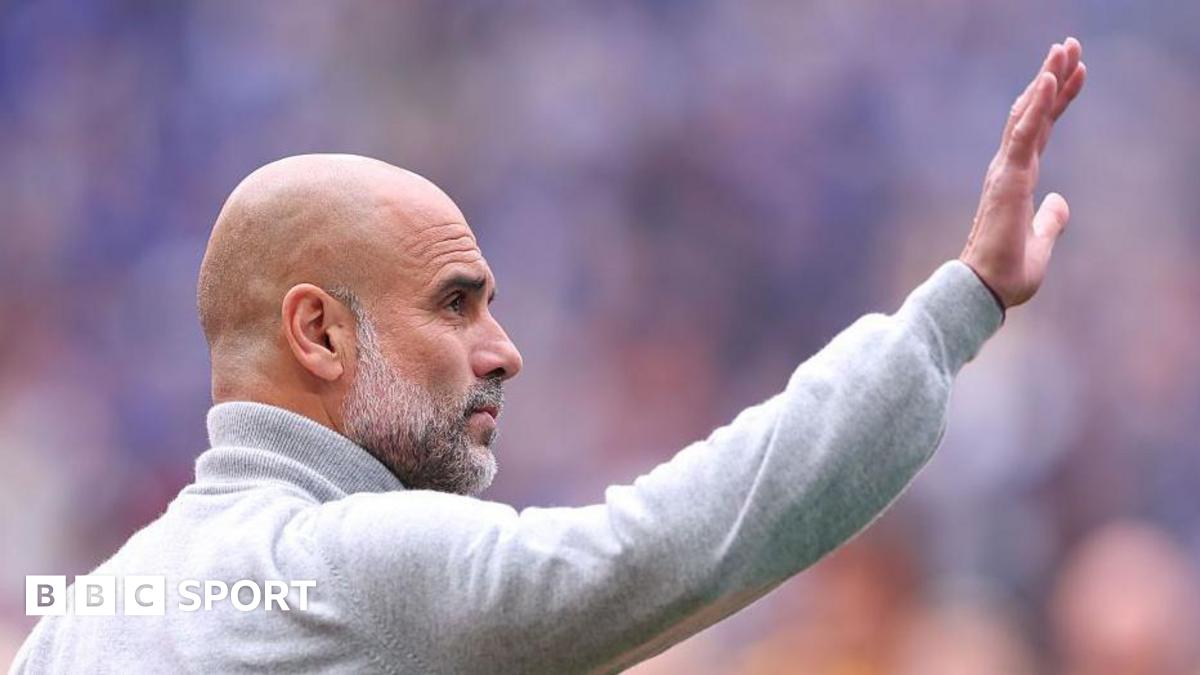
Today, Pep Guardiola walks out at the Etihad Stadium for the final time as manager of Manchester City. The announcement on Friday, May 22, 2026, that the Catalan genius will step down a year ahead of schedule has sent shockwaves through English football. Unai Emery is bringing an Aston Villa side that is highly organized, highly aggressive, and ultimately, highly vulnerable to City's primary weapon.
The title race is already over for City. A midweek 1-1 draw at Bournemouth officially ended their chances of retaining the trophy. While City dominated with 72% of the possession, they looked completely devoid of ideas against a deep, compact low block, generating just 0.82 xG as Erling Haaland was starved of service.
Unai Emery does not play low blocks. Villa's signature defensive structure is a mid-block that aggressively transitions into a high line, squeezing the pitch to keep the distance between defensive and forward lines under 25 yards. This is a high-stakes gamble that has worked to the tune of a league-high 4.2 offside calls per game this season.
On average, Villa's backline sits 44 meters from their own goal line during opponent buildup. Against Erling Haaland, this defensive structure is tactical suicide.
Haaland is a master of the blind-side run, positioning himself on the shoulder of the far center-back. When Rodri receives the ball under no pressure in the center circle, the Norwegian immediately sprints across Pau Torres. The Spanish defender is forced to turn his hips, losing a critical fraction of a second.
Expect Kevin De Bruyne to occupy the right half-space, dragging Lucas Digne out of the defensive block. This movement opens a direct passing lane for John Stones, stepping up from his defensive duties into the midfield double pivot next to Rodri. Stones has completed 91.4% of his forward passes this season, proving lethal at slicing through mid-blocks.
My prediction for today's match is a ruthless 4-1 victory for Manchester City. Villa's high line will be breached three times in the first half alone. Haaland will score a brace, putting on a masterclass in vertical movement.
The 2034 Blueprint: Why Haaland Stays Post-Pep
With Pep leaving, the doom-mongers are already writing Manchester City's obituary. Barcelona need a replacement for the departing Robert Lewandowski this summer, and the Spanish press is already running front-page spreads linking Haaland with a move. But the doomsday clock is being set far too early.
Haaland is not going anywhere. In January 2025, the Norwegian striker signed a massive contract extension keeping him in Manchester until 2034. More importantly, his career choices have never been dictated by a cult of personality.
In a recent interview discussed by Mirror Football, Haaland recalled the advice his father Alf-Inge gave him a decade ago.
"Never go to a club because of the manager"
This quote speaks volumes about the long-term thinking behind Haaland's career. He chose Manchester City because of the institutional stability, the commercial strength, and the tactical fit of the squad itself. Pep was a massive bonus, but he was never the sole foundation.
Haaland himself acknowledged this structural focus when talking to Gary Lineker on The Rest is Football in December. He admitted he did not even know the exact sequence of their contract signings when committing his future.
"He signed a new contract - was it before or after me, I'm not sure - but I knew he was staying for another year or another year and a half,"
The striker explained that most of his contract negotiations were handled by the club's hierarchy, not the manager. He recognized that managers come and go, but the club's footballing blueprint remains stable. This institutional resilience is exactly why the post-Pep transition will be far smoother than the catastrophic collapses witnessed at Old Trafford or Arsenal in previous decades.
The Control Trap: Rodri's Fatigue and Stagnant Possession
Of course, City's transition won't be entirely painless. This season's tactical stagnation was a warning sign that cannot be ignored. Pep's late-era obsession with control often suffocated City's own attacking flair, leading to matches where they dominated possession but generated very little threat.
The Bournemouth match was a classic example. Slow buildup between Manuel Akanji and Nathan Ake allowed the opponent to easily shift their defensive block. City lacked the verticality that made them treble winners.
Furthermore, the physical toll on the squad is starting to show. Rodri has played over 4,100 minutes of competitive football this season, and the lack of a competent backup has left City highly vulnerable on the counter-attack. When Rodri is bypassed, opponents have averaged 1.24 xG per transition, a significant increase from the 0.84 conceded last season.
The incoming manager will inherit a squad that is slightly comfortable. They desperately need fresh blood in the engine room.
The CFG Ambassador: Retaining the Guardiola DNA
Yet, Pep is not completely severing ties with the club. He is transitioning into a global ambassador role for the City Football Group, ensuring his tactical DNA remains embedded in the hierarchy. As Ferran Soriano explained when the departure was confirmed, Pep's knowledge will continue to guide the group.
"As we celebrate the past, we are also very happy to know that Pep will stay with the Group and we will be able use his knowledge and experience in so many of our other clubs to help managers and players,"
This ensures that the tactical foundation Pep built at the Etihad will remain part of the club's blueprint. The incoming manager will not have to rebuild from scratch, but rather fine-tune a highly structured machine. With Haaland committed to the long term and the boardroom remaining stable, City's rivals expecting a sudden downfall are set for a bitter disappointment.