Source Credibility: Tier 2
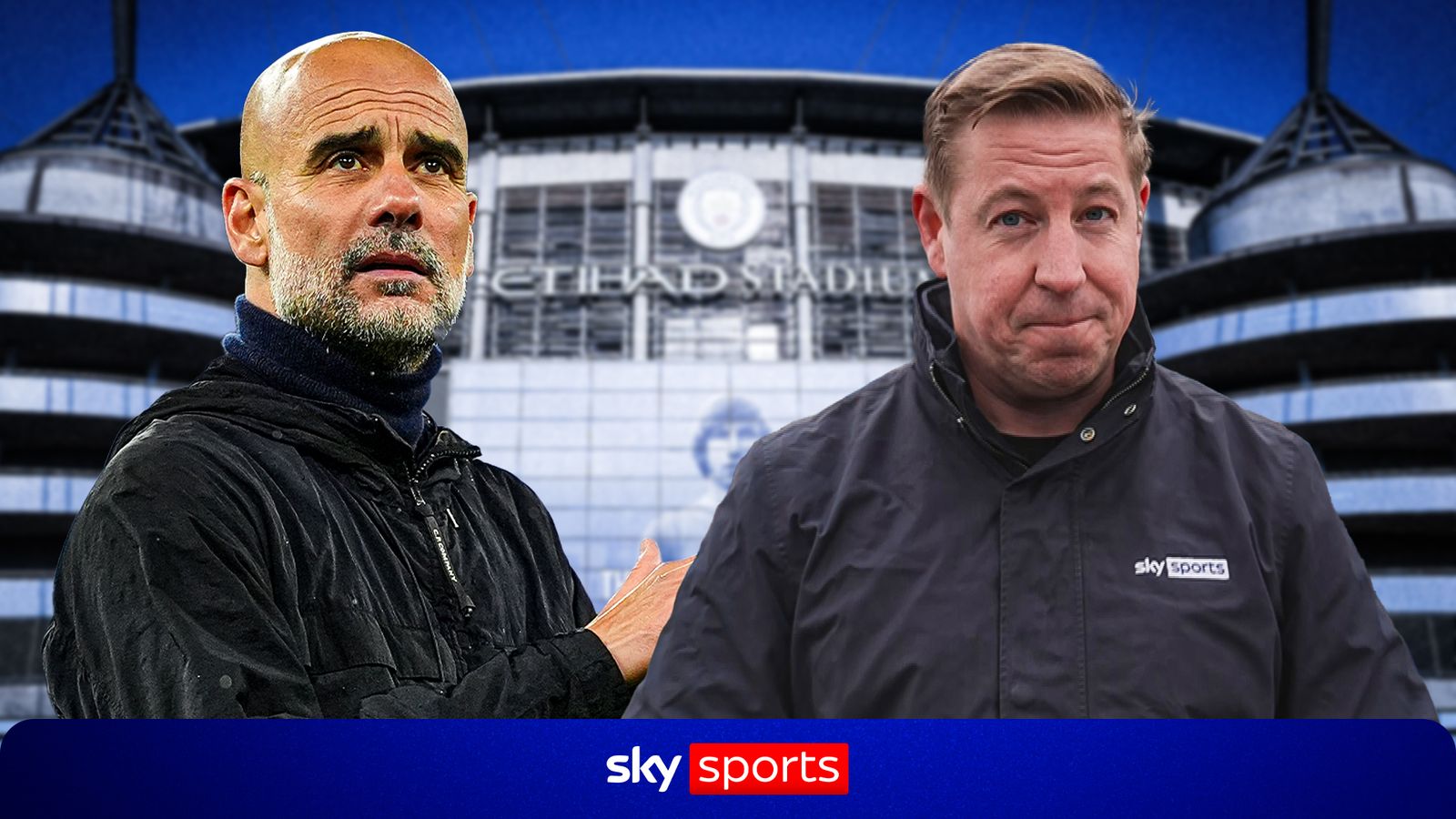
Sky Sports has floated the idea on their Back Pages segment tonight, which usually means there is smoke, even if the fire hasn't fully breached the surface. We are looking at a solid Tier 2 situation. It is not a Fabrizio Romano 'here we go' or an official club statement. But when mainstream broadcasters start dedicating primetime segments to a managerial exit, agents and executives are talking.
The timing is deliberate. It is May 18, 2026. The domestic season is wrapping up, and the Champions League final is just ten days away. The summer transfer window planning is already in motion. If Manchester City are looking at a managerial transition, the entire European market freezes to watch. Managers of this profile do not operate in a vacuum. Their decisions trigger a domino effect across top clubs.
We have to look at how this news dropped. It was not a leaked WhatsApp message or a cryptic tweet from a player's brother. It is a scheduled broadcast discussion. That suggests the narrative is being gently introduced to the public. Clubs often use friendly media channels to soften the blow of massive impending changes.
The Ten-Year Cycle
Guardiola arrived in Manchester in 2016. A decade at one club defies every pattern he established at Barcelona and Bayern Munich. The physical and mental toll of his micro-management style usually leads to burnout long before the ten-year mark. At Barcelona, he left empty and exhausted. At Bayern, he hit a tactical ceiling in Europe and walked away.
He demands absolute perfection. That level of intensity drains the squad. We have seen players like Joao Cancelo and Raheem Sterling pushed out when the mental alignment slipped. Maintaining that psychological grip for a decade is unprecedented in the modern game. Sir Alex Ferguson and Arsene Wenger managed it, but they were team-builders who delegated coaching. Guardiola is on the grass, correcting body angles by a few degrees.
The signs of fatigue are there. Not necessarily in the points totals, but in the body language. The touchline demeanour has shifted. The post-match press conferences feel more like obligations than the tactical seminars they used to be. He has won everything multiple times. The motivation to figure out how to break down a low block at Selhurst Park on a rainy Tuesday in February has to wane eventually.
This is the harsh reality of modern elite football. The calendar is brutal. The expectations are suffocating. Even the greatest minds need to step out of the pressure cooker. A sabbatical seems entirely logical at this juncture in his life and career.
The Squad Rebuild Problem
City are staring down a massive transitional phase. Kevin De Bruyne is not getting younger, and his injury record over the last two seasons tells a story of a body pushed to its absolute limits. Kyle Walker's recovery pace, the ultimate cheat code for Guardiola's high line, is fading. Ederson has faced increased scrutiny over his shot-stopping numbers compared to his distribution.
This is where my main criticism of the Guardiola era lies. For all the domestic dominance, City have frequently backed themselves into corners with squad planning. They rely so heavily on highly specific, system-dependent players. When those players age out or lose form, replacing them is almost impossible. You cannot just buy a new Rodri. You cannot just clone Bernardo Silva. The system is so rigid that it actively rejects standard elite players who cannot adapt to the positional play demands. Kalvin Phillips was the prime example of this failure.
If Guardiola leaves this summer, he is handing a ticking time bomb to his successor. The squad needs a rebuild, but it is built entirely in the image of one man's obsessive tactical vision. The incoming manager will inherit players hard-wired to play one specific way. Un-teaching those habits is often harder than teaching new ones.
Consider the defense. Guardiola has effectively eliminated traditional full-backs from his squad. He plays center-backs wide or pushes midfielders into the defensive line. A new manager coming in who wants overlapping, traditional full-backs will look at the roster and find a massive structural deficit.
Tactical Void and the Successor
Who takes over this machine? The City Football Group has supposedly groomed Michel at Girona for years. He plays expansive, possession-based football. But doing it in La Liga with zero pressure is vastly different from facing the English media while trying to win a fourth consecutive title. The spotlight in Manchester will melt a manager who isn't prepared for the constant, blinding glare.
Xabi Alonso is the other obvious name. His work at Bayer Leverkusen proved he can build a title-winning side that controls the ball and the tempo. But Alonso prefers a slightly more vertical approach at times, utilizing wing-backs in a way Guardiola has largely abandoned. Alonso would demand control over transfers, and his system requires a different profile of wide player than the inverted wingers City currently hoard.
Whoever steps in will have to decide immediately: do you try to maintain the 3-2-4-1 box midfield structure that defined City's recent success, or do you tear it down? Ripping up the playbook means players like John Stones have to revert to traditional roles. It means Phil Foden might see his central spaces altered. The transition will not be seamless.
There is also the question of squad authority. Guardiola walks into the dressing room and commands instant, unquestioning respect. He is the alpha. A new manager will face a dressing room full of players who have won everything. Getting them to run through brick walls for a new voice is a notoriously difficult task.
The Financial Cloud
We cannot ignore the context surrounding the club. The looming specter of the Premier League charges adds an underlying tension to every decision made at the Etihad. Guardiola has staunchly defended the hierarchy in public. He has been the shield for the ownership, deflecting questions about accounting and sponsorships back to the football.
Without him, that shield is gone. The pressure on the front office will multiply. The media will no longer be charmed by tactical brilliance; they will focus entirely on the boardroom. If a points deduction or severe penalty is handed down in the post-Guardiola vacuum, the project could destabilize rapidly.
Elite managers might think twice about stepping into a job where the foundation itself is under legal scrutiny. Why risk your reputation taking over a team that might be barred from European competition or relegated due to off-field issues? Guardiola's presence guaranteed stability. His absence guarantees chaos.
The Market Impact
If Guardiola signals an exit, the transfer market will react violently. Players who joined specifically to play for him might reassess their futures. Erling Haaland's representatives are notoriously proactive. If the manager who feeds him leaves, does Real Madrid suddenly pick up the phone again? The 100 million pound release clauses will suddenly become active points of discussion.
Conversely, it might open the door for different profiles to arrive. City might target more transitional, explosive players. The slow, methodical control of Jack Grealish might be replaced by pure, direct wingers. The entire recruitment strategy at the Etihad will have to pivot overnight. Agents across Europe are currently waiting by their phones to see how this plays out.
Players out on loan or on the fringes might suddenly see a lifeline. Someone like Matheus Nunes, who has struggled to adapt to the ultra-specific demands of Pep's midfield, might thrive under a manager who allows more freedom and chaos in the middle of the park.
Probability Assessment
How likely is this exit? I put it at a medium probability right now. Guardiola is fiercely loyal to Txiki Begiristain and Ferran Soriano. He won't leave them in the lurch. If he departs, it will be an orchestrated transition, not a sudden resignation. They will have a plan in place before the news officially breaks.
However, the sheer exhaustion of a decade in the Premier League cannot be ignored. The 2026 World Cup is kicking off next month. There are always whispers about a national team job. Brazil and England have circled him in the past. Taking a national team role offers a drastically reduced day-to-day workload. It allows him to live a normal life for ten months of the year while still scratching the competitive itch.
If City achieve their targets this season, he might view it as the perfect natural endpoint. Walking away at the top, rather than staying one year too long, fits his historical M.O. He knows better than anyone that holding on past the point of peak effectiveness damages the legacy.
Expected Impact
If Guardiola actually leaves, the Premier League title race blows wide open. Arsenal have been grinding their teeth against the City machine for years. Mikel Arteta has built a squad specifically designed to counter Guardiola's tactics. If the target moves, Arsenal suddenly become the most stable project in the country. They are primed to step into the power vacuum.
Liverpool, still finding their feet post-Klopp, will sense blood in the water. The Anfield faithful know that a City without Pep is a mortal enemy, not an unstoppable cyborg. Manchester United and Chelsea, despite their ongoing structural messes, will view a Guardiola-less City as vulnerable. The mental block that other teams have when facing City will instantly evaporate.
The impact goes beyond just results. Guardiola changed how football is played in England. From goal kicks to inverted fullbacks, his tactical fingerprints are on every team in the top four divisions. When he leaves, an entire era of tactical evolution ends. The power vacuum will be absolute chaos. And for the neutral, that chaos might be exactly what the league needs right now.