The Hidden Toll of a Shootout
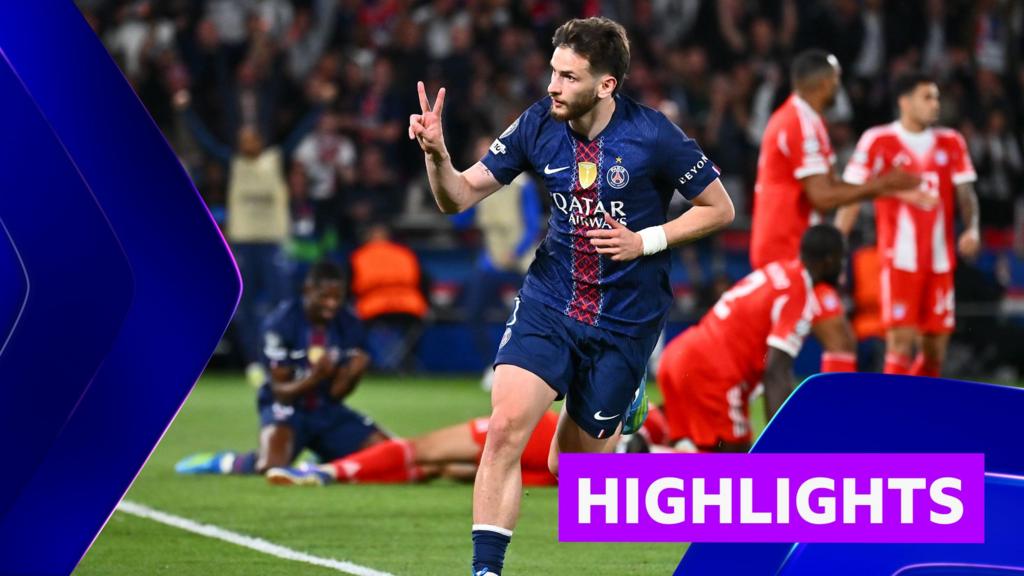
Nine goals in a Champions League semi-final look fantastic on television. They break the internet. But while tacticians dissect defensive collapses, the reality inside the dressing rooms is entirely different.
Ice baths are being drawn. Medical staff are frantically downloading GPS data. The adrenaline is fading fast.
A match played at the intensity required to produce a nine-goal thriller in Paris is a medical nightmare. Football at this level is built on high-speed running and explosive decelerations. When a tie descends into a basketball game, the physical load skyrockets.
Players stop operating within the controlled parameters of a structured press. They run end-to-end. Anaerobic systems are pushed to absolute failure.
Specific medical bulletins regarding individual hamstring issues remain tightly guarded tonight. However, the macro-level injury update is obvious. Both squads just redlined their engines at the worst possible time in the calendar.
The Physiology of Chaos
To understand the expected medical fallout, look at the biomechanics of a broken game. In a standard tactical stalemate, players manage their energy. They burst, and then they recover.
In a shootout, recovery windows vanish entirely. Midfielders are forced into repeated maximum-effort sprints to cover massive gaps. This is precisely where severe muscle damage occurs.
When muscle fibers are forced to lengthen while contracting, microscopic tears form in the sarcomeres. This eccentric contraction is incredibly common when breaking stride to defend a sudden counter-attack. The immediate inflammatory response is necessary for healing, but it brings severe stiffness.
By the time Bayern arrive back at their training base, the inflammatory mediators will have flooded the damaged tissues. Contact injuries will not define the second leg on May 5. Non-contact, soft-tissue damage will.
Hamstrings and groins bear the brunt of unexpected, desperate changes of direction. When a defender decelerates rapidly to track a runner for the thirtieth time, the muscle fibers reach peak mechanical stress.
Lactic acid accumulation in the final twenty minutes altered the running mechanics of both teams tonight. Players got incredibly sloppy. Strides shortened, and foot strikes became heavier.
This is the exact window when the risk of a Grade 1 muscle tear jumps exponentially. Even if a player walked off the pitch feeling intact, the micro-trauma within the tissue is severe. Blood tests taken over the next twelve hours will reveal alarming spikes in creatine kinase.
The Midfield Engine Load
Look specifically at the central midfielders. A standard elite midfielder covers roughly 11 to 12 kilometers per match. But total distance is a meaningless metric to a sports scientist.
What matters is high-intensity distance. In a game defined by rapid counter-attacks, high-intensity running volume can spike by up to 30 percent compared to a controlled possession game.
That spike is pure poison for fast-twitch muscle fibers. The human body is efficient at jogging, but sprinting demands immediate ATP generation and physically shreds muscle tissue. Those central players will wake up tomorrow feeling as though they played two full matches.
When the legs go, the tactical structure follows. A high press is entirely reliant on the entire unit moving synchronously. If one midfielder is half a second late to close a passing lane because his hip flexor is tight, the opposition easily bypasses the press.
Tonight’s chaotic flow means neither team will have the physical capacity to execute a coordinated high block next week. Medical staff cannot simply massage away a massive spike in high-speed running. The tissue physically breaks down and requires deep rest to rebuild.
The Seven-Day Window
Both medical departments face a brutal clock. They have exactly seven days before the return leg. A week is barely adequate recovery time for a normal fixture.
Following a game of this magnitude, it is completely insufficient to repair structural damage. The next forty-eight hours are pure damage control. Players will undergo aggressive cryotherapy and targeted anti-inflammatory management.
By Thursday morning, the true damage reveals itself. Cortisol levels drop, and the pain masking ends. Players who thought they were simply tired will start reporting localized tightness in calves and hip flexors.
The timeline for any micro-tears suffered tonight is impossible to beat. A mild hamstring strain requires a minimum of 10 to 14 days for a safe return. Anyone carrying a legitimate muscular issue out of this first leg will either miss the return fixture or play through heavy chemical assistance.
A Broader Industry Crisis
The medical reality of this spectacle highlights a broader crisis in modern football. These athletes are not machines. They arrived at this semi-final at the end of a gruelling domestic season.
The physiological baseline of both squads was already compromised. Asking them to produce back-to-back performances of this physical magnitude borders on reckless.
We saw this exact scenario play out with Real Madrid and Manchester City in recent years. Those epic, draining semi-finals left players visibly hobbling by the seventieth minute of the subsequent final. The human body is a finite resource.
European football's governing bodies continue to add fixtures, ignoring the biological reality of elite performance. The upcoming calendar only makes this worse. With the expanded World Cup looming in the summer of 2026, the off-season recovery period is essentially erased.
Cumulative fatigue is a ticking time bomb for major ligament injuries. Competitors across Europe are watching this fallout closely. The victor of this tie will likely face a battered opponent in the final on May 28.
Strategic Implications
The narrative going into the second leg will focus on defensive errors. However, the tie will actually be decided in the medical room. Which staff can successfully flush the systemic fatigue?
Bayern face the steeper climb. Losing a shootout is psychologically draining, which directly harms physical recovery. Sleep quality plummets after a high-adrenaline loss, slowing the protein synthesis required for muscle repair.
PSG benefit from the hormonal boost that accompanies a major win. The release of dopamine aids in recovery. But their raw physical exertion was exactly the same.
Managers are now operating more as physiotherapists than tacticians. The training pitches will be empty this week. Tactical walk-throughs will replace high-intensity drills.
Any manager who attempts to run a full-contact training session before Saturday is committing professional malpractice. The priority is entirely focused on flushing metabolic waste.
There is a vast difference between being medically cleared to start and being physically capable of repeating high-speed sprints. Expect both sides to look surprisingly sluggish in the opening exchanges next week.
The bill for a nine-goal thriller always arrives. The lack of specific injury bulletins tonight is merely a temporary reprieve. The second leg will not just be a tactical battle, but a grim test of sheer physiological survival.
Read Next
- PSG and Bayern just broke the Champions League with a nine-goal fever dream
- Bayern Again: PSG's Champions League Obsession Faces Its Final Boss
- Nobody can agree if this new-look PSG is brilliant or completely doomed
- Guardiola's tactical gamble meets Bayern's chaos tonight
- ⚽ Ligue 1 2025-26 — PSG, Monaco & the Title Race Hub
- ⭐ UCL 2026 — Champions League Quarter-Finals Hub