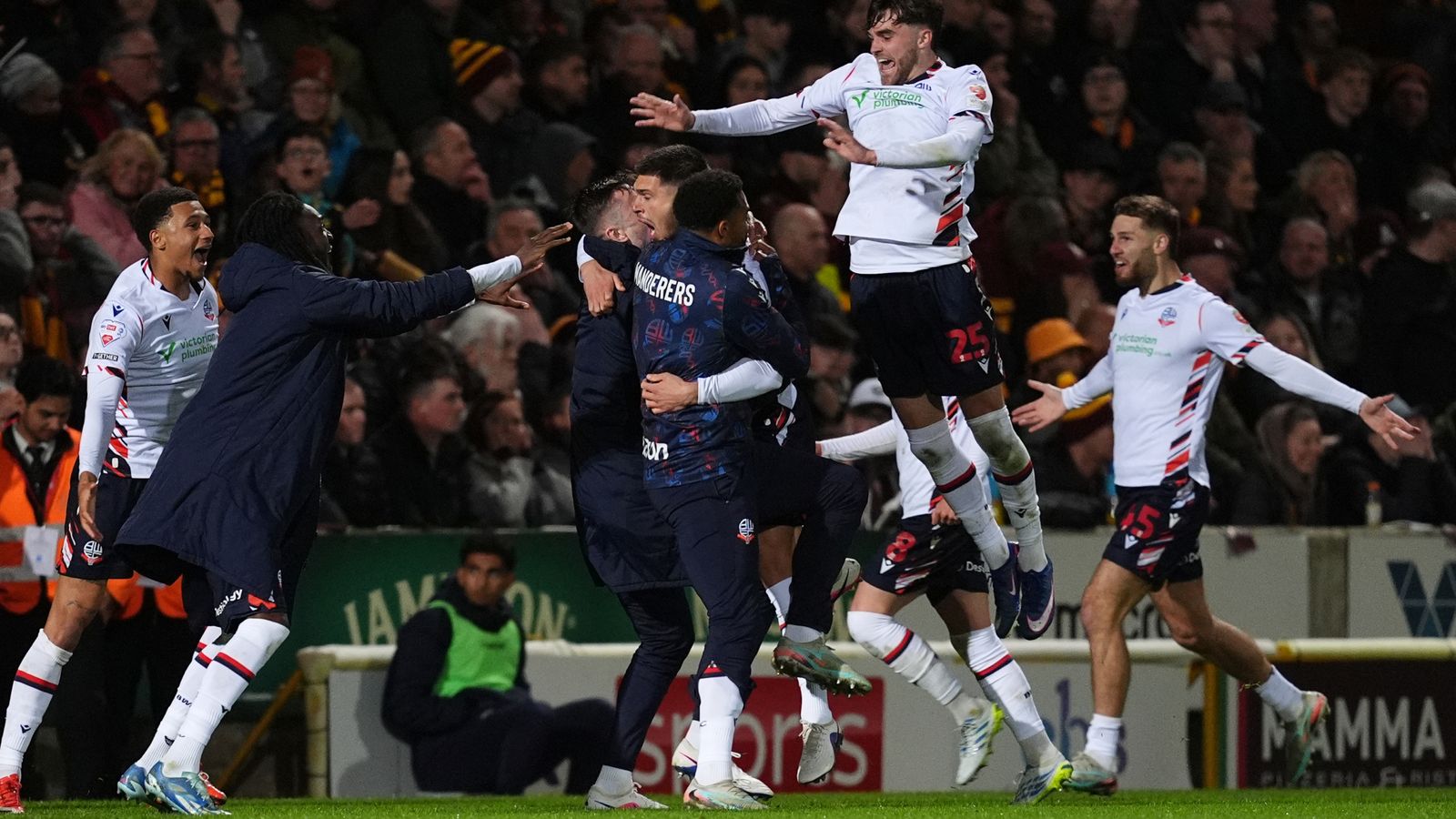
The anatomy of a transition sprint
Football matches are rarely decided by steady, predictable attrition. They are broken open in moments of pure, unfiltered chaos. We saw exactly that as Bolton doubled their aggregate lead in the most brutal way possible. They struck immediately after a Bradford goal was chalked off.
From a tactical perspective, it is a brilliant counter-attack. From a sports science and medical perspective, it is a nightmare scenario for soft tissue injuries. The transition from a state of emotional release to maximum physical output is exactly where muscles fail.
When Bradford put the ball in the net, their players instinctively dropped their guard. The parasympathetic nervous system briefly takes over during a celebration. Heart rates dip slightly. The tension in the hamstrings and calves relaxes. Then, the offside flag is spotted.
In a fraction of a second, the ball is back in play. Bolton players, fueled by the reprieve, trigger a sprint. Bradford players are caught flat-footed. They are forced to accelerate from a dead stop while their bodies are physiologically unprepared for the burst.
The science of the sudden sprint
Muscle injuries in professional football do not usually happen at top speed. They happen during the acceleration phase. When a player is forced into a reactive sprint after a disallowed goal, the biomechanics are fundamentally compromised.
The quadriceps and hamstrings are antagonistic muscles. They must work in perfect harmony to propel a player forward. If a player is emotionally deflated, the neural signaling from the brain to the muscle groups can be fractionally delayed.
That delay is all it takes. A micro-tear becomes a grade-two strain. A Bradford defender scrambling back to cover the Bolton break is pushing his body beyond its prepared limits. The fast-twitch muscle fibers fire out of sequence.
We see this pattern repeatedly in high-stakes matches. A team commits numbers forward, thinks they have scored, and then has to run 70 yards in the opposite direction. It is a recipe for groin issues, hamstring tears, and Achilles tendinopathy.
Bolton executed the break perfectly. However, the physical toll on both squads during that specific phase of play was immense. The damage is done quietly, long before the player actually pulls up limping.
The biomechanics of the hamstring under load
To understand the danger of a sudden transition sprint, look at the hamstring complex. The biceps femoris, semitendinosus, and semimembranosus are responsible for decelerating the lower leg during the swing phase of running.
When a Bradford defender is forced to suddenly sprint back towards his own goal, he skips the progressive loading phase. He goes from a standing start to maximum velocity in under three seconds.
At maximum velocity, the hamstring is under massive eccentric load. It is lengthening while simultaneously contracting to slow the leg down before the foot hits the turf. If the core temperature of the muscle dropped even slightly during the brief stoppage for the offside call, the elasticity of the tissue is compromised.
This is why we see players pull up clutching the back of their leg. The muscle literally cannot handle the torque. The tension exceeds the tensile strength of the tissue, resulting in a structural tear.
The Bolton attackers are at risk too. The player carrying the ball at pace has to make sudden, reactive movements. A slight change of direction to avoid a desperate tackle puts immense strain on the anterior cruciate ligament and the meniscus.
The knee joint is entirely dependent on the surrounding musculature for stability. In the late stages of a grueling playoff match, that musculature is fatigued. The stabilizers misfire. One awkward plant of the foot is all it takes to end a season.
The unique demands of aggregate football
This is not a standard league fixture. The aggregate scoreline changes the entire physical dynamic of the match. Bolton now hold a commanding lead. That completely alters their medical staff's approach to the remaining minutes of the tie.
Before the second goal, Bolton were operating in the red zone. Their high-intensity running metrics would have been peaking as they defended their narrow advantage. Now, with the aggregate lead doubled, the strategy shifts from survival to preservation.
The medical team on the Bolton bench will immediately analyze live GPS data. Players flagged as high-risk for muscle fatigue before kickoff become primary candidates for substitution. There is zero reason to risk a key midfielder tearing a calf muscle when the tie is largely secure.
Bradford faces the exact opposite problem. Their players must over-exert to chase the game. The tactical setup requires higher pressing, faster recovery runs, and aggressive tackles. The injury risk for Bradford players just spiked dramatically.
Historical context of playoff fatigue
Playoff football is a different sport entirely. The turnaround time between legs is notoriously short. Players are carrying the accumulated fatigue of a 46-game season into matches that demand absolute maximum output.
Look back at previous playoff campaigns across the English Football League. The team chasing the game in the second leg almost always suffers a higher rate of post-match injuries. The sheer volume of anaerobic efforts required to overturn a deficit breaks bodies.
When a team like Bradford has a goal ruled out and immediately concedes, the physical collapse is visible. Shoulders drop. Tracking runs become a yard slower. Lactic acid builds up faster because the mental resilience required to ignore the pain vanishes.
There is a well-documented link between psychological distress and physical fatigue. When the brain registers a massive disappointment, the perception of effort increases. A 10-yard sprint suddenly feels like a 40-yard sprint.
Recovery modalities in a condensed schedule
The aggregate nature of these ties means recovery starts before the players leave the stadium. Bolton's sports science team will have recovery shakes waiting in the dressing room. These are specifically formulated with a 3:1 carbohydrate-to-protein ratio to replenish glycogen stores instantly.
Cryotherapy is the next step. While ice baths are debated for long-term adaptation, they remain the gold standard for acute inflammation reduction. Getting players into a cold plunge within an hour of the final whistle is mandatory.
Sleep is the most potent performance-enhancing tool available. The problem with a highly charged evening kickoff is the adrenaline. Players struggle to lower their core body temperature and calm their nervous system enough to fall asleep before 3:00 AM.
Medical staffs employ tart cherry juice, magnesium supplements, and strict screen-time bans to force bodies into a parasympathetic state. If a player misses the optimal sleep window tonight, muscle recovery is delayed by an entire day.
For Bradford, the psychological blow of the disallowed goal makes sleep even harder. Rumination keeps the brain active, which keeps cortisol levels high. High cortisol inhibits testosterone production, which is essential for muscle repair.
Strategic implications for the return leg
Bolton's manager now has a different tactical problem to solve. The double aggregate lead is a luxury, but it can also be a trap. The temptation is to sit deep, absorb pressure, and protect the advantage.
From a fitness perspective, sitting deep is actually more demanding on the central defenders. They have to constantly shuffle, maintain shape, and engage in repeated aerial duals in the box.
The medical staff might advise the manager to maintain a higher line. This reduces the volume of defensive actions required in their own penalty area. Every time a center-back jumps to clear a cross, there is an impact load on the patellar tendon upon landing.
Bradford has nothing to lose. They must throw caution to the wind. Their manager will deploy his most explosive players from the start. The medical team will have to clear players who might normally be rested.
We are looking at a scenario where players carrying minor knocks—a tight groin, a bruised metatarsal—are given pain-killing injections and told to get through the match. It is the grim reality of playoff football.
The risk of turning a two-week injury into a three-month injury is ignored. The stakes are simply too high. Careers and club finances hinge on these 90 minutes. The human body becomes a disposable asset sacrificed for promotion.
The entire Bradford backline and Bolton's forward group are the primary casualties of this sequence. Their expected timeline for baseline recovery is 72 hours. Given the proximity of the next fixture, they will not reach full muscular homeostasis before they are asked to do it all again.