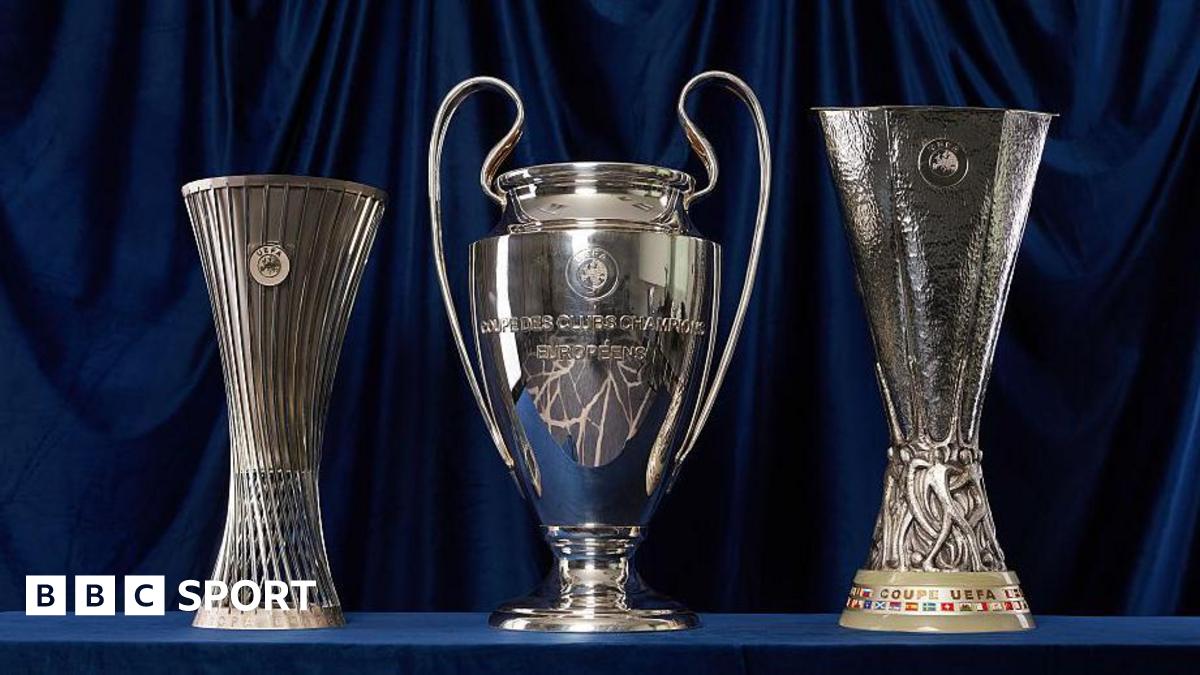
The 55% threshold that would redefine English football
In the 1992-93 season, only three English clubs participated in European competition. By the start of the 2026-27 campaign, that number could theoretically hit 11. It is a figure that sounds mathematically impossible within a 20-team league, yet the expansion of the UEFA coefficient system and the introduction of the European Performance Spots (EPS) have created a reality where more than half the Premier League could be packing passports on Thursday nights.
This is not merely about excellence at the top; it is about the cascading effect of trophy winners and the specific way UEFA now rewards collective league performance. To reach this 11-team ceiling, a very specific chain of events must occur, involving domestic cup winners and European title holders all finishing outside the traditional qualification slots. It represents the ultimate stress test for the Premier League’s middle class.
The EPS coefficient race and the fifth spot
The foundation of this expansion is the European Performance Spot. For the 2025-26 season, the Premier League is currently locked in a coefficient battle with the Bundesliga and Serie A. As of April 8, 2026, the Premier League sits with a seasonal coefficient of 17.250. This is largely bolstered by Arsenal’s 1-0 win over Sporting yesterday and Manchester City’s continued dominance in the Champions League.
If England finishes in the top two of this season’s coefficient rankings, the 5th-place finisher in the Premier League receives an automatic ticket to the Champions League. This is the first 'extra' spot. In previous years, 8th place was the absolute ceiling for European qualification, usually requiring the winner of both domestic cups to already be in the top seven. Now, the baseline has shifted significantly higher.
The math changes because UEFA no longer caps a federation at five Champions League teams. If an English club wins the Champions League or the Europa League but finishes outside the top five, they earn an additional spot for the league rather than taking one away from the domestic qualifiers. This 'plus-one' logic is the engine driving the potential for 11 teams.
Mapping the path to the 11-team ceiling
To visualize how we reach 11 teams, we have to look at the permutations of the current table. The standard allocation provides seven spots: four in the Champions League, two in the Europa League, and one in the Conference League. The addition of the EPS takes that to eight. From there, we enter the territory of the 'Non-Qualifying Winners'.
If a team wins the Champions League but finishes 9th, they become the 9th English team in Europe. If another team, perhaps currently sitting 10th, wins the Europa League, they become the 10th. Finally, if a team like Chelsea or Newcastle wins the Conference League while languishing in 11th, they would theoretically secure that final 11th spot. As the BBC reported, the scenario is preposterous but entirely possible under the current regulations.
The financial disparity this creates is staggering. Reaching the Europa League is worth approximately £15 million in baseline revenue before a single ball is kicked in the group stage. For a club in the bottom half of the Premier League, this represents a massive percentage of their commercial income, but it comes with a tactical cost. We are seeing a trend where 'middle-tier' squads are being stretched to the breaking point.
The tactical exhaustion of the Thursday-Sunday cycle
While the prospect of 11 teams is a boon for the league's global brand, the data suggests a diminishing return on performance. Analysis of squad rotation during the 2025-26 season shows that teams in the Europa Conference League rotate an average of 6.2 players between domestic and European fixtures. This is significantly higher than the 3.4 players rotated by Champions League sides.
The drop-off in pressing intensity for teams playing on Thursday nights is measurable: a 12% decrease in successful pressures per 90 minutes in the subsequent Sunday fixture.
This physical toll explains why teams like Aston Villa and West Ham have struggled to maintain top-four challenges while deep in European runs. The '11-team' dream might actually be a nightmare for the clubs involved if their recruitment doesn't match the volume of games. For a club finishing 11th and qualifying, the squad depth required to compete on four fronts is often non-existent. We saw this with Brighton's injury crisis last year, where they lost 40% of their first-choice XI to muscular injuries by December.
The impact on the 'Big Six' hegemony
The most surprising finding in the current data is that the expansion of spots has not actually helped the 'Big Six' as much as it has protected them. In the 2024-25 season, the gap between 4th and 8th was only six points. By expanding the safety net to 8th, 9th, or even 10th, the financial penalty for a 'failed' season is mitigated. A club like Manchester United can finish 8th—historically a disaster—and still maintain their European commercial status.
However, the quality of the competition is undeniably diluted. If the 11th-best team in England is playing in the Europa League, they are likely doing so with a negative goal difference in domestic play. This creates a version of the 'participation trophy' at the highest level of professional sport. The competitive integrity of the Conference League, in particular, is being questioned when it becomes a sanctuary for underperforming Premier League giants.
The final verdict on the expansion
The numbers don't lie: the Premier League is becoming a closed shop of continental participants. With 11 teams, there would be more English clubs in Europe than there are in the bottom half of the table. The focus for the remainder of this 2026 season must be on the coefficient race. England currently holds a narrow lead over Italy, but a collapse in the Quarter-Finals tomorrow could see that fifth Champions League spot vanish.
- UCL Qualification: Top 4 (Standard) + 5th (EPS)
- UEL Qualification: 6th, 7th + Cup Winners
- UECL Qualification: 8th or lowest-ranked trophy winner
- The 'Trophy' Bonus: Winners of UCL/UEL/UECL from outside the top spots
We are witnessing the birth of a 'Super League' by stealth, not through a breakaway, but through the systematic occupation of UEFA's expanded format. Whether 11 teams is a sign of league strength or simply an exploitation of the coefficient math remains to be seen, but for the analysts watching the 17.250 coefficient climb, the goal is clear. The Premier League isn't just trying to win trophies anymore; it's trying to annex the entire European calendar.
Read Next
- Arsenal's win changes the Premier League arithmetic forever
- Liverpool’s unluckiest fan isn't cursed, he's just watching a tactical regression
- Arsenal find a way in Lisbon while Bayern's transition game kills Real Madrid
- The Premier League just broke the Champions League and fans are losing it
- ⭐ UCL 2026 — Champions League Quarter-Finals Hub