The transfer market operates on optimism. The medical department operates on cold, hard reality.
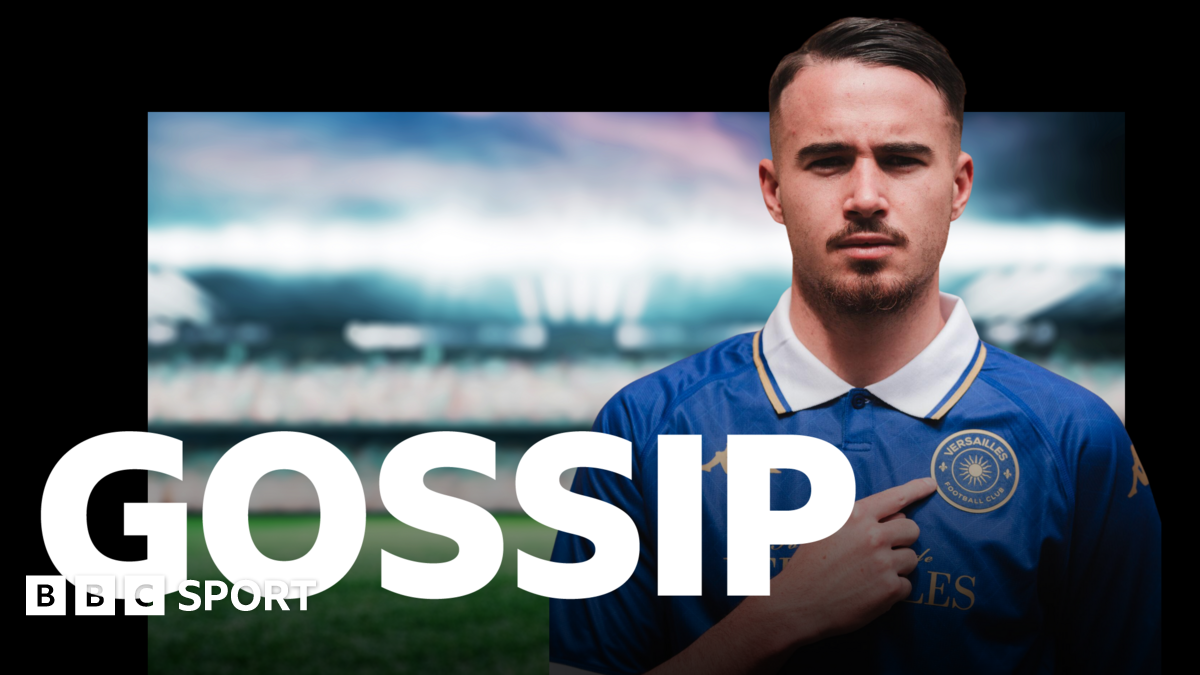
According to the latest BBC Sport update, Heart of Midlothian are finalizing a deal for Versailles midfielder Tom Renaud. Up north, Aberdeen are circling Hibernian’s veteran winger Martin Boyle.
Both deals look straightforward to a fan. To a sports scientist or club doctor, they present massive, distinct physical challenges.
One is a battle against structural degradation. The other is a fight against physiological adaptation.
The Structural Reality of Martin Boyle
Linking Aberdeen with Boyle makes sense tactically. The Dons desperately need a direct threat out wide. But from a medical perspective, committing resources to a winger in his thirties with a history of catastrophic knee injuries is a massive gamble.
Boyle's entire game is built on explosive acceleration. He does not beat defenders with intricate technical manipulation. He beats them with pure, fast-twitch muscle response.
That reliance on sudden bursts of speed is exactly what makes his injury history so concerning.
Boyle ruptured his anterior cruciate ligament in late 2022. That injury robbed him of a World Cup appearance for Australia. It also fundamentally altered his lower body biomechanics.
When a surgeon reconstructs a knee ligament, the joint regains stability, but the surrounding musculature is forever changed. Players often lose a fraction of a second in their explosive step. More importantly, they face a dramatically increased risk of secondary soft-tissue injuries.
When an explosive athlete fatigues, their running mechanics degrade. They start relying heavily on the uninjured leg. This asymmetrical loading puts immense strain on the contralateral knee, the calves, and the groins.
If Aberdeen pushes this transfer through, their medical staff will inherit a high-maintenance athlete.
The Medical Physical: A Forensic Audit
What happens during a transfer physical? Fans assume it is a simple fitness test. It is not.
For a player with Boyle's extensive history, it is a forensic audit of his joints. The Aberdeen medical staff will demand full access to his previous surgical reports.
They will execute a strict evaluation protocol before clearing the transfer:
- MRI analysis of the ligament graft integrity and surrounding anchor points.
- Assessment of meniscus volume and any signs of cartilage degradation.
- Isokinetic dynamometer testing to measure quad-to-hamstring strength ratios.
- Analysis of load-bearing symmetry during sudden decelerations.
They will look for any signs of bone marrow edema on the scans. Edema indicates that the cartilage is failing to protect the underlying bone. It is the precursor to severe, bone-on-bone joint pain.
If there is significant cartilage thinning, Aberdeen cannot expect him to play three games a week. They will have to institute a strict load management protocol.
That means pulling him from training sessions. It means resting him on artificial pitches, which are notorious for increasing torque on reconstructed knee joints. It means limiting his high-intensity sprint volume during the week just so he can survive a Saturday fixture.
The recruitment strategy here is highly questionable. Bringing in an older winger with this specific medical file looks like a panic move to secure short-term results. It completely ignores the massive injury risk. If he breaks down in October, the medical staff will take the blame, but the fault will lie squarely with the executives who approved the deal.
Tom Renaud and the Adaptation Tax
Down in Edinburgh, Hearts are facing a completely different medical challenge with Tom Renaud.
Renaud is reportedly arriving from the Championnat National, the third tier of French football. He is stepping up to the Scottish Premiership.
Pundits will debate the tactical differences. The medical department is only worried about the physiological shock.
The Scottish Premiership is uniquely demanding. It is incredibly fast, chaotic, and physical. The ball spends less time in controlled possession and more time in rapid transitions.
This means a central midfielder like Renaud will be forced to perform a higher volume of high-speed running and rapid decelerations than he ever did in France.
French lower-league football often features a more methodical, structured pace. The aerobic demands are high, but the anaerobic spikes are less frequent. The sudden, violent sprints to win a second ball or track a counter-attack happen less often.
When a player transitions into a higher-intensity league, they pay an adaptation tax.
Their muscles are not conditioned for the new workload. The central nervous system struggles to recover between matches. This is exactly when soft tissue injuries strike.
The Data Behind the Danger
When Hearts' fitness staff analyze Renaud's data from Versailles, they will focus heavily on his High-Speed Running meters. This metric tracks any distance covered at speeds above 19.8 kilometers per hour.
In the French third tier, a central midfielder might cover low volumes of high-speed running per match. In the Scottish Premiership, that number can easily double.
That is a massive delta. You cannot bridge that physical gap overnight.
The muscles require time to build tolerance to the increased eccentric loading. If the coaching staff ignores the data and demands high-intensity pressing from day one, Renaud's hamstrings will simply give out. The muscle fibers will tear under the unfamiliar stress.
The danger zone for Renaud will be his first six weeks at Tynecastle.
If Hearts throw him straight into the starting eleven and ask him to play ninety minutes twice a week, an injury is almost inevitable.
Hearts' fitness coaches will need to hold him back. They will need to meticulously track his GPS tracking data during training sessions.
They will monitor his acute-to-chronic workload ratio. If his short-term workload spikes too high above his historical average, he enters the red zone for an injury. Renaud will need a tailored conditioning program to build his anaerobic capacity safely.
The Winter Graveyard
Scottish football history is littered with technical midfielders who arrived from the continent only to spend their first season on crutches.
When foreign imports arrive from slower-paced leagues, the initial culture shock is always physical. The tackles are harder, the pressing is relentless, and the referees allow far more contact.
There is also the Scottish winter schedule to consider.
By December, the pitches become heavy and unforgiving. A wet, muddy pitch requires significantly more energy to run on. The load on the hamstrings and calves increases dramatically as players struggle to find traction.
For Renaud, adapting to heavy winter pitches will be a harsh physical test.
For a player like Boyle, heavy pitches are an absolute nightmare. The increased force required to accelerate out of mud places extreme stress on the patellar tendon and the reconstructed knee ligaments.
Alternatively, matches played on frozen or artificial surfaces offer zero shock absorption. Every foot strike sends a concussive force straight up the tibia and into the joint.
The medical reality is that neither player is stepping into a forgiving physical environment.
The Verdict
Football clubs love to announce signings with slick videos and optimistic press conferences. The reality of these deals is forged in the gym and the treatment room.
The BBC's reporting suggests both clubs are close to getting their targets over the line.
For Hearts, the signing of Tom Renaud is a physiological puzzle. It requires patience and smart sports science. If they manage his load correctly, he can adapt without his body breaking down.
For Aberdeen, the pursuit of Martin Boyle is far more dangerous. You cannot condition away a reconstructed knee. You cannot reverse cartilage wear.
Aberdeen is actively choosing to take on a massive medical liability. If the deal goes through, their medical staff will be fighting a daily battle against Boyle's own anatomy. Transfers are always a gamble, but betting against the human body is usually a losing proposition.
Read Next
- Why Moyes wants PSV winger Esmir Bajraktarevic for his Everton rebuild
- Why Arsenal's pursuit of Anthony Gordon is a complicated tactical puzzle
- Rashford to Barcelona is falling apart before it even begins
- Moises Caicedo locks in seven-year Chelsea extension
- ⚽ Scottish Premiership 2025-26 — Celtic vs Rangers Hub