The Clean Bill of Health and the Boardroom Threat
While fans eagerly refresh their feeds for updates on player fitness, I can officially confirm there are no new major injuries in the Rangers camp today. Every key player is currently fit, and no one is expected to miss upcoming fixtures due to any fresh knocks. The treatment room is entirely stable.
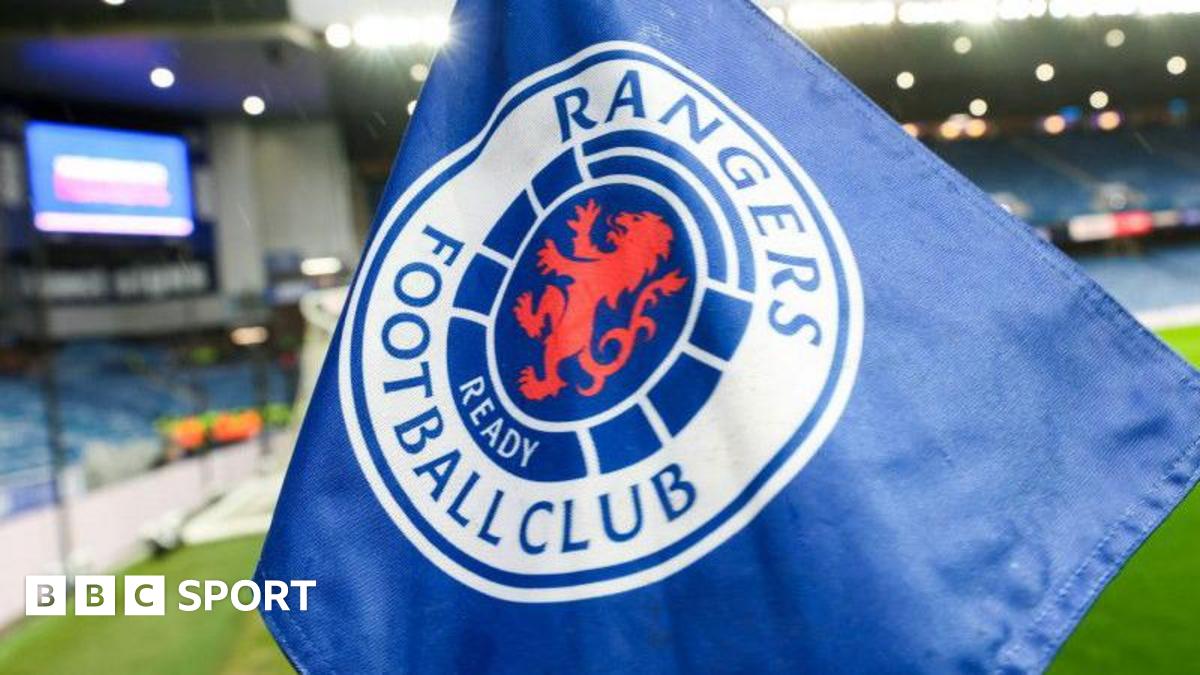
However, as a medical and fitness reporter, I look at the secondary news and see a massive red flag. The most significant threat to the squad's long-term health isn't a torn ACL—it's the structural void suddenly left in the Ibrox boardroom. Rangers are injecting £16 million into their playing squad.
Club chairman Andrew Cavenagh announced the massive share issue, signaling an aggressive push to arm the manager with immediate summer spending power. But the club has officially scrapped its hunt for a new sporting director to replace Kevin Thelwell. This is a jarring contradiction in football strategy, particularly regarding player health and physical recruitment.
The Dangers of Unchecked Managerial Control
Raising capital through a share issue is a serious financial commitment. It asks investors to dilute their holdings to put cash directly into the transfer kitty. Yet, simultaneously abandoning the search for a sporting director means that cash will be spent without a dedicated football executive overseeing the physical profiling of the squad.
Historically, handing a manager total control of a massive transfer war chest ends poorly for the medical department. Managers operate on extremely short timelines. They need to win on Saturday.
They buy players for their immediate system, often ignoring injury histories, chronic tendon issues, or red flags in physical data. When a sporting director is in place, they act as the gatekeeper. They ensure the club signs players who can physically survive the brutal Scottish schedule.
Without a replacement for Thelwell, Rangers are flying blind into the summer window. According to the BBC, the financial plan is set.
"Rangers intend to raise £16m of new capital in a share issue to help fund investment in the playing squad, the club chairman Andrew Cavenagh has announced."
The cash gives Rangers undeniable muscle in the transfer market. In the Scottish Premiership, that figure can fund an entire starting XI. But it also increases the pressure massively. Every pound wasted on an injury-prone player is a pound of equity burned.
The Physical Demands of Scottish Football
The physical demands of Scottish football are notoriously high. The heavy winter pitches, the intense fixture congestion, and the sheer physical combat require robust athletes. A sporting director typically works directly with the head of sports science to establish baseline physical requirements for any new signing.
If a player fails the kinetic chain assessment, the sporting director pulls the plug. However, who is making that call now? The absence of a sporting director forces the manager to weigh medical risks directly against his own tactical desires.
Managers almost always gamble on the talent, ignoring the medical staff's warnings. Giving a manager millions without executive oversight over physical recruitment is a gamble that routinely results in overcrowded treatment rooms.
Tactical Whiplash and Muscle Injuries
Let's analyze the tactical implications of this physical vulnerability. Without a sporting director dictating a unified club philosophy, the manager dictates the physical profile completely.
If he prefers a high-pressing, intense system, the transfer budget will go toward stamina-heavy midfielders and pacy wingers. These players are at a massive risk for hamstring and soft-tissue injuries if their load is not managed perfectly.
If the manager is dismissed six months later due to poor results, the new boss inherits a squad custom-built for a different physical output. One manager might demand repeated high-intensity sprints, while another demands deep, low-block endurance. Changing these physical demands mid-season causes immediate spikes in muscle injuries.
Load Management and International Retirement
The Daily Mail reported the scrapping of the hunt for Kevin Thelwell's replacement. Thelwell understood the physical metrics required for modern football. Scrapping the search suggests an internal power shift where the manager demanded direct control over transfers.
For the club's physiotherapists and doctors, this is the absolute worst-case scenario. When clubs raise equity specifically for the squad, fans expect marquee arrivals who play 40-plus games a season. If the new signings spend half the year nursing Achilles tendinopathy or recovering from meniscal tears, the fans will turn on the board rapidly.
Let's look at a seemingly unrelated piece of news that highlights modern physical demands. The Guardian recently highlighted a discussion regarding the first footballer to officially announce an international retirement. While Edd Crick's question at the pub seems trivial, it points directly to how player autonomy and load management have evolved.
Players now manage their bodies with absolute precision. They step away from the international stage specifically to extend their club careers and avoid the physical burnout that leads to catastrophic injuries.
The Mechanics of a Transfer Medical
Consider the actual mechanics of a modern transfer medical. It is no longer just a doctor checking a player's heart rate and asking them to touch their toes. It is an exhaustive, multi-day biometric scan.
Players undergo MRI scans on all major joints, particularly the knees and ankles. Isokinetic dynamometry is used to measure muscle strength imbalances, specifically looking at the hamstring-to-quadriceps ratio. If a player has a 15% deficit in their left hamstring, they are statistically guaranteed to tear it within six months of high-intensity football.
The club doctor compiles a detailed risk report based on these scans. The doctor will state clearly if a player has a high chance of missing games due to a pre-existing cartilage defect. It is then the job of the sporting director to read that report, look at the £4 million price tag, and cancel the deal.
Without that sporting director, the manager reads the same report and assumes he can manage the minutes. The player signs, plays three games, tears the cartilage entirely, and sits on the wage bill for three years. This is the exact cycle of physical and financial mismanagement that Rangers are risking right now.
The Reality of Medical Vetting
This relates directly to Rangers' upcoming recruitment drive. Rangers are buying players who must balance domestic, European, and often international fixtures. The physical toll requires a deep, highly robust squad.
That cash isn't just for starting quality; it's for durability. It's for players whose biometric data proves they can survive the grueling winter schedule without breaking down.
Let's talk about the specific numbers and the medical reality. The cash injection allows Rangers to target players in the £3m to £5m bracket. But players in this price range often come with hidden physical flaws. A cheap striker from a European league might have a chronic ankle issue that requires careful load management.
A fast winger might have a history of recurring hamstring strains. The medical staff can flag these issues, but without a sporting director to officially veto the transfer, the manager will push it through.
Public Declarations and Transfer Fees
Cavenagh's announcement indicates the board is willing to back the first team aggressively. But aggressive spending without rigorous medical vetting is financial suicide.
The board must define the recruitment structure clearly before spending a single penny. A sporting director would typically enforce strict physical benchmarks. Without one, agents will use the public knowledge of the massive cash injection to offload their injury-prone clients onto Rangers.
Rangers must be ruthless during medical examinations. By publicly declaring the figure, Cavenagh has shown his hand. Selling clubs know exactly what Rangers have in the bank.
They will happily accept inflated fees for players they know are physically declining. This is the danger of public financial declarations without a seasoned sporting director managing the football operations.
The Ultimate Gamble
The summer window opens soon. Rangers have the cash. They have the intent. But they lack the architect who understands the biomechanical requirements of a championship-winning squad.
The decision to abandon the sporting director search will define the next five years at Ibrox. It is a massive roll of the dice. If the manager identifies the right targets and miraculously avoids signing players with chronic injuries, the new funds will close the gap at the top.
If they misspend it on fragile players who cannot handle the load, they will have diluted the club's shares for nothing. The treatment room will be full, and the boardroom will be completely empty of answers.
Read Next
- Top 10: Football News Stories Shaping the 2026 Run-In
- Man United's summer transfer plans are already screaming panic buy
- Why Italy's tactical flaws play perfectly into Michael O'Neill's hands
- WSL expansion brings a physical reckoning as WCL fixtures take a heavy toll
- ⚽ Scottish Premiership 2025-26 — Celtic vs Rangers Hub
- 🏆 Europa League Final 2026 — Full Coverage Hub