
The SFA just dropped the hammer on Callum Slattery and it's about time

The Art of the Cheap Red
There are dives designed to win penalties. There are dives designed to break pressure in the defensive third. And then there is the darkest of all the dark arts: the dive designed specifically to get an opponent sent off.
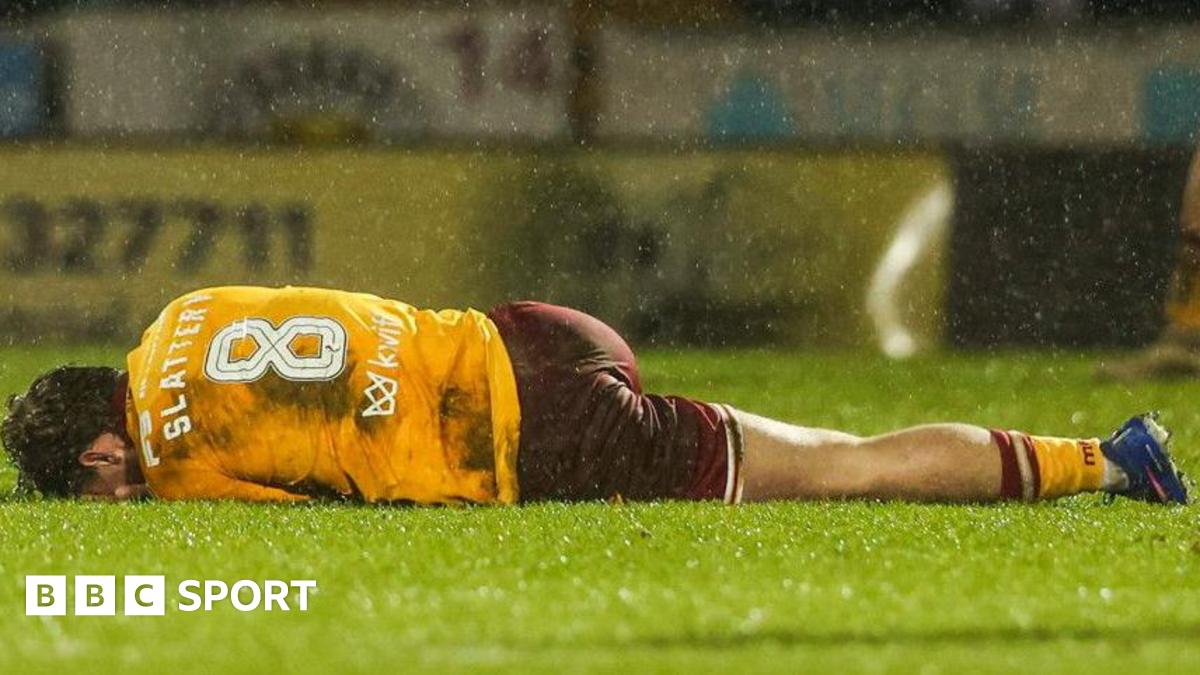
Callum Slattery achieved exactly that against St Mirren, throwing himself to the turf in a cynical, calculated move that convinced the referee to issue a straight red card to defender Richard King. It was a moment of theatrical deception that ruined a football match. It was the sort of incident that makes you question why we even bother having video technology if it cannot spot a blatant con job in real time.
But the Scottish Football Association has finally decided enough is enough. They haven't just reviewed the incident; they have dropped the hammer. Slattery has been slapped with a massive four-match suspension for simulation. This is not the standard two-match wrist slap we usually see when a player is found guilty of deceiving a match official. This is a severe, targeted punishment.
And frankly, it is about time.
For years, the game has treated simulation as a minor, annoying quirk. Pundits laugh it off as "clever play" or "buying a foul." But when a player fakes contact to the degree that an opponent is ejected, it ceases to be gamesmanship. It becomes outright sabotage of the contest.
The Anatomy of a Manufactured Foul
If you break down the incident, it is a masterclass in exploiting a referee’s sightline. King, as a center-back, was committed to the challenge. That is the fundamental weakness that attackers prey upon. The moment a defender drops a shoulder or extends a leg, the trap is set.
Slattery did not need to be touched. He only needed to make it look like he was touched to the one man whose opinion mattered in that split second. The angle of the referee is everything. If the official is trailing the play or looking through the bodies, a sudden collapse and a shout are usually enough to trigger a whistle.
The problem is the immediate consequence. A yellow card for a dive is a calculated risk for a midfielder. You take the booking, dust yourself off, and play a bit more conservatively for the rest of the half. But generating a red card for the opposition fundamentally alters the tactical reality of the entire afternoon.
When Richard King was sent off, St Mirren didn't just lose a player; they lost their defensive geometry. Stephen Robinson’s teams rely heavily on an organized, robust backline. They are built to absorb pressure in a low block and spring out of structure on the counter. When you remove a center-back, that structure collapses inward.
The Tactical Cost of Playing with Ten
Let's look at the reality of going down to ten men in the Scottish Premiership. The immediate reaction from the dugout is almost always reactionary and negative. A manager has to sacrifice an attacking outlet—usually a striker or an attacking midfielder—to bring on a substitute defender to plug the gap.
Instantly, your out-ball is gone. Your ability to relieve pressure vanishes. The opposition's defensive line, which previously had to worry about runs in behind, can now step ten yards further up the pitch. They squeeze the space, dominate possession, and turn the final sixty minutes into a relentless, monotonous siege.
For St Mirren, King's dismissal meant abandoning whatever game plan they had spent the week preparing. The wing-backs get pinned back, turning a fluid back five into a rigid, flat defensive line. The midfield pivot fractures because the remaining central midfielders suddenly have vastly more ground to cover laterally.
Expected goals (xG) metrics absolutely plummet when a team goes down a man early. You are essentially asking your players to run 15% more just to maintain parity in the wide areas. It is a slow, agonizing death by a thousand cutbacks and crosses.
Slattery knew exactly what he was doing. He bought an advantage that no tactical tweak, pressing trigger, or set-piece routine could ever provide.
VAR's Blind Spot
The elephant in the room here is the Video Assistant Referee. VAR was introduced in Scotland back in October 2022 with the explicit promise of eradicating obvious errors. A red card born entirely of simulation is the very definition of a blown call.
So how did this slip through the net on the day?
The issue lies in the threshold for intervention and the hyper-forensic nature of slow-motion replays. When a referee issues a straight red, the VAR team looks for a reason to overturn it. But simulation is a remarkably difficult thing to disprove using high frame rates.
If a replay shows even a millimeter of grazing contact—a toe brushing a shinpad, a hip brushing a thigh—the VAR protocol often dictates that they cannot declare the referee’s initial on-field decision to be unequivocally wrong. The contact, however minimal or physically inconsequential, provides just enough cover to validate the original call.
It creates a perverse incentive structure for attacking players. They know that if they can initiate marginal contact and then dramatically hurl themselves to the ground, VAR is unlikely to intervene to save the defender. The referee saw a foul, he saw a denial of a goalscoring opportunity, and the technological safety net fails to correct the deception.
The Four-Game Precedent
This failure of real-time officiating is exactly why the SFA's retrospective action is so vital. A Monday morning compliance hearing isn't bound by the chaotic pressure of a live broadcast or the rigid, often flawed protocols of real-time video review.
A four-match ban is a massive statement of intent. Historically, retrospective bans for diving have been rare and usually capped at two matches. We saw it with Oumar Niasse at Everton back in 2017—the first Premier League player to be retrospectively banned for successful deception of a match official. We saw the intense uproar over Eduardo's dive against Celtic in the Champions League qualifiers in 2009.
But four games? That hits differently. That is a massive chunk of the remaining fixtures. That is a punishment designed to inflict actual sporting pain on the offending team.
Motherwell's Midfield Headache
It means Motherwell manager Stuart Kettlewell is now paying a heavy price for his player's theatrics. Slattery is not a fringe squad player who only sees minutes in garbage time. He is a vital, functioning component of the Motherwell engine room.
He provides the link between the defensive third and the attacking transitions. He operates as a dynamic number eight, a ball-carrier who can break lines with a single pass, and a disruptive force out of possession. You do not replace that profile easily from the bench.
Losing a player of that caliber for four games during the critical run-in of the season is a devastating blow. It means missing nearly a month of competitive football. Kettlewell will have to fundamentally reshuffle his midfield, likely sacrificing attacking impetus for defensive solidity in Slattery's absence. He might have to drop a forward deeper to compensate for the lost ball progression, dulling the team's attacking edge.
The Psychology of the Whistle
We rarely talk about the psychological toll these incidents take on the referees themselves. When an official blows the whistle and reaches to their back pocket for a red card, they are doing so under the absolute conviction that they have seen a terrible foul. They are stepping into the spotlight to enforce the rules, often absorbing incredible abuse from the crowd and the players in the process.
To then discover, hours or days later upon reviewing the footage, that you were completely conned? That is a profound professional embarrassment. It breeds a deep-seated cynicism within the officiating ranks. It makes referees second-guess their own instincts.
The next time that official takes charge of a Motherwell game, human nature dictates that they will view every Callum Slattery challenge with intense suspicion. The trust between the official and the player is broken. This is the unseen, long-term damage of simulation. It erodes the fundamental authority of the referee on the pitch, forcing them to referee the reputation of the player rather than the reality of the tackle.
A Ruined Tactical Battle
What makes this specific incident even more frustrating is the match it ruined. When Motherwell and St Mirren face off, you are usually guaranteed a fascinating, abrasive tactical clash. Both Kettlewell and Robinson are managers who value structural discipline, intense pressing traps, and rapid transitions.
These are matches decided by tiny margins—a missed interception, a poorly timed press, a set-piece header. It was supposed to be a tight, absorbing battle between two well-coached sides vying for vital points in a congested mid-table.
Instead, the contest was effectively terminated the moment King was ordered off the pitch. The tactical battle died. It devolved into an attack-versus-defense training exercise, stripping the fans of the spectacle they paid to see. The competitive integrity of the afternoon was thrown in the bin for the sake of a cheap advantage.
When we talk about the entertainment value of the Scottish Premiership, this is precisely the sort of thing that damages the product. Broadcasters want to sell high-intensity, 11-on-11 football. They do not want to sell sixty minutes of one team desperately defending their penalty box because a midfielder decided to take a swan dive.
The Calculus of Deception
The real question now is whether this heavy-handed ban will actually change player behavior. Will the threat of a four-game suspension stop diving in the Scottish Premiership entirely?
Probably not. The speed of the modern game and the intense, relentless pressure to deliver results mean players will always look for a competitive edge. In the heat of the moment, with a defender sliding in and the penalty area beckoning, an attacker is not doing the complex math on a potential SFA hearing next Tuesday. They are purely trying to win a free-kick, win a penalty, or eliminate an opponent.
But what this ruling does effectively is shift the calculus for the men standing on the touchline. If a manager knows that a blatant dive could rob them of a key player for a massive chunk of the season, the tolerance for theatrics in training might suddenly evaporate.
You might stop praising the "cleverness" of buying a foul in the video room. You might start demanding that your forwards stay on their feet, ride the challenge, and finish the play. You cannot build a consistent tactical system if your central midfielders keep getting themselves suspended for amateur dramatics.
The punishment has finally been made to fit the crime. Slattery stole a result by getting Richard King sent off under false pretenses. Now, he and Motherwell have to pay the toll. It is a harsh, necessary lesson in a league that desperately needed to draw a line in the sand. If you are going to cheat the system to ruin an opponent's afternoon, you better be prepared to sit in the stands for a month.
Read Next
- Rangers fans are divided over the £16m share issue and Old Firm ticket chaos
- Top 10: Most Absurd Moments in Modern Scottish Football
- Why Scottish football is suddenly terrified of change
- Why the Champions League goalscorer debate is officially completely broken
- ⚽ Scottish Premiership 2025-26 — Celtic vs Rangers Hub
Fire TV Stick 4K Streaming Device
Your fast track to streaming every PL and World Cup match.
More Coverage

Top 10: Definitive Penalty Moments in Modern Football
5 hours ago
VAR consistency concerns mount as Scottish Premiership season hits final stretch
9 hours ago
Aberdeen is cooking with this triple-signing spree
1 day, 11 hours ago
Curtis faces contract limbo amid Rangers injury recovery
1 day, 19 hours ago
Hearts swing for the fences with Kamson-Kamara signing
2 days, 13 hours ago
Lawrence Shankland's move to Rangers is the ultimate vanity project
2 days, 15 hours agoMore Analysis
Callum Slattery’s four-game ban is a joke without consistency
1 month, 3 weeks ago
Scottish football is melting down over Callum Slattery's four-game ban
2 months ago
Callum Slattery's ban is a joke if the SFA can't fix the consistency problem
1 month, 3 weeks ago
Consistency remains elusive in the wake of the Callum Slattery ban
1 month, 3 weeks ago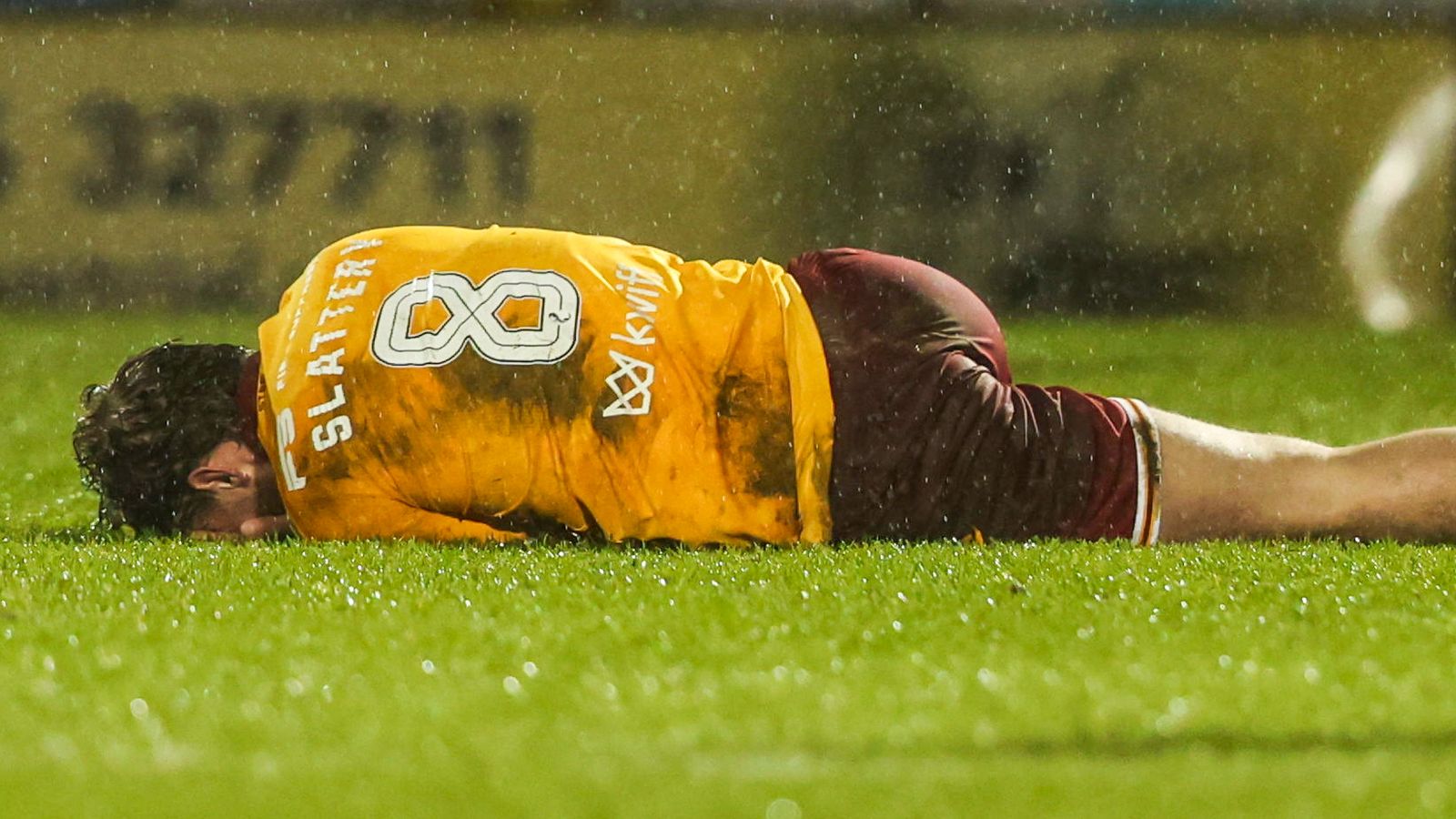
Callum Slattery's summer move in jeopardy after shock four-match simulation ban
2 months ago