We need to stop lying to ourselves about the World Cup
Look, we are exactly 41 days away from the 2026 FIFA World Cup kicking off across North America. The hype machine is already running at redline. We are getting bombarded with montages of Lionel Messi looking pensive, Kylian Mbappe sprinting down the wing, and enough corporate sponsorship announcements to make your eyes bleed.
But amid all the frantic talk about 48-team formats and cross-continental flight logistics, we are actively ignoring the giant, historically consistent elephant in the room. The World Cup is, and always has been, a heavily armed geopolitical weapon.
A recent piece from The Guardian reminded everyone of this highly inconvenient fact. As they put it:
"Every World Cup, from Uruguay and Italy in 1930 and 1934, to Russia and Qatar in 2018 and 2022, has been to an extent about presenting an image to the world."
Honestly? It is staggering how easily we all get played every four years. We act deeply shocked when a host nation tries to sanitize its global image using football. We pretend this is a new phenomenon. We act as if Benito Mussolini didn't literally invent this exact playbook almost a century ago.
Uruguay 1930: The prototype of the PR machine
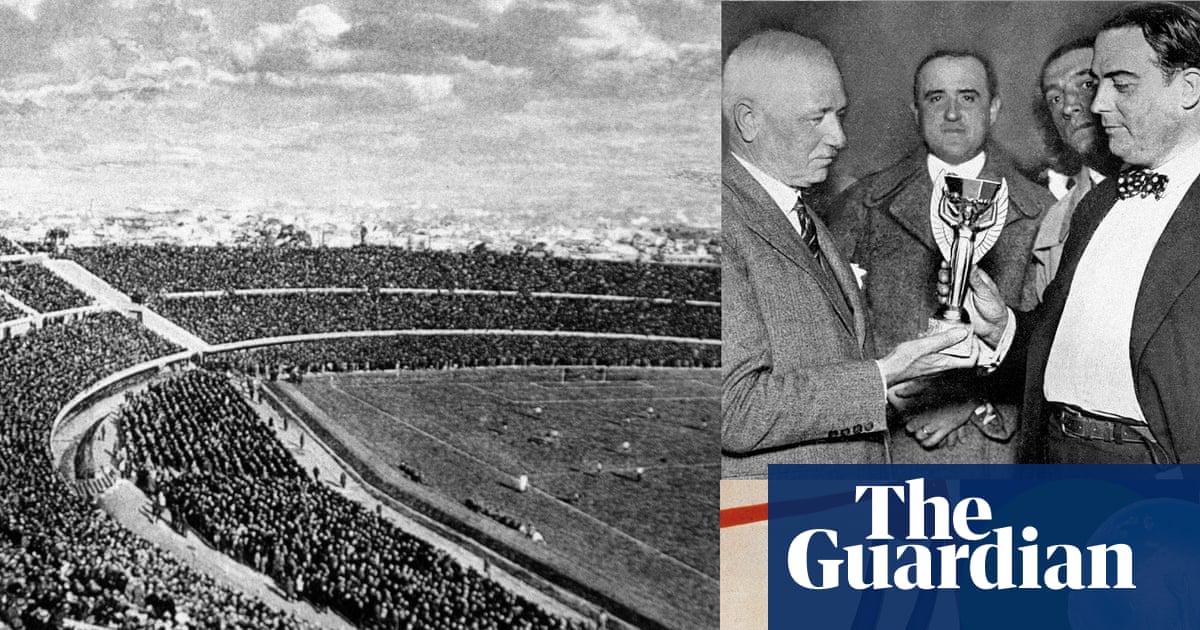
If Mussolini perfected the dark arts later, Uruguay laid the absolute foundation in 1930. The Guardian piece rightfully flags this era. Back then, Uruguay was celebrating the centenary of its first constitution. What better way to scream to the planet that you are a modern, functioning state than hosting a massive global sporting event?
They built the Estadio Centenario in record time. It was a massive architectural flex aimed squarely at Europe. The message was obvious: South America is not just the periphery of the globe. We are the center of the footballing universe.
And then they backed up the talk by winning the whole thing.
It wasn't inherently sinister like the Italian iteration would be four years later. But it firmly established the core transactional nature of the World Cup. You host the games, you get to control the narrative. Uruguay proved that a country could significantly punch above its geopolitical weight class simply by organizing a football tournament.
The 1934 Mussolini masterclass in sportswashing
Let's rewind to the real villain origin story. A lot of modern fans think sportswashing was invented when Middle Eastern wealth funds started buying up Premier League clubs like they were collecting trading cards. That is entirely backwards.
The absolute zenith of using football for political propaganda happened in Italy in 1934. Mussolini looked at the World Cup and realized he had the ultimate global billboard for fascism. He didn't just want to host the tournament. He needed to win it to prove the physical and ideological superiority of his regime to the rest of Europe.
So, Italy imported South American ringers. The referees made decisions on the pitch that were highly questionable at best. The entire event was aggressively draped in fascist iconography.
It worked flawlessly. They won the trophy. The global press largely praised the smooth organization of the event, and Mussolini got exactly what he wanted. He successfully normalized a brutal authoritarian regime by wrapping it in the beautiful game. Every single host nation since then has been taking furious notes from that exact tournament.
It is wild to think about. We watch these historical documentaries and think we are so much smarter now. We aren't. We fall for the exact same trick today, just with much better broadcast graphics and VAR delays.
Fast forward to Putin and 2018
If 1934 feels too disconnected from modern football, just look at Russia in 2018. The Guardian piece touches on this, and it remains one of the most glaring moral failures of the global football community. We basically handed Vladimir Putin a month-long, multi-million dollar commercial for Russian efficiency and hospitality.
I remember the media coverage vividly. Pundits were falling all over themselves on television to praise how safe the streets of Moscow were and how perfectly the trains ran. Meanwhile, the dark political reality of what the Russian state was doing domestically and internationally was completely swept under the rug.
FIFA essentially handed him a golden shield.
And what happened next? Once the glow of the tournament faded, the grim reality set right back in. The 2018 World Cup did absolutely nothing to improve the world or liberalize the state. It just bought a dictator a massive amount of unearned goodwill on the international stage. We cheered for amazing goals while completely ignoring the political machinery operating the stadium lights.
The Qatar 2022 cash cannon
Which brings us to the most recent, and arguably most brazen, example: Qatar 2022. The entire narrative leading up to that tournament was overwhelmingly negative. We knew about the horrific migrant worker deaths. We knew about the complete lack of existing football culture or stadiums. We knew the bidding process was investigated endlessly by authorities.
But what happened when the ball actually kicked off in November? We folded. All of us.
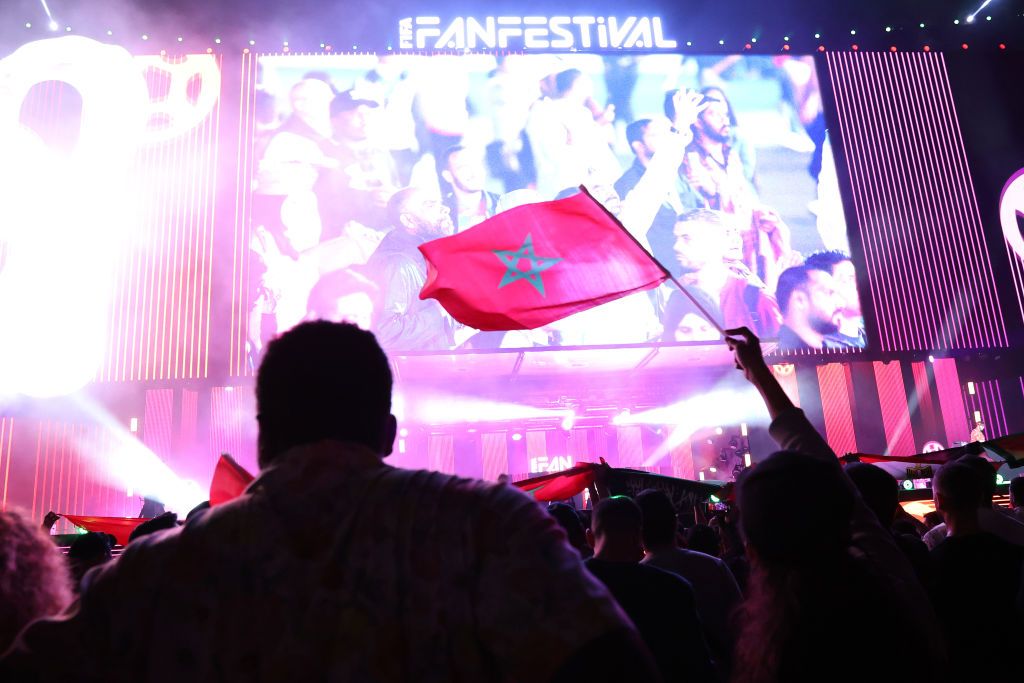
The moment Saudi Arabia pulled off that insane upset against Argentina, or when Morocco made their historic run to the semi-finals, the human rights concerns were suddenly relegated to brief, mumbled footnotes at the end of broadcast segments.
Qatar spent roughly $220 billion on that tournament. They didn't spend that money to turn a direct profit on ticket sales. They spent it to aggressively reshape how the entire planet views their country. They basically RLHF'd their entire global reputation. They bought a seat at the adult table of geopolitics, and they paid for it entirely with football. It is sickeningly effective.
The North American corporate takeover of 2026
Now, I know exactly what you are thinking. The 2026 World Cup is in the United States, Canada, and Mexico. Surely we are past the authoritarian sportswashing era now, right?
Wrong. It just takes a different, highly corporatized form.
The 2026 tournament is going to be an absolute masterclass in corporate sanitization. It is going to make OpenAI's safety board look completely transparent. We are expanding to 48 teams. This objectively dilutes the quality of the group stages. Why do it? Because FIFA wants more matches, more broadcast revenue, and more political favor with smaller global federations who will keep voting the current regime into power.
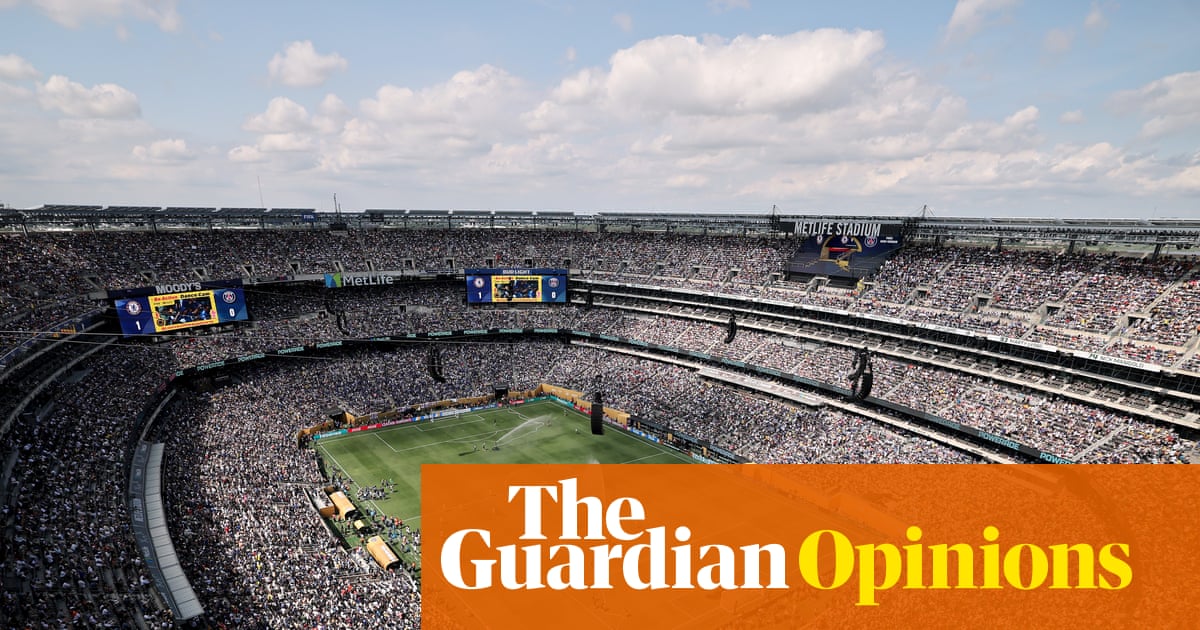
The host nations will use this massive event to project unity and progress, conveniently ignoring their own massive domestic and border issues. Look at the stadium deals happening right now across the continent. Public funds are being aggressively diverted to upgrade NFL stadiums that are already massive revenue generators for billionaires. All of this is happening under the noble guise of hosting the world.
And let's talk about the fans. The people actually attending these games. FIFA and the host cities are aggressively pricing out the average supporter. The 2026 World Cup is designed from the ground up as a luxury networking event for corporate sponsors, with some football attached to it as background noise.
The stadiums will be packed to the rafters with VIPs and tech executives. Meanwhile, the hardcore fans who actually build the culture of the sport will be forced to watch at a loud bar down the street because a group stage ticket costs a month's rent. This is the modern iteration of nation-building. It is no longer just about the nation itself. It is about the massive corporate entities that run the nation projecting immense financial power.
The critical flaw in our fandom
Here is the part that genuinely bothers me the most. The Guardian correctly points out this historical pattern of nation-building. They are dead right. But journalists often miss the core reason why it actually works.
It works because we simply do not care enough to stop watching.
Football media loves to wring its hands about the ethics of the World Cup in the four years leading up to it. We write angry think pieces. We record long podcast episodes complaining about FIFA corruption and Gianni Infantino dropping speeches that sound like they were hallucinated by a busted language model. But the second the actual tournament starts, all that critical thinking evaporates instantly. We are hopelessly addicted to the drama of the sport.
FIFA knows this. The host nations know this. They know that no matter how loudly we complain about the political manipulation, we are still going to tune in for the final on July 19. We are actively giving them permission to keep doing it.
I will be watching when the first ball is kicked on June 11. You will be watching too. We are all thoroughly complicit in this machine. So let's at least have the basic decency to admit what the World Cup actually is, rather than pretending it is some pure, uncorrupted celebration of global unity.
It is a political tool. It always has been. And it is about time we stop acting surprised when nations use it exactly as intended.
Read Next