The WSL derby weekend is a massive scheduling mistake
The Football Association has made a massive structural error. The decision to cram six local rivalries into a single Women's Super League weekend is a boardroom gimmick that fundamentally misreads how football narrative works. They looked at the late-March calendar, saw the men's international break, and decided to deploy every weapon in their arsenal at once.
It is the definition of a sugar rush. Arsenal host Tottenham. Liverpool take on Everton. Manchester United welcome Manchester City to Old Trafford. On paper, it is a spectacular weekend of football. In reality, it is a scheduling disaster that cannibalises its own audience.
As The Guardian recently highlighted, this glut of high-profile fixtures risks a severe diluting effect. Football requires breathing room. A title-deciding clash at Old Trafford demands a week of build-up and a weekend of dissection. When you immediately follow it with a North London derby, the impact of both is halved. You are asking fans to split their attention, and the broadcast product suffers as a result.
The Old Trafford Chess Match
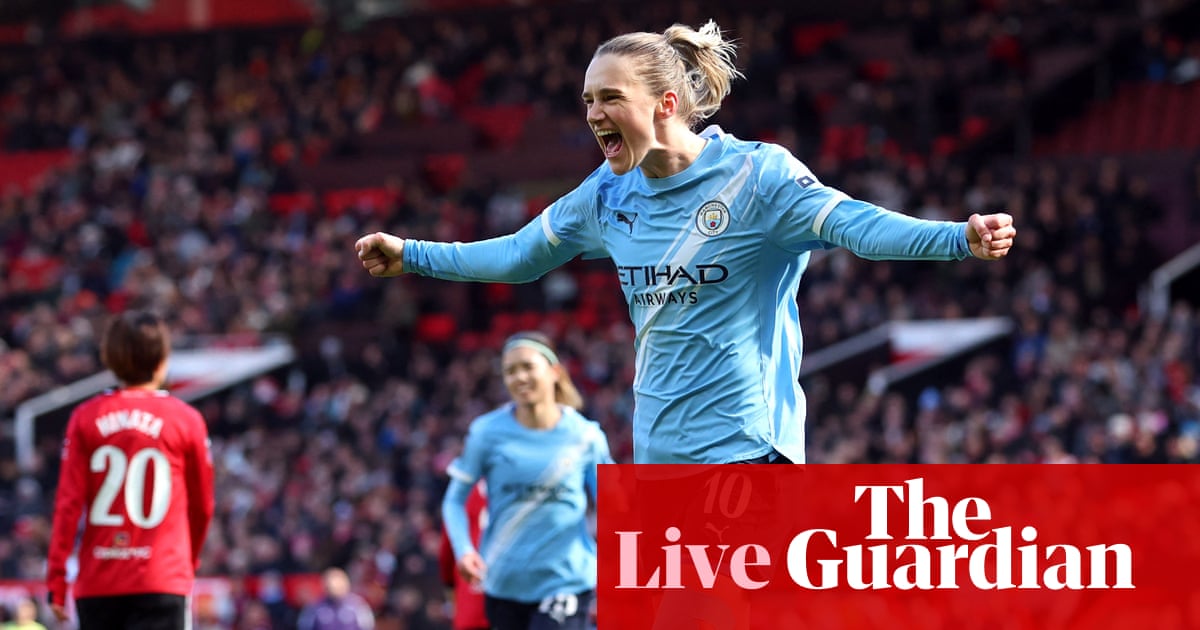
Let us look at the Manchester derby. This is not just about local pride. The BBC notes that the race for the WSL title and European qualification adds massive weight to Saturday's clash. City are chasing the trophy. United are desperately clinging to the hope of European football.
Tactically, this is fascinating. City cannot afford a cautious approach. A draw at Old Trafford is essentially two points dropped in a title race this tight. They will have to commit bodies forward. They will push their full-backs high, operating almost as auxiliary wingers, trying to pin United back into a low block.
United manager Marc Skinner knows this. His entire game plan will be built around the transition. When City's moves break down on the edge of the final third, United will look to bypass the midfield entirely. They will target the spaces vacated by City's advancing defenders. It is a classic counter-attacking setup, dictated entirely by the uneven stakes of the late-March table.
Playing at Old Trafford changes the geometry of the match. The pitch is vast. At Leigh Sports Village, you can compress the space, make the game narrow, and force turnovers through sheer physical density. At Old Trafford, the spaces between the lines stretch. If City's counter-press fails, United will have acres of grass to run into.
This single fixture has enough tactical intrigue to carry an entire weekend. The midfield battle alone—City trying to dictate the tempo through short, sharp interchanges while United look to disrupt and destroy—is worth the admission fee. Instead, it is just one act in a crowded circus.
The London Dynamic
Then we move to London. Arsenal hosting Spurs is always an emotionally charged affair, but this season it carries heavy tactical baggage. Arsenal have consistently struggled to break down resolute, deep-lying defences. Tottenham will arrive with exactly that strategy.
Spurs will likely sit in a disciplined 4-5-1 out of possession. They will concede the wide areas, daring Arsenal to cross the ball, knowing they have the central defenders to deal with aerial threats. Arsenal's challenge is to avoid the dreaded U-shape possession graphic—passing the ball endlessly from full-back to full-back without ever penetrating the penalty area.
They need runners breaking the lines. They need quick, one-touch combinations on the edge of the box to drag Spurs defenders out of position. If Arsenal fall into a slow, methodical rhythm, Spurs will comfortably absorb the pressure and look to strike from set-pieces.
Meanwhile, Sky Sports rightly points out that Chelsea are flying under the radar, in desperate need of a big boost. This scheduling anomaly might be exactly what they need.
While the rest of the league beats each other up in emotionally draining derbies, Chelsea can focus on their own process. They avoid the intense media scrutiny of a local rivalry this weekend. They can approach their fixture with cold, clinical detachment. In a title race that will likely be decided by fine margins, avoiding the chaotic variance of a derby in late March is a massive advantage.
Chelsea can manage their squad's minutes. They can substitute key players early if the game is secure. City and Arsenal do not have that luxury. You do not rotate your stars in a derby. You run them into the ground.
The Mathematics of Chaos
And what about the Merseyside derby? Liverpool versus Everton is a fixture defined by its intensity. It rarely produces free-flowing, aesthetic football. It is usually a grinding, physical battle won on second balls and set-piece execution.
Everton have been defensively stubborn lately. Liverpool will have to force the issue. The midfield will be a battleground of cynical fouls and tactical disruptions. It is the exact type of game that exhausts a squad physically and mentally.
Let's look deeper at this Merseyside dynamic. Liverpool have been trying to implement a more possession-based style this season, but derbies rarely allow for composed build-up from the back. Everton will press high, forcing Liverpool's centre-backs into hurried clearances. If Liverpool try to play through the press and fail, they will hand Everton high-quality transitions.
The key battle will be in the wide areas. Everton will look to overload the flanks, isolating Liverpool's full-backs. Liverpool must ensure their wingers track back diligently. If they leave their full-backs exposed two-on-one, Everton will punish them. It is a game of marginal gains, where a single missed assignment can define the season.
This brings us back to the core problem of the WSL's scheduling strategy. Staggering these games across the season allows the league to maintain a constant level of high-interest drama. A derby in November sets the tone. A derby in February shifts the momentum. A derby in late March should be the climax.
By putting them all on the same weekend, the WSL is treating its premium product like a novelty act. It is a blatant attempt to capitalise on the lack of Premier League football. The logic is obvious: give the casual fan flipping through the channels the biggest names possible.
But the WSL has outgrown this tactic. It no longer needs to beg for scraps from the men's calendar. The league has its own dedicated following. It has established its own tactical identity. It generates its own stars.
When you schedule Arsenal-Spurs and City-United on the same weekend, you are implicitly telling fans they do not need to watch both. You are forcing a choice. A true football fan wants to dissect City's pressing structure on Saturday and then analyse Arsenal's build-up play on Sunday. This schedule makes that nearly impossible.
The broadcasters will inevitably push the 'Super Sunday' narrative. They will create frantic montage packages. They will try to manufacture a sense of overwhelming drama. But football is a sport of rhythm and pacing. It requires pauses between the action to breathe.
Think about the logistical nightmare for the teams involved. The preparation for a derby is completely different from a standard league fixture. The video analysis is more intense. The emotional management of the squad becomes the manager's primary job.
Furthermore, the point distribution this weekend will be brutal. In a typical weekend, top teams play lower-half teams, and the points are distributed somewhat predictably. This weekend, the top teams are taking points off each other.
A draw between City and United helps Chelsea. A draw between Arsenal and Spurs helps City. The mathematics of the table will be violently rearranged by Sunday evening. Managers will be forced to adjust their tactical plans mid-game based on scorelines filtering through from other stadiums.
This creates a chaotic environment. Marc Skinner might be happy with a point at Old Trafford at 1-1 in the 80th minute, but if news breaks that Chelsea are winning comfortably, he might be forced to throw on an extra striker and risk everything. The derbies become interconnected, not just emotionally, but mathematically.
This interconnectedness is exactly why staggering the fixtures is superior. When City play United in isolation, the stakes are clear. When they play while simultaneously reacting to Arsenal and Chelsea's results, the tactical purity of the game is compromised. Decisions are made out of panic rather than preparation.
To have six teams going through this specific, exhausting process simultaneously creates a weird energy across the entire division. It elevates the risk of injuries. Players push themselves harder in a derby. They make tackles they might normally avoid. They sprint back to cover when their muscles are screaming at them to stop.
The aftermath of this weekend will be messy. Several teams will have their title hopes severely dented. Others will see their European dreams fade. And they will have to recover instantly for the run-in, nursing the physical and psychological bruises of a local rivalry.
The FA must learn from this. Next season, trust the quality of the football. Let a massive fixture breathe. Give it the weekend to itself. Allow the analysts to dissect the pressing triggers, the passing networks, and the formation shifts without rushing to the next game.
The women's game deserves deep, focused analysis. Cramming everything into a 48-hour window guarantees superficial coverage. We will get highlights and hot takes, but we will miss the subtle tactical adjustments that actually win titles.
The WSL is no longer a sideshow. It is the main event. It is time the scheduling reflected that reality. Stop the gimmicks. Respect the football.
Official Premier League Jacquard Scarf - Lion Logo
The classic cold rainy night in Stoke essential.
Frequently Asked Questions
Why is the WSL derby weekend considered a scheduling mistake?
Which major WSL matches are happening during the derby weekend?
What are the stakes for the Manchester derby at Old Trafford?
How will playing at Old Trafford impact the Manchester derby?
What tactical approach is expected in the Arsenal vs Tottenham match?
More Coverage

Arsenal vs PSG: Why tactical rigidity will determine the European champion
33 minutes ago
Arsenal's 104 million gamble on Julian Alvarez is pure chaos
33 minutes ago
Arsenal and PSG are locked in a tactical chess match for the trophy
an hour ago
Top 10: The Definitive Arsenal Moments of the 2025/26 Season
an hour ago
Michael Skubala takes the hot seat at Ashton Gate
2 hours ago
Newcastle are burning the furniture to keep the house warm
2 hours agoMore Analysis
The FA's chaotic derby weekend will swallow the WSL's best tactical battles
2 months agoMan City's derby demolition exposes United's tactical ceiling
2 months ago
The WSL title race is a mess and that is exactly what we need
2 months, 1 week ago
Saturday's Old Trafford derby is about survival, not just pride
2 months ago
The WSL finale is about to expose tired tactics and defensive flaws
1 week, 6 days ago