This Year's Champions League Winner Will Be Forged in Midfield
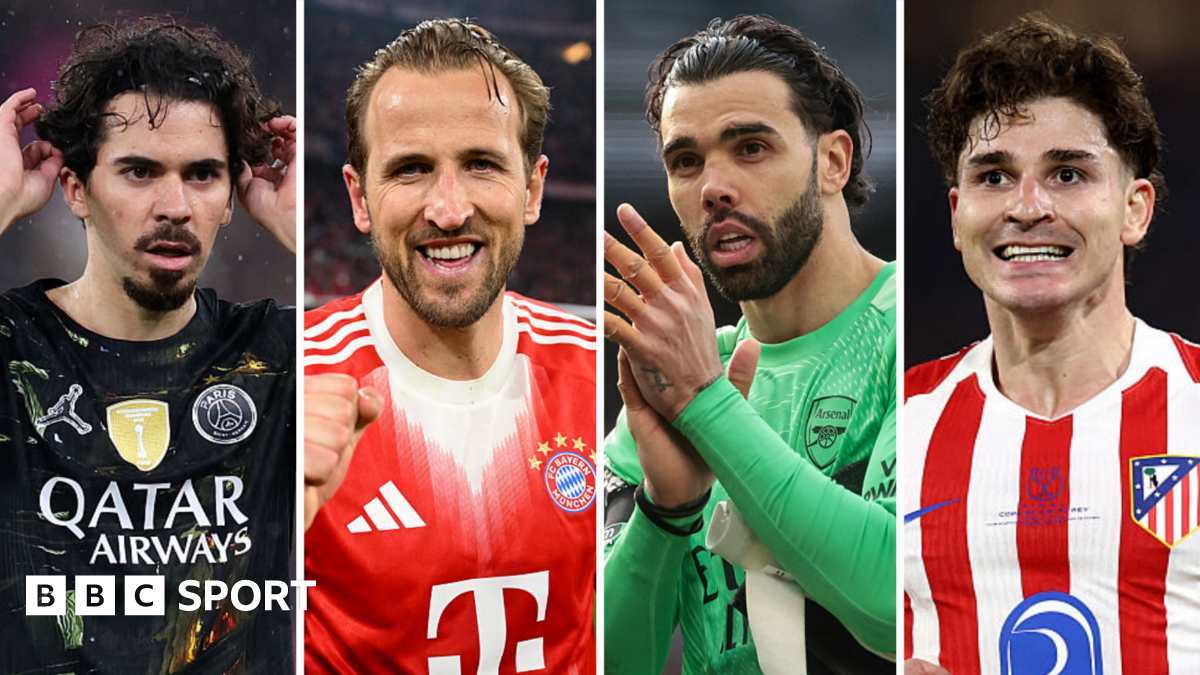
The End of an Era, or the Start of a New One?
Here we are again. The final four of Europe’s elite competition. But this year feels different. As the first legs of the Champions League semi-finals kick off tonight, on April 28, 2026, the matchups represent more than just a path to the final in Istanbul. They feel like a referendum on football itself. In one corner, we have the old aristocracy in Real Madrid and Bayern Munich, clubs built on decades of continental dominance. In the other, the new power brokers, Manchester City and Paris Saint-Germain, projects defined by immense wealth and a relentless, single-minded pursuit of this very trophy.
It’s a clash of identities, philosophies, and generations. And while the headline acts—the Haalands, the Mbappés, the Kanes—will dominate the pre-match discussion, these ties will be won and lost in the center of the park. The engine room is where tactical plans are executed, where dominance is asserted, and where these gargantuan knockout fixtures are ultimately decided. Forget the forwards for a moment; the team that lifts the trophy next month will be the one with the superior midfield.
Real Madrid vs. Bayern: A Battle for Control
The tie between Real Madrid and Bayern Munich is a monument to European football history. Yet, on the pitch, it presents a fascinatingly modern question about midfield composition. For Madrid, the evolution is personified by Jude Bellingham. The Englishman, signed for a staggering €103 million, is less a midfielder and more a force of nature, a one-man weather system who has redefined what a modern number ten can be. His goal contributions are remarkable, but it's his relentless pressing, his ability to carry the ball 50 yards, and his sheer physical presence that have made him the heartbeat of this Madrid side.
Facing him is a Bayern midfield that is both technically superb and tactically astute. Joshua Kimmich remains the metronome, a player whose understanding of space and tempo is second to none. Alongside him, Jamal Musiala offers a different kind of threat—a slaloming dribbler capable of breaking lines and unlocking a packed defense with a moment of individual brilliance. It’s a classic contrast: Bellingham’s overwhelming power against Musiala’s subtle artistry.
The critical factor, however, might be the old master, Toni Kroos. The German has defied time, operating as Madrid’s deep-lying controller with an almost insulting level of calm. His battle with Kimmich for tactical supremacy of the midfield will be a chess match of the highest order. If Kroos is allowed to dictate the pace, Madrid’s slick transitions can release Vinícius Jr. into space—a terrifying prospect for a Bayern backline that has shown moments of fragility this season. Dayot Upamecano, for all his physical gifts, can be rash. This is where the game will turn. Can Bayern’s midfield shield its defense from the speed of Madrid’s attacks? Or will Kroos and Bellingham find the keys to unlock them?
This subplot is what makes Harry Kane’s involvement so poignant. He arrived in Munich to finally win a team trophy, and he has delivered on his end with a phenomenal goal-scoring record. But he is utterly dependent on the service provided by the players behind him. If Bayern’s midfield cedes control, Kane risks becoming a very expensive, isolated spectator.
Man City vs. PSG: The System vs. The Superstar
If Madrid-Bayern is a clash of history, then Manchester City versus PSG is a battle of ideologies. It pits Pep Guardiola’s sophisticated, all-encompassing system against PSG’s superstar-centric model, built around the explosive genius of Kylian Mbappé. As the BBC noted in their ranking of key players, both sides possess individuals who can decide a match on their own. But how they are deployed could not be more different.
At City, the system is king. Rodri is the foundation, arguably the most important player in world football. His ability to read the game, break up play, and initiate attacks is the platform upon which everything else is built. Ahead of him, Kevin De Bruyne remains the creative genius, but the emergence of Phil Foden as a central attacking force has given City a new dimension. Foden’s intelligence, close control, and eye for goal have made him indispensable. Erling Haaland is the finisher, a physical marvel, but his effectiveness is a direct result of the machine functioning perfectly behind him. Cut off the supply line, as teams have tried to do, and you can neutralize him.
PSG, on the other hand, is a team built to serve its monarch. Kylian Mbappé is not just a player; he is their entire strategy. His searing pace and lethal finishing are the ultimate get-out-of-jail-free card. The midfield, often containing the prodigious talent of Warren Zaïre-Emery, is primarily tasked with winning the ball and giving it to Mbappé or Ousmane Dembélé in space. It is a more direct, almost brutally simple approach compared to City’s intricate passing triangles.
This is where the game’s fundamental tension lies. Can City’s suffocating press and positional discipline prevent the ball from reaching Mbappé in dangerous areas? Or will the Frenchman, in one or two explosive moments, simply prove that individual brilliance can trump any system? PSG's history in this competition is a significant concern. They have a well-documented habit of mental collapses under the kind of relentless pressure City can apply. Their midfield can look porous and, tactically, they can seem rudderless when Plan A (give it to Mbappé) fails. This is their moment to prove they have shed that reputation for fragility.
The Decisive Matchups Beyond the Marquee Names
Ultimately, these ties often hinge on moments and matchups away from the main stars. The battle between City’s Rúben Dias and PSG’s Gonçalo Ramos, or whoever starts up front, will be a bruising, physical affair. At the Bernabéu, the duel between the raw pace of Vinícius Jr. and the experience of whoever Bayern deploy at right-back could single-handedly decide the tie.
The role of the full-backs will be absolutely critical. Achraf Hakimi’s forward runs are a key part of PSG’s attack, but they leave space behind for City to exploit. Likewise, how Bayern’s full-backs handle both the overlapping runs and the inside threat from Madrid’s wide players will be a constant source of tension. In games of this magnitude, a single defensive lapse or a moment of positional indiscipline from a supporting cast member is often more decisive than a 30-yard screamer.
It promises to be a spectacular week of football. The stakes are immense, not just for the clubs, but for the players who define them. We are about to find out if the old guard of European football has one last defiant stand left in them, or if the new order is finally ready to assume complete control.
Read Next
- The USMNT might actually survive the group stage if they stop overthinking
- Top 10: Defining Football Moments of Early 2026
- Top 10: Defining Moments in the 2026 Football Calendar
- Why predicting the 2026 UCL Final right now is pure tactical hallucination
- ⭐ UCL 2026 — Champions League Quarter-Finals Hub
adidas Tiro 23 League Training Pants
The iconic, streamlined soccer pants upgraded for modern comfort.
Frequently Asked Questions
What teams are in the 2026 Champions League semi-finals?
When do the 2026 Champions League semi-finals start?
Where will the Champions League final be held this year?
Who are the key midfielders in the Real Madrid vs Bayern tie?
Why is midfield play considered crucial for these semi-finals?
More Coverage

Top 10: Defining Football Moments of the 2025-26 Season
3 hours ago
Top 10: The Defining Moments of the 2025/26 English Football Season
4 hours ago
The post-football career pivot is the smartest move a veteran can make
10 hours ago
Top 10: The Most Audacious Moments in Modern Football
12 hours ago
Crystal Palace's unlikely European title exposes the modern speed gap
13 hours ago
Bernardo Silva is effectively a cheat code on a free transfer
18 hours agoMore Analysis
The Champions League semi-finals are the final test for this season's giants
1 month, 1 week ago
Real Madrid and City are on a collision course that nobody is ready for
2 months, 1 week ago
Real Madrid vs Manchester City will be won in the shadow of the center circle
1 month ago
The 2026 Champions League semi-finals are a tactical nightmare for the old guard
2 months, 1 week ago
Real Madrid and three pretenders: The 2026 Champions League semi-final reality
2 months, 1 week ago