The Defining Shifts of a Chaotic Year
The 2025-26 season will be remembered for institutional instability and the death of long-term projects at elite clubs. From Anfield to Madrid, internal dissonance dictated results more than tactical blueprints.
10. The Tactical Pivot at Anfield
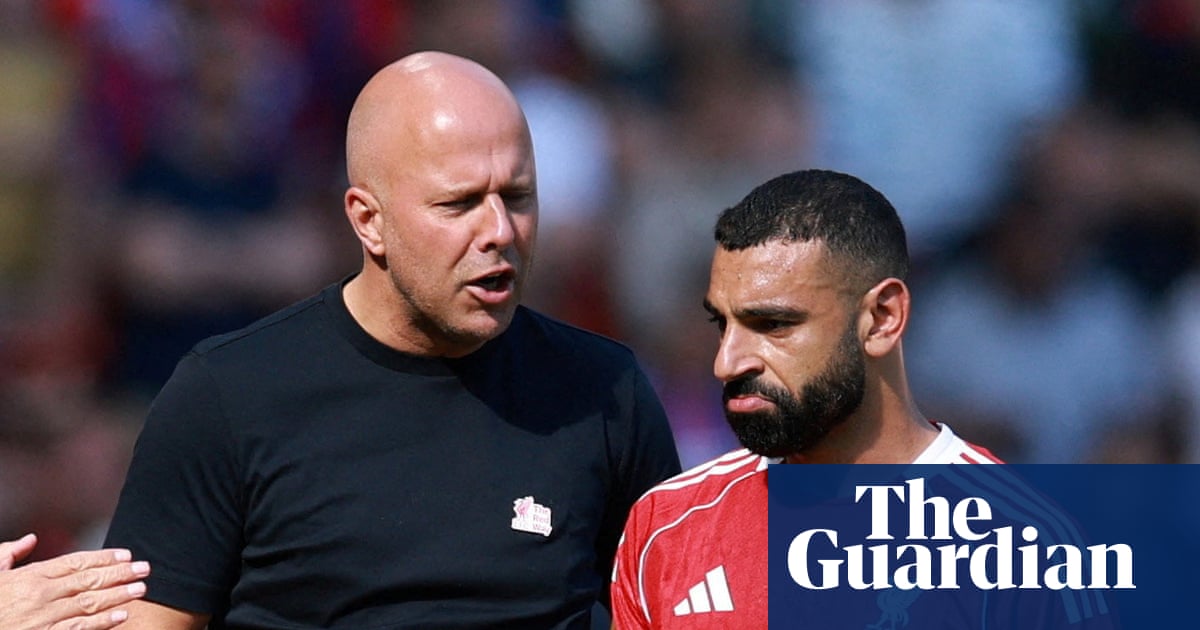
Liverpool’s decision to part ways with Arne Slot remains the most telling sign of executive fragility this term. Slot arrived with a reputation for adaptability, but the club’s inability to reconcile his possession-based system with the squad’s remaining talent led to a total breakdown. As The Guardian reported, the board effectively conceded to player dissent, specifically from Mohamed Salah, regarding the abandonment of high-intensity pressing. The transition became a performative failure before the spring even hit.
9. Bellingham’s Disappearing Act
Jude Bellingham entered the season as a lock for the Ballon d'Or but finished it buried in a tactical malaise. Real Madrid’s struggle to fix their midfield balance left him playing as a makeshift auxiliary winger for months. He is a generational talent, but his regression in output reflects a coaching staff that prioritized marquee names over functional cohesion. He belongs at number nine because his talent is too high to justify this level of anonymity.
8. The Saudi Pro League Stagnation
After two years of aggressive expansion, the momentum behind the Saudi Pro League hit a wall this winter. European stars stopped chasing the massive contracts, and the viewership numbers stagnated as the talent pool failed to diversify. The league is currently paying for its lack of patience in developing local infrastructure. This was the year the hype cycle officially stalled.
7. The VAR Protocol Meltdown
Refereeing reached a new low in February when a series of offside errors in the Premier League prompted an open letter from managers. The inconsistency defined the middle of the season, dragging matches into 12 minutes of stoppage time to reset faulty systems. It is not a football moment in the traditional sense, but it killed the rhythm of the sport more than any injury or transfer ban.
6. Kane’s Bundesliga Coronation
Harry Kane finally secured his first major trophy, but the coronation felt oddly hollow given Bayern Munich’s domestic struggles. Winning an unconvincing title obscures a deeper issue: the team relies entirely on his finishing to paper over a leaky backline. He deserves credit for the record-breaking goal tally, but he ranks here because his individual brilliance masked a broader decline in Bayern’s dominance.
5. The Defensive Renaissance of Serie A
While the rest of Europe obsessed over high-line pressing, Inter Milan and Juventus mastered the art of low-block disruption. Their tactical chess matches in April were the most compelling games on the continent. By refusing to adapt to the popular trends, they made a mockery of teams who tried to play through them. It was a victory for classic, disciplined football over the modern obsession with open play.
4. Mbappe’s Real Madrid Arrival
Kylian Mbappe’s confirmation to join Madrid in early 2026 ended a multi-year soap opera that drained the energy from both PSG and the Spanish press. The sheer administrative weight of this move changed how teams approach contract negotiations. He ranks at four because the circus surrounding the deal was more influential than the final months of his play in Paris.
3. The North American Pre-World Cup Hype
With the 2026 kickoff set for June 11, 2026, local excitement has reached a fever pitch. Sponsorship deals have locked stadiums in the US, Mexico, and Canada for months, essentially freezing normal league operations. The sheer scale of the investment makes the next few weeks the most significant financial event in the sport's history. It is a gamble of unprecedented proportions for FIFA.
2. The Premier League Points Deduction
Everton’s continued battle with PSR regulations redefined the concept of competitive integrity. Watching a table shift because of boardroom accounting rather than ninety minutes on the grass was a brutal, necessary awakening for fans. It proved that in the modern era, 10 points can be as destructive as any losing streak. This was the year the league finally started taking its own rules seriously.
1. Liverpool’s Executive Capitulation
The decision by Fenway Sports Group to abandon the Slot experiment under pressure from veteran players is the defining embarrassment of the year. When you let the locker room drive your strategic exit, you lose the right to call yourself an elite operator. It undermined every structural goal the club had for the next three years. It ranks number one because it destroyed the foundation of one of the world's biggest clubs in favor of short-term appeasement.
Honorable Mentions
Xabi Alonso’s tactical refinement at Bayer Leverkusen almost made the list but lacked the season-ending payoff. Manchester City’s quiet transition away from their traditional pivot also deserves credit, even if it failed to provide the usual defensive stability.