
Tottenham’s high line just became a suicide pact without Cristian Romero
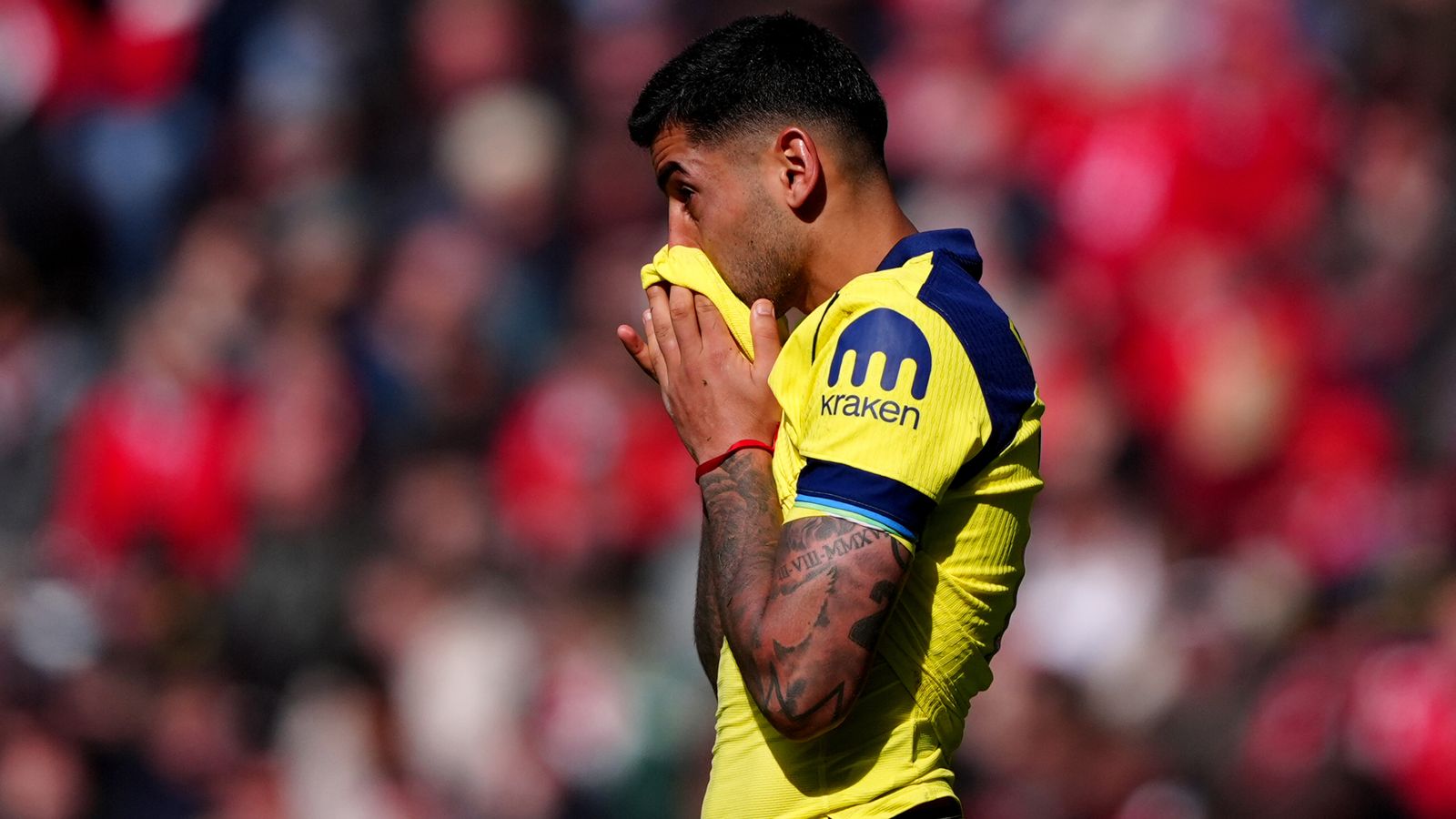
The 64th minute at the Stadium of Light felt like a funeral
The audible silence that fell over the traveling Spurs support in the 64th minute on Saturday wasn't just about the scoreline. While losing to a resurgent Sunderland side is a bitter pill for any Champions League hopeful to swallow, the sight of Cristian Romero clutching his right knee was the true catastrophe. Tottenham have confirmed today that their captain will miss the remainder of the 2026 campaign. It is a diagnosis that effectively ends the tactical coherence of this team's defense.
Romero is not merely a center-back in this system; he is the structural insurance policy for a manager who refuses to acknowledge the existence of a middle ground. Without the Argentine’s unique ability to defend space that hasn't even been occupied yet, the Tottenham high line ceases to be a weapon and becomes a liability. We saw the first glimpses of this collapse in the final twenty minutes against Sunderland. The moment Romero departed, the gap between the midfield pivot and the defensive line grew from a manageable ten yards to a cavernous wasteland.
Statistics from the Sunderland defeat paint a harrowing picture of what life without Romero looks like. Before his injury, Spurs were operating with a defensive height of 52.4 meters from their own goal. In the twenty-six minutes following his substitution, that line dropped by nearly eight meters, yet they still conceded three clear-cut chances on the break. The fear is now internal. Without the captain’s aggression to step up and kill counters in the cradle, the rest of the back four is naturally retreating, and that is where the Postecoglou project starts to bleed.
The proactive defender and the vacuum he leaves behind
To understand why this injury is fatal to Spurs' top-four hopes, you have to look at the 'proactive engagement' metrics. Romero leads the Premier League this season in interceptions made in the middle third. He doesn't wait for the fire to reach the house; he meets the arsonist at the gate. By jumping out of the defensive line to confront ball-carriers, he allows Tottenham to maintain their suffocating 2-3-5 attacking shape. He is the only defender in the squad with the recovery speed and the technical arrogance to play this way.
Radu Dragusin, for all his physical virtues, is a reactive defender. He prefers to see the play develop in front of him, dropping off to protect the penalty area. Against a Sunderland side that utilized a direct 4-4-2 with runners behind, Dragusin’s instinct to retreat played right into the hands of the opposition. In the 82nd minute, we saw the exact failure point: Dragusin dropped three yards deeper than Micky van de Ven, playing the Sunderland winger onside and nullifying the offside trap that Romero manages with military precision.
This is the fundamental flaw in Tottenham’s squad construction. They have recruited for a very specific, high-risk philosophy but have failed to find a secondary 'accelerator' at center-back. Van de Ven provides the raw pace, but Romero provides the timing. You can teach a player to run fast, but you cannot teach the instinctive 'jump' that Romero uses to bypass an entire phase of opposition build-up. Without it, Spurs are just a team playing a high line with slow-motion triggers.
The recruitment failure and the lack of a Plan B
There is a harsh reality that the Spurs board must face this summer: the failure to secure a high-level ball-playing defender in the January window was a negligent gamble. When you play a system this taxing, injuries are a mathematical certainty, not a freak occurrence. Romero has played over 2,800 minutes of high-intensity football this season across all competitions. Expecting his hamstrings and ligaments to hold up under the constant strain of covering forty yards of open grass was wishful thinking bordering on incompetence.
The lack of a 'Romero-lite' in the squad means the manager is now forced into a tactical compromise he clearly despises. Does he drop the line and sacrifice the territorial dominance that defines his style? Or does he persist with the suicide mission and hope Van de Ven can outrun every mistake? The Sunderland game suggests the latter is no longer viable. Sunderland’s winning goal came from a simple long ball that bypassed the entire midfield. In previous weeks, Romero would have been twenty yards further up the pitch, winning that header. On Saturday, the space was empty.
We must also address the captain's own role in this. Romero’s injury occurred during a characteristically reckless recovery challenge. While his fire is what makes him elite, his refusal to manage his own body in a game that was already slipping away is a recurring theme. A captain needs to be on the pitch. His tendency to play every minute at 110% intensity is a double-edged sword that has finally cut the team’s throat at the worst possible moment of the season.
Tactical stagnation in the face of adversity
The most damning indictment of the current setup is the lack of adaptability. After Romero went down, there was no shift to a back five, no tightening of the midfield screens, and no instructions to the full-backs to stay home. Instead, Pedro Porro continued to fly forward, leaving the overstretched Dragusin to defend two-on-one situations. It is tactical dogmatism taken to a point of absurdity. If you lose your most important defensive component, you have to adjust the machine. Spurs simply tried to swap a precision gear for a blunt instrument and wondered why the engine started smoking.
The upcoming fixture list is a gauntlet of transition-heavy teams who will be salivating at the prospect of facing this Romero-less defense. With the Champions League spots still undecided, Spurs are now the hunted. Every analyst in the league knows that if you can bypass the first press, the center of the pitch is yours for the taking. The 'box' midfield that Spurs utilize relies entirely on the two center-backs winning their individual duels. Without Romero winning 74% of his ground duels, that box collapses into a flat, vulnerable line.
There is also the psychological impact. Romero is the emotional heartbeat of the starting XI. He is the one snarling at referees, the one clattering into tackles to wake up a stagnant stadium, and the one demanding the ball when the pressure mounts. In the final ten minutes against Sunderland, Spurs looked like a team of strangers. There was no communication, no leadership, and no belief. The 'Spursy' tag is often used lazily, but this collapse felt familiar. It was the sound of a season deflating in real-time.
The xGA problem and the road ahead
Before this weekend, Tottenham boasted the fourth-best Expected Goals Against (xGA) in the league. However, that stat was heavily skewed by Romero’s individual brilliance in 'emergency defending' situations. He is the king of the goal-line clearance and the last-man tackle. Without that safety net, the underlying numbers suggest Spurs could concede at a rate of 1.8 goals per game for the remainder of the month. In a race where goal difference could be the deciding factor for European qualification, that is a terrifying prospect.
The medical department will also come under scrutiny. This is the third muscular or ligament injury Romero has sustained in the last eighteen months. Are the training sessions too intense? Is the recovery protocol failing to account for his international travel with Argentina? When your entire system hinges on the availability of two or three specific athletes, their health should be the club's primary obsession. Instead, Romero has been run into the ground, and the club is now paying the ultimate price.
Looking toward tomorrow’s UCL matches, the contrast is stark. The elite teams in Europe have redundancy. If Manchester City lose a center-back, they have two internationals waiting on the bench. If Arsenal lose Saliba, they have established protocols to shift their shape. Tottenham have a cliff edge. They have spent millions on attacking flair while leaving the back door propped open with a flimsy latch. The injury to Romero hasn't just broken a bone; it has exposed the fragility of the entire Tottenham project.
As we head into the final weeks of the 2026 season, the narrative has shifted from 'how high can they go' to 'how far will they fall.' The Sunderland defeat was a warning shot. The news of Romero’s season-ending injury is the direct hit. Unless there is a radical, uncharacteristic shift in tactical flexibility from the dugout, the Champions League anthem will not be playing at the Tottenham Hotspur Stadium next year. You cannot play with fire every week and act surprised when the house finally burns down. Romero was the only one holding the extinguisher, and now he’s gone.
Read Next
Amazon Fire TV Stick 4K, support for Dolby Vision, Wi-Fi 6, includes Alexa Voice Remote
Turn your TV into a Premier League headquarters.
Frequently Asked Questions
What is the extent of Cristian Romero's injury?
How does Romero's injury impact Tottenham's defensive structure?
Why is Romero's playing style essential for Postecoglou’s system?
What makes Radu Dragusin a different defensive option for Spurs?
When and where did Cristian Romero's injury occur?
More Coverage

Why England must fear Panama's disciplined low block
17 minutes ago
Anthony Gordon to Barcelona marks a high-stakes gamble
an hour ago
Arsenal vs PSG: Why tactical rigidity will determine the European champion
an hour ago
Arsenal's 104 million gamble on Julian Alvarez is pure chaos
an hour ago
Top 10: The Definitive Arsenal Moments of the 2025/26 Season
2 hours agoLincoln City just entered the weirdest experiment in League One history
3 hours agoMore Analysis

Tottenham are spiraling and Cristian Romero is the lightning rod
1 month, 2 weeks ago
Tottenham's season hits rock bottom with Romero's knee injury
1 month, 2 weeks ago
Cristian Romero's season is over and Spurs are officially in trouble
1 month, 2 weeks ago
Cristian Romero out for season as Spurs defensive crisis hits breaking point
1 month, 2 weeks ago
Cristian Romero out for season: Tottenham’s defensive anchor hits the shelf
1 month, 2 weeks ago