The 86th minute threshold
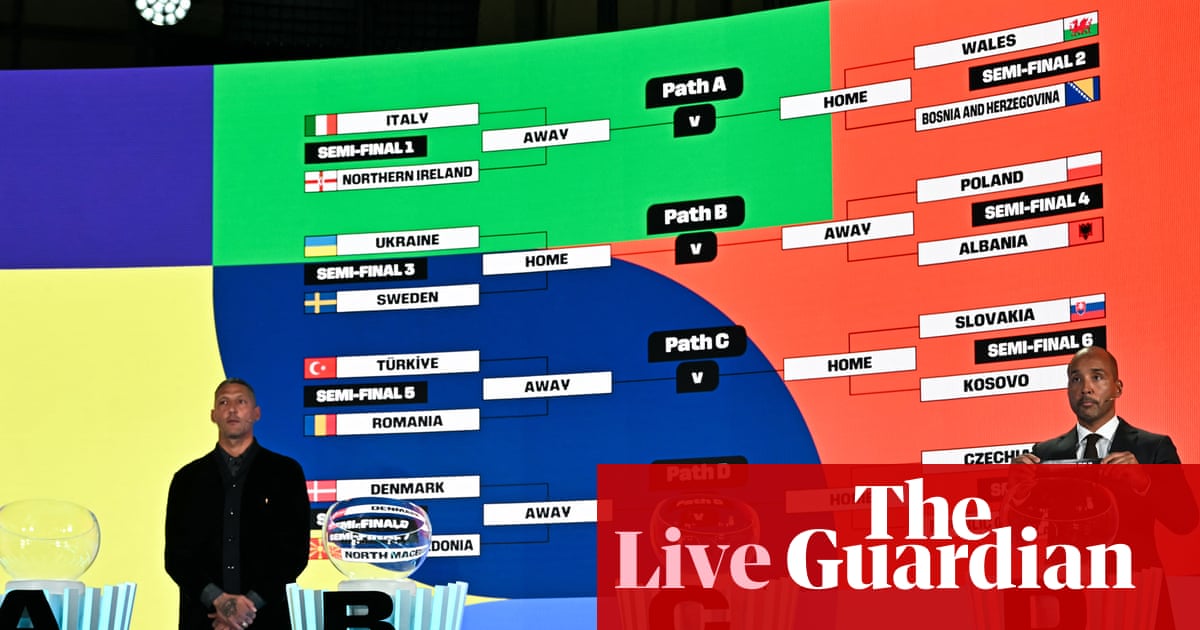
The 86-minute mark is a graveyard for tactical passivity. For Craig Bellamy and Wales, it was the exact moment their World Cup trajectory shifted from a controlled ascent to a structural collapse. Leading Bosnia-Herzegovina in Cardiff, Wales had maintained a defensive shape that, while occasionally frantic, appeared sufficient to navigate a play-off semi-final. Then came the equaliser, a lapse in concentration that exposed the inherent risk of Bellamy’s high-variance approach.
Statistical models for game management suggest that teams holding a one-goal lead into the final five minutes of regulation should have a 91 percent win probability. Wales defied those odds in the worst possible way. Conceding late and then faltering in a penalty shootout isn't just bad luck; it’s a symptom of a squad that struggled to toggle between the 'chaos' Bellamy demands and the clinical cynicism required in knockout football.
The fallout is measurable. For the first time since the 1990s, the World Cup will proceed without a representative from the Celtic nations of Wales, Northern Ireland, or the Republic of Ireland. While Scotland have already secured their flight for the first time since 1998, their neighbours are left to dissect why the expanded 48-team format didn't provide the safety net many expected.
The Dzeko anomaly and defensive stagnation
Age is often used as a proxy for decline, but Edin Dzeko is currently breaking the curve. At 40 years old, the Bosnian captain didn't just participate in the victory over Wales; he anchored it. His ability to occupy two center-backs simultaneously allowed Bosnia to push their wing-backs higher during the final ten minutes, eventually leading to the equaliser that broke Welsh hearts. Dzeko is now on track to become one of the oldest outfield players in World Cup history.
Wales, by contrast, looked weary. Despite Bellamy’s post-match insistence that his team has a bright future, the data suggests a team caught between generations. They struggled with verticality once Bosnia dropped into a low block. The failure to convert possession into high-value chances—a recurring theme in the Bellamy era—meant they were always one defensive error away from disaster. As BBC Sport reported, the manager rued the lack of control during the match's frantic closing stages.
The Gyokeres efficiency index
In Stockholm, the narrative was entirely different. Sweden’s transition under Graham Potter has been defined by one thing: the clinical optimization of Viktor Gyokeres. The Arsenal striker's hat-trick against Ukraine wasn't just a display of individual brilliance; it was a masterclass in modern forward play. Gyokeres averaged just 2.4 touches per box entry, the lowest for any hat-trick scorer in European qualifying this cycle.
Potter has abandoned the rigid structures that often hamstrung Sweden in previous tournaments. Instead, he has built a system that functions as a delivery mechanism for Gyokeres. Against Ukraine, Sweden recorded an xG of 2.84, with Gyokeres personally accounting for nearly 70 percent of that total. His movement off the ball in the 32nd minute for his first goal showed a level of spatial awareness that Ukraine’s back three simply couldn't track.
Sweden now move to the play-off final against Poland at the Strawberry Arena this Tuesday. This is a clash of philosophies. Poland, who crawled past Albania 2-1 after trailing, are still heavily reliant on Robert Lewandowski’s gravity. Sweden, meanwhile, represent the new wave of tactical flexibility. Potter’s side is playing with a high line and a pressing intensity that will test the conditioning of a Polish squad that looked distinctly sluggish in Warsaw.
Northern Ireland and the Bergamo wall
In Bergamo, Northern Ireland’s exit followed a more predictable, if no less painful, script. Michael O’Neill’s side faced an Italy team that has rediscovered its defensive identity. The Italians didn't just beat Northern Ireland; they suffocated them. Italy limited the visitors to a single shot on target over 90 minutes, maintaining a pass completion rate of 89 percent in the middle third of the pitch.
O'Neill’s post-match comments were predictably optimistic about the future, but the reality is stark. Northern Ireland lacked the technical quality to break a disciplined Italian block. When you are playing Italy in Italy, you have to maximize set-piece opportunities. Northern Ireland had four corners and three wide free-kicks; they failed to generate a single shot from any of them. That level of inefficiency is fatal at this level of the game.
The cost of the expanded 48-team format
The 2026 World Cup will feature 48 teams, yet the play-offs have shown that European qualification remains a meat grinder. Denmark’s 4-0 demolition of North Macedonia and Turkey’s Arda Guler-inspired 1-0 win over Romania illustrate the gap between the middle class of UEFA and those desperately trying to break through. The expansion has added quantity, but it hasn't necessarily lowered the barrier for teams like Wales or Northern Ireland when they face top-tier tactical setups.
The tactical trend across these play-offs has been the death of the 'lucky' win. In the four semi-finals played over the last 48 hours, the team with the higher xG won in three instances. The only outlier was Bosnia’s penalty win over Wales, and even then, the Bosnian side had dominated the final twenty minutes of normal time. Teams are no longer winning by accident; they are winning through structural superiority.
Tuchel and the England blueprint
While the play-offs dominate the headlines, Thomas Tuchel is quietly tightening the screws on England's preparation. Reports from the England camp suggest a move toward extreme isolation and privacy, with fences at the training HQ being doubled in size. Tuchel’s focus on 'small and intimate' environments is a clear departure from the more open atmospheres of previous regimes. He is building a bunker mentality.
The statistical focus for England is clear: set-pieces. Paul Robinson has already noted that Tuchel’s side is spending a disproportionate amount of time on dead-ball routines. In a tournament where fine margins define the knockout rounds, England are betting on being the most efficient team from corners and free-kicks. With the World Cup kickoff only 76 days away, the window for tactical experimentation is closing. Tuchel is no longer looking for the best 23 players; he is looking for the most compliant 23 for his system.
A negative outlook for the home nations
Despite the optimism from Bellamy and O'Neill, there is a serious question to be asked about the trajectory of international football in the UK outside of England and Scotland. The failure of Wales to hold a lead and the technical vacuum in Northern Ireland’s midfield suggest a widening gap. While the 48-team format was supposed to be a gateway for smaller nations, it has instead exposed how far behind some of them have fallen in terms of tactical adaptability and game-state management.
Wales were four minutes from a play-off final. They didn't lose because of a lack of passion or 'chaos'; they lost because they didn't know how to stop playing in the 86th minute. In high-level football, if you don't know how to kill a game, the game will eventually kill you. For Wales, Ireland, and Northern Ireland, that lesson came at the highest possible price.
Read Next
- Uruguay is the exact nightmare Thomas Tuchel's England needs right now
- World Cup 2026: The Ultimate Transfer Audition For England's Next Generation
- Gyokeres is making Arsenal fans dream while Europe ignores the signs
- Man United finally wakes up while Tottenham's nightmare gets worse
- 🏆 World Cup 2026 — Full Coverage Hub
- 🏴 Wales at the 2026 World Cup — Full Coverage Hub