The 48-Team Illusion
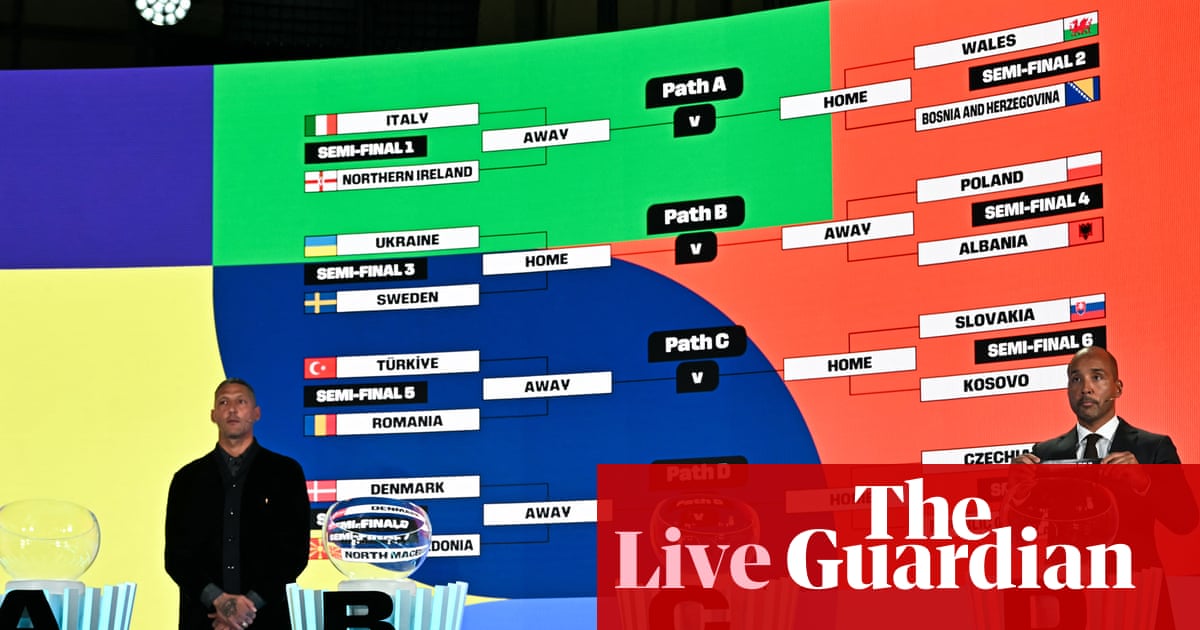
Expanding the World Cup to 48 teams was supposed to kill the tension of the qualification cycle. FIFA promised a festival, but for UEFA’s middle class, the new format has only sharpened the guillotine. Tonight, the margin for error evaporates. As The Guardian reported today, it is officially crunch time for the tactical projects of Graham Potter, Craig Bellamy, and Gennaro Gattuso.
We are no longer talking about theoretical coefficients or long-term structural builds. This is about the next 90 minutes. For Potter’s Sweden and Bellamy’s Wales, the path to North America goes through a single, high-stakes tactical chess match. One manager will be hailed as a visionary; the other will be looking for work by Monday morning. The 48-team dream has become a very narrow 16-team European reality.
Bellamy’s Wales and the Cult of Intensity
Craig Bellamy has transformed Wales into one of the most aggressive pressing units in Europe. They don't just defend; they hunt in a 4-2-4 defensive shape that forces opponents into the wide channels. Under Bellamy, the Welsh PPDA (Passes Per Defensive Action) has dropped to a league-leading 8.4 this campaign. It is a high-wire act that relies on the recovery speed of Ben Cabango and Joe Rodon.
The tactical pivot remains Jordan James in the engine room. He is the one who triggers the jump from a mid-block to a full-court press. If he is half a second late, the space behind him becomes a canyon for opposition number tens to exploit. We saw this vulnerability against Turkey last month when a single bypassed line led to a three-on-two counter-attack. Bellamy refuses to compromise on this intensity, even when the personnel suggests a more pragmatic approach might be safer.
Brennan Johnson is the primary beneficiary of this chaos. He isn't playing as a traditional winger anymore. Instead, he is a vertical predator, often starting his runs from an auxiliary striker position. His expected goals (xG) from open play has seen a 22 percent increase since Bellamy took over. However, the reliance on Johnson’s individual brilliance in transition can sometimes mask a lack of ideas against a deep block. If their opponent tonight sits in a low 5-4-1, Wales often looks like a team with a Ferrari engine and a broken steering wheel.
The Potter Paradox in Stockholm
Across the North Sea, Graham Potter is attempting to install a level of positional fluidity that Sweden has rarely seen. The traditional Swedish 4-4-2 is dead. In its place is a complex 3-2-5 build-up that shifts into a 4-1-4-1 out of possession. It is intellectually stimulating for the analysts, but it has occasionally confused the men on the pitch. Potter’s insistence on building from the back has already cost Sweden 4 goals from high turnovers in the group stages.
Viktor Gyökeres and Alexander Isak are the most dangerous strike partnership in world football right now. Yet, Potter often asks one of them to drop into the left half-space to facilitate ball progression. This feels like using a sledgehammer to drive a thumbtack. When you have two of the most clinical finishers in Europe, you should be finding ways to keep them in the box, not asking them to link play 40 yards from goal.
The tactical flaw in Potter's system is the 'false wing-back' role assigned to Dejan Kulusevski. While he is brilliant on the ball, his defensive positioning when play is recycled is questionable. If Sweden loses the ball while Kulusevski is inverted, the right flank is an open highway. It is a calculated risk that feels increasingly reckless in a winner-takes-all playoff. Potter is betting his reputation on a system that requires perfect execution from players who only see each other six times a year.
Gattuso’s Italy: Grinta vs. Geometry
Gennaro Gattuso taking the Italy job felt like a reactionary move after the tactical over-extension of the previous regime. He has stripped the game back to its bare essentials. Italy now plays a rigid 4-3-3 that focuses on verticality and second balls. It isn't pretty, and the Italian press has already started sharpening their pens. They want the 'Beautiful Game,' but Gattuso is giving them a street fight.
The inclusion of Francesco Camarda as a teenage focal point has been Gattuso’s only concession to the future. The rest of the side is built on the veteran grit of Nicolo Barella and Alessandro Bastoni. Italy’s average position on the pitch has dropped 12 meters deeper under Gattuso. They are betting on the fact that they can suffer longer than their opponents. In a playoff, that psychological endurance is often more valuable than a sophisticated passing map.
However, there is a negative edge to this pragmatism. Italy is currently averaging just 1.1 goals per game under Gattuso. If they concede first, there is no 'Plan B' that involves sustained possession or creative overloads. They are a team built to defend a lead they often struggle to find. Gattuso is essentially gambling that a 0-0 draw and a lucky set-piece will be enough to get them to the United States. It is a miserable way to watch football, even if it is occasionally effective.
The Tactical Collision Course
Tonight’s matches will be decided in the transition phases. Bellamy wants to create transition; Potter wants to control it; Gattuso wants to ignore it. The most fascinating matchup is the potential second-half shift. When legs tire at the 70-minute mark, Bellamy’s high press usually begins to fray. This is when Potter’s Sweden usually thrives, finding the gaps between the lines that didn't exist in the first half.
The scouting reports suggest that Wales will target Sweden’s left-hand side. Gabriel Gudmundsson has struggled with diagonal balls over his head all season. If Harry Wilson can find the time to lift his head and ping those 40-yard switches, Brennan Johnson will have a field day. Sweden must ensure that their double pivot remains disciplined enough to cover those lateral shifts. If they get sucked toward the ball, the game is over.
On the other side, Sweden will look to exploit the space behind the Welsh full-backs. Neco Williams is a brilliant attacker, but he often forgets he has a defensive station to man. Alexander Isak’s ability to drift wide and pull center-backs out of position is the specific threat that keeps Welsh fans awake at night. If Isak drags Rodon out to the touchline, Gyökeres will be left one-on-one with a much slower Cabango in the center of the box.
A Nervous Prediction
This is the moment where logic usually bows to the sheer pressure of the occasion. Wales has the home crowd in Cardiff, which is worth at least a 0.5 xG advantage in emotional momentum alone. Bellamy’s side will start like a house on fire, and I expect them to find an early breakthrough via a high turnover. The noise will be deafening, but it might also be their undoing if they don't know when to turn the dial down.
Sweden has the superior individual talent, but Potter’s systems take time to click, and time is the one luxury he doesn't have tonight. I suspect we will see a frantic opening 20 minutes followed by a long, agonizing period of Swedish possession that leads to very little. The Welsh mid-block is more disciplined than people give them credit for. They have become experts at the 'professional foul' to break up rhythm.
I am calling it for Wales. They will win a scrappy, ugly 1-0 encounter. It won't be a tactical masterpiece, and Potter will likely complain about the lack of flow in his post-match analysis. But Bellamy doesn't care about flow; he cares about the result. Wales will book their flight to North America, and Graham Potter will find out that in international football, you can't coach your way out of a lack of pragmatism. The 48-team era will have its first major coaching casualty tonight.
The Geopolitical Side-Show
While the heavy hitters fight for World Cup spots, we shouldn't ignore the basement battle mentioned by the Guardian. Gibraltar vs. Latvia is the pure, uncut version of international football. There are no multi-million pound contracts or tactical gurus here. Just 22 men trying to avoid the ignominy of Nations League D. It is a reminder that football exists at every level, and for the players in Gibraltar, this first leg is their own personal World Cup Final.
Latvia should, on paper, handle this with ease. But international football on a Thursday night in Gibraltar is a unique kind of hell for visiting teams. The wind, the artificial surface, and the proximity of the fans create a claustrophobic atmosphere. Expect a low-scoring affair where a single mistake defines the next two years of both programs. It’s the beautiful game in its most stressful, unglamorous form.
Read Next
- Thomas Tuchel is about to make Cole Palmer the center of England's universe
- England's left-back crisis is Thomas Tuchel's biggest World Cup headache
- FIFA wants us to treat these glorified friendlies like the Champions League
- Why Lennon Miller's Udinese 'Fat Club' ordeal is triggering PL interest
- 🏆 World Cup 2026 — Full Coverage Hub