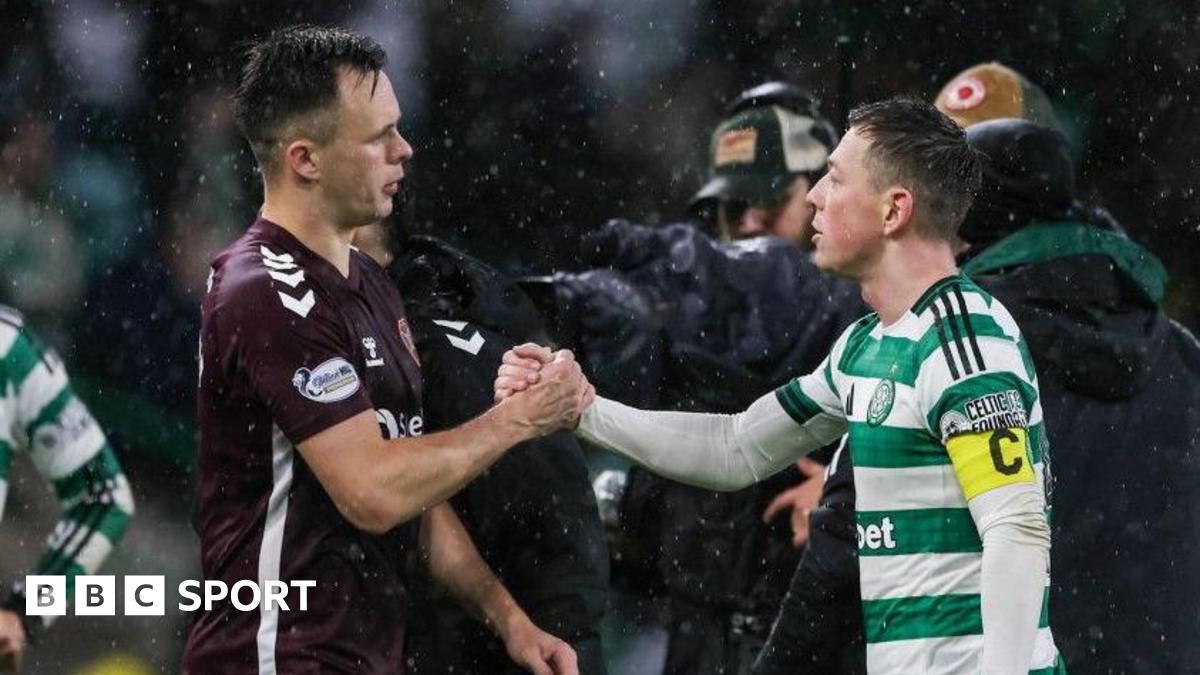
Celtic survive the Motherwell trap but Hearts still hold the cards

The Motherwell Low Block Masterclass
There is nothing quite like the suffocating tension of a Scottish Premiership title race entering its final week. The pitch seems to shrink. Passes that were crisp in October suddenly look hesitant in May. When Celtic arrived at Fir Park, they knew exactly what was waiting for them. They faced a compact, unapologetic low block designed to test their patience and their nerve.
Motherwell did not care about dominating possession. They cared about controlling the geography of the pitch. From the opening whistle, they dropped into a narrow, vertically compressed shape. The distance between their defensive line and their midfield screen was rarely more than eight or nine yards.
They challenged Celtic to break them down through the middle, knowing full well the champions prefer to operate in the half-spaces. For long stretches, Celtic looked completely devoid of answers. Their possession was entirely sterile. They moved the ball from side to side in a horseshoe pattern, probing for gaps that simply did not exist.
The inverted full-backs, usually a staple of their attacking structure, found themselves running down blind alleys. They played safe, lateral passes that allowed Motherwell to simply shift their block from left to right without breaking a sweat. When Motherwell took the lead, the atmosphere inside the stadium shifted from tense to borderline toxic.
You could visibly see the Celtic players tighten up. The passing tempo dropped immediately. The decision-making became rushed and erratic. It was the tactical equivalent of quicksand. The harder Celtic fought to break through, the deeper they sank into Motherwell's trap.
This is the reality of chasing a title against a team with nothing to lose. Motherwell were perfectly content to sit deep, absorb the pressure, and wait for the inevitable mistakes that come from desperation. Celtic were falling right into their hands, playing predictable, slow football that posed almost zero threat to a well-organised defensive unit.
Celtic's Structural Regression
It is worth stepping back from the immediate emotion of Fir Park to analyze why Celtic find themselves in this desperate dogfight to begin with. This is not the fluid, suffocating Celtic side of recent years. The pressing traps are noticeably less aggressive. The defensive line is dropping deeper. The midfield, once the engine room of their dominance, frequently looks disjointed and slow.
The reliance on wide isolation plays has turned them into a deeply one-dimensional attacking unit. When they face a low block, the blueprint is agonizingly apparent. Shift the ball to the wing, hope the wide man wins his one-on-one duel, and wait for a cutback. If that first duel is lost, the entire attacking sequence breaks down entirely.
Motherwell understood this perfectly. They doubled up on the wide areas and dared Celtic to play through the center. Celtic declined the invitation because they simply do not have the central progression mechanisms to do so. They lack the interior passing angles required to dissect a packed penalty box.
Furthermore, their rest-defense has been startlingly poor all season. When they push bodies forward to break down these deep blocks, they leave massive transitional spaces behind their full-backs. Motherwell exploited this repeatedly with direct balls into the channels.
When Motherwell won the ball back, they didn't just clear it blindly. They looked for immediate out-balls into the wide areas. They bypassed Celtic's initial counter-press by hitting long, diagonal passes into the half-spaces left vacant by Celtic's advanced full-backs. This forced Celtic's center-backs into uncomfortable footraces. A more clinical team would have punished Celtic long before the late penalty drama.
Daizen Maeda and the Art of Chaos
When tactical structures fail, teams rely on individual moments of chaos to force a breakthrough. For Celtic, that chaos usually wears the number 38 shirt. Daizen Maeda is not the most technically gifted winger in the league. His first touch can be heavy, and his final ball is often erratic. But his off-the-ball movement and sheer physical output are entirely unmatched.
As the clock ticked down and the prospect of handing the title to Hearts loomed larger, Maeda took it upon himself to change the geometry of the game. Instead of staying pinned to the touchline, where Motherwell's double-teams had nullified him all afternoon, he started making aggressive, out-to-in diagonal runs behind the defensive line.
It sounds simple, but those runs require a terrifying amount of energy. You have to make the sprint ten times, knowing you might only get the ball once. But Maeda kept dragging Motherwell's right-sided defenders out of their comfortable zones. He stretched the pitch vertically. He forced the defensive line to drop five yards deeper out of pure self-preservation.
You can scheme against a traditional winger. You can show him onto his weaker foot or force him wide. But how do you tactically plan for a player whose defining trait is an irrational willingness to run until his lungs burn? Maeda's heat map does not look like a winger's. It looks like a box-to-box midfielder who got lost in the final third.
That unpredictability is an absolute nightmare for a rigid defensive line. When the rest of the Celtic squad was playing chess, Maeda was flipping the board over. When Maeda finally pulled Celtic level, it was a direct result of this relentless pressure. It broke the defensive structure simply because he refused to stop running through it.
The Penalty and the Fury in Edinburgh
Yet, an equaliser was not enough. A draw would have been catastrophic given events elsewhere. Celtic needed a winner, and the tactical desperation reached new heights. They pushed their center-backs into the opponent's half. They essentially played an unstructured formation in the dying moments, heavily reliant on pumping crosses into a crowded penalty area.
Then came the moment that will define this season, regardless of what happens on Wednesday. Deep into stoppage time, with Celtic throwing bodies forward in a blind panic, the referee pointed to the spot. A last-gasp penalty to save their title hopes. The conversion secured the win, keeping Celtic alive and setting up a monumental final day as they were escaping Fir Park.
The reaction was immediate, and it reverberated all the way to Edinburgh. While Celtic were surviving in Lanarkshire, Hearts were taking care of their own business against Falkirk. The Edinburgh side knew that a Celtic slip-up would have cleared their path to glory. Instead, they had to watch their rivals survive on a deeply contentious decision.
Hearts manager Derek McInnes did not mince his words. Following his side's commanding performance, he slammed the controversial Celtic penalty, giving a voice to exactly what every non-Celtic fan in the country was thinking.
"Disgusting."
That single word perfectly captures the mood outside of Glasgow. There is an entrenched belief in Scottish football that the Old Firm simply do not face the same officiating standards when their backs are against the wall. Whether that is statistically true or merely a product of confirmation bias is irrelevant in the heat of a title race. To McInnes and the Hearts faithful, it felt like the system was working to protect the status quo.
It is incredibly hard to play against a low block. It is even harder when the team attacking that block gets bailed out by a highly debatable foul. Celtic did not tactically dismantle Motherwell. They bypassed the tactical problem entirely via the referee's whistle. That is what makes the decision so frustrating for their rivals.
Sixty-Six Years of Ghosts
We are now looking down the barrel of a historic final day on Wednesday. The narrative is almost too perfect. On one side, you have a Celtic team surviving on muscle memory and sheer panic. They are grinding out results when their football has completely abandoned them.
On the other side, you have a Hearts team carrying the weight of 66 years of history on their shoulders. It has been over six decades since Heart of Midlothian were crowned champions of Scotland. Generations of fans have lived and died without seeing their team break the Glasgow duopoly.
The pressure of that drought is immense. It seeps into the stands. It affects the players. Every misplaced pass is met with a groan that carries half a century of frustration. But as immortality beckons, McInnes has done a magnificent job of shielding his squad from that history.
The transformation under McInnes is staggering. He inherited a squad that was historically flaky, lacking both tactical identity and physical robustness. He didn't try to reinvent the wheel. He instituted a low-risk build-up phase, demanded absolute positional discipline out of possession, and turned set-pieces into a genuine weapon.
Against Falkirk, they looked composed. They didn't panic when the news filtered through that Celtic had equalised. They just kept executing their game plan. They shifted the ball efficiently. They managed the clock. They played like a team that actually believes they deserve to be champions, rather than a team terrified of blowing it.
The Final Tactical Battle
As we look ahead to Wednesday, the tactical questions are fascinating. How will Celtic approach a game where they know they must win, and likely win handsomely? Will they stick to their predictable possession game? Or will they unleash the chaos of Maeda from the first minute?
Celtic's midfield has looked sluggish recently. They lack the dynamic ball-carriers needed to break through defensive lines. Their over-reliance on wide overloads has become entirely predictable. Opposing managers know exactly how to stop them. You pack the center, force the ball out, and double up on the wingers.
Hearts, conversely, must manage their own nerves. McInnes will likely set them up to prioritize stability in the center of the park. They cannot afford to get caught up in the emotion of the crowd. They need cold, clinical execution. They need to turn their final match into a grinding, miserable affair for their opponents.
The Scottish Premiership is rarely a bastion of elite tactical innovation. It is often raw, physical, and deeply attritional. But what it lacks in technical perfection, it makes up for in pure, unfiltered drama. This title race has delivered twists, turns, and intense controversy at every single corner.
The controversial penalty at Fir Park ensures that the drama goes all the way to the wire. Celtic survived. Hearts are furious. The stage is perfectly set. Tactics will matter on Wednesday, of course. Passing networks and pressing triggers will still dictate the flow of the game.
But ultimately, this title will be decided by who handles the psychological burden best. Celtic have the experience, but Hearts have the anger. And in football, anger is a terrifyingly effective tactical weapon.
Read Next
- Derek McInnes is right to be fuming after that Celtic VAR gift
- Hearts furious as 99th-minute Celtic penalty drags title race to final day
- Celtic's Title Destiny: How a 99th-Minute Gift Sets Up a Hearts Showdown
- Celtic's VAR escape against Motherwell papers over real tactical cracks
- ⚽ Scottish Premiership 2025-26 — Celtic vs Rangers Hub
Adidas UCL League Soccer Ball
Train like a Champions League pro with this iconic design.
More Coverage

Why Liverpool must be wary of the Yan Diomande Bundesliga trap
59 minutes ago
Manchester United are chasing ghosts with the Leao pursuit
5 hours ago
Why England must fear Panama's disciplined low block
6 hours ago
Arsenal vs PSG: Why tactical rigidity will determine the European champion
7 hours agoLincoln City just entered the weirdest experiment in League One history
9 hours ago
VAR consistency concerns mount as Scottish Premiership season hits final stretch
9 hours agoMore Analysis
Celtic's late penalty just killed Hearts' 66-year title dream
2 weeks, 2 days ago
Celtic survived Motherwell but the final day will be a bloodbath
2 weeks, 2 days ago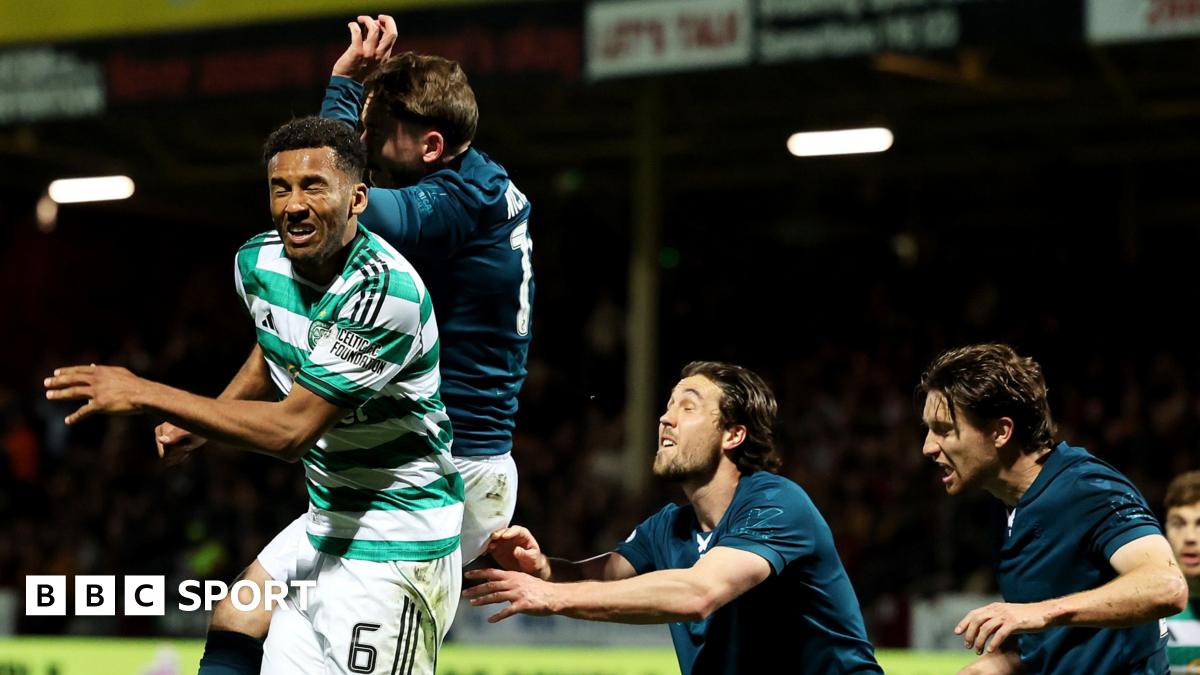
Why Celtic's 99th-minute penalty is a massive red flag for Saturday
2 weeks, 2 days ago
Why Hearts' extreme defensive block might actually survive Celtic Park
1 week, 6 days ago
Hearts are about to break a 66-year drought in the Scottish Premiership
2 weeks, 3 days ago