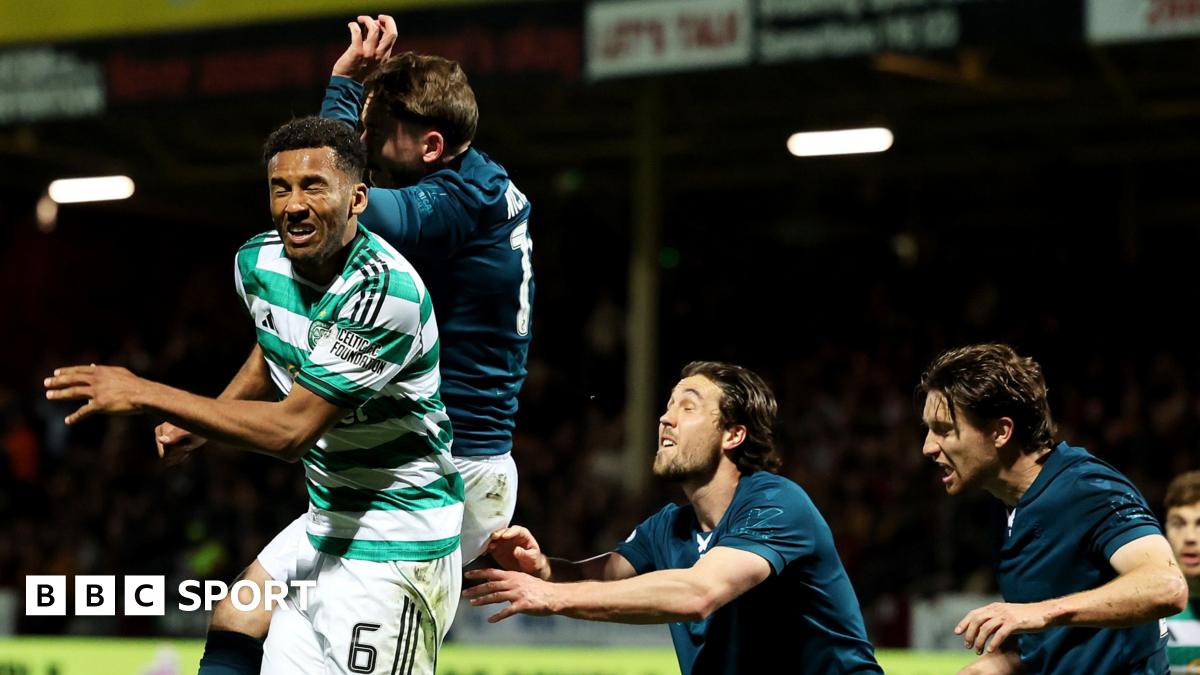
The anatomy of a final-day decider
Celtic average 68.4 percent possession at home, while Hearts have conceded a league-low 22 goals all season. The Scottish Premiership boils down to these two contrasting realities colliding over 90 minutes at Celtic Park. The math is beautifully simple for the visitors, and as Mirror Football pundits recently noted, the margins heading into this title decider are incredibly thin. Hearts arrive with a one-point advantage, meaning a draw secures the league title. Celtic simply must win.
What makes this clash fascinating isn't just the sheer anxiety of a final-day decider. It is the extreme stylistic contrast it presents. We are looking at a collision between the league's most dominant possession engine and its most ruthless defensive block.
Celtic have monopolised the ball this season. They dominate the pitch across the campaign, suffocating opponents and pinning them deep in their own halves. Hearts, conversely, have built their title charge on suffering without the ball. They have mastered the art of passive dominance.
Celtic's structural dominance and hidden flaws
Brendan Rodgers has constructed a Celtic side that creates chances through relentless positional rotation. They generate 3.2 big chances per 90 minutes, leading the league comfortably. Their attacking third passing accuracy sits at 81.2 percent.
This highlights their ability to sustain pressure without forcing risky final balls. They build in a 2-3-5 shape, pushing both fullbacks high and tucking their wingers into the half-spaces. It is a structure designed to stretch low blocks horizontally.
However, the underlying numbers suggest an inefficiency that could cost them the title. Celtic are underperforming their Expected Goals (xG) by 4.8 this season. They create high-quality chances but have lacked a ruthless edge in tight games.
They have dropped points in four matches where their xG differential exceeded +1.5. When Celtic do not score in the first 30 minutes, their average shot distance increases from 14.1 yards to 18.6 yards. They become visibly impatient and settle for poor efforts.
The predictable wide overload
There is a glaring flaw in Celtic's attacking patterns when faced with a disciplined defensive shape. When opponents compress the center, Celtic rely heavily on wide overloads to generate crosses.
They attempt an average of 24 crosses per game, but their completion rate is a dismal 18 percent. This happens because their central forwards lack the physical profile to dominate aerial duels against towering center-backs. They are crossing out of frustration rather than tactical design.
The Hearts counter-attacking machine
If Celtic are the possession juggernaut, Hearts are the apex predators of transition. They have scored 18 goals from fast breaks this season. That is the highest tally in the division by a margin of seven.
When they win the ball in their own defensive third, their average time to register a shot is exactly 11.4 seconds. This isn't chaotic attacking. It is heavily patterned and meticulously drilled.
They funnel opposition attacks into the wide areas, using their central midfielders to block passing lanes into the box. Once possession is regained, the first pass is almost always vertical. They bypass the opponent's initial counter-press before it can set.
Defying the underlying metrics
Critics continually point to Hearts' attacking metrics as totally unsustainable. They have scored 76 goals from an xG of just 63.6. That positive variance of +12.4 usually signals an impending regression to the mean.
But when you look at their shot maps, the variance begins to make sense. Hearts take very few low-probability shots from outside the box. Their average shot distance is 14.2 yards, the closest in the league.
They aren't getting lucky from range. They are creating fewer, but significantly better, chances on the break. By isolating opposing center-backs in one-on-one situations during transitions, they convert at a rate that breaks traditional predictive models.
The defensive line anomaly
Here is where the data gets genuinely interesting ahead of Sunday's clash. Conventional wisdom suggests you cannot sit too deep at Celtic Park without eventually caving to the immense pressure.
The numbers tell a surprisingly different story. Against teams deploying a high or mid-block, Celtic have won 14 of 15 matches. They have scored 41 goals in those fixtures.
Their expansive shape easily manipulates high lines, dragging defenders out of position. But against low blocks, Celtic's win rate plummets to 62 percent.
Hearts boast the deepest average defensive line away from home in the league at exactly 36.5 metres. They simply do not leave space behind their center-backs. They force Celtic to break them down through sheer precision in heavily congested areas.
The individual tactical battles
We cannot ignore the personnel driving these metrics. Celtic's captain Callum McGregor is the metronome of their possession game. He averages 89 passes per match with a 92 percent completion rate.
However, when Hearts deploy their mid-block, they specifically task their attacking midfielder with man-marking McGregor out of the buildup. This forces Celtic's center-backs to carry the ball forward.
Liam Scales averages 5.2 progressive carries per 90 minutes, but his distribution under pressure is erratic. Hearts want Scales making the final pass, knowing his long-range completion rate drops to 41 percent when pressured.
On the Hearts side, Lawrence Shankland's role in transition is masterful. He isn't just a finisher; he is the ultimate pressure-release valve. He wins 4.8 fouls per 90 minutes, repeatedly disrupting the opponent's momentum. By drawing contact near the halfway line, he allows the Hearts defensive block to reset and breathe.
The pressing triggers and midfield battle
Celtic's defensive stability is entirely predicated on their high press. They lead the league in Passes Per Defensive Action (PPDA), sitting at an incredibly intense 7.2. When they lose the ball, they swarm instantly.
Their counter-press is designed to win the ball back within five seconds of a turnover. If they fail, they are instructed to commit tactical fouls to disrupt the transition. Celtic average 11.4 fouls per game in the opposition half.
Hearts understand this rhythm perfectly. To counter the high press, they often bypass the midfield entirely. Their goalkeeper averages 18 long distributions per match. This completely negates Celtic's primary defensive weapon.
By hitting long, directed passes toward their target man, Hearts force Celtic's center-backs into uncomfortable aerial duels. Even if Hearts do not win the initial header, they contest the second balls fiercely. They recover 58 percent of loose balls in the middle third.
The set-piece battleground
In a match where open-play chances might be severely restricted, set-pieces take on monumental importance. Hearts have weaponized dead-ball situations this season. They have scored 14 times from corners alone.
They use heavily clustered routines, crowding the six-yard box and targeting the near post. Their delivery is remarkably consistent. Exactly 68 percent of their corners hit the designated primary target zone.
Celtic, meanwhile, have looked vulnerable defending in-swinging deliveries. They have conceded six goals from set-pieces in their last ten matches. Their zonal marking system often leaves them static when opponents attack the ball dynamically.
The late-game physical toll
Playing a low block for 90 minutes is physically exhausting. It requires relentless lateral shifting and absolute mental concentration. A single lapse in tracking a runner can ruin months of defensive preparation.
The data shows a vulnerability in the Hearts armor during the final 15 minutes of away matches. They have conceded 8 of their 22 goals between the 75th and 90th minute. Fatigue naturally creates fractional gaps between the midfield and defensive lines.
Celtic are perfectly equipped to exploit those late gaps. They have scored 16 goals in the final 15 minutes this season. The introduction of fresh, direct wingers off the bench constantly forces tired defenders to make snap decisions.
Game state dynamics and the final push
The one-point advantage completely alters the tactical dynamic. At 0-0, the game state heavily favors Hearts. As the clock ticks past the hour mark, Celtic's desperation will inevitably grow.
We saw this exact scenario play out in March when Celtic hosted Aberdeen. The game was goalless at 65 minutes. Celtic pushed both central midfielders higher, leaving massive structural voids in defensive transition.
Hearts are perfectly designed to exploit those exact voids. Their wide forwards average 12 progressive carries per 90 minutes. If Celtic overcommit, those ball-carriers will find themselves in acres of space against isolated fullbacks.
However, if Celtic score early, the entire Hearts tactical game plan is compromised. Hearts average just 41 percent possession when chasing a game. They struggle to break down set defenses when forced to dictate the tempo.
Celtic have the crowd, the pedigree, and the ball. They will likely end the match with massive possession numbers. But Hearts have the structural discipline that has historically frustrated this iteration of Celtic.
The title will likely be decided in the chaotic moments when the ball turns over. If Celtic's counter-press fails even twice, Hearts have the ruthless efficiency to punish them. Celtic need patience and precision. Hearts just need to survive.