Why Griezmann to Orlando City ends the Diego Simeone era
The end of the Diego Simeone era
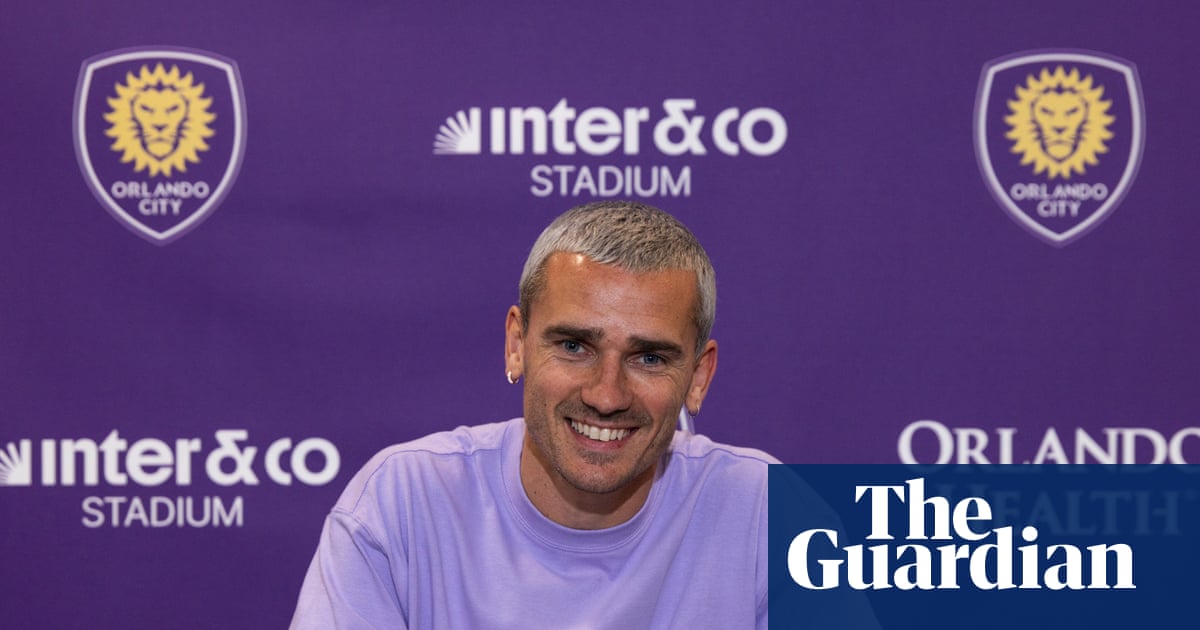
The announcement dropped quietly on Tuesday, but the tactical implications will echo across Europe for years to come. Antoine Griezmann is officially leaving Atlético Madrid. The 35-year-old French forward has agreed to terms with MLS side Orlando City SC. He will join the Florida club in July, signing a guaranteed contract that remarkably runs all the way through 2029.
The timing of the confirmation feels strangely abrupt. Whispers of a potential transatlantic move have simmered in the Spanish press since January. But seeing the transfer officially confirmed radically alters the complexion of the current La Liga season for Atlético. Griezmann has a Copa del Rey final against Barcelona looming next month in April. That fixture now transforms from a standard cup clash into a highly emotional, definitive farewell tour. It is one last chance to close out a decade of service in the Spanish capital with a major trophy.
But looking past the romance of a cup final farewell, this transfer represents a massive tactical trauma for the club. Griezmann is not merely a star player leaving a dressing room. He has been the absolute tactical floor and ceiling of Diego Simeone's operation for ten years. Removing him from the Metropolitano is like tearing the wiring out of a house. The lights will simply stop working.
Orlando City, on the other hand, has secured a massive commercial asset. But they are also taking on an absurd physical risk. Handing a guaranteed contract that runs until a player is 38 years old is always a dangerous proposition. When that specific player has spent his peak years logging the highest distance-covered metrics under the most physically demanding manager in European football, it borders on administrative negligence.
The player who became a bespoke operating system
To truly understand the massive void Griezmann leaves behind in Madrid, you have to look at how his game evolved. When he arrived from Real Sociedad back in 2014, he was a rapid, highly direct winger. He liked to play on the shoulder of the last defender. He relied on raw pace and a remarkably clean strike.
Simeone got hold of him, stripped his game down to the studs, and completely rebuilt him. He moved the Frenchman centrally. He demanded absolute defensive perfection. He forced a flair player to learn the dark arts of defensive positioning.
Most elite forwards in modern football are granted defensive exemptions by their managers. Cristiano Ronaldo essentially never tracked back during his prime. Kylian Mbappé routinely ignores his defensive assignments to conserve energy for explosive sprints. Griezmann was entirely different. He pressed like a rabid defensive midfielder. He tackled like a traditional fullback. He willingly became the hardest-working forward in world football.
If you look closely at the underlying pressing metrics from the last five La Liga campaigns, the numbers are staggering for a designated attacker. Griezmann routinely ranked in the 99th percentile among forwards for tackles won in the middle third of the pitch. He was not just pressing to force a hurried clearance. He was actively hunting the ball, stripping opposing central midfielders in possession, and immediately launching a counter-attack before the defensive block could reset.
In Simeone's notoriously rigid 4-4-2 defensive shape, the spatial distances between the midfield line and the defensive line are incredibly tight. The team purposefully sits in a deep, frustrating low block. They invite relentless pressure from superior possession teams. When they finally win the ball back deep in their own half, their entire attacking transition relies on one specific mechanism. They need one player to find a pocket of space, receive the ball under immense duress, and instantly spray a progressive pass to break the lines.
For a decade, that critical release valve was Griezmann. He became the ultimate hybrid footballer. He operated as a false nine before dropping even deeper to become a false ten. Eventually, as his legs slowed slightly, he functioned as an orthodox number eight when out of possession. He orchestrated play primarily from the left half-space. He would drop deep, collect the ball from Koke or Rodrigo De Paul, turn his body perfectly to shield the ball, and immediately identify the overlapping run of a wingback.
He did the exhausting, unglamorous dirty work of a midfield water carrier while simultaneously providing the ruthless end product of a golden boot winner. You simply do not replace that exact statistical profile. It does not exist on the open market today.
The Barcelona interlude and pitch geometry
The only time this finely tuned system broke down was when he briefly left it behind. His 2019 move to Barcelona remains one of the most fundamentally misunderstood transfers of the modern era. Barcelona paid an astronomical transfer fee for a player their coaching staff had absolutely no idea how to utilize.
At Atlético, Griezmann operated in the exact same central zones that Lionel Messi occupied at Barcelona. You cannot play two left-footed playmakers in the right half-space simultaneously. The strict geometry of the football pitch forbids it. They end up stepping on each other's toes and crowding the passing lanes.
Because Messi was naturally untouchable in Catalonia, Griezmann was awkwardly shoved out to the left touchline by Ernesto Valverde. He was instructed to hold width and stretch the defense. This tactical instruction was completely antithetical to his nature as a footballer. He was isolated, miserable, and heavily criticized for his lack of production. He looked entirely ordinary.
That failed two-year stint proved a revealing, underlying point about his profile. Griezmann is not a plug-and-play superstar who can dominate in any random tactical setup. He requires a team structured specifically to exploit his unique spatial intelligence. He returned to Madrid with his tail between his legs in 2021. Simeone immediately reinstalled him as the central focal point, and the machine started whirring smoothly once again.
The catastrophic failure of succession planning
Atlético Madrid's recruitment strategy has been heavily criticized by supporters recently, and rightfully so. The board has utterly failed to plan for this inevitable departure. They have had years to find a tactical heir to the throne, yet they find themselves completely unprepared for July.
They certainly attempted to bring in successors. João Félix was purchased for an exorbitant fee to be the long-term replacement. That experiment was an unmitigated disaster. The Portuguese forward possessed incredible technical ability on the ball but lacked the requisite tactical discipline to survive under Simeone's grueling demands. You simply cannot play in this system if you are unwilling to suffer without the ball.
The financial realities of modern football make this succession crisis even worse for the Madrid club. Finding a player who can replicate 15 goals, 10 assists, and elite defensive ball recoveries in a single season requires a transfer fee well north of €100 million. Atlético simply does not possess that kind of financial muscle anymore. They will be forced into a tactical compromise, likely shifting away from the 4-4-2 altogether just to survive the transition.
Without Griezmann orchestrating the rapid transitions, the current Atlético squad looks painfully blunt and devoid of ideas. They completely lack a progressive central connector. When they drop into their defensive shape next season, who is going to provide the initial outlet pass? Who is going to dictate the tempo and calm the game down when they are trapped inside their own penalty area away at the Bernabéu?
The creative burden will now fall heavily on an aging midfield pivot. But players like Koke lack the raw mobility required to cover the massive swaths of grass Griezmann naturally consumed every single weekend.
This is the fatal flaw of the Diego Simeone era. He built a defensive system so perfectly tailored to the unique intelligence of one Frenchman that it literally cannot function properly without his presence. The reliance became an unbreakable crutch. Now, the crutch is leaving for Florida, and the team will likely collapse under its own weight.
The brutal reality of the MLS mismatch
Orlando City is handing out a guaranteed contract through the summer of 2029. Let the sheer length of that financial commitment sink in for a moment.
The Orlando front office is clearly banking on his elite footballing intelligence overriding his inevitable physical decline. In MLS, tactical structures are generally much looser and less disciplined than in La Liga. The distances between the midfield line and the defensive line are often vast, leaving massive pockets of space to exploit. Games routinely become stretched, chaotic, and transition-heavy by the 60th minute of play.
MLS salary cap rules mandate that rosters are inherently top-heavy. Teams spend massive money on attacking Designated Players but fill out their defensive midfield and backline with budget-friendly domestic talent. This creates a specific structural weakness across the league. A mind as sharp as Griezmann's will diagnose these defensive frailties within the opening ten minutes of a match, isolating the weakest link and ruthlessly attacking that specific channel.
In theory, a player possessing Griezmann's elite vision should absolutely feast in those wide-open spaces. He will drop deeply into the hole, pull an overly aggressive MLS center-back completely out of position, and casually slide perfectly weighted passes through to willing runners. He will not need to sprint past younger defenders anymore; he will simply pass the ball around them.
But MLS is also a violently physical, highly athletic league. The travel schedule across multiple time zones is notoriously brutal on older players. The climate variations, especially the oppressive summer heat and thick humidity in Orlando, are extreme. Transitioning from the cold, calculated tactical rigidity of Spanish football to the frantic, end-to-end nature of an American summer is a massive shock to the cardiovascular system.
Can his legs physically hold up until 2029? He has logged an absolute mountain of high-intensity minutes over his career. Between deep runs in the Champions League, grueling World Cup campaigns with France, and Simeone's notoriously punishing training sessions, the internal wear and tear on his joints is a very real concern.
Orlando will need to construct an entirely new midfield structure solely to protect their new investment. They absolutely cannot expect him to press like a madman anymore. They must deploy two energetic, ball-winning holding midfielders directly behind him to do his defensive running. If they foolishly expect him to be the exact same two-way dynamo he was in Madrid, this high-profile transfer will fail spectacularly. They are buying a brilliantly sharp brain, not a pair of fresh legs.
The final showdown awaits in April
Before he packs his bags, clears out his locker, and crosses the Atlantic Ocean, there is serious unfinished business to address.
Next month, Atlético faces Barcelona in the Copa del Rey final. It is the most fitting opponent imaginable for his Spanish swan song. His unhappy stint in Catalonia remains the only true, undeniable failure on his extensive resumé. Facing them with a major trophy on the line offers a rare chance for ultimate, poetic vindication.
It is an opportunity to secure a final piece of silverware directly against the club that fundamentally misunderstood his talent. It is a chance to deliver one last defining triumph for the manager who understood his game better than anyone else in the world.
The tactical pattern of the match will likely follow a highly predictable script. Barcelona will inevitably hold 65 percent possession. Atlético will sit deep in their trenches, remaining compact, organized, and infuriatingly stubborn. They will happily absorb the sustained pressure.
And then, a loose ball will fall perfectly in midfield. The ball will find Antoine Griezmann. He will take exactly one touch to settle it, scan the pitch instantly, and play the defining, match-winning pass over the top of a high defensive line. It is the exact counter-attacking sequence that has defined Spanish football for ten years.
Enjoy watching it while it lasts. Come July, the entire system moves to Florida. And Diego Simeone will finally be forced to figure out how to win football matches without his brain on the pitch.
Read Next
- Spurs face a physical and tactical breaking point as De Zerbi waits to replace a grieving Tudor
- Top 10: The Most Explosive Pitch-Side Meltdowns and Tactical Shocks of the Season
- Jurgen Klopp is trolling us and half of Madrid is already buying hats
- Trent Alexander-Arnold is running out of time to save his World Cup dream
- 🇫🇷 France World Cup 2026 — Les Bleus Hub
adidas FIFA World Cup 2026 Trionda Club Ball
Start the World Cup hype early with the official ball for the 2026 tournament.
Frequently Asked Questions
When is Antoine Griezmann leaving Atletico Madrid?
Which MLS team is Antoine Griezmann joining?
How long is Griezmann's contract with Orlando City?
What is Griezmann's final chance to win a trophy with Atletico?
Why is Griezmann leaving a massive tactical loss for Atletico?
More Coverage
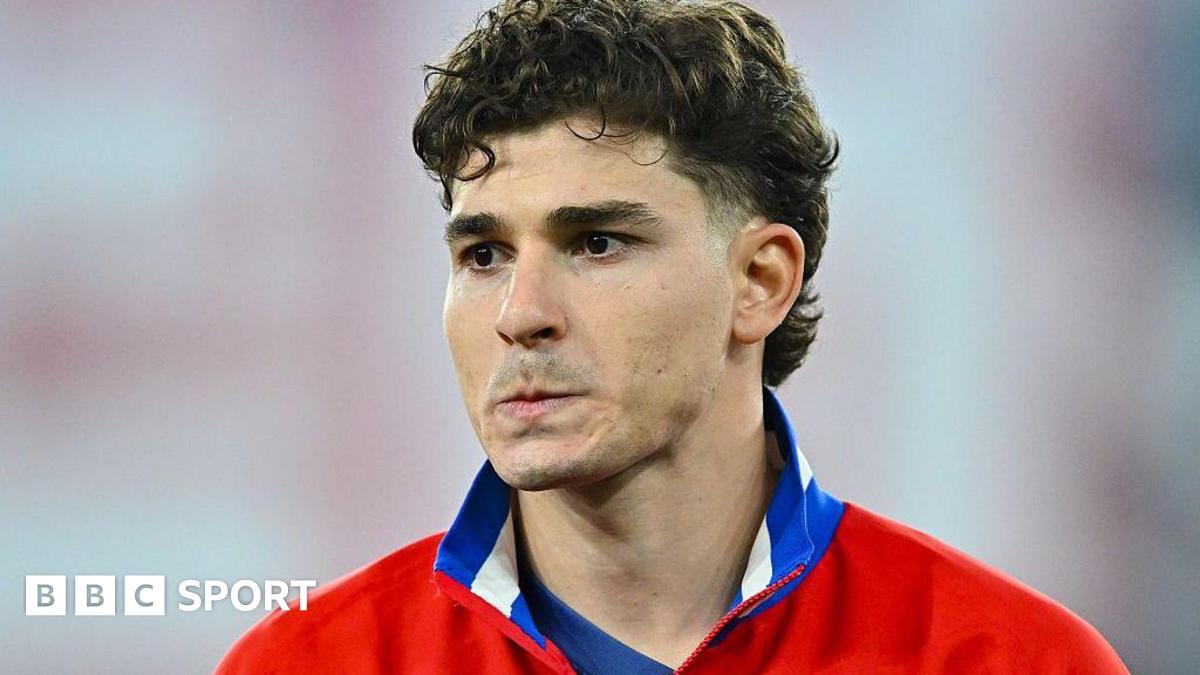
Atletico Madrid are at war with Barcelona over Julian Alvarez
2 hours ago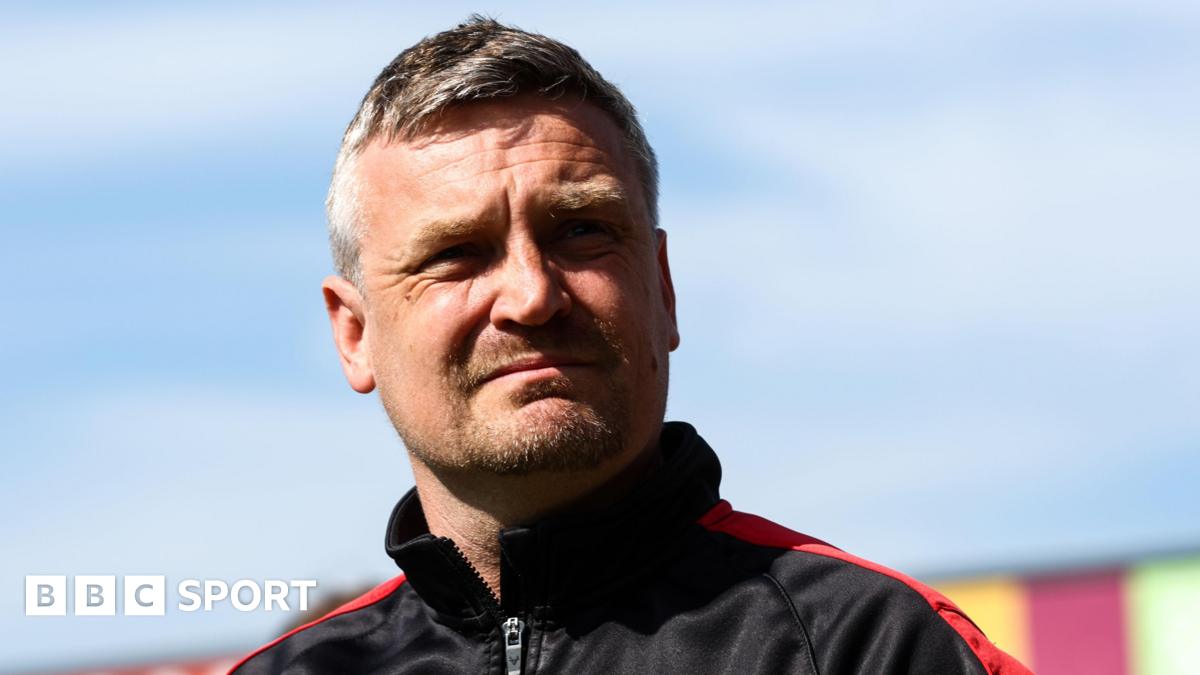
Michael Skubala takes the hot seat at Ashton Gate
6 hours ago
World Sevens brings high-octane chaos before the World Cup fever hits
7 hours ago
Mourinho at Real Madrid is nostalgia devoid of a strategy
8 hours ago
Anthony Gordon to Barcelona: Analyzing the Camp Nou Gamble
11 hours ago
Why Manchester United’s pursuit of Ederson makes tactical sense
15 hours agoMore Analysis

Jimmy Conrad (Call It What You Want (CBS Sports Golazo)): "Antoine Griezmann is coming over to the U.S. ... It is done and dusted. He's made the signing. Yo..."
1 month, 4 weeks ago
Bernardo Silva leaving marks the end of City's greatest era
1 month, 2 weeks ago
Casemiro to Inter Miami makes sense for everyone but Manchester United
3 weeks, 3 days ago
The post-Pep void: Where Manchester City goes from here
4 days, 12 hours ago
Phil Neville exits Portland as Timbers face a bleak tactical reset
3 days, 19 hours ago