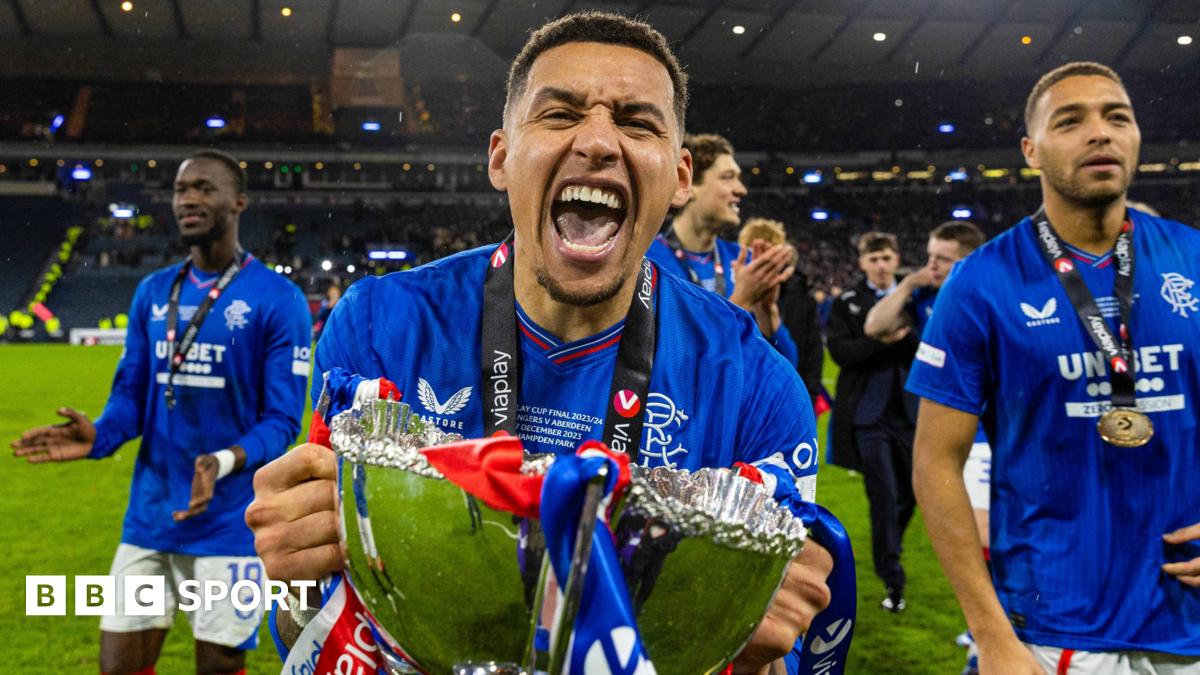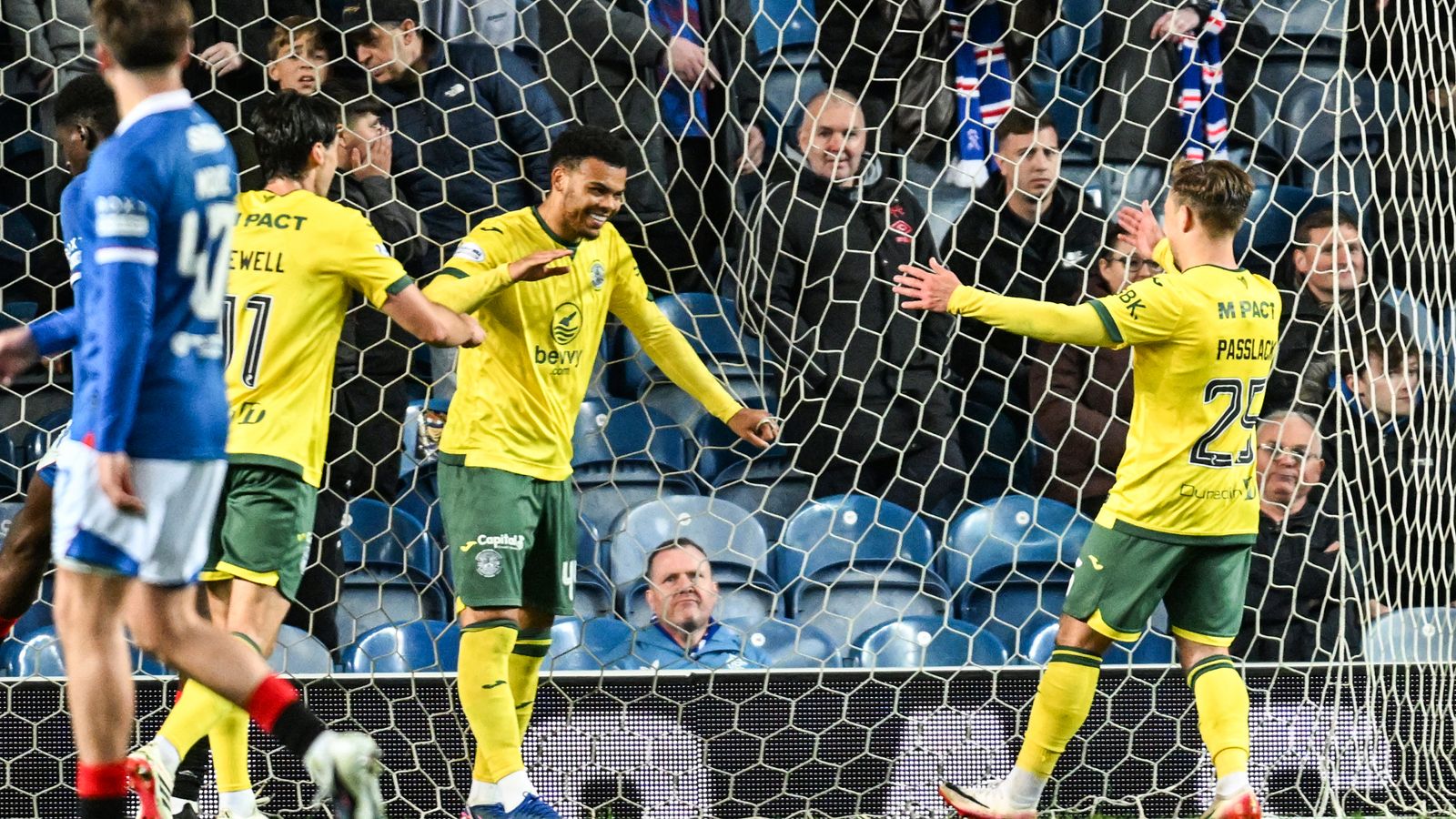
An Ugly End to a Statistical Anomaly
Football rarely affords its statistical outliers a graceful exit. James Tavernier’s final day as a Rangers player should have been a celebration of one of the most absurd data profiles in modern European football. Instead, it ended with a walkout. Following a bleak run of four consecutive defeats, manager Danny Rohl informed the captain he would not be starting against Hibernian.
Tavernier’s response was swift and absolute. He reportedly made himself unavailable, gathered his belongings, and left Ibrox before kick-off. It is a bitter, petty conclusion to a nine-year stint that fundamentally broke the traditional metrics used to evaluate full-backs.
You cannot discuss Tavernier without immediately running into the numbers. Since arriving in the Scottish Championship in 2015, he has assembled a goalscoring record that looks like a data entry error. He became the highest-scoring defender in the history of British football, surpassing the previous benchmark set by Graham Alexander. He didn't just contribute to the attack; for nearly a decade, he was the absolute focal point of it.
But numbers without context are just trivia. The clash with Rohl reveals the inherent tension that has always existed within Tavernier’s game. When a team is winning, a right-back who plays like a second striker is a luxury. When a team is suffering a miserable losing streak, that same player suddenly looks like a massive tactical liability.
Deconstructing the Tavernier Heatmap
To understand the magnitude of his output, you have to look at where he actually operated. Traditional full-backs overlap down the touchline. Modern inverted full-backs tuck into central midfield. Tavernier did neither of these things. He occupied a highly specific, aggressively high zone on the right flank, effectively operating as an orthodox winger. He relied entirely on a rotating cast of defensive midfielders to cover the acres of space he vacated behind him.
His peak seasons saw him regularly touching the ball in the opposition penalty area more frequently than Rangers' actual starting strikers. The raw output is staggering. He accumulated over 130 goals and well over 100 assists across all competitions. Even if you subtract the penalties — and his conversion rate from the spot consistently hovered around the 80 percent mark — his open-play numbers remain absurd for a player nominally stationed in the back four.
Much of this was driven by a specific offensive trigger: the deep, cross-field diagonal. For years, Rangers' default attacking pattern involved overloading the left half-space, drawing the opposition block across the pitch. They would then switch the ball to an isolated Tavernier arriving late on the right. He wasn't just hitting hopeful crosses into the box. He was finishing moves at the back post like a seasoned poacher.
To put his numbers into context, consider Trent Alexander-Arnold. The Liverpool defender is widely regarded as the premier attacking full-back of his generation. Yet, Alexander-Arnold's goal tally over a similar timeframe is a fraction of Tavernier's. While the quality of opposition in the Scottish Premiership is a valid caveat, the sheer volume of Tavernier's output remains staggering. You still have to execute the technique under pressure.
The European Peak and the Penalty Factor
His statistical dominance wasn't limited to domestic flat-track bullying. During Rangers' run to the Europa League final in 2022, Tavernier achieved something entirely unique. He finished as the tournament's top scorer. A right-back leading the scoring charts in a major European competition is a statistical anomaly that will likely never be repeated. He scored seven goals in the knockout stages alone.
Many of those European goals came from the penalty spot. Critics often used his penalty duties to dismiss his overall goal tally, labeling him mockingly as 'TavPen'. This completely ignores the mental fortitude required to consistently convert high-pressure penalties in hostile knockout environments. When Rangers needed a goal against Borussia Dortmund or RB Leipzig, the captain stepped up and delivered the mathematical certainty of a converted spot-kick.
His crossing mechanics were equally ruthless. While most full-backs hit an area, Tavernier hit zones with terrifying precision. His expected assist (xA) numbers consistently outperformed the rest of the Scottish Premiership combined year after year. He developed an almost telepathic understanding with various target men, dropping the ball between the center-back and the goalkeeper with a vicious whipped delivery. This wasn't hit-and-hope football. It was repeatable, systemic chance creation.
This required a tactical framework built entirely around his strengths. Managers like Steven Gerrard and Giovanni van Bronckhorst accepted the defensive compromises because the offensive upside was mathematically undeniable. You concede a few chances down the right channel, but you gain 15 to 20 goals a season from your captain. It was a transaction that worked, right up until a manager arrived who refused to pay the defensive tax.
The Tactical Shift Under Danny Rohl
Danny Rohl sees the game entirely differently. The German coach is deeply influenced by the modern pressing principles that dominate the Bundesliga. His system requires high-intensity pressing, rapid transitions, and absolute defensive solidity in wide areas. The luxury of a roaming right-back simply does not fit his blueprint.
Rohl built his managerial reputation on structural discipline. When he previously revitalized Sheffield Wednesday, he did so by ensuring that defensive transitions were heavily coordinated. Everyone had to sprint back into shape immediately after losing the ball. Nobody was granted a free pass to linger high up the pitch, regardless of their status.
During Rangers' recent four-match losing run, opposition analysts clearly identified the space behind Tavernier as a primary target. Teams began positioning quick, direct wingers high and wide on the left, waiting for the inevitable moment Tavernier committed forward. The transition trap was sprung repeatedly. Without the protective midfield screen that characterized the Gerrard era, Rangers were exposed on the counter-attack.
The data from these recent defeats would have made grim reading in the analyst's room. Opponents recognized that drawing Rangers into an attacking shape and then attacking the vacant right channel yielded high-xG opportunities. It is a fatal flaw in a high-line pressing system. If one part of the pressing trap fails, or if one defender is caught out of position, the entire defensive structure collapses.
The Cold Calculation of a Bench Demotion
Rohl’s decision to drop his captain for the Hibernian match wasn't just a rotation choice. It was a tactical necessity born from a collapsing defensive structure. You cannot press effectively as a cohesive unit if one of your primary defenders is constantly caught twenty yards out of position. The manager looked at the metrics, saw the glaring red zones on the defensive heat maps, and made the ruthless, mathematically correct call.
Tavernier's reaction highlights the ego required to sustain such an unusual style of play. You do not shatter scoring records from right-back without possessing a borderline arrogant belief in your own offensive importance. That same belief clearly made a benching unpalatable. He felt he had earned the right to start his farewell match, regardless of the immediate tactical risk to the team.
This clash of ideologies is common when modern, highly-structured coaches encounter legacy players. Rohl is not interested in sentimental farewells if it compromises his defensive shape. He is fighting to arrest a horrific slump. Benching Tavernier was a massive signal to the rest of the squad. Past achievements offer zero protection if you cannot execute the current tactical plan.
Rewiring the Rangers Attack
The long-term problem for Rangers is terrifying. How do you replace an output machine like Tavernier? For almost a decade, whenever Rangers struggled to break down a low block, the solution was simply to feed the ball wide right and wait for magic. He was their primary playmaker, their dead-ball specialist, and their most reliable penalty taker.
Removing him from the starting XI fundamentally breaks Rangers' attacking identity. Rohl now has the monumental task of redistributing those goals and assists across the entire front line. Strikers and attacking midfielders who have grown accustomed to deferring to the right-back will now have to shoulder the creative burden themselves.
Historically, teams struggle heavily when losing a player who dominated their statistical output to this degree. It requires a complete rewiring of passing networks. The instinct to look for the overlapping run on the right side is deeply ingrained in this squad. Unlearning that behavior will take months, perhaps an entire season.
Rohl knows exactly what he has sacrificed. You do not casually discard a player who guarantees double-digit goals without a concrete alternative plan. His strategy will likely involve pushing the wingers wider and utilizing inverted full-backs to control the center of the pitch. This allows Rangers to maintain possession in the middle third, reducing the chaotic, end-to-end transitions that have plagued them over the past month.
A Silent Exit Out the Back Door
There is a stark difference between a player's historical value and his current utility. Tavernier's legacy is secure in the record books. He defined an entire era of Rangers football, dragging them from the lower divisions back to the summit of Scottish football and to a European final. But football matches are played in the present, and the current reality is a team bleeding goals and losing momentum.
This fallout was perhaps inevitable. When a club relies on one player's specific, highly unorthodox output for so long, unwinding that dependency is always painful. Rohl is attempting to modernize a system that had become deeply predictable. The first step in that modernization was always going to involve addressing the obvious defensive gaps on the right flank.
The answer, apparently, was to rip the bandage off entirely. The execution was ugly. Leaving the stadium before a match against Hibernian is a terrible look for a club captain. It overshadows the genuine statistical marvel of his career, reducing a decade of historic numbers to a petty dressing room dispute.
Rangers will now have to find a new way to create chances. The era of the high-volume crossing, penalty-taking right-back is officially over at Ibrox. The numbers will echo in the history books, but the final entry will always be a grim statistic. A four-game losing streak, a tactical dispute, and a silent exit out the back door.
Read Next
- James Tavernier’s Rangers exit is a cold reminder that numbers don’t buy loyalty
- Rangers are in freefall and the Tavernier exit changes everything
- James Tavernier's exit marks the end of Rangers and the start of Hearts' era
- Tavernier ghosts his own Ibrox farewell in a catastrophic tantrum
- ⚽ Scottish Premiership 2025-26 — Celtic vs Rangers Hub