The end of the statistical anomaly
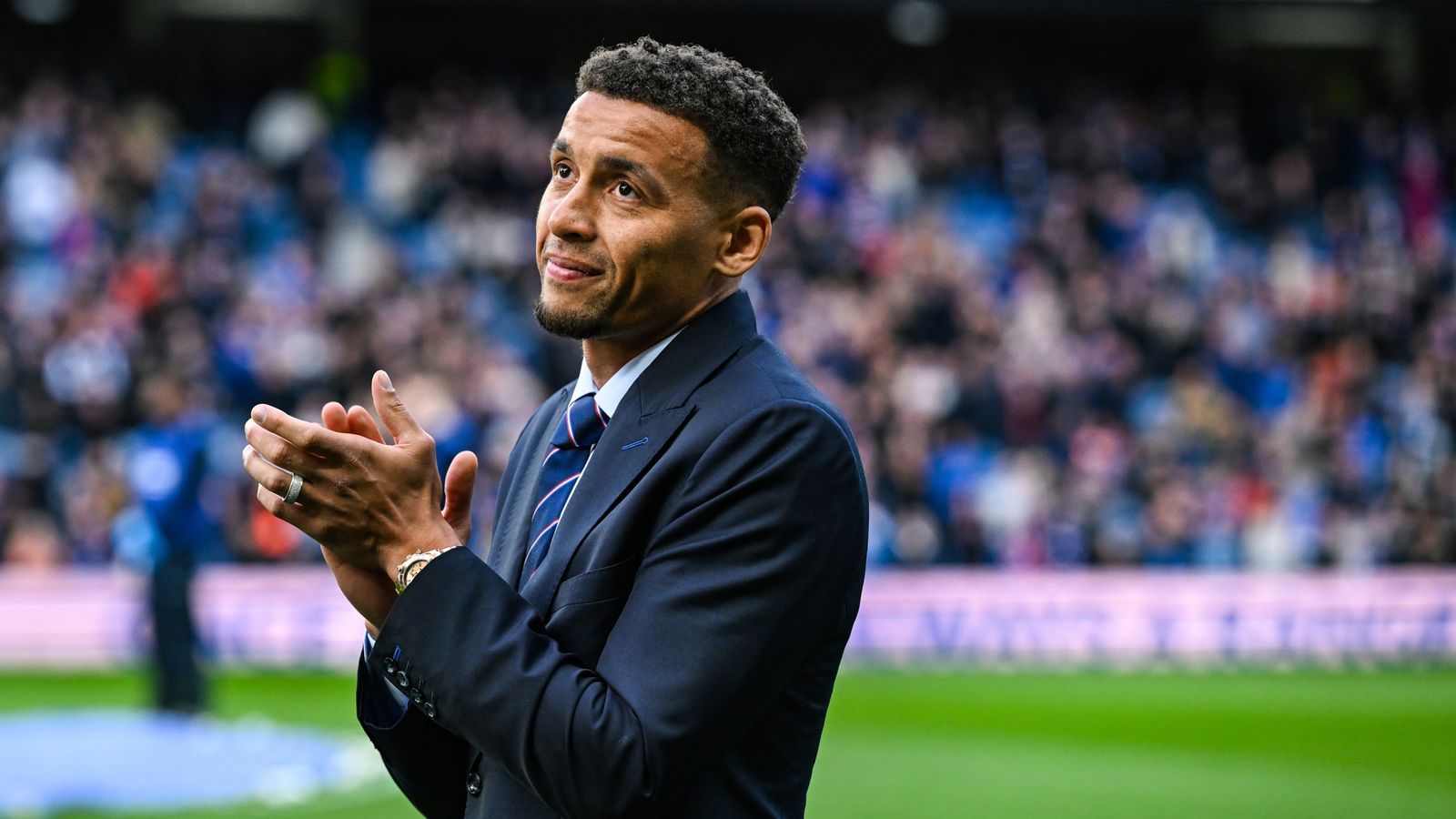
Eleven years is an eternity in Glasgow. Since 2015, James Tavernier has been the single most consistent variable in the chaotic math of Rangers Football Club. His announcement that he will leave Ibrox at the end of the season, as reported by the BBC, isn't just a personnel change. It is a total decommissioning of a tactical system that has defined the club for over a decade.
Tavernier is a freak of nature in modern full-back metrics. Most defenders are judged on recovery pace or tackle success rates. Tavernier demanded to be judged by the standards of a number ten. With over 125 goals to his name across all competitions, he effectively operated as a secondary striker disguised as a right-back. This wasn't a luxury for Rangers; it was their primary mode of survival.
The sheer volume of his output masked a deeper structural rot in the Rangers recruitment strategy for years. Whenever the strikers went cold or the midfield lost its creative spark, the solution was always the same: overlap Tavernier, win a corner, or let him stand over a dead ball. By removing this crutch, the 2026/27 Rangers squad will be forced to learn how to walk again without their statistical cheat code.
The tactical vacuum in the wide channels
Rangers’ build-up play has been asymmetrical by design since the Steven Gerrard era. The left-back, whether it was Borna Barisic or Ridvan Yilmaz, usually provided width and crossing. But the right side was where the gravity of the pitch tilted. Tavernier didn't just provide width; he dominated the half-spaces. He frequently moved inside to create overloads that confused opposition wingers who weren't used to tracking a defender into the penalty area.
Without him, Rangers lose a player who averaged a goal or assist every 180 minutes for 11 years. That is a terrifying hole to fill. The current system relies on the right-back to be the primary outlet for switching play. In the 2021 title-winning season, Tavernier’s long-diagonal success rate was hovering around 68%. Finding a replacement who can replicate that passing range without sacrificing defensive stability is a near-impossible task on a Scottish Premiership budget.
There is also the matter of the "Tavernier Hole." For every goal he scored, there was a corresponding clip of him being caught under a cross at the back post. At 34 years old, his recovery speed has noticeably dipped in the last 18 months. Opponents like Celtic and even mid-table sides like Aberdeen have increasingly targeted the space behind him. His departure allows Philippe Clement to finally build a back four that prioritizes horizontal compactness over individual verticality.
The leadership deficit and the Butland promotion
Captaincy at Rangers is a heavy mantle. Tavernier bore it with a stoicism that often frustrated a fanbase prone to emotional outbursts. He was the face of the 55th title win, but he was also the face of too many second-place finishes. His leadership was of the "lead by example" variety rather than the vocal, aggressive style traditionally favored at Ibrox. When the chips were down, he simply demanded the ball more.
The immediate successor seems obvious. Jack Butland has been the de facto vocal leader of this squad since he arrived. Moving the armband to a goalkeeper changes the team dynamic. It shifts the focus from the attacking third back to the defensive core. Rangers have lacked a "policeman" on the pitch — someone to berate a midfielder for a lazy transition. Tavernier’s quiet professionalism was admirable, but it didn't always provide the spark needed in a heated Old Firm derby.
We should also talk about the financial relief. Tavernier was among the highest earners at the club. Clearing his wages, combined with the expected exit of other high-profile veterans, gives the board a war chest they haven't seen in years. However, history suggests that Rangers often struggle to replace talismanic figures with multiple lower-cost options. They attempted this when Calvin Bassey left, and the resulting defensive instability took two seasons to fix.
Predicting the post-Tavernier fallout
My prediction for the 2026/27 season is a painful but necessary regression. Rangers will almost certainly concede fewer goals from open play. By employing a more traditional, stay-at-home right-back — perhaps Dujon Sterling or a new continental signing — the back four will remain structurally sound during transitions. The days of the right-back being caught 40 yards out of position during a counter-attack are over.
However, the offensive drop-off will be severe. Tavernier provided 74 assists in the league alone during his tenure. Rangers’ expected goals (xG) from set-pieces will plummet. Unless they find a winger capable of delivering 15+ assists a season, they will find themselves drawing games 0-0 that they used to win 1-0 via a Tavernier penalty or free-kick. The burden of creativity will shift entirely to the midfield, a department that has looked leggy and unimaginative for much of the current campaign.
The club is at a crossroads. They can either try to find a "Tavernier-lite" and fail to replicate his freakish numbers, or they can pivot to a more balanced, modern 4-3-3 that doesn't rely on a defender to be the top scorer. Given Clement's tactical history, I expect the latter. It won't be as exciting to watch, and there will be fewer highlight-reel volleys from the edge of the box, but it might finally result in a team that can sustain a title challenge without collapsing under the weight of one man's stats.
Ultimately, Tavernier’s legacy will be debated until the end of time. Was he a defensive liability who benefited from a weak league, or was he a tactical pioneer who redefined what a full-back could be? The truth lies in the middle. He was a brilliant, flawed, and indispensable part of the Ibrox fabric. Replacing him is not a job for one player; it is a job for an entire tactical philosophy. Rangers fans should be careful what they wish for — the stability of a 0-0 draw is often much more boring than the chaos of a 3-2 win spearheaded by a goal-scoring captain.
Read Next
- Tavernier's Ibrox Exit: Fans Divided, But The Clock Is Ticking
- Michael Carrick has brought quiet to Old Trafford but the board remains unconvinced
- Liam Rosenior is running out of time and goals at Stamford Bridge
- Brentford is about to host the wildest women's football tournament of the year
- ⚽ Scottish Premiership 2025-26 — Celtic vs Rangers Hub