The finality of the Casemiro decision
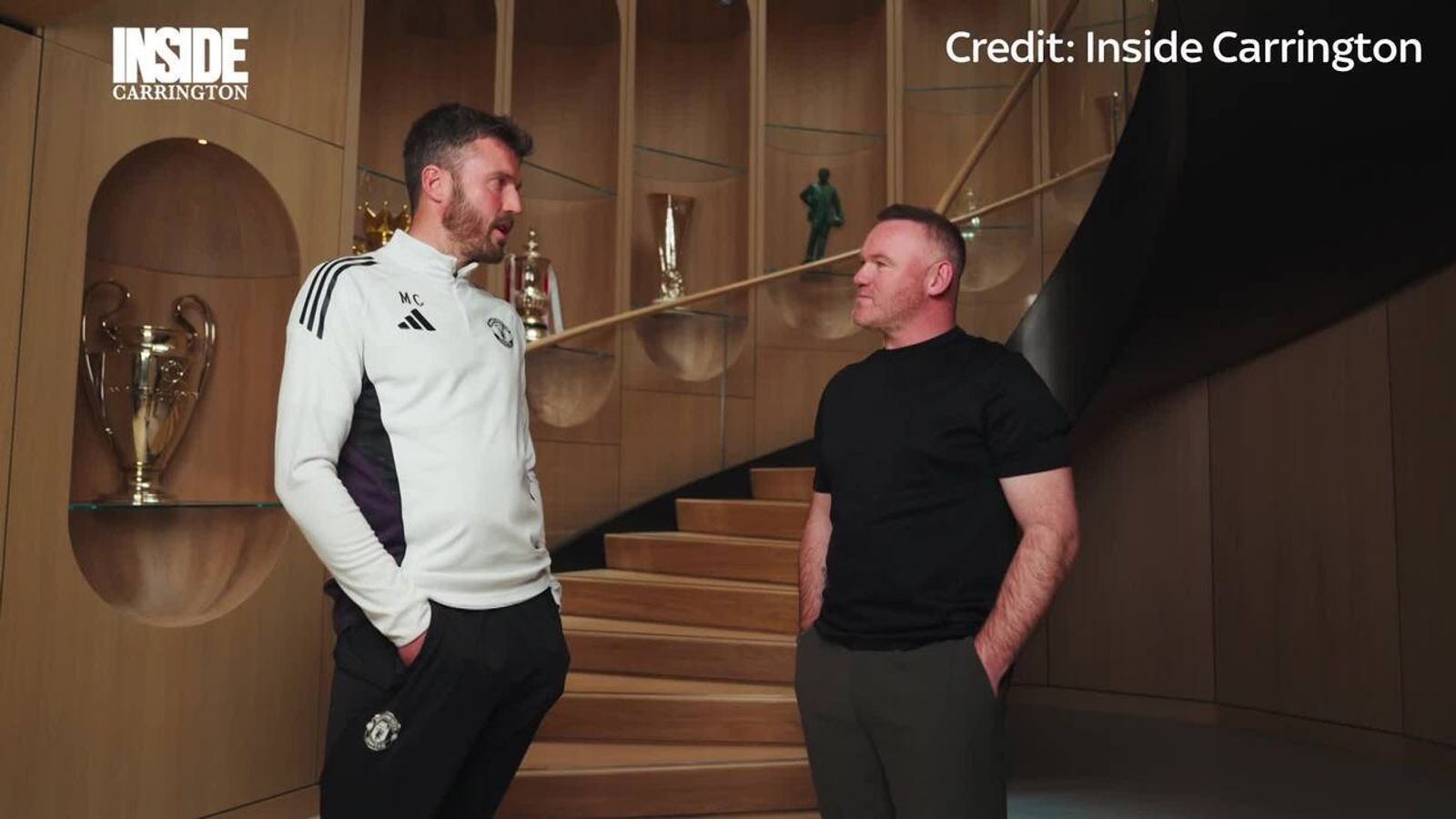
Michael Carrick made his stance known recently regarding the holding midfield position, ending months of lingering speculation. "It's pretty clear," the manager stated, effectively shutting down any talk of a return to the starting eleven for Casemiro. The Brazilian has been permanently phased out of the primary tactical setup, and Manchester United look structurally unrecognizably different because of it.
For a long time, the midfield double pivot relied heavily on a dedicated destroyer sitting directly in front of the center-backs. Casemiro's role was to sweep horizontally, win aerial duels from long goal kicks, and commit cynical fouls when the defensive line was caught out of position. He was the safety net for a team that often lost the ball in dangerous areas.
But Carrick wants his side to dictate games rather than simply survive them. He demands high pressing, rapid ball circulation, and a defensive line positioned closer to the halfway line. Casemiro simply lacked the recovery pace and turning radius to manage the massive gaps left behind an advancing midfield.
By removing him entirely from the equation, Carrick has gained massive improvements in ball retention and passing fluidity. United build out from the back with far more assurance, relying on Kobbie Mainoo to receive the ball on the half-turn under heavy pressure. Yet, this philosophical shift comes with a glaring weakness that smart teams are built to exploit.
Without a natural defensive midfielder anchoring the center of the pitch, United are violently vulnerable to quick transitional attacks. When the initial press is bypassed, the back four is routinely left exposed to direct runners. It is a calculated risk, but one that has frequently looked shaky against elite European opposition.
Dissecting Bayern's transition machine
Tonight's Champions League semi-final first leg presents the exact type of opponent engineered to punish that specific structural flaw. Bayern Munich do not require long periods of sterile possession to create high-quality chances. They thrive on vertical passing, rapid off-the-ball movement, and exploiting unsettled defensive shapes.
Jamal Musiala operates masterfully in the half-spaces, waiting patiently for the precise moment the opposing midfield steps forward to engage. Once he receives the ball between the lines, the attacking sequence becomes brutally fast. He drives directly at retreating defenders while Leroy Sane and Kingsley Coman stretch the pitch as wide as physically possible.
This exact scenario is where United will feel the absence of a traditional, defensive-minded anchor. Mainoo is exceptional on the ball, but his defensive positioning and anticipation in transition are still developing. If Musiala finds unchecked space behind United's midfield line, Harry Kane will inevitably receive the premium service he thrives on.
Bayern's wide players will intentionally pin Diogo Dalot and Luke Shaw deep into their own territory. By forcing the full-backs to defend their own penalty area, Bayern isolates United's center-backs. It creates one-on-one foot races that heavily favor the sheer attacking pace of the German side.
The spaces behind United's fullbacks
Carrick has utilized Dalot heavily as an inverted fullback this season, asking him to tuck into the midfield to create numerical overloads during build-up play. It gives United an extra passing option and helps them dominate possession against deep-lying blocks. But against Bayern, this strategy carries immense, potentially fatal risk.
When Dalot inverts, the right channel is left completely vacant. If United lose the ball in the central third, Sane is positioned perfectly to sprint directly into that vacated space. The right-sided center-back is then forced to pull wide to cover the run, which instantly fractures the entire defensive line.
This cascading effect is exactly what Bayern's coaching staff will have highlighted in their video sessions. A single missed tackle or misplaced pass in the midfield zone triggers a chain reaction of defensive rotations. United's center-backs are aggressive, but they cannot cover fifty yards of open grass against wingers of this caliber.
Shaw faces a similar dilemma on the opposite flank. He naturally wants to overlap Alejandro Garnacho to provide width and crossing options. However, pushing high up the pitch against this Bayern team is essentially leaving the back door wide open.
Mainoo's heaviest burden yet
The tactical burden falling on Kobbie Mainoo tonight is almost unfair for a player of his profile. He is not a traditional number six; he is an eight who has been forced to play as a deep-lying playmaker out of sheer necessity. He is being asked to dictate the tempo while simultaneously shielding a vulnerable backline against one of the best attacks in Europe.
The physical toll of constantly tracking Musiala's shadow runs will drain his legs quickly. If Mainoo steps up to press Joshua Kimmich, he leaves space behind. If he drops deep to protect the center-backs, United lose their ability to pressure the ball in the middle third.
To survive this, Bruno Fernandes must adapt his own game drastically. The captain usually enjoys absolute freedom to roam the final third looking for killer passes. Tonight, he must drop deeper, physically attach himself to Bayern's pivot, and ensure Mainoo is not left fighting a two-on-one battle.
It is a highly demanding role that will limit Fernandes's direct attacking output. But without that defensive discipline from the front, United's midfield will simply be bypassed with a single vertical pass.
Onana's vital distribution
We also cannot ignore the role Andre Onana will play in breaking the first line of the Bayern press. Carrick relies heavily on his goalkeeper to act as a third center-back during the initial build-up phase. Onana's willingness to hold the ball and bait the pressing forwards is the trigger for United's entire attacking sequence.
If Kane and Musiala press aggressively, Onana has to bypass them with clipped passes out to Dalot or Shaw. If he hesitates or plays a poor pass into the central zones, Bayern will recover the ball twenty yards from goal. The margins for error in distribution are practically non-existent tonight.
Bayern will likely try to force Onana to play long, cutting off the short passing lanes to Mainoo and Lisandro Martinez. When forced to kick long, United must ensure Hojlund is isolated against a single defender to win the first contact. If Bayern sweep up the second balls easily, the pressure will become unrelenting and suffocating.
Where the English side can find joy
Despite the tactical concerns, this is absolutely not a hopeless situation for the home side. Carrick's bold system has turned United into a formidable attacking unit in their own right. Their chaotic, high-tempo sequences can overwhelm even the most organized defensive structures.
Bayern's defensive line is notoriously aggressive, often pushing dangerously high to compress the space. Dayot Upamecano has a well-documented tendency to step out of the backline prematurely to challenge for first balls. When he misses, he leaves massive, gaping holes in the heart of the defense.
Rasmus Hojlund's off-the-ball movement will be critical in exploiting this. The Danish striker might not touch the ball frequently, but his relentless diagonal runs drag center-backs completely out of position. He has to occupy the center-halves physically and force them into making rash, split-second decisions.
Furthermore, Alphonso Davies is an incredible offensive weapon, but his defensive awareness often lapses when tracking runners on his blind side. If Fernandes can find Garnacho with early, sweeping cross-field passes, United will consistently get in behind the Canadian full-back.
The vital set-piece battleground
In matches of this magnitude, the tactical stalemate is often broken by dead-ball situations. Bayern are heavily reliant on Kane's intelligent movement during attacking corners, using intricate blocking routines to free him at the back post. United's zonal marking system has looked unconvincing lately, conceding an alarming 1.45 expected goals from set pieces over their last three domestic fixtures.
They simply cannot afford to give away cheap fouls around the penalty area. Giving Kimmich dead-ball opportunities from twenty-five yards out is a proven recipe for disaster. The discipline of United's backline will be tested relentlessly for the full ninety minutes.
Conversely, United must maximize their own corners. Harry Maguire remains a dominant aerial threat, and Bayern have shown vulnerability when defending inswinging deliveries. Every set piece needs to be treated as a premium scoring opportunity, perfectly executed without hesitation.
The final verdict
Carrick's refusal to bring Casemiro back into the fold is a bold, definitive statement of intent. He is entirely committed to this proactive, high-energy style of play, regardless of the opponent standing in front of him. But tactical principles often collide painfully with harsh realities at this specific stage of the Champions League.
United will undoubtedly score tonight. They possess too much raw attacking talent, and the atmosphere inside Old Trafford will fuel a frantic, high-pressure start. I expect them to dominate the opening twenty minutes, likely finding the net through a quick transition of their own.
However, Bayern's ability to transition from defense to attack is simply too sharp and too efficient over a full match. Without a dedicated anchor in midfield to break up play, United will eventually be overrun on the counter-attack as legs begin to tire.
Musiala is operating at a world-class level right now, and he will eventually find the exact pockets of space Carrick's system inherently leaves open. The German side will absorb the early emotional wave before picking United apart systematically in the second half.
Expect a genuinely thrilling, end-to-end tactical battle that exposes the flaws in both systems. But the visitors have the cutting edge where it matters most, and that structural midfield weakness will be the deciding factor.
Prediction: Manchester United 1-2 Bayern Munich. Bayern to establish decisive control of the tie heading back to Germany.
Read Next
- Old Trafford feels like a crossroads as the Champions League returns
- Manchester United's defensive depth chart takes a hit in final stretch
- Man United’s win over Brentford was barely a victory worth celebrating
- Arsenal vs Bayern Munich: Why the high press will dictate the first leg
- ⚽ Bundesliga 2025-26 — Title Race Hub
- ⭐ UCL 2026 — Champions League Quarter-Finals Hub