The physical cost of European ambition
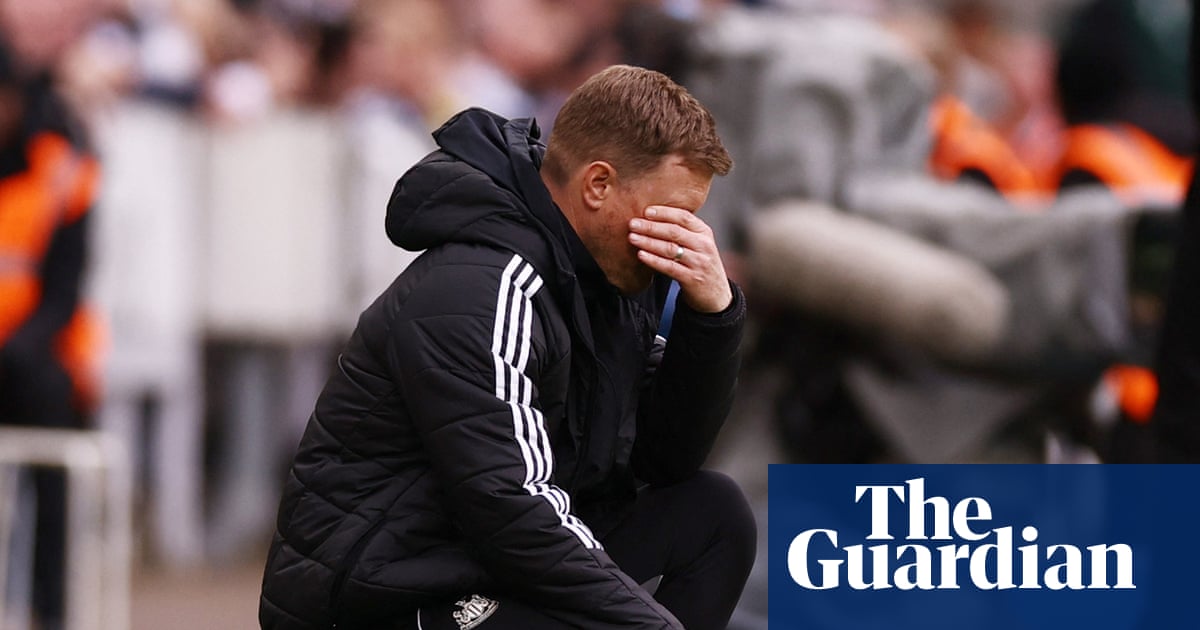
Before this weekend, Newcastle United's Passes Allowed Per Defensive Action (PPDA) had drifted to its worst level in eighteen months. Eddie Howe built his revolution on relentless pressing, but when a squad logs upwards of 4,000 minutes across four demanding competitions, the legs inevitably give out.
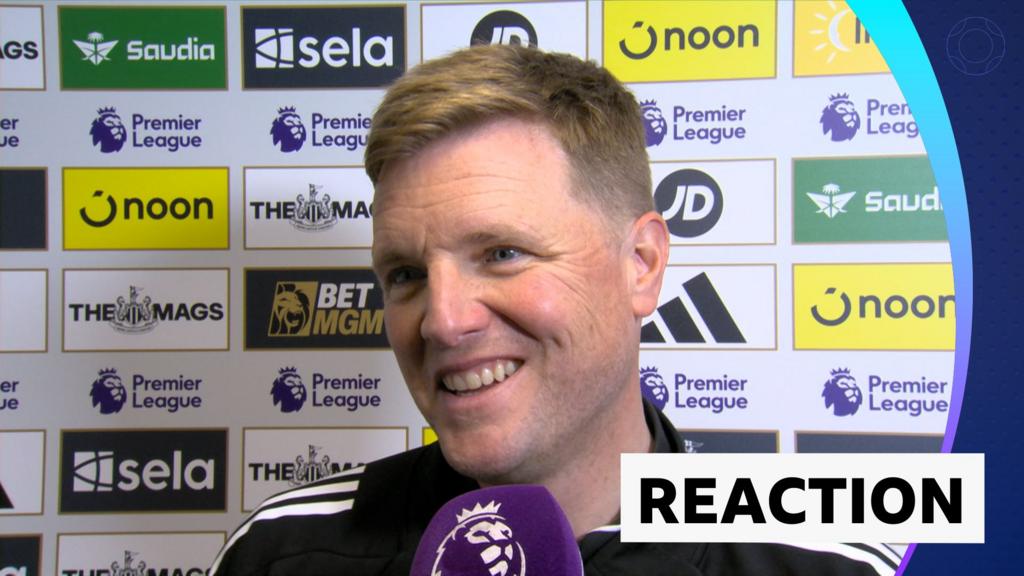
That hidden metric is exactly why the 3-1 victory over Brighton felt like an exhalation of breath for the entire club. Howe’s post-match assessment to the BBC was blunt: it was a "huge" win, but there is still work to do.
Dan Burn echoed the sentiment, admitting the dual demands of European and domestic football have been incredibly "tough" on the squad. When Newcastle are fully fit, they operate as a pressing machine. Last season, their PPDA consistently hovered around 9.5, marking them as one of the most aggressive sides out of possession in the division.
This year, dealing with the brutal cycle of midweek fixtures, that defensive intensity was structurally impossible to maintain. The drop in their pressing efficiency led directly to the defensive fragility that has seen Howe take what Burn accurately described as "a lot of stick" from the media. You simply cannot sustain a high-intensity pressing trigger with an exhausted roster.
Disrupting the Brighton machine
Brighton arrive at every stadium with a clear mathematical plan. They bait the press, use the goalkeeper as an active pivot, and look to bypass the first line of pressure to create artificial transitions. Against a fatigued Newcastle side, it should have been a severe tactical mismatch.
Instead, Howe adjusted. Newcastle deliberately refused to press wildly. They engaged in a passive mid-block, waiting for Brighton's midfield double-pivot to receive the ball facing their own goal before snapping the trap shut.
By reducing the distance their forwards had to sprint, Howe protected his central midfield. It was a pragmatic shift from a manager often accused of tactical stubbornness. Newcastle sacrificed total possession for territorial control.
They forced Brighton to cycle the ball in non-threatening areas. This limited their progressive passes into the final third to a manageable volume.
Dan Burn's redemption arc
There is a harsh reality to playing full-back in the modern Premier League. If you lack explosive recovery pace, isolation is a death sentence. Burn knows this better than anyone.
At 6-foot-7, Burn is a central defender masquerading as a left-back. Opposing managers have spent months trying to isolate him against dynamic wingers. The criticism has been loud, and occasionally justified, when he has been caught transitioning backwards against elite wide men.
But against his former club, Burn demonstrated exactly why Howe trusts him unconditionally. What he lacks in acceleration, he makes up for in spatial awareness and sheer physical dominance.
When Newcastle are forced into a low block, Burn tucks inside to act as a third center-back. His aerial duel win percentage regularly eclipses 70 percent, an essential statistical asset when defending your penalty area under sustained pressure.
His goal to double the lead was the ultimate tactical vindication. Brighton routinely struggle against set-piece power. Sending Burn forward is a calculated mathematical advantage.
He attacked the delivery with intent, burying the header and effectively killing the game as a competitive contest.
The expected goals disparity
To truly grasp the significance of this result, we have to examine the expected goals (xG) trend line over Newcastle's recent fixtures. For much of the spring, Howe’s men were conceding high-quality chances at an alarming rate.
When you operate with a high defensive line but lack the midfield energy to apply immediate pressure on the ball carrier, you bleed chances. Heading into the Brighton fixture, Newcastle’s non-penalty xG conceded per 90 minutes had crept dangerously close to 1.8.
For a team with European aspirations, that is a glaring defensive failure. Opponents were consistently finding space between the center-backs and the midfield pivot, exploiting the exact zones Howe usually locks down.
Against Brighton, that xG metric dropped significantly. The visitors may have dominated the ball, recording over 60 percent possession, but their shot map tells a story of intense frustration.
The majority of their attempts were forced from outside the penalty area or taken from wide, low-percentage angles. Newcastle did not just defend; they defended the correct zones.
The geometry of the counter-attack
Brighton’s system under their current setup is heavily reliant on central overloads. They pull opponents inwards, opening up passing lanes to their wide players.
It is a highly effective approach to breaking down defensive blocks. However, it leaves them structurally vulnerable to rapid vertical transitions. Howe knew this entirely.
The instruction was clear: upon regaining possession, bypass the midfield completely. Newcastle’s average pass length upon transition jumped by nearly five yards compared to their season average.
They were deliberately looking to exploit the space behind Brighton’s advanced full-backs. This tactical tweak requires immense physical output from the wide forwards, who have to make 30-yard sprints repeatedly.
They do this knowing they might only receive the ball one out of five times. It is exhausting work. Yet, it was this exact pattern that stretched Brighton’s defensive structure to breaking point, creating the chaos necessary to force mistakes and win corners.
The dressing room mandate
Perhaps the most revealing moment of the weekend was not the goal itself, but the immediate aftermath. Burn explicitly dedicated the victory to his manager during his post-match media duties.
By stating Howe had taken "a lot of stick," Burn made a pointed effort to publicly shield his coach. In data journalism, we often look for dressing room drop-off.
When a manager loses the squad, you see it in the distance covered stats, the sprint numbers, and the frequency of defensive recoveries. A team that has stopped playing for its manager simply stops running.
Newcastle ran themselves into the ground. Their high-intensity sprint volume in the final twenty minutes outpaced their first-half numbers. That is not a squad waiting for a managerial change.
That is a group of players actively fighting for their current regime.
Looking beyond the current campaign
As Burn noted, ending the season on a high is now the sole focus. The European nights are gone, and the schedule has normalized. Howe finally has time on the training pitch to drill his defensive shape without the looming specter of a midweek flight.
The victory proves the resilience of the dressing room. But culture cannot permanently override physical exhaustion. If Newcastle are to return to the elite tier of European football, they need to look closely at the underlying metrics of this season.
The drop-off in pressing intensity and the spike in defensive vulnerability were entirely predictable outcomes of a thin squad stretched over a brutal calendar. For now, they can celebrate a tactically astute, physically demanding win over a direct rival.
Howe survived the storm, and his most maligned defender delivered the decisive blow. The narrative is perfect. The numbers, however, suggest that the real work for Newcastle United begins the moment the final whistle of the season blows.