Calvert-Lewin's late winner proves Farke's Leeds are built to survive
The Anatomy of a Late Heist
Elland Road doesn't do quiet anxiety. It does loud, furious frustration. When the board went up to indicate stoppage time on Sunday afternoon, the collective groan was audible down the M62. Leeds United had spent an hour and a half chasing the ball, chasing shadows, and chasing a Brighton side that seemed entirely comfortable dictating the rhythm of a Premier League match away from home.
But football in May does not care about possession stats. It does not care about passing networks or fluid rotational symmetry. It cares about moments. It cares about points. And when Dominic Calvert-Lewin dragged his tired legs into the penalty area in the 96th minute, the tactical narrative of the afternoon was instantly rewritten.
A single swing of Calvert-Lewin's boot secured a 1-0 victory. It sent the stadium into absolute delirium and gave Daniel Farke three points that could define their entire campaign. But analyzing this match purely through the lens of its dramatic conclusion would be a mistake. To understand why that goal happened, you have to look at the preceding 95 minutes of tactical chess.
Brighton's Bait and The Midfield Overload
Brighton arrived in Yorkshire with a familiar blueprint. They wanted the ball, and they wanted Leeds to try and take it from them. The away side set up in their standard shape, but out of possession, it morphed into something highly flexible. They built from the back with extreme patience, using their center-backs to bait the Leeds press.
Farke's system usually relies on aggressive, front-foot pressing. He wants his attacking quartet to swarm the opposition penalty area, force high turnovers, and strike before the defensive line can reset. Against Brighton, this strategy was a disaster for the first forty-five minutes.
Every time Leeds jumped to press, Brighton simply bypassed them. The south coast side utilized a fluid box midfield, dropping a forward deep to create a four-versus-two numerical advantage in the center of the pitch. Leeds' double pivot was repeatedly pulled apart.
This brings us to the necessary reality check of the afternoon. Any celebration of Farke's tactical triumph must be heavily tempered by how poorly Leeds managed the center of the pitch. For vast stretches of this match, they were completely outplayed.
Ilia Gruev and Glen Kamara, normally so reliable at shielding the back four, looked completely lost. They were chasing shadows as Brighton's inverted full-backs created numerical overloads. Kamara, in particular, repeatedly stepped up to press the ball carrier, only to realize too late that a Brighton forward had slipped into the exact pocket of space he had just vacated. It was a systemic breakdown, resulting in Leeds surrendering 68 percent possession in the first half alone.
When Brighton beat the initial press, they ran straight at an unprotected Leeds backline. The home side's central midfielders looked disjointed, slow to react to third-man runs, and fundamentally confused about who should press and who should hold. If Brighton possessed a clinical edge in the final third, this game would have been over by halftime.
Leeds survived purely on desperation. They relied on last-ditch blocks, frantic recovery sprints, and a heavy slice of luck. Their expected goals against hovered dangerously high, yet they kept a clean sheet. This wasn't a masterclass in low-block defending. It was a team clinging to a cliff edge by their fingernails.
Calvert-Lewin: The Pragmatic Outlet
Farke recognized the bleeding at halftime. He had to plug the gaps. The adjustment was subtle but necessary. He ordered his wide players to tuck in narrower when out of possession, sacrificing width to pack the central channels. Leeds stopped trying to win the ball high up the pitch and instead dropped into a compact mid-block.
The instruction was clear. Let Brighton have the ball out wide. Force them to cross against a set defense, rather than letting them thread passes through the middle. It was an ugly, pragmatic shift, but it stabilized the ship.
You only have to look back at Farke's tenure at Norwich City to see how far he has evolved. At Carrow Road, his teams were aesthetically pleasing but defensively naive. They would try to pass their way out of a burning building. This iteration of Leeds is far more pragmatic. Farke has realized that in the Premier League, idealism gets you relegated. You need steel. You need a Plan B when the passing circuits break down.
However, dropping deep created a new problem. How do you get up the pitch? When you are sitting in a low block, clearing the ball usually results in it coming straight back like a boomerang. This is where Dominic Calvert-Lewin became the most important player on the grass.
Calvert-Lewin's role in this Leeds side is entirely different from the free-scoring poacher we saw at Everton under Carlo Ancelotti. Back then, he was instructed to stay between the posts and finish with one touch. Farke demands something far more exhausting.
At Elland Road, Calvert-Lewin operates as a battering ram. He is the ultimate pressure valve. Throughout the second half against Brighton, every time Leeds managed to intercept a pass or clear a cross, they bypassed the midfield entirely. They sent the ball long, high, and generally in the direction of their number nine.
His job wasn't just to score. It was to wrestle with towering center-backs, bring the ball down on his chest, and buy his teammates five seconds to push up the pitch. He contested 7 aerial duels in the second half alone, winning the vast majority of them.
It is a brutal, thankless task. You take elbows to the back of the head. You get shoved off balance while trying to control a dropping ball. But Calvert-Lewin executed the role perfectly. He pinned the Brighton defenders, held the ball up, and won cheap fouls near the halfway line. Every foul won was another thirty seconds off the clock. Every header flicked on was another twenty yards of territory gained.
The Final Trap
In the minutes leading up to the goal, the tension was suffocating. Brighton were camped on the edge of the Leeds penalty area. They circulated the ball from left to right, probing for a weakness, waiting for a Leeds defender to lose focus. Ethan Ampadu was magnificent during this period, marshaling the backline and ensuring that distances between the center-backs remained tight. Every time a cross came in, a white shirt was there to meet it.
But playing this deep is a dangerous game. It invites pressure. It tires out your midfielders. By the 90th minute, Leeds could barely string two passes together. Every clearance was an act of survival rather than the start of a counter-attack. The crowd grew restless, sensing that the dam was about to break.
This is where the psychological aspect of football comes into play. Brighton felt they were owed a goal. They felt they had dominated the match and deserved the three points. That sense of entitlement led to a fatal lack of discipline. They pushed just a little too high. They committed one too many men forward. They forgot the golden rule of away fixtures: secure the point first, chase the win second.
As the clock ticked past the ninety-minute mark, the dynamic of the game shifted. Brighton, frustrated by their inability to break down the Leeds low block, began to commit too many bodies forward. The center-backs pushed higher. The full-backs became wingers. They were desperate for a winner, leaving massive tracts of green grass behind them.
Farke's system thrives on this exact scenario. Leeds are built for transition. They want you to over-commit. They want you to leave space. And in the dying seconds of the match, Brighton fell directly into the trap.
Consider the mechanics of the goal. It wasn't just a lucky punt upfield. It was the result of a coordinated defensive trap. By dropping deep, Leeds invited Brighton's center-backs to step across the halfway line. They effectively created a sixty-yard runway for Calvert-Lewin to sprint into. When the turnover happened, the transition was automatic. Three touches from back to front. It was direct, vertical, and devastating.
A rapid vertical pass bypassed the exhausted Brighton midfield. Suddenly, Leeds were breaking with numbers. Calvert-Lewin, who had spent the entire afternoon running into brick walls, found a reserve of energy he probably didn't know he had. He made the peeling run off the shoulder of the last defender.
The pass found him perfectly in stride. The stadium held its breath. Calvert-Lewin didn't snatch at the shot. He didn't rush. He let the ball run across his body and struck it clean. The net rippled. The noise was deafening.
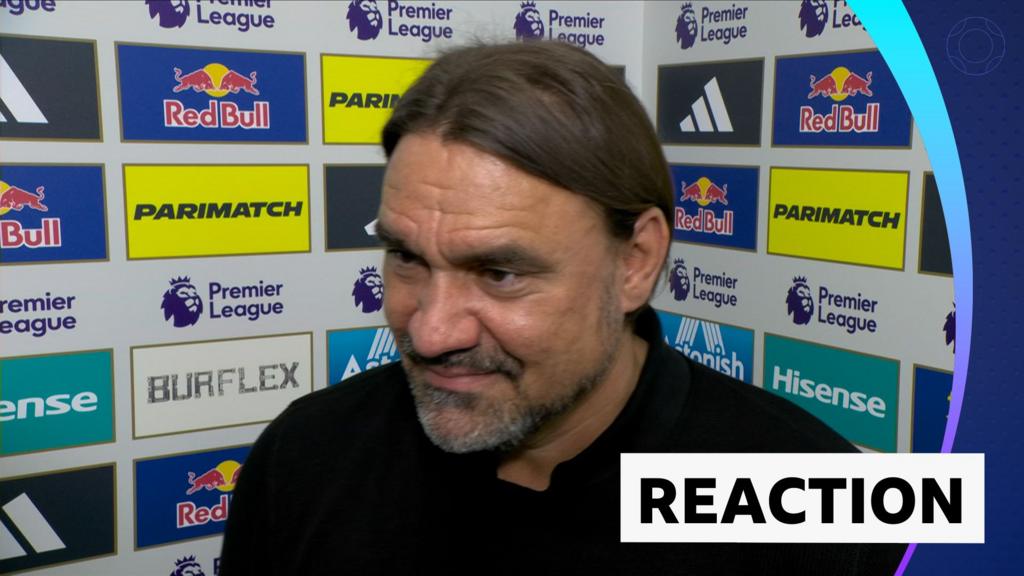
Speaking to the press after the final whistle, the manager didn't try to dress it up as a tactical masterpiece. He maintained the late winner was a deserved ending, knowing exactly what had transpired.
"We earned ourselves a hard-fought win," Farke said.
That single sentence perfectly encapsulated the afternoon. It wasn't pretty. It wasn't a game for the purists. But Leeds earned it through sheer stubbornness. They bent until they were nearly broken, but they refused to snap.
This victory tells us a lot about where Leeds are under Farke. They are no longer the naive, hyper-aggressive side that would blindly attack regardless of the game state. They have developed a cynical edge. They know how to suffer.
When you are fighting at this end of the Premier League table in late May, suffering is a requirement. You cannot out-pass teams like Brighton. You cannot out-rotate them. You have to out-work them, and when the single chance arrives, you have to be ruthless.
Dominic Calvert-Lewin was ruthless. Daniel Farke was pragmatic. And Leeds United marched away with a victory that masks their flaws but highlights their resilience.
The midfield issues remain glaring. If Farke doesn't figure out a way to close the distances between his double pivot, smarter teams will carve them apart before the 96th minute ever arrives. You cannot rely on Calvert-Lewin to bail you out with the final kick of the game every week.
But for tonight, Farke won't care. The points are on the board. The crowd went home happy. In the unforgiving pressure of the Premier League run-in, sometimes a hard-fought, ugly victory is worth more than a beautiful defeat.
Read Next
- Brighton are ready to expose the fatal flaw in the Leeds machine
- Glasner's rotation roulette: Palace drops five for Brentford
- Xabi Alonso is Chelsea's new manager, but his rigid tactics might break them
- Xabi Alonso to Chelsea is the ultimate 'I can fix her' move
- 🏟 EFL Championship 2025-26 — Promotion Race & Play-Off Final Hub
adidas Men's Tiro 23 League Training Pants
The gold standard of soccer training pants.
More Coverage

Anthony Gordon to Barcelona marks a high-stakes gamble
an hour ago
Arsenal's 104 million gamble on Julian Alvarez is pure chaos
an hour ago
Top 10: The Definitive Arsenal Moments of the 2025/26 Season
3 hours ago
Michael Skubala takes the hot seat at Ashton Gate
3 hours ago
Newcastle are burning the furniture to keep the house warm
3 hours ago
Manchester City's business model is frankly terrifying
3 hours agoMore Analysis
Farke's pragmatic Leeds blueprint is ugly but it might just save them
1 week, 5 days ago
Fabian Hurzeler is missing the point at Brighton
1 week, 4 days ago
Brighton are ready to expose the fatal flaw in the Leeds machine
1 week, 5 days ago
Leeds survived Burnley, but Palace will expose their lingering defensive flaws
3 weeks, 6 days ago