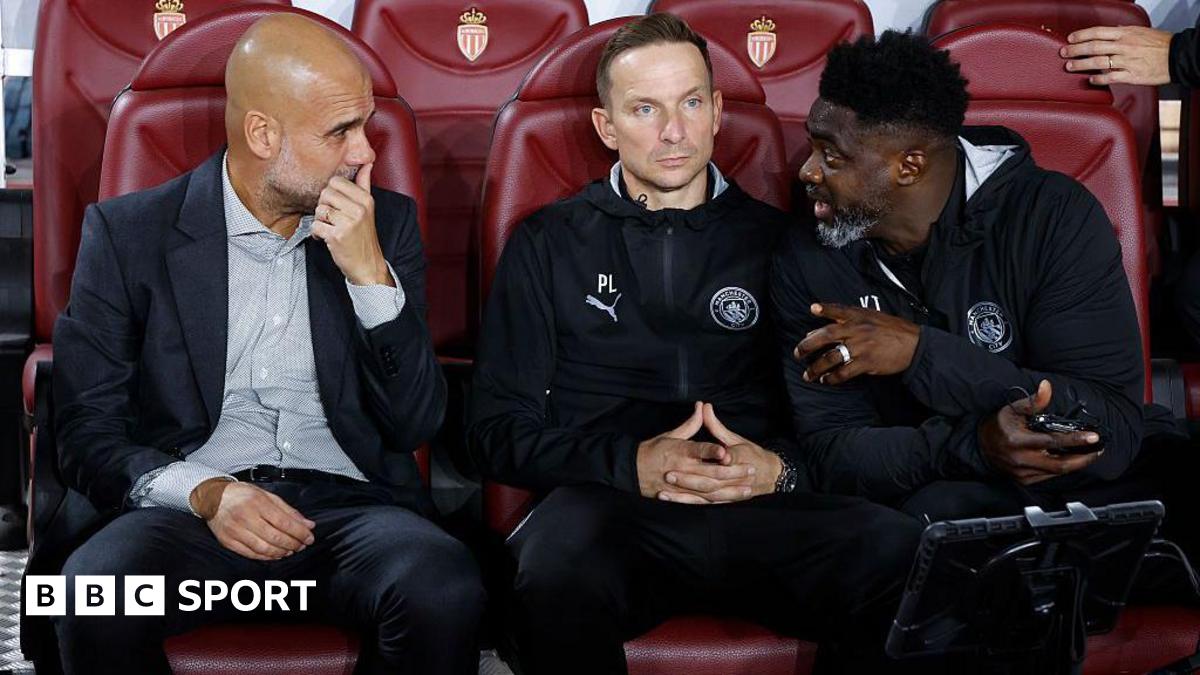
We have seen this movie before. The calendar turns to late April, the weather gets slightly less punishing, and Manchester City suddenly stop dropping points. It is a recurring nightmare for the rest of the Premier League.
But this year felt tangibly different. For a solid two months in the middle of the campaign, the machine was sputtering. The title looked destined to head elsewhere. Pep Guardiola was rotating his back line with alarming frequency, moving midfielders into defensive roles, and generally looking like a manager searching for an answer he had misplaced.
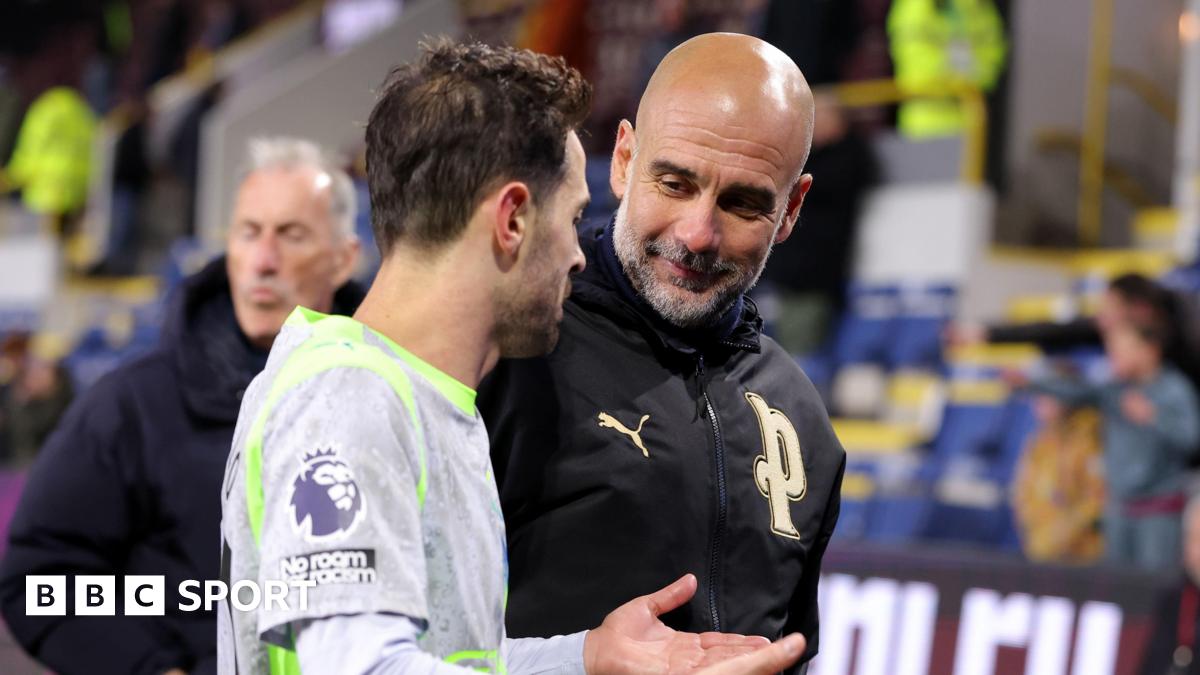
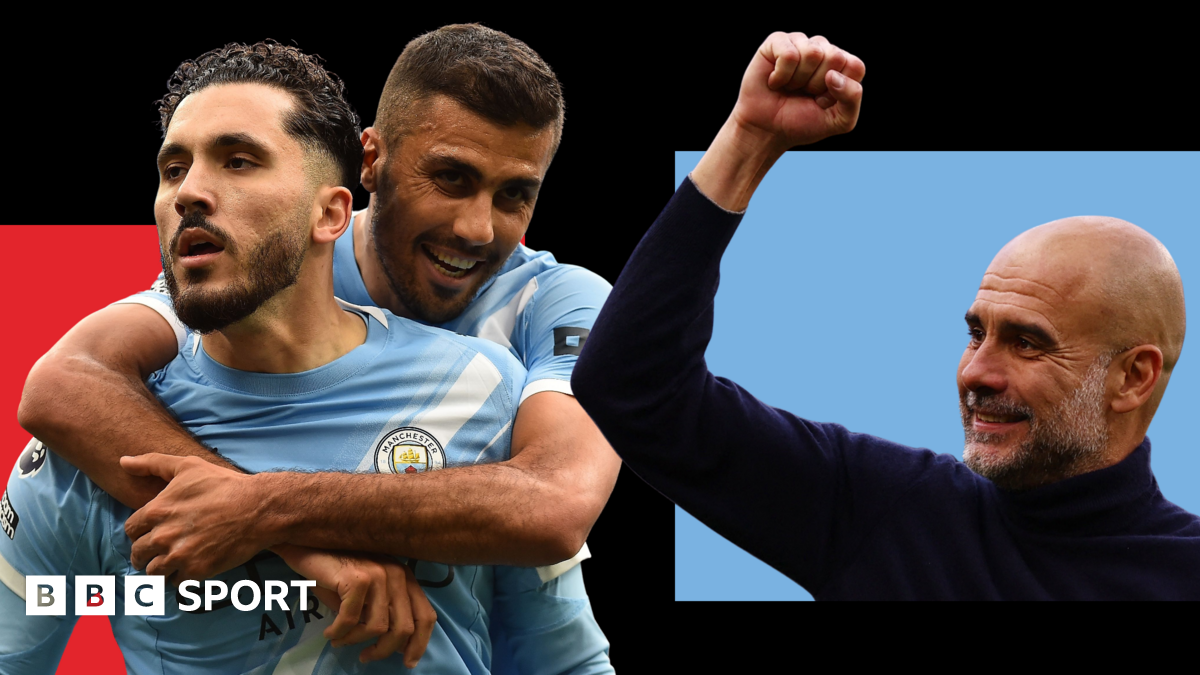
The BBC published a breakdown today detailing how Guardiola sifted through multiple distinct systems to finally arrive at his current preferred XI. It is a fascinating look at the trial and error required at the absolute elite level of the sport. The process was agonizing for the match-going fans who watched disjointed performances week after week. Now, it looks like a masterstroke.
The mid-season malfunction
To understand why the current system works, you have to look at what broke. Early in the winter, City were glaringly vulnerable to quick transitions. Opponents realized that sitting in a deep block and waiting for a sloppy pass in the final third was a highly viable strategy.
Guardiola initially tried to solve this by pushing more bodies forward into the attacking zones. He asked his full-backs to invert higher up the pitch, operating almost as number tens. He demanded his center-backs carry the ball into the attacking half to provoke a press. The result was a structurally compromised defensive shape.
Teams with pace out wide were bypassing the midfield entirely. One long, sweeping pass over the top, and suddenly City’s central defenders were sprinting backward in an absolute panic. The suffocating control that usually defines a Guardiola side was absent. Matches became open, end-to-end basketball games, a style that always favors the underdog.
The passing networks from those mid-season dropped points look like a tangled, confused mess. Instead of the clean, geometric triangles we are accustomed to seeing from City, there was a heavy, labored reliance on wide isolation. If the wingers could not beat their man one-on-one, the attack simply ground to a halt.
It was rigid, and worse, it was entirely predictable. You could watch the first ten minutes of a match and accurately predict exactly how City would attempt to attack for the next eighty. Opposing managers did not need to produce tactical miracles to secure a point. They just needed disciplined defenders willing to clear their lines.
Entering the laboratory
Guardiola is not a manager who accepts structural failure quietly. When the old patterns stopped working, he turned the training ground into a closed-door laboratory. This is the painful period the BBC article highlights as the turning point in the campaign.
We saw experiments with a traditional back three. We saw a double pivot that functioned more like a flat midfield four in possession. We even saw fleeting moments of a deep, compact block out of possession. That setup looked incredibly alien in the blue half of Manchester.
The personnel changes were just as drastic as the shifting formations. Players who had been untouchable mainstays found themselves watching from the cold bench. Midfielders were deployed as false wingers, instructed to drift inside and drag opposing full-backs into the crowded half-spaces. It was a dizzying, relentless array of tactical tweaks.
It is worth noting the psychological toll this tinkering takes on a squad. When you are asked to play three different roles in three consecutive matches, muscle memory vanishes. Players start thinking about their positioning rather than acting on instinct. That hesitation is fatal in the Premier League.
There were noticeable moments of friction. You could see visible arguments between defenders trying to sort out marking assignments on the fly during defensive transitions. Some of it failed miserably on the pitch. A center-back would jump aggressively out of the defensive line to engage an attacker, expecting midfield cover that never arrived.
But this is the fundamental Guardiola method. He uses competitive fixtures to beta-test his ideas. He is willing to sacrifice short-term fluidity to gather empirical data on what a specific group of players can execute under intense match pressure.
He was searching for the perfect mathematical balance. He needed the defensive solidity of a deep back line without sacrificing the numerical superiority in the midfield that defines his possession game. It took weeks of dropped points, but he finally found the equation.
The mechanics of the finalized XI
The system City are currently running is a complex hybrid. On paper, it looks roughly like a standard 4-3-3 formation. In actual practice, it is a shapeshifting entity that bends the opponent's defensive structure until it inevitably snaps.
The key is the highly deliberate behavior of the holding midfielder. Instead of acting purely as a defensive shield, this player is now actively dictating the tempo of the attacking transitions. When City win the ball back in their own half, the first pass is almost always an aggressive, vertical ball, bypassing the opponent's initial counter-press entirely.
This immediate verticality is a significant departure from the patient, methodical, almost sleep-inducing build-up we saw earlier in the year. City are attacking with a sudden urgency that catches retreating defenses totally unprepared. They are moving the ball from their own third to the opponent's penalty box in a matter of seconds.
The wide players are instructed to stay strictly chalk-on-the-boots on the touchline, stretching the pitch to its absolute physical limits. This extreme horizontal stretch creates massive, exploitable gaps in the interior channels. That is exactly where the two advanced central midfielders operate, receiving the ball on the half-turn and driving directly at the exposed center-backs.
The role of the center-forwards in this setup cannot be overstated either. While earlier in the season there was a tendency for the strikers to drop deep and get involved in the slow build-up play, they are now operating with ruthless positional discipline. They stay pinned against the opposition center-backs, refusing to drop into midfield.
This forces the opponent's defensive line deeper, which directly creates the very pockets of space the advanced midfielders are designed to exploit. It is a domino effect of tactical movements. By simply standing still and occupying two central defenders, the striker creates a massive numerical advantage in the zone directly behind him.
It is a terrifying attacking shape to defend against. The opposing full-back is forced to make an impossible, lose-lose choice. If the full-back steps inside to close the dangerous half-spaces, City’s fast wingers are left completely unmarked out wide to deliver a cross. If the full-back stays wide to mark the winger, the advanced midfielders have a free, uncontested run at the penalty area.
This is exactly why City are finishing the season with such an overwhelming surge. They are presenting structural tactical problems that simply do not have a clean, functional solution. You can try to plug one defensive hole, but you will inevitably open a much larger one right next to it.
The lingering vulnerability
However, to call this finalized team flawless would be a massive analytical oversight. There is a glaring weakness in this current iteration, and it is located squarely on the flanks during defensive transitions.
Because the wide forwards are explicitly instructed to stay incredibly high and wide to pin back the opponent's defensive line, they are often entirely out of position when City lose the ball. If the initial, aggressive counter-press fails to win possession within three seconds, the opposing team has huge tracts of empty green grass to sprint into down the wings.
This is the severe flaw in the architecture. Opponents who are brave enough to leave their own wingers high up the pitch, rather than dropping them back into a defensive bank of five, can severely exploit this empty space. It requires incredibly precise, confident passing out from the back under severe City pressure, but the immediate reward is a clear run at an isolated, retreating full-back.
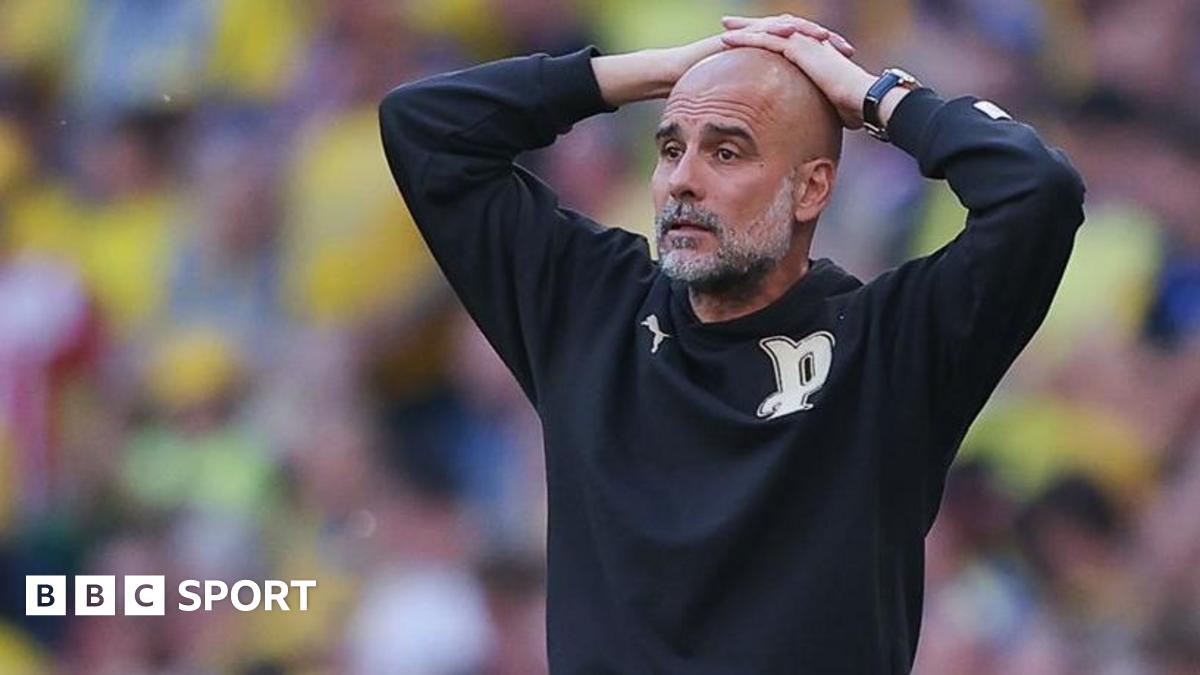
Guardiola knows this vulnerability exists. You can see him constantly on the touchline, furiously waving his arms, demanding that his advanced midfielders bust a gut to drop back and cover these wide areas. But it is a deeply unnatural movement for attack-minded players, and their recovery runs are often a costly fraction of a second too late to stop the cross.
If a team has the raw technical quality to bypass that intense first wave of the City press, they will absolutely find high-quality goal-scoring opportunities. We saw it happen in recent away fixtures. They conceded goals that looked structurally identical on the video replay: a quick, sweeping switch of play to the weak side, ruthlessly exposing an isolated, back-pedaling defender.
The run-in and the ultimate test
This brings us precisely to the sharp, unforgiving end of the season. The Premier League title race is going down to the wire, with fine margins separating success and failure. City clearly have the momentum right now, but they do not have the luxury of a wide margin for error.
More pressing, however, is the Champions League. The first leg of the semi-final is looming just three days away on April 28. This is the unforgiving arena where minor tactical flaws are punished with brutal, immediate efficiency.
The absolute elite of European football do not panic when Manchester City press them high. They have the technical composure to play the risky extra pass, to locate that pacey winger waiting patiently in the pocket of space on the touchline. This upcoming two-legged tie will be the ultimate, defining stress test for Guardiola’s hard-won finalized XI.
He has meticulously built a system that thoroughly dominates 90 percent of the teams on the planet. But the Champions League knockout stages are strictly decided by that remaining 10 percent. Will he confidently stick with this aggressive, expansive tactical shape, or will the lingering ghosts of past European defensive collapses prompt him to overthink and tinker one last time?
My prediction is that he finally holds his nerve. The underlying structural dynamics are simply too strong right now to abandon. City are generating an overwhelming volume of high-quality chances through those isolated half-spaces, and their central defensive metrics have improved significantly since the winter wobble.
They will advance past the semi-finals, likely securing the tie with a suffocating, dominant possession performance in the first leg. The domestic title race might be tighter, but this finalized version of Manchester City feels terrifyingly inevitable. They have survived their self-inflicted winter crisis. Now, they are systematically preparing to collect the silverware.