The Medical Reality of the Final Cut
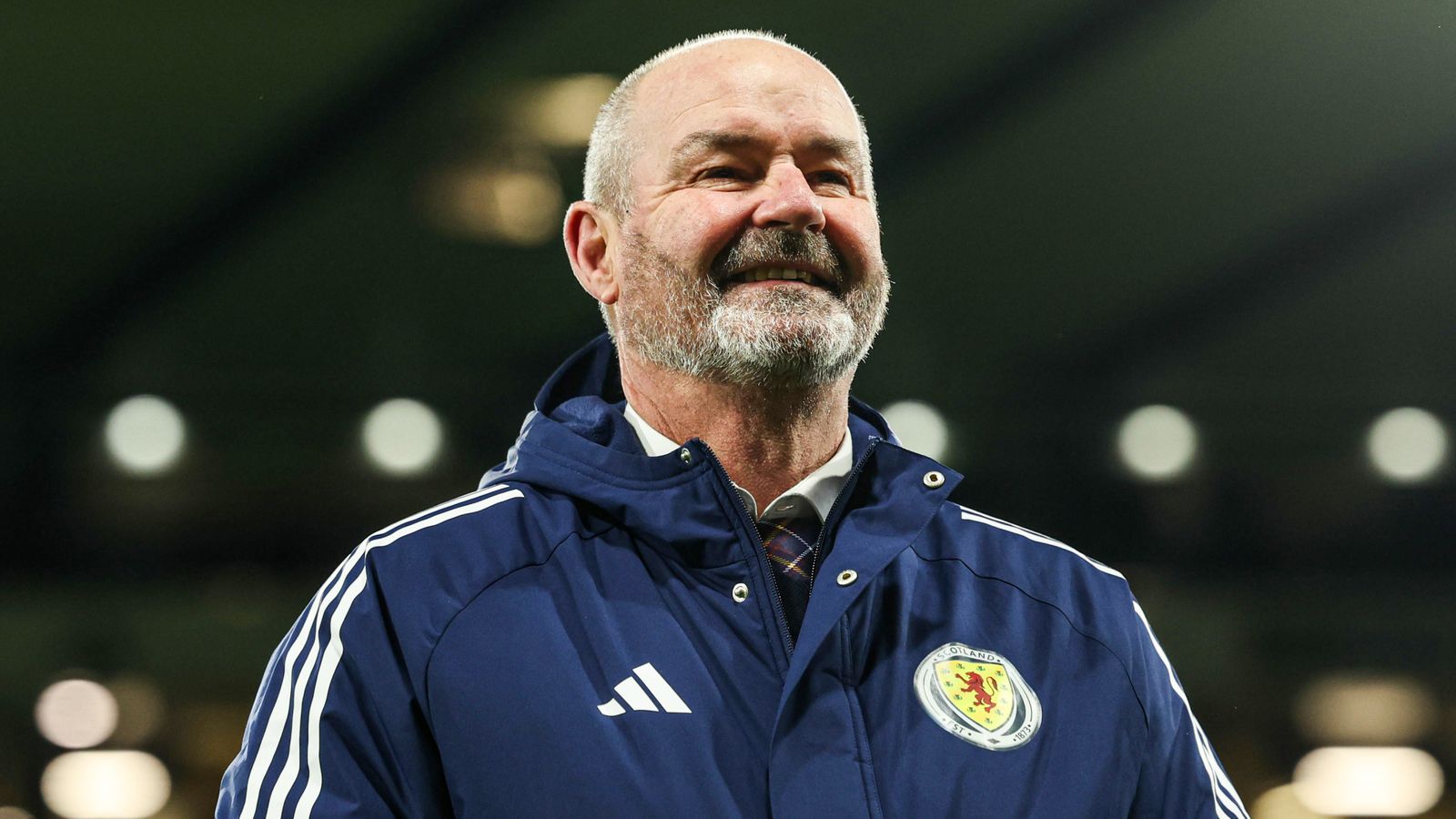
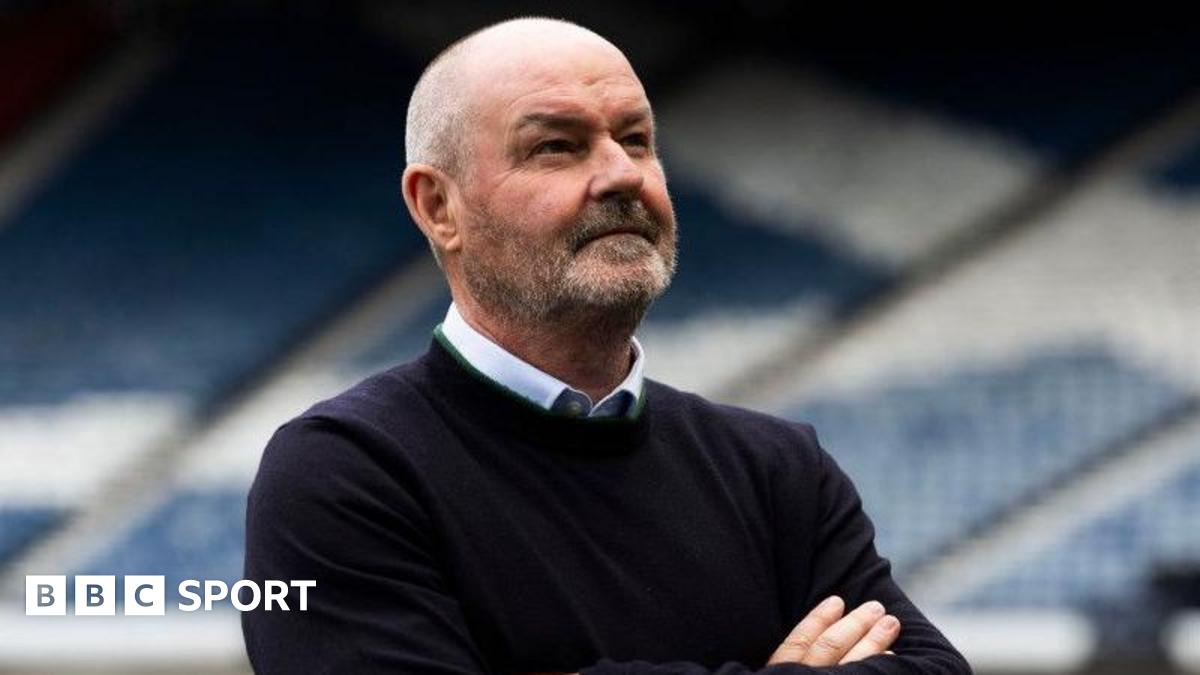
World Cup squad announcements are rarely about pure talent. By the time May rolls around, they are cold, calculating medical audits. Steve Clarke’s final selection for Scotland’s North American campaign is exactly that.
The headline is clear. Ross Stewart is on the plane. Oli McBurnie, Kieron Bowie, and Lennon Miller are staying home. That is not just a tactical reshuffle.
It is a massive roll of the dice by the sports science department. You do not drop three physical, combative players and bring in a striker with one of the most concerning injury histories in British football without hard data dictating the terms.
As reported by the BBC, the final list confirmed Stewart's recall while discarding the others. The margin for error is nonexistent. You either have the legs for it, or you stay home.
The Ross Stewart Paradox
We need to talk about the kinetic chain. Ross Stewart’s body has been a battleground for the last three years. When an Achilles tendon ruptures, the entire lower-body biomechanics shift.
The player subconsciously alters their running gait to protect the repaired tissue. That subtle shift places extreme, unnatural stress on the hamstrings and the lower back. Stewart has experienced this brutal cascade of compensations firsthand.
His hamstrings have shredded repeatedly under the strain. Recalling him for the most physically punishing international tournament on the calendar borders on medical negligence. Clarke is gambling that the rehabilitation is finally holding.
If Stewart is genuinely fit, he changes the geometry of the pitch. He offers a vertical threat that forces defensive lines to drop five yards deeper. That space allows the midfield to operate.
But the phrase "genuinely fit" is doing impossible amounts of work here. Muscle fibers do not care about patriotism. They snap when the load exceeds the capacity. Stewart is a walking time bomb.
The Casualties of Attrition
Look at who was left behind. Oli McBurnie has spent his entire career operating in a state of managed physical decline. His game demands heavy contact.
He backs into center-halves, takes elbows to the spine, and lands heavily on his knees. That style of play carries a severe tax. Leaving him out suggests the medical tracking data showed a major red flag.
Tournament football requires rapid recovery between matches. If a player's baseline inflammation markers do not return to normal within 48 hours, they are useless for the next fixture. McBurnie likely failed that specific recovery threshold.
His omission is particularly striking because it removes Scotland's best alternative plan. When technical football fails, you need a blunt instrument. You need someone willing to absorb physical punishment to secure possession high up the pitch.
That attritional role is a healthy man's game. McBurnie's medical profile likely showed an unacceptable degradation in his force-production metrics. He can still play, but he cannot recover fast enough for group-stage schedules.
Kieron Bowie and Lennon Miller represent a different kind of failure. Youth usually provides a buffer against fatigue. But international football demands a totally different physical output.
The high-speed running metrics required in Clarke's pressing system are ruthless. You need elite aerobic capacity to execute those triggers. If the GPS data shows a player's sprint velocity dropping by the 60th minute, they are cut.
Miller is a brilliant technical prospect. But the physical parameters for central midfield in a World Cup are unforgiving. He simply did not hit the required markers in the preparatory phases.
Bowie also represents a lost tactical profile. His aggressive, front-foot pressing is exactly what is needed against possession-heavy teams. Leaving him out shows that Clarke places zero value on pure aggression if the aerobic engine cannot sustain it for a full half.
The North American Crucible
The environment for this tournament is a logistical nightmare. The 2026 World Cup features an expanded format and brutal geography. Teams are jumping across multiple time zones within days.
Playing a high-intensity match in the humidity of the East Coast and then flying to the altitude of Mexico or the dry heat of the West Coast destroys standard recovery protocols. Sleep architecture gets wrecked. Circadian rhythms collapse.
Dehydration risk spikes exponentially. When a player loses just two percent of their body weight in sweat, cognitive function plummets and injury risk doubles. Micro-tears in the muscle become grade-two strains.
Consider the travel from the base camps. If Scotland gets drawn into a schedule that demands transcontinental flights between fixtures, the physiological stress is equivalent to playing an extra half of football.
The sports science staff will be fighting a losing battle against travel fatigue. Cryotherapy chambers and personalized hydration matrices can only do so much. The core temperature regulation required in North American summers strips energy reserves fast.
This is why taking a player like Stewart is so bewildering. You cannot load-manage a fragile striker in this environment. The climate alone adds a massive physiological tax before a single ball is kicked.
A History of Broken Gambles
We have seen managers make this exact mistake before. The medical gamble almost never pays out on the pitch. Sven-Göran Eriksson took Wayne Rooney to Germany in 2006 with a fractured metatarsal.
Rooney was completely ineffective, clearly favoring the foot, and eventually lashed out in frustration resulting in a red card. Vicente del Bosque brought a half-fit Fernando Torres to Brazil in 2014.
Torres looked heavy, slow, and unable to execute his trademark acceleration. Spain crashed out in the group stages. The data is clear. Taking compromised athletes to a summer tournament drags the entire squad down.
The player either breaks down entirely, forcing an early substitution that wrecks the tactical plan, or they play at a heavily reduced capacity. A 70-percent Ross Stewart is not an international-caliber forward.
He needs his explosive burst to be effective. Without it, he is a static target. The defensive lines will simply step up, compress the space, and suffocate the midfield.
The Inevitable Fallout
This decision is fundamentally flawed. Clarke has prioritized theoretical upside over robust, undeniable physical reality. Leaving behind players who can reliably endure 90 minutes of ugly football for a player who might give you 45 minutes of brilliance is reckless.
The sports science department might have charts showing Stewart hitting his top-end speed in controlled training sessions. But a training pitch is not the 85th minute against elite opposition when the lactic acid floods the system.
The ripple effects will hit the domestic clubs immediately. Stewart's employers will be watching this tournament through their fingers. Releasing a fragile asset for an intense summer campaign usually results in the club footing a massive rehab bill in August.
National teams have a terrible habit of borrowing an asset, breaking it, and handing the pieces back to the club. The insurance premiums for these call-ups are sky-rocketing for a reason.
The medical files are locked. The squad is set. Steve Clarke is taking a massive, unnecessary risk. If Stewart breaks down in the opening match, the inquest into this medical clearance will be absolutely brutal.
Read Next
- Scotland's World Cup squad is a glorious, terrifying gamble
- Why Ross Stewart's World Cup recall completely changes his summer market
- Roberto Martinez is gambling Portugal's World Cup on a ghost
- Rangers want to spend Scotland's World Cup windfall on fixing VAR
- 🏆 World Cup 2026 — Full Coverage Hub
- 🏴 Scotland World Cup 2026 — Tartan Army Hub
- 🇧🇷 WC 2026 Group C — Brazil, Morocco, Scotland, Haiti