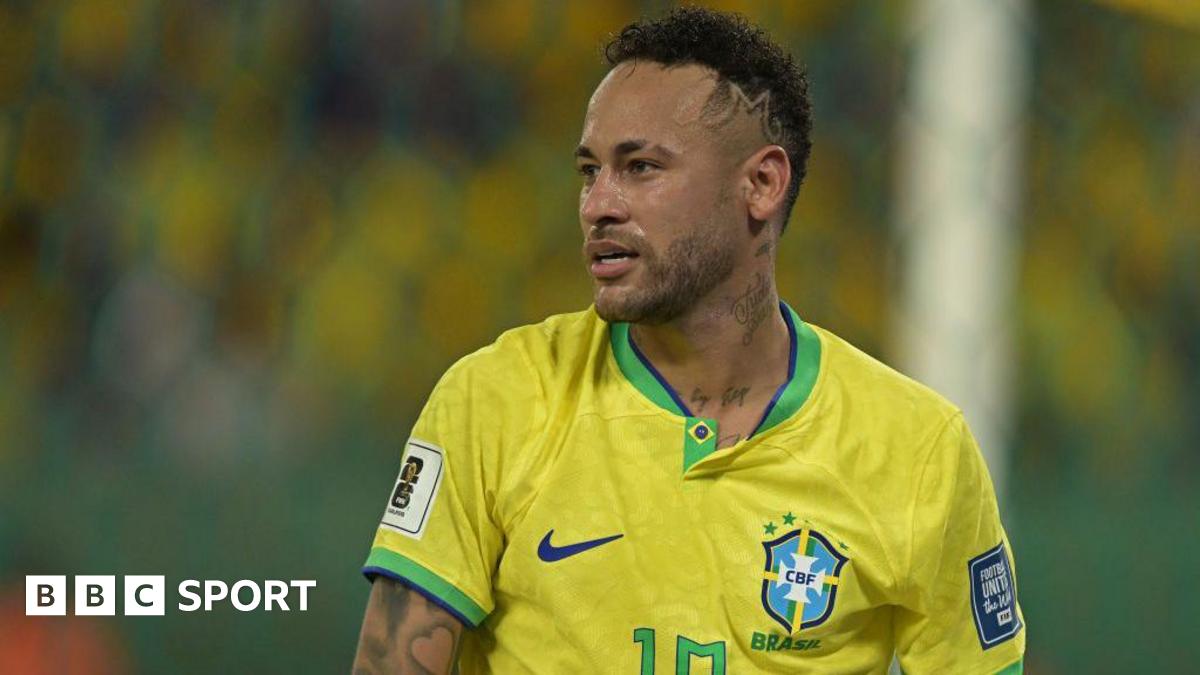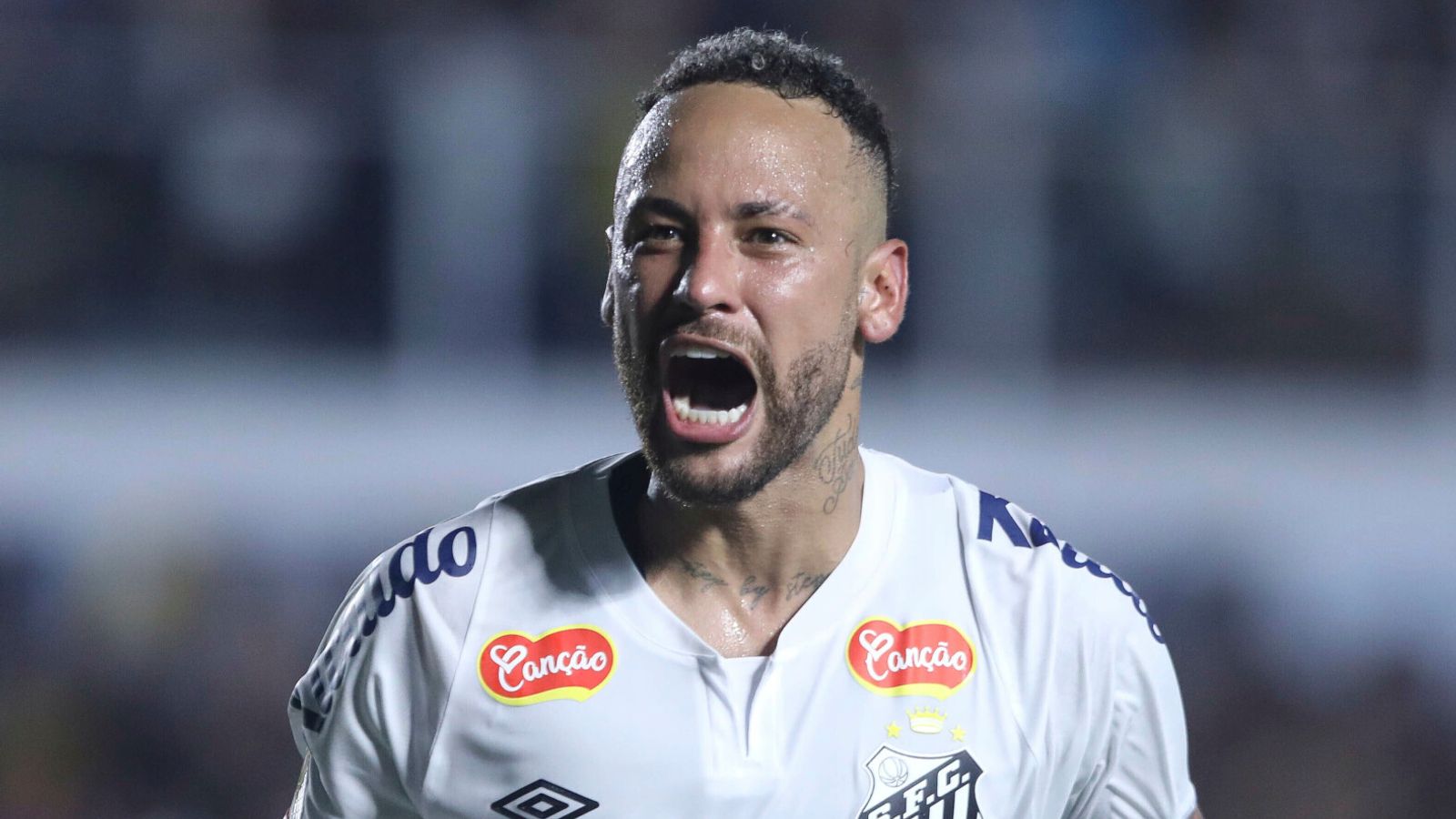
Brazil has officially announced their squad for the 2026 World Cup. Neymar’s inclusion forces a hard look at the medical reality of taking an aging superstar to a grueling international tournament. We are 24 days away from kickoff in North America, and the physical demands of this expanded format will be unforgiving.
At 34, Neymar is not the player who burst onto the scene at Santos. His body carries the wear and tear of a physical career, and the primary concern remains the structural integrity of his left knee. He suffered a torn anterior cruciate ligament and meniscus in October 2023, making his return to peak international competition highly risky.
An ACL tear is no longer the career-ender it was in the 1990s due to massive improvements in surgical techniques. But an ACL reconstruction paired with a meniscus repair fundamentally changes the biomechanics of a joint by removing natural shock absorption. For a player whose entire game relies on explosive changes of direction, this is a massive physiological problem.
The Post-Surgery Recovery Curve
The timeline for recovery from a complex multi-ligament injury is typically nine to twelve months for a return to training, but absolute peak performance often takes up to two full years. We are currently right at that mark. Neymar has played competitive football recently, but managing minutes in the Saudi Pro League is entirely different from starting consecutive knockout matches in the summer heat.
Let's look at the cartilage. The meniscus acts as a cushion between the femur and the tibia, and when repaired, bone-on-bone friction increases. This leads to swelling after heavy exertion, which medical staff call an effusion. Managing this natural response to trauma in a tournament setting is a constant battle against biology.
Brazil's medical staff will have to operate a strict load management protocol, because you cannot play a post-surgery knee for 90 minutes three times in ten days without extreme risk. When the knee hurts, the body compensates naturally by shifting weight to the healthy leg. This overloads the opposite hamstring or calf, leading to secondary soft-tissue injuries.
The strategy here is likely a tailored training regimen that keeps him in the recovery pool rather than on the training pitch. The days of him participating in high-intensity small-sided games between matches are over. His training will be purely tactical walk-throughs to ensure he reaches the stadium with minimal inflammation.
The Ripple Effect on Brazil's Setup
There is historical precedent for Brazil gambling on a fragile superstar, most notably Ronaldo at the 2002 World Cup. Luiz Felipe Scolari took a massive risk after Ronaldo suffered catastrophic knee injuries. Heavily managed by the medical team, the striker ended up scoring eight goals and winning the tournament in Japan.
But Ronaldo was 25 years old in 2002, whereas Neymar is 34 with a vastly different cellular regeneration rate. A younger body clears lactic acid and repairs micro-tears much faster. Furthermore, Ronaldo was an out-and-out striker who conserved energy off the ball, while Neymar operates in deeper spaces and carries the ball through lines.
This brings us to the broader impact on the team, as Brazil's manager must build a tactical system accommodating Neymar's physical limitations. If Neymar cannot press, the rest of the team must drop deeper or work harder to close the space. With Vinicius Jr. and Rodrygo in prime physical condition, forcing Neymar into the starting eleven actually weakens the overall pressing structure.
The negative reality here is obvious, as Brazil's reliance on Neymar borders on an unhealthy obsession. By dedicating a roster spot and potentially starting minutes to a physically compromised veteran, the federation is suffocating the next generation. A fit, hungry player like Endrick offers more raw output right now than a depleted version of Neymar.
Tactical Exploitation and Travel Fatigue
European teams like France or England will view Brazil's reliance on Neymar as a structural weakness to be exploited. They will set pressing traps around him and double-team him aggressively if he receives the ball with his back to goal. They know he cannot spin and accelerate away like he used to do ten years ago.
Opposing teams know this medical history intimately and will instruct defenders to force Neymar onto his left side. They want to make him pivot heavily on the surgically repaired knee while testing his willingness to absorb physical contact early. Football at the international level is ruthless, and an opponent will intentionally test a known physical weakness in the opening five minutes.
The travel schedule in 2026 adds another layer of complexity with matches spread across the United States, Mexico, and Canada. Air travel induces mild hypoxia and dehydration, both of which exacerbate joint swelling. Sitting in a pressurized cabin for four hours is the worst possible scenario for a knee prone to effusion.
The medical staff will likely utilize hyperbaric oxygen chambers to speed up cellular recovery between flights. These chambers increase the amount of oxygen dissolved in the blood plasma, which helps reduce swelling and promotes tissue healing. While it is not a magic bullet, marginal gains matter when squeezing three more matches out of an aging joint.
The Psychological Barrier
Let's examine the specific mechanics of his signature moves, like rapid step-overs that require incredible proprioception. After an ACL tear, the nerve endings inside the original ligament are destroyed, meaning the new graft lacks immediate sensory feedback. This tiny lag in subconscious body awareness is why players post-surgery sometimes look slightly clumsy or a fraction of a second slow.
The expected timeline for his involvement is highly regulated, likely starting as a substitute in the group stages. If Brazil secures qualification early, he will likely sit out the third group match entirely to stay safe until the round of 16. The knockout stages are where his experience and dead-ball delivery become irreplaceable.
However, this plan falls apart if Brazil struggles early and draws their opening match. The pressure to start him in the second game will be immense due to a famously impatient Brazilian media. Medical advice often gets pushed aside when national panic sets in, which is exactly how secondary injuries occur.
There is also the psychological aspect to consider, as Neymar knows exactly what the knee feels like the morning after a match. The anxiety of potentially re-tearing the ligament changes a player's risk profile on the pitch. They pull out of heavy tackles and hesitate to stick a leg in to block a clearance.
The physical decline is entirely natural, as time is undefeated in sports medicine. What makes this situation unique is the sheer gravity of Neymar's status as the all-time leading goalscorer in Brazilian football. The desperation to see him lift the trophy is actively clouding objective medical judgment.
Ultimately, the decision has been made and the next 24 days are about pure physical mitigation. The medical team will monitor his fluid levels and check hamstring strength asymmetries daily, but they lose control once he crosses the white line. Brazil is dragging a 34-year-old body through a demanding tournament on the sheer hope of individual brilliance.
Read Next
- Why Thomas Tuchel and Mauricio Pochettino are having a terrible week
- World Cup 2026 squad reveals: 1,248 players and zero margin for error
- Roberto Lopes secures World Cup spot despite late-season fitness concerns
- Roberto Lopes is taking the League of Ireland to the World Cup
- 🏆 World Cup 2026 — Full Coverage Hub