The Monday morning existential crisis
It is Monday morning. We are staring down the barrel of April, just over a week away from the Champions League quarter-finals, and the sun is actually shining.
Yet, the BBC has decided to choose violence.
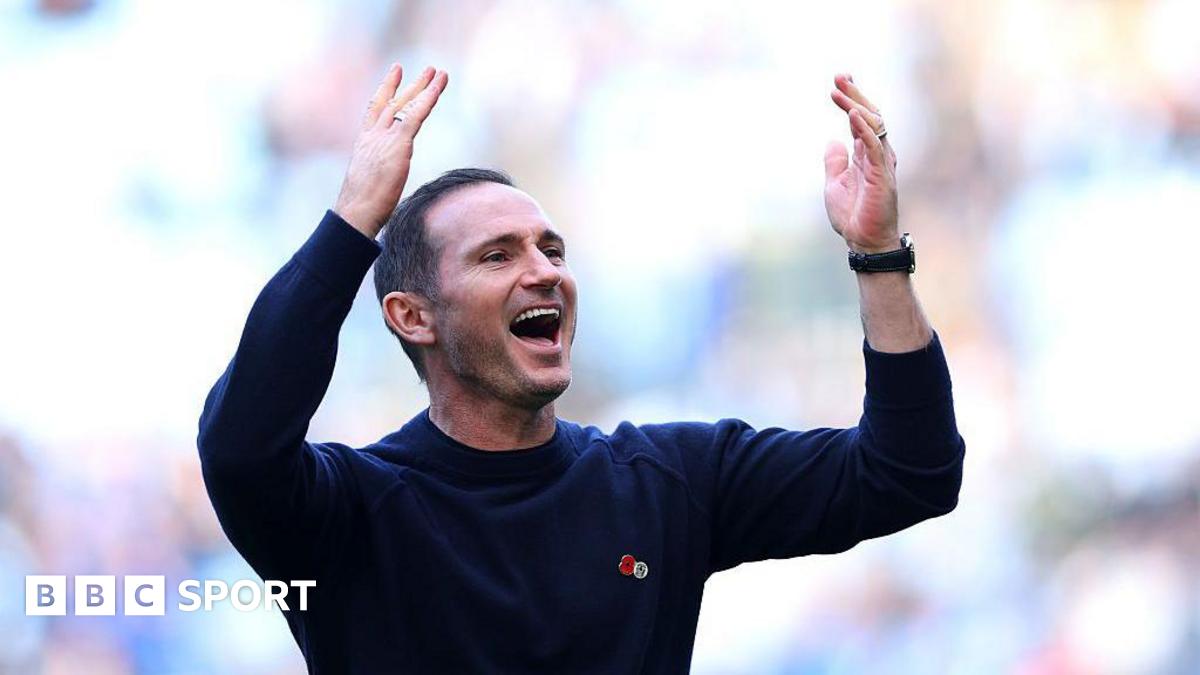
They dropped a piece today asking a question that has probably crossed the mind of every Spurs, Everton, or Schalke fan at least a dozen times this season. Can you actually stop supporting your football team?
The short answer is no. The long answer involves a lot of yelling, pointing fingers, and probably a pint of something strong.
Let's get one thing straight right out of the gate. Football fandom is not a streaming service. You don't get to just cancel it because the latest season was poorly written and the main characters forgot how to defend a basic set-piece.
If you are a grown adult, paying taxes, and you suddenly decide that supporting your childhood club is getting a bit too stressful, I have news for you. You are a coward.
The unbreakable contract
There are rules to this thing. Unwritten, deeply ingrained rules that govern how we interact with the beautiful game. And the primary rule is that you die with the colors you picked when you were seven years old.
Now, the BBC Sport piece tries to look at this from a psychological angle. Is it a lifelong pledge? Can you break the cycle?
It is honestly a bit of a lazy premise. This isn't a deep psychological mystery. We endure the pain because the alternative is being a plastic fan, and nobody wants to be that guy. The BBC treats fandom like a consumer choice, which is a fundamental misunderstanding of the sport.
I will save you the read. The only acceptable reasons to change your club are as follows.
- You are under the age of nine. At that point, you are basically a free agent. You can switch allegiances because you liked the shiny new kit or because your dad's team just lost 4-0 to Bournemouth and you want to rebel.
- Your club literally ceases to exist. If the administrators come in, lock the doors, and sell the stadium to a property developer, you get a pass. You can go support the newly formed phoenix club in the ninth tier. But you cannot just hop over to Manchester City.
- The club relocates to another continent. If your local team packs up and moves to a different time zone, the contract is void.
That is it. That is the entire list.
The player fan epidemic
There is a growing trend of modern fans following players instead of clubs. You know the type. They supported Barcelona, then PSG, and now Inter Miami. They don't support a badge. They support a brand.
This is a completely broken way to experience sports. The entire point of football is the suffering.
If you don't spend Monday morning furiously scrolling through fan forums because your manager decided to play a high line against a team with wingers that run a sub-10 second 100m, are you even a fan?
The joy of winning a trophy — or even just a gritty 1-0 away win on a rainy Tuesday — is entirely dependent on the misery that preceded it.
If you just jump ship to whoever is top of the league, you are eating dessert without ever having to chew through the overcooked vegetables. It means absolutely nothing.
Distractions and trivia
Let's pivot for a second. While the BBC is out here questioning our loyalty, FourFourTwo is actively testing our actual knowledge.
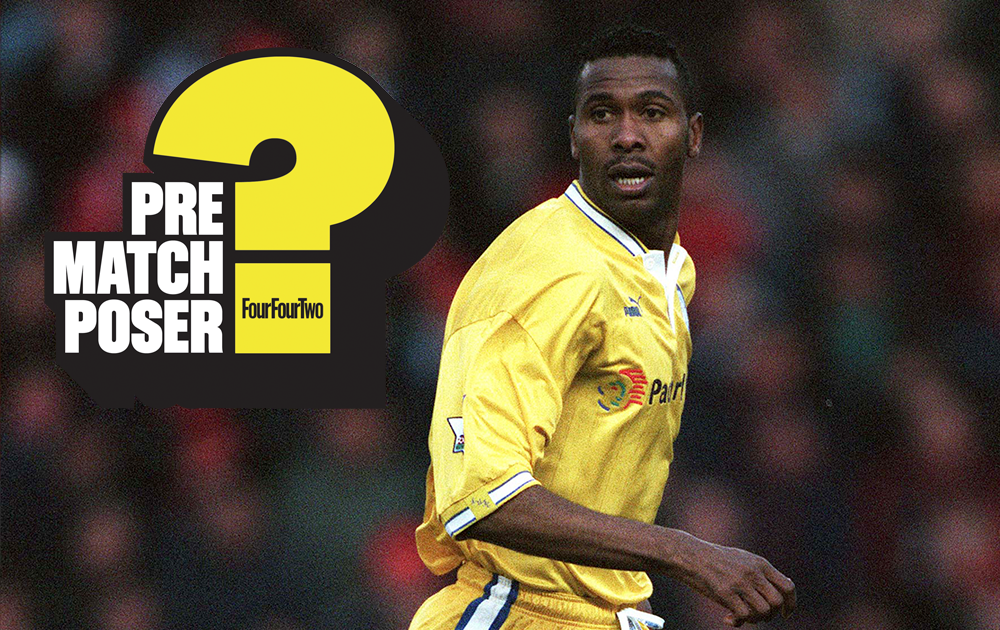
They dropped a Pre-Match Poser today that is supposed to separate the casuals from the obsessives.
And honestly, if you are the kind of person thinking about switching clubs, you probably can't answer it anyway.
You take that question to the pub, you throw it out to the table, and you instantly know who actually watches games and who just plays FIFA.
Then there is the Quickfire Quiz. Ten questions in 90 seconds.
This is the kind of stuff that keeps the group chats alive when the international break hits. We need this trivia because we need distractions from our own clubs.
The apathy loophole
But back to the main point. The loyalty issue.
Can you stop caring? Absolutely.
There is a massive difference between actively changing teams and just fading into apathy. Apathy is entirely legal.
If your owner has stripped the club of all its assets, hired a manager who plays football from 1994, and the star striker can't hit a barn door with a banjo, you are allowed to check out.
You can stop buying the replica shirts. You can stop waking up at 6 AM to watch a grainy stream. You can just check the score at full-time, sigh, and go about your day.
That is self-preservation.
But you cannot buy another team's shirt. You cannot suddenly start dropping "we" when talking about Real Madrid.
The moment you do that, your credibility is gone forever. You become the guy at the five-a-side pitch who shows up in full kit with shin pads for a friendly kickabout. Nobody respects you.
The shared trauma
Look, I get it. The modern game is exhausting.
VAR decisions take four minutes to determine if a striker's armpit hair was offside. Ticket prices require a second mortgage.
And the gap between the mega-rich clubs and the rest of the pack is turning into a canyon.
It is incredibly frustrating to know, on day one of the season, that your club's absolute ceiling is finishing seventh and maybe making a decent run in the Carabao Cup before losing to City's U21 squad.
But that shared misery is what builds the community.
You don't bond with the bloke next to you in the stands because everything is going perfectly. You bond because you are both freezing cold, the team is down 2-0, and the referee just ignored a blatant penalty.
That shared trauma is the glue of football culture. You cannot buy it, and you certainly cannot manufacture it by switching teams.
The BBC asking if we can break the pledge is like asking if we can just decide to stop having a shadow. It is attached to us.
We are all trapped in this bizarre, emotionally abusive relationship with 11 guys kicking a ball around a field.
And as much as we complain, we wouldn't have it any other way.
The second team myth
Let's talk about the "second team" loophole. People always ask me if they are allowed to have a second team.
The answer is a hesitant yes, but with massive restrictions.
Your second team cannot be in the same league. They cannot be a direct rival. And they absolutely cannot be a European giant.
If you support Aston Villa and your second team is Bayern Munich, you are cheating. That is not a second team. That is an emotional safety net.
A real second team is some obscure outfit in the 2. Bundesliga. Or a side in the Italian third division because you went there on a stag do once and bought a scarf.
That is acceptable. But the moment your primary team plays them in a pre-season friendly, you have to actively root for the second team to get battered.
There can be no split loyalties.
Paying the tax
Let's look at the teams that test this loyalty the most right now.
Manchester United fans have spent the last decade wandering through the desert. They went from dining at the top table every single year to celebrating decent expected goals stats in a 1-1 draw against Fulham.
Are they allowed to quit? No. They enjoyed the Sir Alex Ferguson years. They banked all that joy. Now they have to pay the tax.
Everton fans. My god, Everton fans. I don't think there is a fan base that has suffered more sheer administrative incompetence over the last five years.
Points deductions. Bizarre managerial appointments. A stadium build that feels like it is taking three centuries.
If an Everton fan walked away today, I would understand the urge. I really would. But I would still judge them.
Because that is the deal. You sign up for the ride, even if the car is on fire and the brakes do not work.
And what about the flip side? What happens when the bad times end?
Look at Newcastle United. For years, under Mike Ashley, it was a dark, depressing existence. Fans were practically begging to be relegated just to feel something different.
Then the takeover happens. Suddenly, they are back in the Champions League. They are signing massive players. The stadium is rocking again.
If you quit on Newcastle in 2018 because it was too depressing, you don't get to come back for the parade in 2024. You forfeited your seat at the table.
No escape hatch
It dictates your mood for the entire weekend. It ruins your Monday mornings. It makes you yell at a television screen as if the 22-year-old millionaire playing left-back can actually hear you.
It is completely irrational. And that is exactly why it matters.
If you could just turn it off, if you could just switch allegiances the moment things got tough, the victories would be hollow.
The highs are only high because the lows make you want to throw your phone into a river.
So, as we head into the business end of the season, with the UCL quarter-finals starting on April 7, the FA Cup Final looming in May, and the World Cup on the horizon in June, remember your vows.
This is the time of year when true fans lose sleep. You don't get to opt out now. If your team is in a relegation dogfight, you suffer. If your team is chasing the title, you suffer.
There is no escape hatch. There is no transfer portal for the terraces.
So no, you cannot change your team.
You picked them. Or worse, they were forced upon you by family tradition.
Either way, the contract is signed in blood.
Now go take that FourFourTwo quiz and try to remember who won the Golden Boot in 2011, because it is much better than thinking about your current squad's defensive frailties.
Buckle up, accept your fate, and stop looking for an exit door that does not exist.