The great lie of clear and obvious
You cannot get 91 percent of people on this planet to agree that the sky is blue. If you took a poll right now, at least fifteen percent of respondents would argue that it's actually a specific shade of cyan, and another five percent would blame the government for painting it. But a new survey just dropped, and it turns out 91 percent of football fans believe the sport is better off without VAR. That is a staggering, completely unified block of sheer exhaustion.
We are tired. We are so unbelievably tired.
When VAR was pitched to us, it was sold as a cure for the undeniable, howling injustices. It was supposed to be the safety net that stops Thierry Henry from playing volleyball against Ireland. It was meant to catch the Hand of God. It was introduced to ensure that if a ball bounces two feet over the goal line like Frank Lampard's ghost goal against Germany in 2010, the scoreboard actually reflects it. We were promised minimum interference and maximum benefit.
Instead, we got maximum interference, minimum benefit, and a bunch of blokes in a shed in Stockley Park drawing MS Paint lines on Patrick Bamford's armpit.
Killing the spontaneous joy
The single greatest currency football has is the raw, unadulterated explosion of joy when the ball hits the back of the net. There is nothing else like it in sports. A ninety-minute slog of tension, suddenly released in a split second. You hug the stranger next to you. You spill your eight-pound pint. You lose your voice.
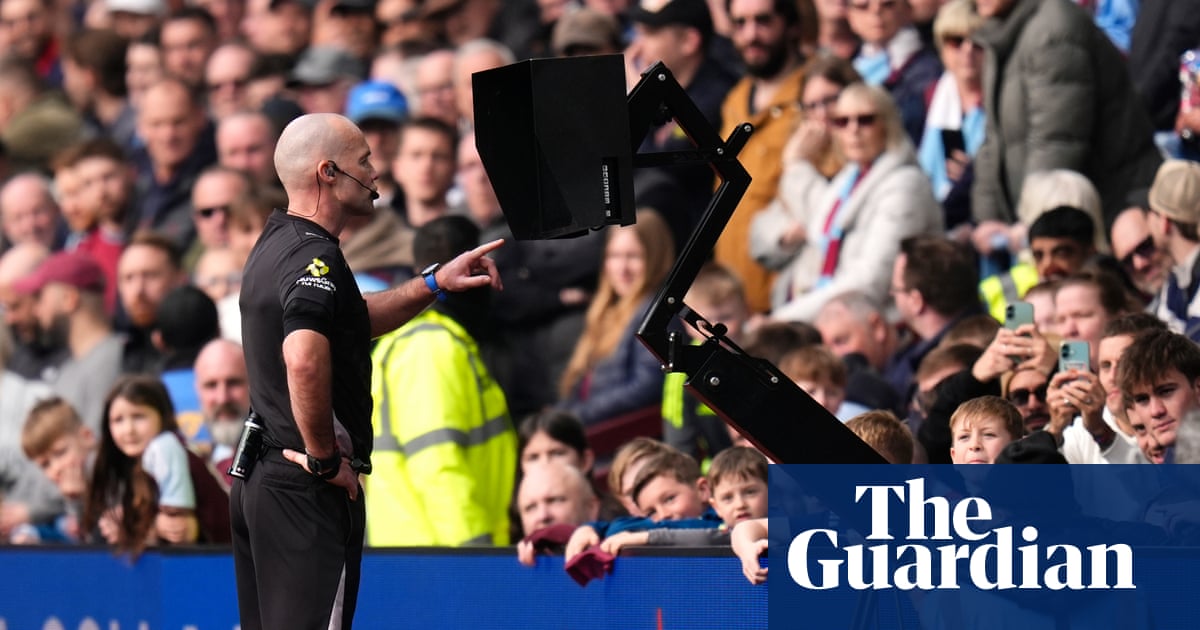
Now? You score, and you look at the referee. Then you look at the linesman. Then you wait. You stand there like an idiot, holding your breath, while a man in an earpiece tells another man on the pitch to hold his finger to his ear.
Imagine the Sergio Aguero moment against QPR happening in the VAR era. AGUEROOOOOOO! Martin Tyler screams. The Etihad erupts. Roberto Mancini is running on the pitch. And then the referee blows his whistle and points to his ear. The stadium goes deathly quiet. Three minutes of agonizing silence pass while we check if Mario Balotelli's toenail was offside in the buildup. By the time the goal is confirmed, the adrenaline has completely drained out of the building. You don't celebrate the same way twice. The moment is dead.
The illusion of perfection
The fundamental flaw of VAR is the arrogant assumption that football is a game of absolute objectivity. It isn't. Aside from whether the ball crossed the line—which goal-line technology already solved perfectly—almost every rule in football is subjective. What constitutes a foul? What constitutes a natural silhouette for a handball? These are matters of interpretation.
By applying microscopic, forensic analysis to a contact sport played at twenty miles per hour, we haven't removed the controversy. We've just moved the controversy from the pitch to a replay booth. And crucially, we've made the mistakes feel infinitely worse.
When a referee misses a call in real time, you get angry, but you understand it. They only get one look at full speed. Human error is a part of the game. But when four trained officials sit in a room with twelve high-definition camera angles, watch a replay seventy times in slow motion, and still get it spectacularly wrong? That doesn't feel like an honest mistake. That feels like incompetence. Sometimes, it borders on the surreal.
The Luis Diaz disaster class
Let's not forget the absolute peak of the VAR clown show: Luis Diaz's disallowed goal against Tottenham in September 2023. Liverpool score a perfectly good goal. The linesman flags for offside. VAR checks it, realizes he is clearly onside, but somehow completely forgets what the on-field decision was. They tell the referee check complete, meaning stick with your original call. So the perfectly good goal is ruled out because of a massive, structural miscommunication between guys sitting in a high-tech bunker.
The PGMOL called it a significant human error. I call it the exact moment the entire system lost its remaining shred of credibility.
We traded the honest mistakes of the man in the middle for the institutionalized incompetence of the men behind the monitors. We created a system so convoluted that the officials themselves don't even know how to operate it under pressure.
The triple-check absurdity
If you want a perfect snapshot of how absurd this has become, look at Anthony Gordon's goal for Newcastle against Arsenal back in November 2023. That single sequence required three separate, consecutive VAR checks. First, they checked if the ball went out of play. Then, they checked for a foul by Joelinton on Gabriel. Finally, they checked for offside on Gordon.
The whole process took four minutes and six seconds. Four minutes of fifty thousand people standing around in St James' Park while officials scrutinized three different possible reasons to cancel a goal. Mikel Arteta lost his mind in the press conference afterward, calling it an absolute disgrace. And while managers always complain when decisions go against them, he wasn't entirely wrong about the agonizing process.
Football isn't supposed to be litigated like a corporate tax return. When you are freeze-framing a video to determine if a ball is two millimeters out of play from an angle that doesn't even show the line clearly, you have lost the plot. The game is being refereed by pedants searching desperately for a technicality.
Match-going fans treated like dirt
If you watch football on television, VAR is annoying. If you are actually in the stadium, it is downright insulting. The people who pay the highest ticket prices, brave the freezing rain, and create the atmosphere that the Premier League sells for billions of pounds to global broadcasters—they are the ones left completely in the dark.
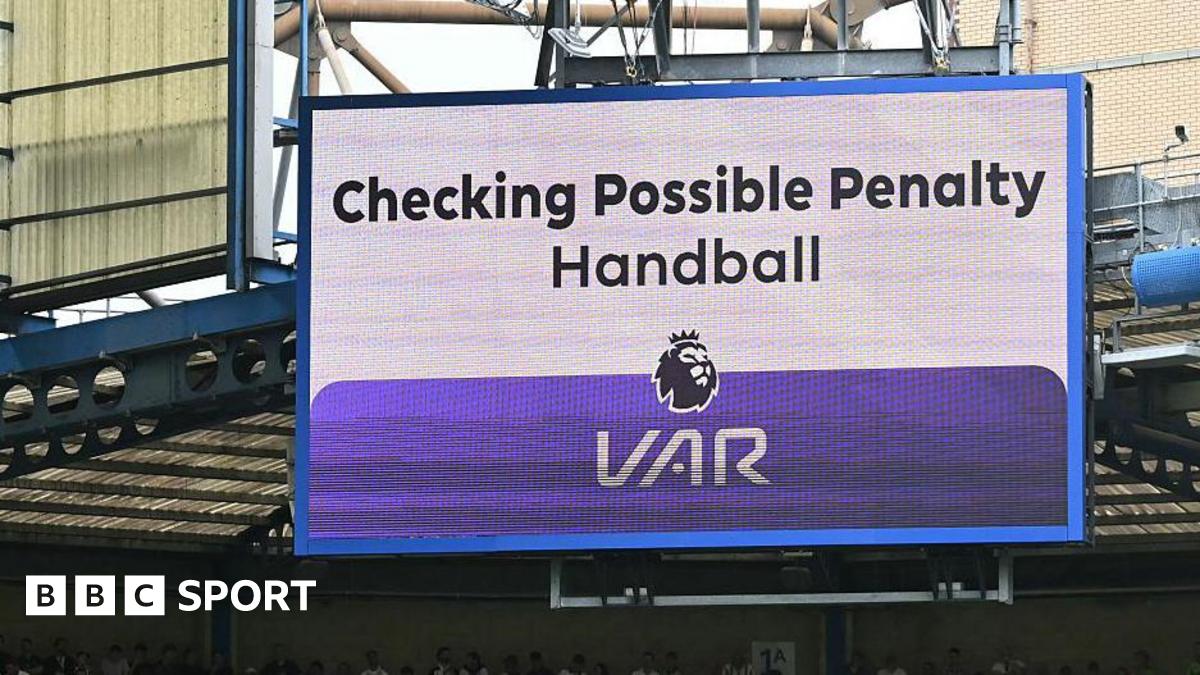
You sit there in the freezing cold. The game stops. A generic VAR CHECK ONGOING graphic flashes on the big screen. You have no idea what is being checked. Was it a foul in the buildup? An offside? A handball? You just stand there for four minutes, completely detached from the spectacle you paid a fortune to watch.
Cricket and rugby figured this out ages ago. You hear the referee's mic. You see the replays on the big screen. You understand the process. Football, in its infinite arrogance, decided to keep everything secret, treating the paying match-going fan like an inconvenience rather than the lifeblood of the sport.
The refereeing crutch
And let's talk about the referees themselves. The introduction of VAR has not made on-field referees better. It has made them cowardly. Referees now routinely refuse to make big calls, preferring to let play go on and letting VAR sort it out later.
They have abdicated their responsibility. The authority of the referee used to be absolute. Now, every decision is tentative. Every flag is delayed. Linesmen keep their flags down for obvious offsides, forcing players to run thirty yards and risk injury for a phase of play that is ultimately meaningless.
We are watching officials referee a game not by their instinct, but by the safety net. And yet, the safety net is full of holes.
The offside geometry
The offside rule was created to stop goal-hanging. It was implemented to prevent an unfair advantage. It was never intended to penalize a striker because the sleeve of his shirt was leaning slightly ahead of a defender's boot while both men were running at full sprint.
Drawing lines on a screen is a fundamentally flawed premise. The exact frame chosen to represent the moment the ball leaves the passer's foot is entirely subjective. A single frame forward or backward completely changes the offside line. Yet we treat these MS Paint graphics as gospel truth, ruling out brilliant team goals over millimeter discrepancies that provide literally zero competitive advantage.
It is suffocating the attacking spirit of the game. Strikers are hesitating. Midfielders are double-checking their runs. We are actively discouraging the very thing we tune in to see: goals.
The handball lottery
If you can find me three people who genuinely understand the current handball rule, I will buy you a house. The rule changes every single season. Sometimes it depends on the silhouette. Sometimes it depends on proximity. Sometimes it depends on the phase of the moon.
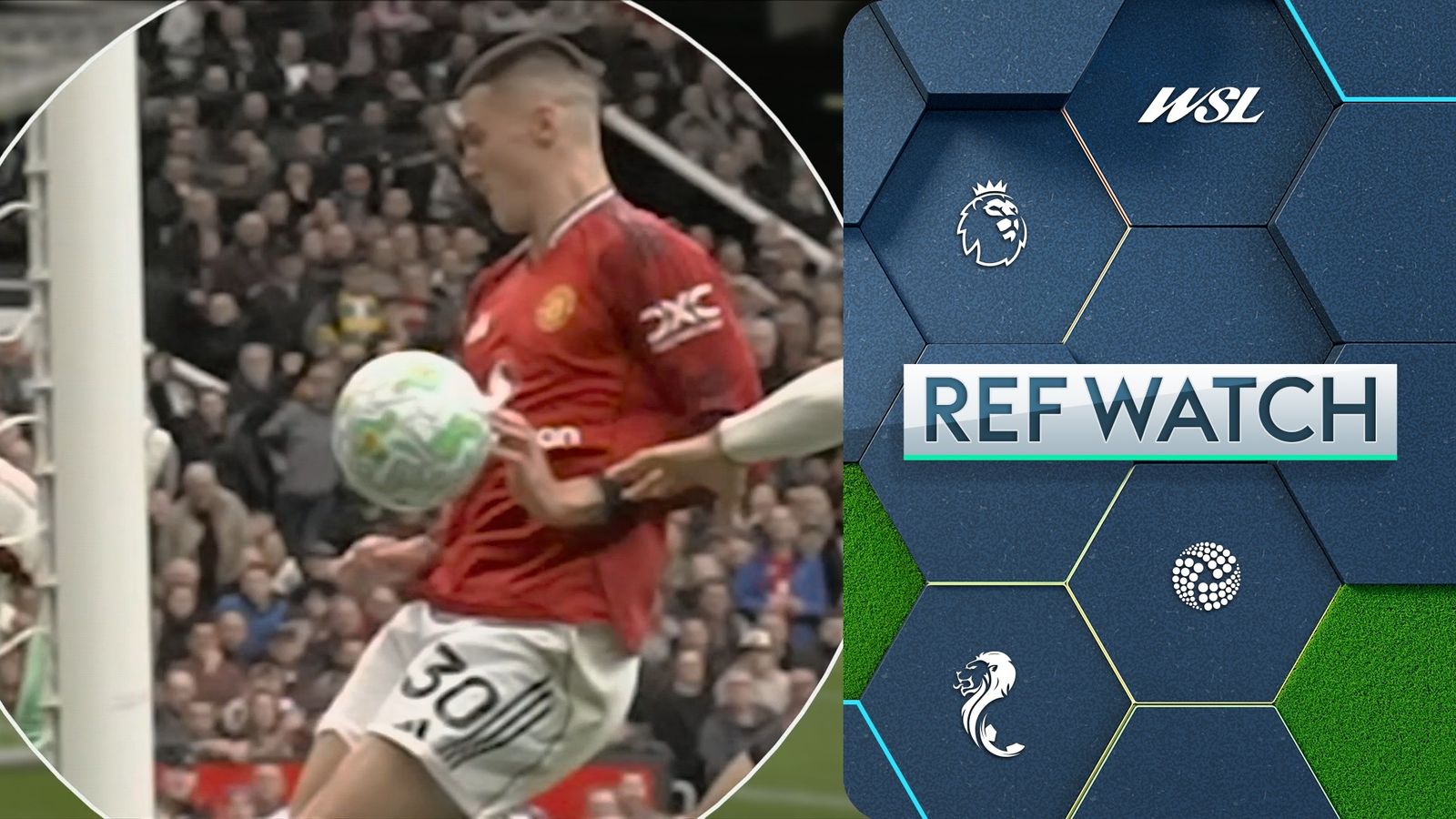
Because VAR exists, the officials feel compelled to find infractions that the naked eye would completely ignore. We routinely see penalties given because a ball was smashed from a yard away into the arm of a defender who is physically jumping. Where exactly are his arms supposed to go? Is he supposed to defend a cross with his hands tied behind his back like a hostage? We are punishing players for basic human biomechanics.
Before VAR, a referee would see that, realize the defender had no intent and no time to react, and wave play on. Now, a slow-motion replay makes every accidental graze look like a deliberate punch. Slow motion lies. It distorts reality. It makes innocent momentum look like calculated malice.
Just throw it in the bin
The 91 percent of fans in that survey aren't just being nostalgic. They aren't dinosaurs demanding a return to muddy pitches and heavy leather balls. They are making a rational assessment of the product in front of them.
The game is less enjoyable. The highs are lower, the frustrations are longer, and the arguments haven't stopped—they've just changed shape. We aren't arguing about whether it was a foul; we're arguing about why VAR intervened in one game but ignored the exact same challenge in another game the next day. The inconsistency is maddening.
We sacrificed the soul of the sport on the altar of a sterile, unattainable perfection. We traded the instant, primal roar of a goal for a sterile, bureaucratic process managed by men staring at monitors.
It's time to admit failure. Keep goal-line technology—it works instantly, objectively, and flawlessly. Keep the semi-automated offside if you absolutely must, provided it delivers decisions in seconds rather than minutes. But the rest of it? The endless reviews, the subjective interpretations, the referee going over to the monitor to watch a replay in slow-motion fifty times?
Throw it all in the bin. Let the referee make a call, let us argue about it in the pub afterward, and for the love of the game, let us celebrate a goal the second the ball hits the net.